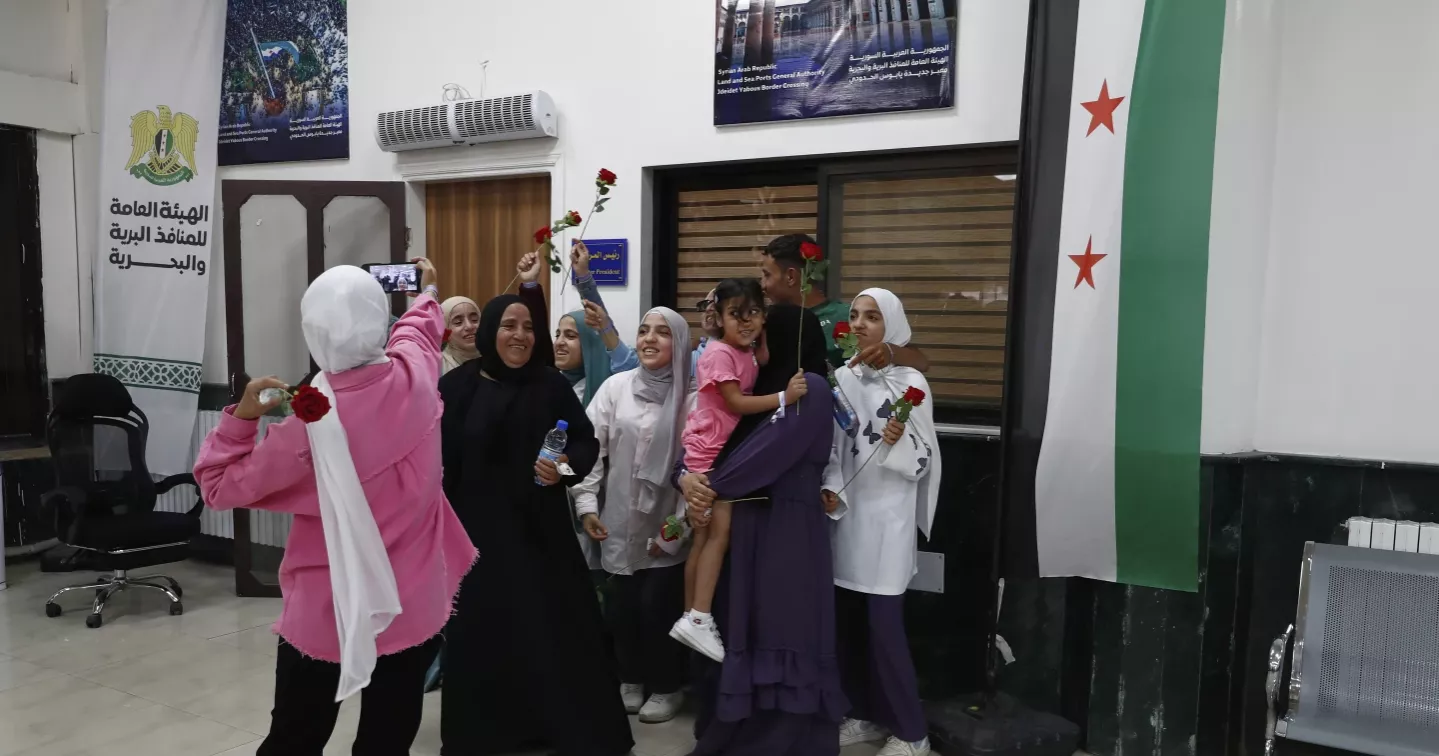
On Tuesday, the first group of Syrian refugees returned to their home country from Lebanon under a newly launched plan developed by the United Nations in coordination with the Lebanese government, following the fall of Bashar Assad’s regime in December.
Over the past 14 years, Syria’s civil war displaced roughly half of its pre-conflict population of 23 million. Lebanon has hosted an estimated 1.5 million of those refugees — nearly a quarter of its own population — many of whom entered the country illegally and remained unregistered with the UN.
Under the new repatriation initiative, each Syrian refugee choosing to return will receive $100 in cash assistance from the UN Refugee Agency (UNHCR), while Lebanese authorities will waive any residency fines or legal fees. The UNHCR and the International Organization for Migration (IOM) are also providing transportation, including buses for returnees.
In addition to travel support, the UNHCR has committed to offering returnees various forms of assistance once back in Syria — including financial aid, legal services for civil documentation, psychosocial support, livelihood programs, and other protection services.
Lebanon’s Push for Repatriation Amid Economic Struggles
Lebanon has repeatedly called for the return of Syrian refugees, especially as the country grapples with a deepening economic crisis and shrinking aid from international donors. However, many Syrians were reluctant to return under Assad’s rule due to fears of forced conscription, political repression, and penalties for overstaying in Lebanon.
With the rise of Syria’s new government, led by President Ahmed al-Sharaa — who ousted Assad in a surprise offensive — Lebanon’s Prime Minister Nawaf Salam has renewed hopes that more Syrians will opt into the voluntary return plan.
According to the UNHCR, more than 205,000 Syrians have returned from Lebanon since December, with at least 126,000 confirmed as permanent returns.
Torrential rain triggers deadly flooding, evacuations in Beijing region
A Small Start to a Larger Plan
UNHCR Lebanon spokesperson Lisa Abou Khaled described Tuesday’s return as a “test run,” involving only 72 refugees, mostly bound for Homs and rural Damascus. She noted that around 17,000 refugees in Lebanon have registered for repatriation, though most have not yet boarded the buses.
At the border crossing, Syrian authorities welcomed the returnees with roses and bottled water, and helped them complete paperwork. Many posed for photos in front of Syria’s new green flag. Among them was Rasha, returning to Homs after 14 years. “We’re going home with nothing, but it’s easier than paying rent,” she told the AP. Her decision to stay in Lebanon previously was due to fears that her sons would be conscripted — a fate she likened to “sending your son to his death.”
Another returnee, Raghad, fled to Lebanon as a child after her father was killed in Homs. Now, she is heading back with her siblings and their children. “We’re hoping to fix up the house so we can live there again,” she said. “I can’t imagine being there without Dad.”
Humanitarian Challenges Persist
Despite the lifting of long-standing U.S. sanctions, Syria remains mired in economic hardship, with widespread poverty and crumbling infrastructure. The country faces the daunting task of rebuilding after years of war, with reconstruction costs estimated in the hundreds of billions of dollars.
UNHCR’s Abou Khaled cautioned that without addressing these challenges, long-term, sustainable returns may be difficult. “We must acknowledge that there is a real humanitarian crisis in Syria that remains very significant,” she said. “Millions of people will need urgent help to be able to return in a sustainable way.”