Iran continued launching missile and drone attacks on Israel and Gulf Arab states on Tuesday, even as U.S. President Donald Trump claimed Washington was engaged in talks with Tehran to end the ongoing war.
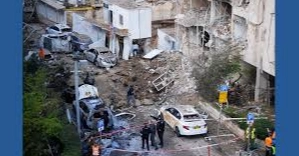
A missile struck a central street in Tel Aviv, causing damage to nearby buildings and injuring at least four people. Israeli emergency responders described scenes of destruction and panic following the தாக்க.
Despite Trump’s remarks, Iranian authorities denied holding any negotiations with the United States. Parliament Speaker Mohammad Bagher Qalibaf dismissed the claim as “fake news” aimed at influencing financial and oil markets.
Trump also postponed a deadline for Iran to reopen the Strait of Hormuz, warning earlier of possible airstrikes on Iranian power infrastructure. The delay briefly eased tensions in global oil markets, though prices soon rebounded amid continued uncertainty.
Over the weekend, both sides exchanged threats that raised concerns about widespread disruption, including potential power outages and damage to vital desalination plants across the Gulf region.
Israeli Prime Minister Benjamin Netanyahu said military operations against Iran and its allies would continue regardless of ceasefire discussions. “There’s more to come,” he said.
Meanwhile, Iran’s Foreign Minister Abbas Araghchi has been in contact with regional and global counterparts in an effort to address the escalating conflict, according to his office.
Iran launched multiple waves of missiles toward Israel early Tuesday, with one striking Tel Aviv after bypassing air defenses. Israel, in response, carried out airstrikes in Beirut’s southern suburbs, targeting positions linked to Hezbollah. At least two people were killed in a strike on a residential building, Lebanese officials said.
Elsewhere in the Gulf, falling debris from intercepted projectiles disrupted power supply in parts of Kuwait, while Saudi Arabia said it intercepted 19 Iranian drones targeting its Eastern Province. Air raid sirens were also sounded in Bahrain.
Although oil prices briefly dipped below $100 per barrel following Trump’s comments on possible talks, Brent crude later climbed above $104, reflecting ongoing market volatility since the conflict began on Feb. 28.
Trump initially set a deadline for Iran to ensure safe passage through the Strait of Hormuz but later extended it by five days. Iran has allowed limited shipping through the vital waterway but warned it would continue targeting vessels linked to the U.S., Israel and their allies.
Tehran has expressed skepticism over Washington’s intentions, citing past conflicts that followed periods of negotiation.
The U.S. is also deploying thousands of Marines to the region, fueling speculation about possible military escalation, including a potential move on Iran’s strategic Kharg Island.
Iran has warned it could mine the Persian Gulf if faced with a ground incursion, a move that could disrupt global shipping.
Analysts say the U.S. could be positioning forces while keeping diplomatic options open, though it remains unclear whether either side is ready to de-escalate.
The conflict has already caused heavy casualties, with over 1,500 reported dead in Iran, 15 in Israel, and several others, including U.S. personnel and civilians, killed across the region.