Ukraine’s capital, Kyiv, faced a large-scale Russian attack early Saturday, with both drones and missiles. Explosions and bursts of machine gun fire echoed across the city, prompting many residents to seek shelter in subway stations. The overnight attack coincided with a major prisoner exchange between Russia and Ukraine—the first phase of a deal reached in Istanbul last week—marking a rare instance of cooperation during the ongoing three-year conflict.
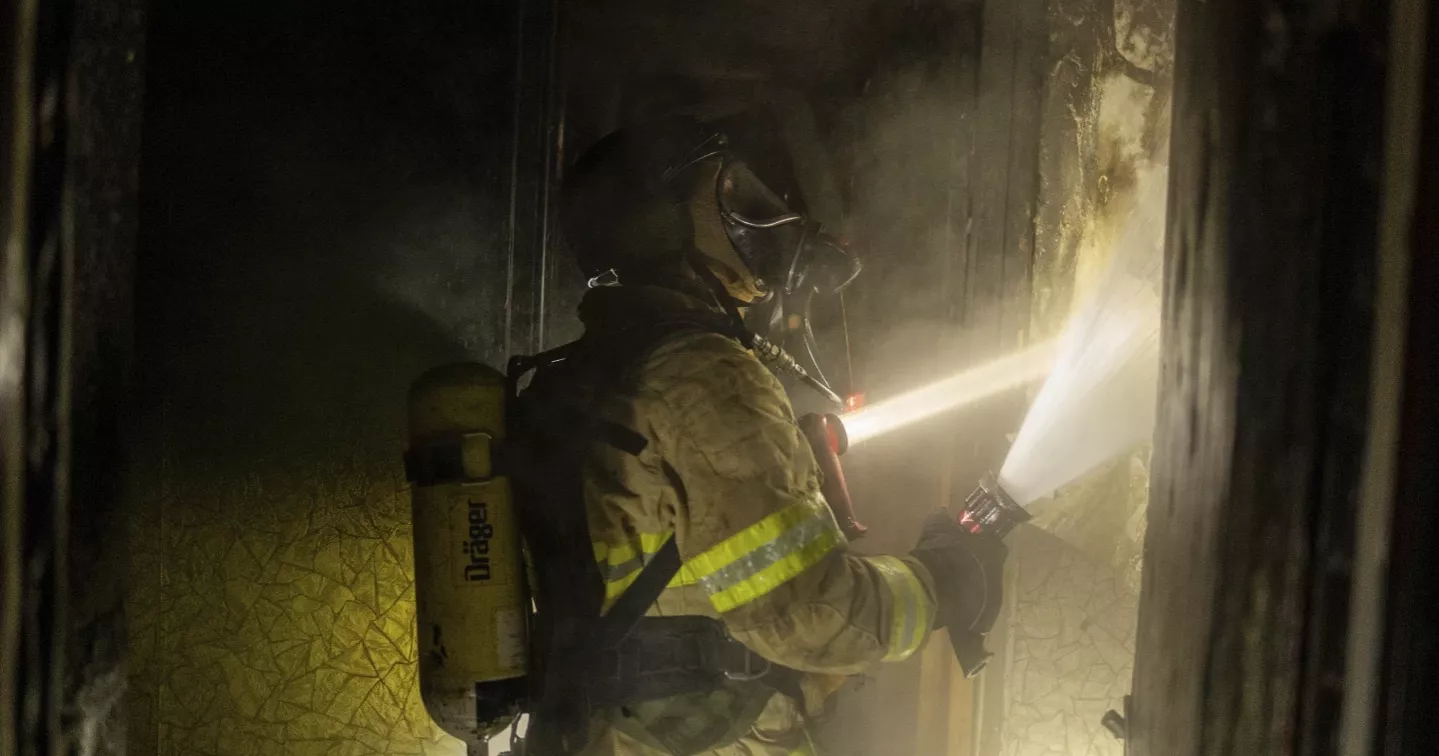
According to Tymur Tkachenko, acting head of Kyiv's military administration, debris from intercepted drones and missiles fell across at least four districts of the city. Six people required medical treatment, and fires were reported in the Solomianskyi district.
Greece deploys record firefighters and drones for wildfire season
Local resident Yurii Bondarchuk recounted the experience, noting that the air raid siren began as usual, followed by the sound of drones overhead. A sudden explosion shattered glass in his apartment. “The balcony is totally wiped out, as well as the windows and the doors,” he said, standing outside in the darkness while firefighters worked nearby. To steady his nerves, he smoked a cigarette.
The air raid alert lasted over seven hours through the night, with repeated warnings of incoming threats. Prior to the strike, Kyiv Mayor Vitalii Klitschko warned that more than 20 Russian strike drones were en route. As the attack unfolded, he reported that drone debris struck a shopping mall and a residential building in Kyiv’s Obolon district, with emergency crews dispatched to the scene.
The missile and drone attack came just hours after Ukraine and Russia began executing a prisoner exchange deal involving 1,000 captives from each side. Ukrainian President Volodymyr Zelenskyy confirmed that 390 Ukrainians were returned in the initial phase, with more expected over the weekend—making it the largest exchange of the war to date. Russia’s Defense Ministry said it received an equal number of Russian nationals. A Ukrainian official, speaking anonymously, said the handover took place at the Belarus border in northern Ukraine.
The Russian prisoners were transported to Belarus for medical care. At the medical facility, relatives of the released men gathered, holding signs and shouting names or brigade numbers in hopes of finding loved ones. “Vanya!” cried Nataliia Mosych, calling out for her husband.
Despite the large-scale exchange, fighting has not abated along the roughly 1,000-kilometer (620-mile) front line, where tens of thousands of soldiers have already died. Both sides continue their deep-strike operations.
Following the May 16 meeting in Istanbul, Turkish Foreign Minister Hakan Fidan described the prisoner swap as a “confidence-building measure” and said the parties had agreed in principle to meet again. However, Kremlin spokesperson Dmitry Peskov stated on Friday that no venue has been finalized for further negotiations.
UK net migration expected to halve in 2024: ONS
Meanwhile, Russian Foreign Minister Sergey Lavrov said that Moscow plans to present Ukraine with a draft document detailing its terms for a “sustainable, long-term, comprehensive” peace agreement once the ongoing exchange concludes. Yet, significant gaps remain in the positions of both sides. One of Ukraine’s key demands—backed by Western allies—is the implementation of a temporary ceasefire as a starting point for peace talks.
European leaders have accused Russian President Vladimir Putin of stalling negotiations while seeking to gain more territory through military advances.
In the days leading up to the latest attack, Russia’s Defense Ministry reported it had shot down 788 Ukrainian drones between May 20 and May 23. Meanwhile, Ukraine’s air force said that Russia had launched 175 Shahed and decoy drones, along with a ballistic missile, since late Thursday.