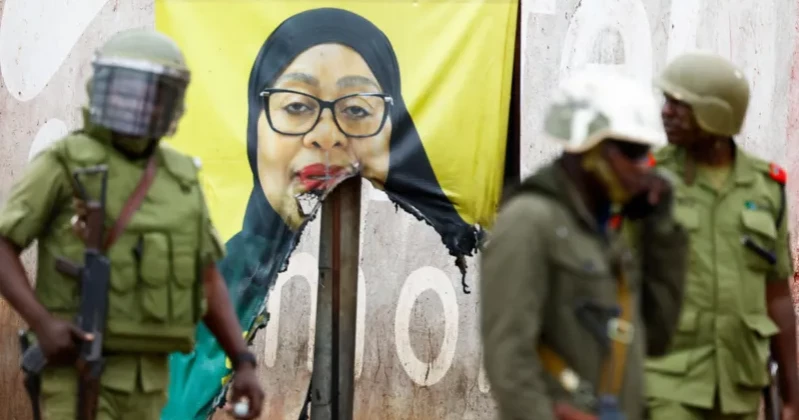
Tanzania has cancelled next month’s independence day celebrations, with the funds redirected to repair infrastructure damaged during recent election-related unrest, Prime Minister Mwigulu Nchemba said.
The announcement comes amid calls by opposition groups for demonstrations on December 9, marking the country’s independence, to protest killings that followed last month’s disputed presidential election. The opposition alleges hundreds were killed during a government crackdown, though the authorities have yet to release an official death toll and have established a commission of inquiry.
President Samia Suluhu Hassan won the election with 98% of the vote, a result widely described by opponents as a “mockery of democracy.” Key opposition figures were barred from contesting: Tundu Lissu remains detained on treason charges, which he denies, and Luhaga Mpina’s candidacy was rejected on technical grounds. Observers reported irregularities and signs of manipulation in the voting process.
An international coalition of lawyers and human rights groups has formally requested the International Criminal Court (ICC) to investigate alleged crimes against humanity during the unrest, including mass killings and the secret disposal of over 500 bodies. The submission, filed on November 13, was publicly released this week.
The government imposed a five-day internet blackout following the October 29 election and warned against sharing protest images. Graphic footage of the violence circulated online, with some verified by international media, though the government has dismissed such reports as misleading.
At least 240 people were charged with treason in connection with the protests, but President Samia later called for leniency, and many detainees have reportedly been released.
While announcing the cancellation of independence day events, Nchemba urged Tanzanians to engage in peaceful dialogue. “Let us not return to what we went through, because the consequences are irreparable,” he said.
President Samia assumed office in 2021 following the death of John Magufuli, becoming Tanzania’s first female president. Initially praised for easing political repression, critics say the political space has since narrowed.
Source: BBC