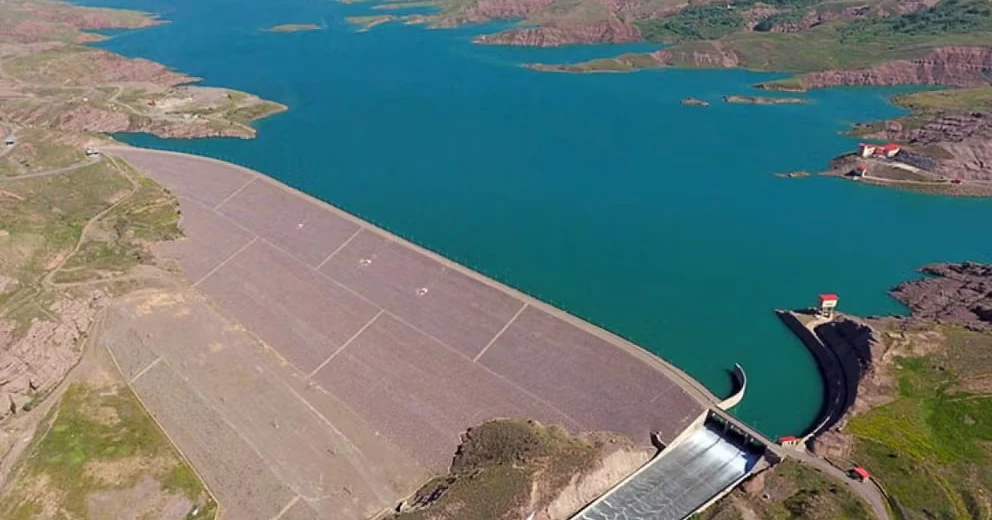
The Iranian capital is on the brink of a severe water shortage, with authorities warning that its main reservoir could run dry within two weeks amid the country’s worst drought in decades.
Behzad Parsa, head of Tehran’s water company, told the state-run IRNA news agency on Sunday that the Amir Kabir Dam — one of five supplying drinking water to the city — now holds only 14 million cubic metres of water, just eight percent of its capacity. At the current rate of consumption, he cautioned, the dam can continue to provide water for only two more weeks.
Rainfall in Tehran province has seen an unprecedented collapse, with a “100 percent drop in precipitation” compared to last year, officials said. The megacity of over 10 million people depends heavily on water from rivers flowing down the Alborz Mountains, whose snowmelt traditionally replenishes its reservoirs.
Parsa noted that the Amir Kabir Dam held 86 million cubic metres of water a year ago, highlighting the dramatic decline. He, however, did not disclose the condition of the other dams serving the capital.
Tehran’s residents consume about three million cubic metres of water daily, according to Iranian media. In an attempt to conserve supplies, water flow to several neighbourhoods has already been restricted, and frequent outages have been reported since the summer.
Earlier in July and August, the government declared two public holidays to reduce water and energy consumption, as a prolonged heatwave pushed temperatures beyond 40°C in Tehran and above 50°C in some regions.
With input from Al Jazeera