The administration of Donald Trump has put forward a 15-point ceasefire proposal to Iran, according to a source familiar with the plan who was not authorised to speak publicly.
The proposal was conveyed to Tehran through intermediaries from Pakistan, which has also offered to host fresh negotiations between Washington and Tehran. The initiative comes as the United States prepares to deploy at least 1,000 additional troops from the 82nd Airborne Division, adding to roughly 50,000 American personnel already stationed in the region.
Earlier on Tuesday, The New York Times reported that the ceasefire plan had been delivered to Iranian officials.
At the same time, the Pentagon is moving to deploy two Marine Expeditionary Units, which would bring around 5,000 Marines along with thousands of sailors to the Middle East.
According to the source, Israeli officials — who have been urging the US to continue military operations against Iran — were caught off guard by the submission of a ceasefire proposal. However, with Washington simultaneously reinforcing its military presence, the move is being seen as an effort by Trump to maintain “maximum flexibility” in determining his next course of action.
The White House has not commented on the development.
In a related development, Trump said for a second consecutive day that the US is engaged in discussions with Iran aimed at ending the war, even as Iran denied that any such negotiations are underway.
Military tensions continue to escalate, with ongoing airstrikes hitting Iran while Iranian missiles and drones target Israel and other sites across the region.
Meanwhile, additional US troops are preparing for deployment. Officials told The Associated Press that at least 1,000 troops from the 82nd Airborne Division will be sent in the coming days, while thousands of Marines are already en route.
Israeli strikes kill 2 paramedics in southern Lebanon
Iran has rejected claims of negotiations and Trump has postponed his self-imposed deadline for Tehran to reopen the Strait of Hormuz. Iran’s control over the vital shipping route has disrupted global trade, driven up fuel prices and raised concerns about the global economy.
Pakistan’s Prime Minister Shehbaz Sharif said his country is ready to facilitate “meaningful and conclusive talks” to end the conflict.
According to multiple officials, the US has agreed in principle to participate in talks in Pakistan, while mediators are still trying to persuade Iran to join. A regional diplomat indicated that discussions could begin as early as next week, with US representatives expected to include envoy Steve Witkoff, Trump’s son-in-law Jared Kushner, Secretary of State Marco Rubio and Vice President JD Vance.
Speaking at the White House, Trump said multiple officials are engaged in negotiations and expressed confidence that Iran is interested in reaching a deal.
Iranian Foreign Minister Abbas Araghchi has held discussions with several counterparts this week. However, Iranian Parliament Speaker Mohammad Bagher Qalibaf denied any direct talks with the US, while a military spokesperson reaffirmed that Iran would continue fighting until “complete victory.”
Efforts led by regional mediators are focused on building trust between Washington and Tehran, with priorities including halting attacks on energy infrastructure and developing a mechanism for reopening the Strait of Hormuz. Israel is not involved in these diplomatic efforts.
Oil markets briefly responded to reports of possible negotiations, but prices soon rebounded, with Brent crude rising above $100 per barrel — nearly 40% higher since the conflict began.
On the battlefield, Israel reported launching extensive strikes on Iranian production facilities, though details were not disclosed. Explosions were heard across Tehran, including in northern districts and the city centre.
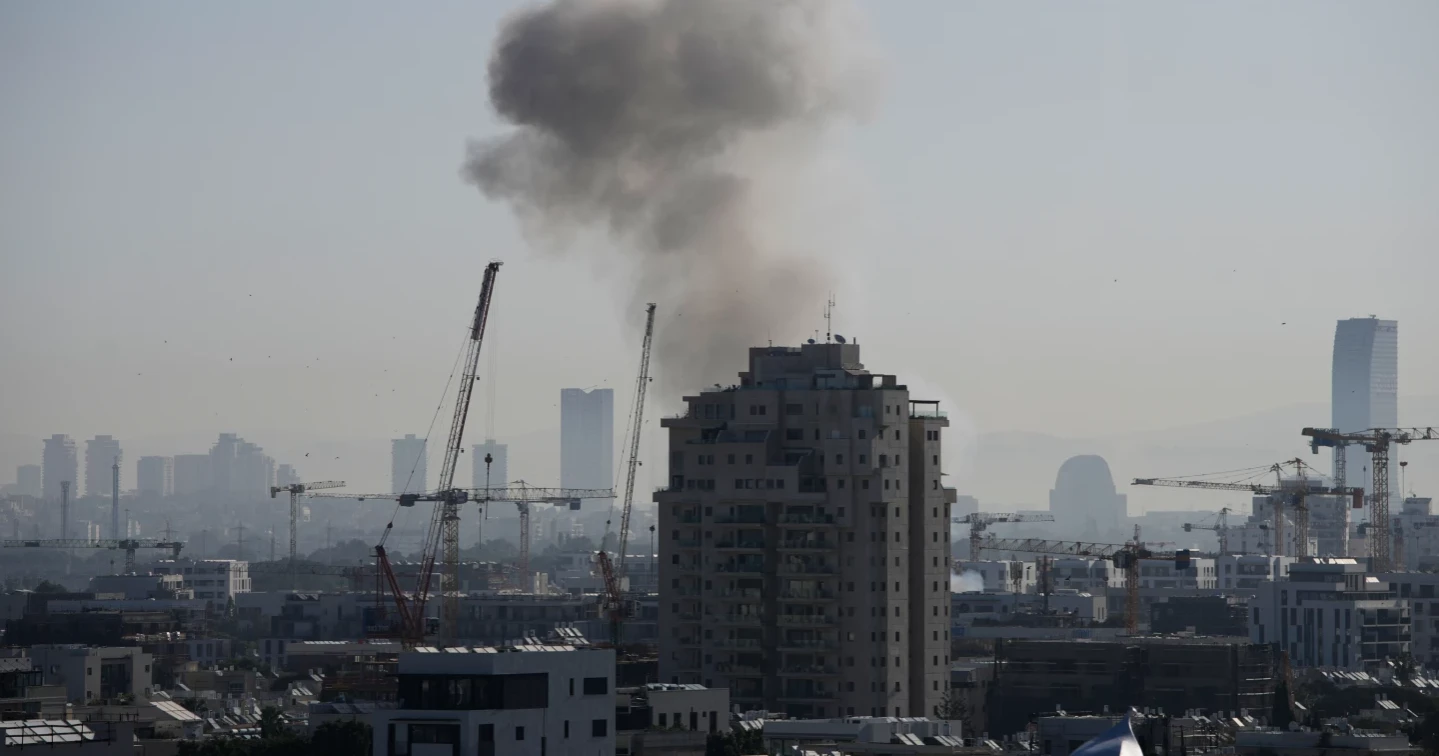
Iran, in turn, launched multiple waves of missile attacks on Israel. Emergency responders said three people were injured in southern Israel, while four others sustained minor injuries in Tel Aviv.
Regional fallout has also intensified. A Moroccan contractor working with the United Arab Emirates military was killed in Bahrain during an Iranian strike, while Kuwait experienced temporary power outages after air defence debris hit power lines. Saudi Arabia said it intercepted Iranian drones targeting its Eastern Province.
Israel also carried out heavy airstrikes on Beirut’s southern suburbs, targeting infrastructure linked to the Iran-backed Hezbollah. A strike on a residential building southeast of the Lebanese capital killed at least three people, including a three-year-old girl, while five others were killed in southern Lebanon.
In northern Israel, a woman was killed by shrapnel during cross-border attacks from Lebanon.
China urges early peace talks; Iran discusses war fallout with Malaysia
Lebanon has declared Iran’s ambassador persona non grata and ordered him to leave by Sunday. The country has also banned Iranian flights amid concerns they could transport weapons or funds to Hezbollah, with some Lebanese officials accusing Tehran of drawing the country deeper into the conflict.
The violence has taken a heavy toll. Israeli strikes have killed more than 1,000 people in Lebanon and displaced over one million. Iran’s death toll has exceeded 1,500, according to its Health Ministry. In Israel, 16 people have been killed, while at least 13 US service members and more than a dozen civilians in the occupied West Bank and Gulf states have also lost their lives.