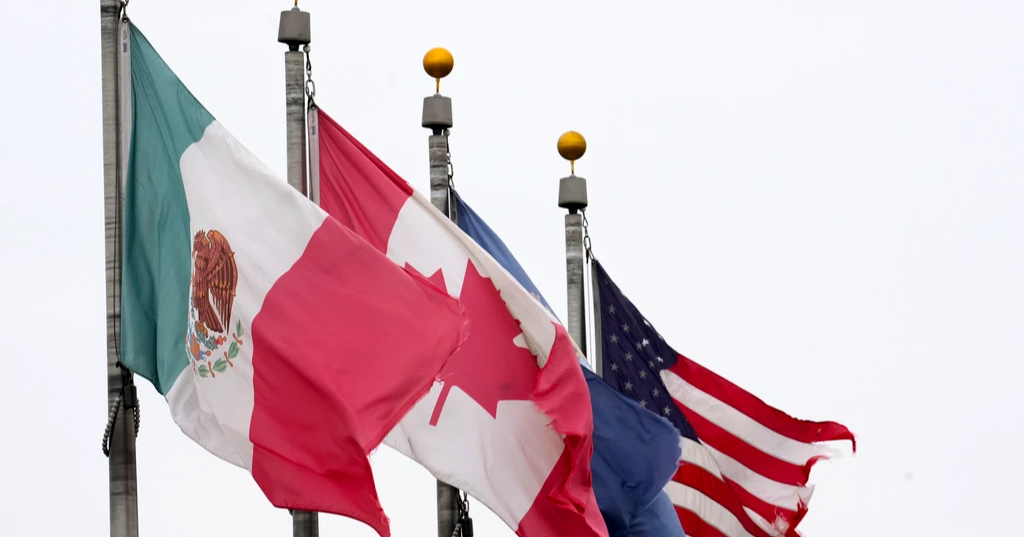
President Donald Trump agreed on Monday to a 30-day suspension of his proposed tariffs on Mexico and Canada after both nations took steps to address his concerns regarding border security and drug trafficking, reports AP.
This temporary halt follows days of heightened tensions that brought North America to the brink of a trade war, one that could have stifled economic growth, driven up prices, and strained two of the U.S.’s most vital trade relationships.
Trump's trade war among allies triggers retaliation from Canada and Mexico
“I am very pleased with this initial outcome, and the tariffs announced on Saturday will be paused for a 30-day period to determine if a final economic deal with Canada can be structured,” Trump stated on social media, adding, “FAIRNESS FOR ALL!”
Canadian Prime Minister Justin Trudeau confirmed the pause in a post on X, stating that it would remain in place “while we work together.” He announced that Canada would appoint a fentanyl czar, designate Mexican cartels as terrorist organizations, and create a joint Canada-U.S. task force to combat organized crime, fentanyl trafficking, and money laundering.
Similarly, the pause in tariffs against Mexico provides an opportunity for negotiations on drug smuggling and illegal immigration. However, the 10% tariff on Chinese imports remains set to take effect on Tuesday, with Trump planning a discussion with Chinese President Xi Jinping in the coming days.
Trump's aid freeze shocks Syria camp housing IS-linked families
Although fears of an imminent trade war have eased, uncertainty remains. While Canada and Mexico have secured a temporary reprieve, Trump could reinstate the tariffs at any time and is already preparing to impose levies on European imports. As a result, the global economy remains unsure whether a crisis has been averted or merely delayed.
On Saturday, Trump had announced 25% tariffs on Mexican and Canadian imports, along with an additional 10% tariff on Canadian oil, natural gas, and electricity. Despite his frequent warnings, the decision still came as a shock to investors, lawmakers, businesses, and consumers.
Economic analyses from the Tax Foundation, the Tax Policy Center, and the Peterson Institute for International Economics suggested that the tariffs could slow growth, reduce incomes, and raise prices. However, Trump, while also promising to control inflation, argued that tariffs were essential to curbing illegal immigration, halting fentanyl smuggling, and ensuring that other nations treat the U.S. with the respect he believes it deserves.
Trump and Mexican President Claudia Sheinbaum agreed to the month-long tariff suspension after what Trump described as a “very friendly conversation” on social media. He expressed optimism about the upcoming negotiations.
Leading the talks will be Secretary of State Marco Rubio, Treasury Secretary Scott Bessent, Commerce Secretary nominee Howard Lutnick, and senior Mexican representatives. Sheinbaum stated that Mexico would reinforce its border with 10,000 National Guard troops, while the U.S. committed to addressing the flow of high-powered weapons into Mexico.
A similar situation occurred in 2019 when Mexico avoided Trump-imposed tariffs by deploying 15,000 soldiers to its northern border.
On Monday, the outlook for Canada appeared less promising until a last-minute agreement was reached.
Americans could feel 'some pain' from trade war: Trump
A senior Canadian official revealed that Canada was uncertain about avoiding tariffs as Mexico had, citing shifting demands from the Trump administration. Speaking anonymously due to the sensitive nature of the negotiations, the official indicated that the Canadian government felt less confident in securing a favourable outcome.
When asked in the Oval Office on Monday what Canada could do to prevent tariffs, Trump responded, “I don’t know.” He even joked about making Canada the 51st U.S. state, continuing his often contentious rhetoric despite decades of close cooperation between the two nations, from World War II to joint efforts after the 9/11 attacks.
Trump also hinted at additional tariffs against China, warning, “If we can’t make a deal with China, then the tariffs will be very, very substantial.”
Financial markets, businesses, and consumers remained on edge as they braced for the potential economic impact of new tariffs. Stew Leonard Jr., CEO of the supermarket chain Stew Leonard’s, which operates in Connecticut, New York, and New Jersey, noted that his team was considering stocking up on Mexico’s Casamigos tequila before tariffs took effect and switching from Canadian to Norwegian salmon.
Stock markets reacted with slight declines, reflecting cautious optimism that the tariffs could be short-lived. Trump himself inquired about market performance as reporters were leaving the Oval Office on Monday.
The situation underscored the unpredictability of a president who has repeatedly expressed admiration for tariffs, even lamenting that the U.S. government shifted to income taxes as its primary revenue source in 1913.
White House National Economic Council Director Kevin Hassett argued that labelling the situation a trade war was misleading, despite the risk of retaliatory measures and escalation.
“Read the executive order—President Trump was absolutely, 100% clear that this is not a trade war,” Hassett said. “This is a drug war.”
Despite this framing, Trump’s rhetoric has frequently suggested a broader concern about perceived trade imbalances and economic exploitation. On Sunday, he indicated that tariffs on European nations would be coming soon.
By Monday afternoon, he appeared willing to continue leveraging tariff threats, citing the U.S. economy’s size as a bargaining tool.
“Tariffs are very powerful, both economically and in getting everything else you want,” Trump told reporters. “Nobody can compete with us because we’re the pot of gold. But if we don’t keep winning and doing well, we won’t be the pot of gold.”
Jaime Bricker, tourism director for Skagway, Alaska, highlighted the economic concerns among Canadian visitors, who are essential to her town’s economy.
Speaking about a recent visit to Vancouver, she noted that many people, from cab drivers to wait staff, expressed anxiety over how exchange rates and potential tariffs might affect their ability to visit the U.S.
“It seems to be a fluid situation, and it’s difficult to know just how impactful it will be without knowing for certain what could come in the days ahead,” she said.