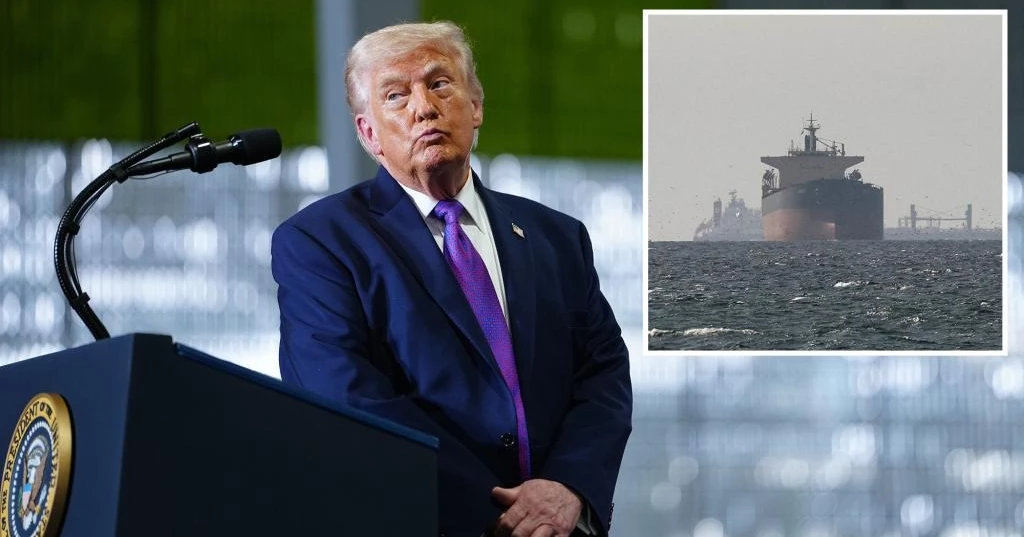
U.S. President Donald Trump said “many countries” would send warships to help keep the Strait of Hormuz open after Iran effectively blocked the vital shipping route during the ongoing war.
In a post on Truth Social on Saturday, Trump said countries “especially those affected by Iran’s attempted closure” of the strait would deploy naval forces alongside the United States. He mentioned China, France, Japan, South Korea and the United Kingdom as potential contributors.
The strait, through which about one-fifth of the world’s oil and liquefied natural gas passes, has remained largely closed since the conflict between the U.S., Israel and Iran intensified earlier this month. Most commercial ships are avoiding the waterway due to security concerns.
Trump claimed U.S. forces had already “destroyed 100% of Iran’s military capability” but acknowledged Tehran could still disrupt shipping by launching drones, mines or short-range missiles. He vowed that U.S. forces would keep attacking Iranian positions along the coast to reopen the waterway.
Iranian officials rejected the claim that the strait had been fully shut down. Alireza Tangsiri, head of the naval arm of the Islamic Revolutionary Guard Corps, said the waterway was “under control” but not militarily closed.
Iran’s Foreign Minister Abbas Araghchi said the strait was only closed to “tankers and ships of enemies and their allies,” not all shipping. He also warned that American vessels had no right to enter the Gulf.
Despite the tensions, some ships have passed through the strait. Two Indian-flagged tankers carrying liquefied petroleum gas crossed safely on Saturday after Iran granted special permission following talks between Narendra Modi and Masoud Pezeshkian, according to Indian officials. A Turkish vessel was also allowed to pass earlier in the week.
The United States is reinforcing its military presence in the region, with about 2,500 Marines and the amphibious assault ship USS Tripoli heading toward the Middle East.
Experts warn there may be no quick military solution to reopening the strait. Even occasional attacks could deter shipping insurers and keep the critical trade route largely closed, threatening global energy supplies and food security.