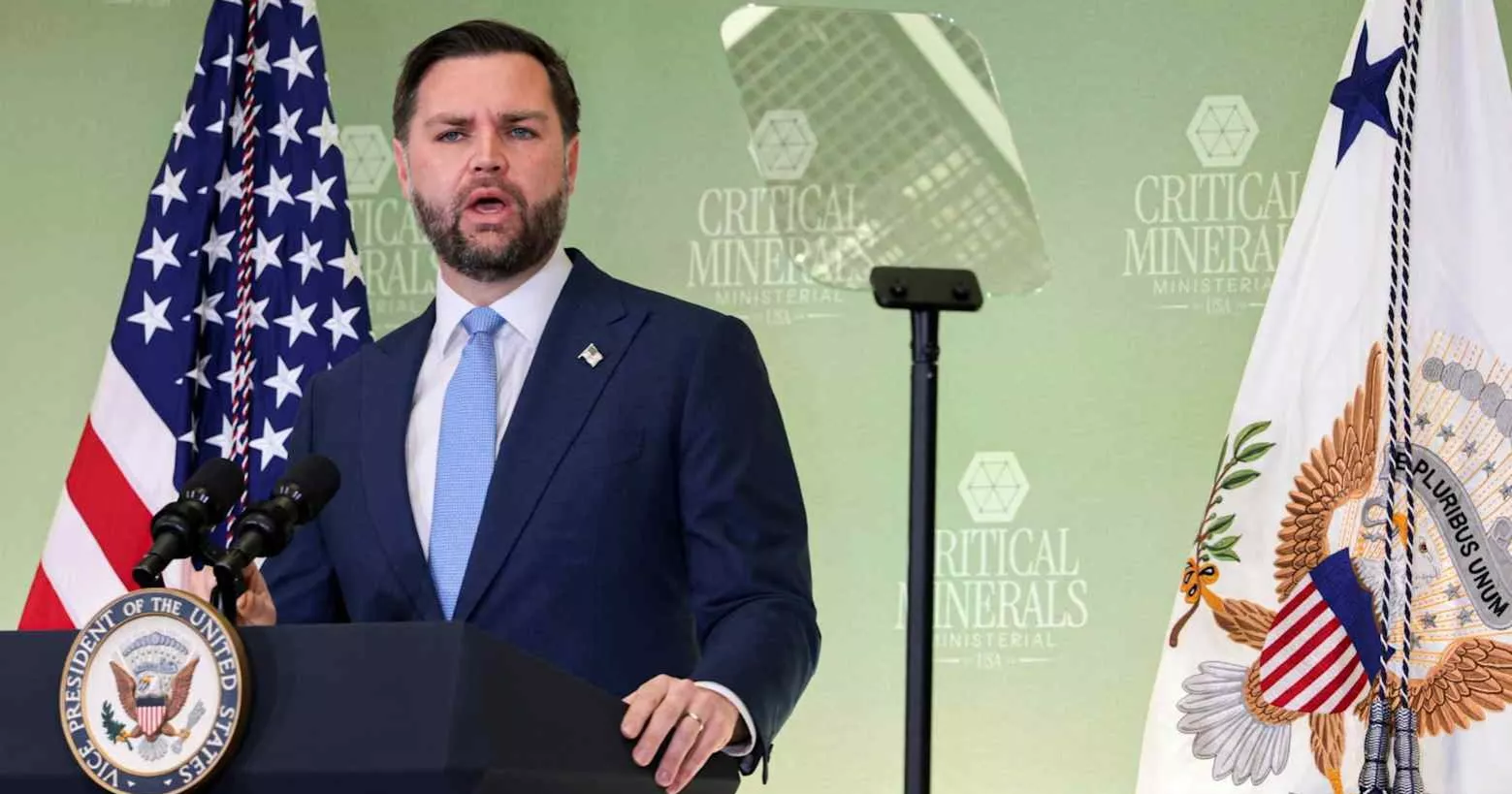
The United States has announced plans to form a critical minerals trading bloc with its allies and partners, aiming to reduce dependence on China and secure stable supplies of key materials used in products ranging from smartphones to fighter jets.
Vice President JD Vance said the past year’s U.S.-China trade tensions highlighted how heavily many countries rely on China for critical minerals, making collective action essential. Speaking at a meeting hosted by Secretary of State Marco Rubio with officials from dozens of European, Asian and African countries, Vance said the proposed bloc would use coordinated trade policies and tariffs to maintain minimum prices and protect supply chains.
Under the plan, member countries would work together to ensure steady production, stable prices and shared access to financing and minerals, while limiting China’s ability to undercut competitors by selling materials cheaply and later raising prices. Vance said the goal is to create diversified production centers and supply chains that are less vulnerable to external shocks.
The initiative comes as Washington takes broader steps to strengthen its access to critical minerals after China tightened export controls in response to President Donald Trump’s tariffs last year. Although both sides later eased some trade measures, China’s restrictions remain tougher than before.
US officials said several countries have already agreed to join the proposed bloc. Allies including France and the United Kingdom attended the Washington meeting, though Denmark and Greenland — home to large mineral resources — were not present.
Experts caution that enforcing the bloc could be challenging, particularly in preventing companies from sourcing cheaper Chinese materials outside the agreement. However, defense-related supply chains may be easier to regulate due to Pentagon oversight.
Alongside the diplomatic push, the Trump administration is investing heavily at home. This week, Trump announced “Project Vault,” a plan to build a strategic U.S. stockpile of rare earth elements, backed by a $10 billion loan from the Export-Import Bank and private funding. The government has also invested billions of dollars in domestic mining and processing projects over the past year.
China currently dominates the sector, accounting for about 70% of global rare earth mining and 90% of processing.
The European Union, Japan and Mexico separately announced agreements with the United States to coordinate trade policies and price floors for critical minerals, with plans to bring in other like-minded countries.
Meanwhile, the US House of Representatives approved legislation to speed up mining on federal land, aiming to boost domestic production of minerals vital for energy, defense and high-tech industries. The bill now heads to the Senate.