Business

IDRA takes fresh move to restore public trust; 5,868 policyholders to get Tk 23 crore
In another major step aimed at expediting long-pending insurance claims and rebuilding public confidence in the sector, the Insurance Development and Regulatory Authority (IDRA) has taken an initiative to disburse Tk 23 crore to 5,868 policyholders.
With the latest move, the regulator has so far initiated the settlement of claims worth Tk 37.54 crore (Tk 37,54,60,117.58) for a total of 8,417 policyholders across two consecutive phases.
Earlier in the first phase, IDRA arranged the payout of Tk 14.51 crore (Tk 14,51,03,146.58) to 2,549 policyholders who had been waiting for their legitimate dues from seven troubled life insurance companies.
According to IDRA, the remaining valid and unpaid insurance claims will be verified, processed, and settled in phases.
The regulatory body reaffirmed its commitment to continuing this drive until the legitimate rights of all policyholders are fully ensured and public trust in the insurance industry is restored.
6 hours ago
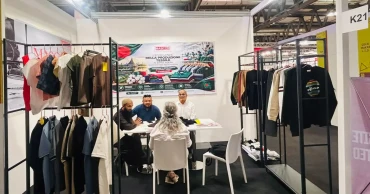
Bangladeshi firms showcase garment and leather products in Italy
Fourteen leading Bangladeshi companies from the apparel, textile, and leather sectors are participating in "Ready to Show," one of Europe’s premier international trade sourcing exhibitions, which kicked off in Milan, Italy, on Saturday.
The three-day professional business-to-business (B2B) trade show will run through September 14, according to a press release of EPB.
Bangladesh’s participation is financially supported by the Export Promotion Bureau (EPB) and managed jointly by the Bangladesh Embassy in Rome and the Bangladesh Consulate General in Milan.
According to a press release issued by EPB Director (Fair and Exhibition Division) Mohammad Wares Hossain, the initiative reflects Bangladesh’s ongoing commitment to diversifying and expanding its export markets, promoting value-added garments, textiles, and leather goods, attracting international buyers, and deepening bilateral commercial ties with Italy and broader European markets.
6 hours ago

Gold prices rebound after three consecutive cuts
The Bangladesh Jewellers Association (Bajus) has raised the price of gold in the local market, reversing three consecutive rounds of cuts, with a hike of Tk 1,050 per bhori.
According to a notice issued by Bajus on Saturday morning, the new price of 22-carat gold, inclusive of VAT, has been fixed at Tk 232,930 per bhori, effective from 10 am the same day.
The association said the adjustment was made in view of the overall market situation following a rise in the price of pure gold (tejabi gold) in the local market.
Under the new pricing, per bhori (11.664 grams) of 21-carat gold will cost Tk 222,491, 18-carat gold Tk 191,056, and traditional (Sanatan) gold Tk 156,064, all inclusive of VAT.
Bajus said the new rates will remain in effect at all jewellery shops until further notice, though making charges will apply depending on jewellery design.
Since VAT is already included in the sale price of gold and silver ornaments, it cannot be collected separately from customers.
The association's existing rules for ornament exchange and purchase, excluding specified VAT, making charges and stone costs, will remain unchanged.
Bajus had last adjusted gold prices in the morning of September 11, cutting the rate by Tk 2,158 per bhori to fix 22-carat gold at Tk 231,880 per bhori including VAT, effective from 10 am that day.
At the time, 21-carat gold was priced at Tk 221,441, 18-carat at Tk 190,123, and Sanatan gold at Tk 155,306 per bhori.
So far in 2026, gold prices have been adjusted 115 times in the local market, with 57 hikes, 57 cuts, and one VAT adjustment.
Despite the rise in gold prices, silver prices remained unchanged. Currently, 22-carat silver, including VAT, is being sold at Tk 5,016 per bhori, while 21-carat silver is priced at Tk 4,782, 18-carat at Tk 4,082, and Sanatan silver at Tk 3,091 per bhori.
Silver prices have been adjusted 69 times so far in 2026, with 35 hikes and 34 cuts.
15 hours ago

Flour, aromatic rice prices spike as edible oil crisis persists in Dhaka
Prices of flour, refined flour (maida) and aromatic rice have risen sharply in Dhaka kitchen markets, adding to pressure on bakeries, biryani businesses and middle-income households amid a continued shortage of soybean oil.
A visit to markets in Shantinagar, Rampura, Badda and Shahjadpur on Friday found loose flour selling at Tk 50 per kg, up from Tk 45 last week, while the maida price climbed to Tk 80-85 per kg from Tk 70-75.
Aromatic rice prices jumped by Tk 20 per kg even after the Ministry of Commerce halved the export quota for the variety. Quality loose aromatic rice is now selling at Tk 200 per kg, up from Tk 180 a week earlier, while packaged aromatic rice ranges between Tk 220 and Tk 240 per kg. Buyers said the same rice cost only Tk 150-160 per kg a month ago.
More than a week after soybean oil prices were raised, supply has yet to return to normal. Most shops are out of bottled one-litre soybean oil, forcing many buyers to purchase costlier rice bran or sunflower oil instead.
Retailers said repeated requests to oil companies and dealers for supply have gone unanswered, adding that their per-litre commission has been cut.
They also alleged several companies are withholding soybean oil unless retailers place orders for other products alongside it.
Bakery and biryani businesses warned they will be forced to raise prices further if the trend continues.
Anwar, manager of Maa Biriyani in Badda, said they used to sell chicken polao at Tk 120 per packet but now charge Tk 150, adding that even the new price may soon become difficult to sustain amid the continued rise in costs.
Adib Rahman, owner of Adib Live Bakery in Rampura, said bakery associations have asked members to raise prices of all maida-based products by 20 percent, noting that not raising prices erodes profit while raising them drives away customers.
Buyers blamed both global volatility and a lack of government market monitoring for the price spikes, saying reduced oil supply and indiscriminate flour price hikes cannot be justified.
"There is no point in market monitoring for show. Why are not big corporate companies supplying oil to the market? They must be held accountable, otherwise consumer interest will remain ignored while companies protect only their own," said Afsana, a consumer at Rampura market.
Another buyer, Imdad, said grocery bills are rising every month due to price hikes across the board, compounding pressure from higher electricity costs on middle-income families like his.
According to the Bangladesh Bureau of Statistics (BBS), overall inflation stood at 8.26 percent in August, with food inflation at 7.02 percent. Though overall inflation eased compared to July, buyers say the relief is not visible in the market.
1 day ago

Gold prices revised downward again
The Bangladesh Jeweller’s Association (BAJUS) has cut gold prices again, reducing the rate of 22-carat gold by Tk 2,158 per bhori to Tk 2,31,880, including VAT.
The new prices came into effect at 10:00am on Friday, according to a notice issued by the association.
BAJUS said the latest adjustment was made in line with a decline in the price of pure gold (tejabi gold) in the local market.
Under the revised rates, a bhori (11.664 grams) of 21-carat gold will cost Tk 2,21,441, 18-carat gold Tk 1,90,123 and traditional gold Tk 1,55,306, all including VAT.
The association said the new rates will remain effective until further notice, while making charges will vary depending on the design of the jewellery.
As VAT is already included in the sale prices of gold and silver ornaments, it cannot be collected separately from customers.
Existing rules for the exchange and purchase of ornaments will remain unchanged, apart from applicable VAT, making charges and stone costs.
BAJUS last adjusted gold prices on September 9, cutting the rate by Tk 1,108 per bhori and setting the price of 22-carat gold at Tk 2,34,038.
So far this year, gold prices have been adjusted 114 times in the local market -- increased 56 times, decreased 57 times and revised once for VAT.
Silver prices were also cut, with the rate of 22-carat silver reduced by Tk 116 per bhori to Tk 5,016, including VAT.
The price of 21-carat silver was set at Tk 4,782, 18-carat at Tk 4,082 and traditional silver at Tk 3,091 per bhori.
Silver prices have been adjusted 69 times so far this year -- 35 increases and 34 decreases -- compared with 13 adjustments in 2025, when prices were increased 10 times and decreased only three times.
1 day ago
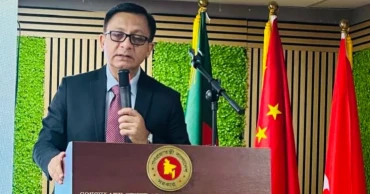
Internationally competitive economy needed to attract global investment: Commerce Minister
Commerce Minister Khandaker Abdul Muktadir has stressed the need to make Bangladesh's economy internationally competitive to attract global investment.
Speaking at a seminar titled "Trade Expansion and Investment Potential in Bangladesh," organised by the Bangladesh Consulate General in Hong Kong on Thursday, Muktadir underscored ensuring policy stability, reducing logistics costs, automating the customs system and simplifying business start-up procedures to improve the investment climate.
Govt working to accelerate economic growth, boost investment: Muktadir
The minister said that thanks to information technology, investors can now easily assess the business and investment environment of any country in the world.
To stay ahead in the competition for investment, he said, Bangladesh must build a business environment, policy framework and capacity comparable to other countries.
He said Bangladesh is signing trade agreements with various countries to retain its trade benefits after graduating from the Least Developed Country (LDC) category in 2029. “Economic partnership agreements have already been signed with Japan and South Korea, giving Bangladesh duty-free access for about 97 percent of its products to the South Korean market. Free trade agreement talks are underway with around 13 more countries.”
Free trade negotiations with the European Union will also begin soon, the minister said, adding that Bangladesh hopes to reach an understanding before its LDC graduation.
If that is not possible, he said, efforts will continue to retain existing market access through preferential trade arrangements.
Highlighting high logistics costs as a major challenge to the investment climate, Muktadir said supply chain costs in Bangladesh stand at around 16 percent of GDP, compared to a global average of about 10 percent.
He said this gap must be narrowed by cutting transport, production and import-export costs.
He also spoke of efforts to boost the capacity of Chattogram Port through the involvement of international operators, along with the construction of the Matarbari deep-sea port, saying these infrastructure projects are expected to reduce cargo transport and port management costs.
On easing business start-up procedures, the minister said it currently takes several hundred days for a business to reach the letter-of-credit stage.
The entire process is being digitised, he said, which will allow new enterprises to reach that stage within a maximum of 14 days in the future.
Efforts are also underway to digitise trade licences, share transfers and other business processes, he said, which will significantly reduce the need for entrepreneurs to visit government offices in person.
On customs reforms, the minister said automation will cut clearance time and costs for importers. “A risk-based customs management system is being introduced to reduce unnecessary physical inspections for established, trusted businesses, adding that unnecessary customs restrictions and procedures are expected to ease considerably within the next six months to a year.”
Emphasising policy continuity to build investor confidence, the commerce minister said investment is a long-term decision, and frequent policy changes shortly after their introduction create uncertainty among investors.
Any necessary policy changes, he said, should apply prospectively to new investments so that investors have a clear picture of the situation when making decisions.
At the seminar, the minister also identified ship recycling as a promising sector for new investment in Bangladesh, noting that Bangladesh and India together account for about 90 percent of global ship recycling, and that there is scope for further investment in the sector in the country's coastal regions.
Muktadir said making Bangladesh more competitive for investment by addressing weaknesses in the business environment remains one of the government's top priorities, and continuous reforms are being carried out in infrastructure, policy, customs and business processes to that end.
2 days ago

Commerce Minister pushes for exports to shrink trade deficit with Hong Kong
Commerce Minister Khandaker Abdul Muktadir has called for reducing Bangladesh's 'over-reliance' on ready-made garments in its export basket to Hong Kong, urging a push toward high-value, diversified products such as fresh fruits, jute and leather goods to narrow the widening bilateral trade gap.
Muktadir made the remarks during a meeting with Sophia Chong, Executive Director of the Hong Kong Trade Development Council (HKTDC), on the sidelines of the Belt and Road Initiative (BRI) Summit at the Hong Kong Convention and Exhibition Centre on Thursday.
The minister said Bangladesh's total bilateral trade with Hong Kong stood at $415 million in FY2024-25, of which Bangladesh imported $307 million worth of goods against exports of only $108 million. In FY2025-26, exports edged up slightly to $109.51 million.
He said closing this gap requires greater direct access for Bangladeshi products to the Hong Kong market.
During the meeting, the two sides discussed organising B2B matchmaking events to connect premium Bangladeshi fruits, including mangoes, jackfruits and lemons, with Hong Kong supermarkets and major importers.
They also explored the potential for expanding Bangladesh's eco-friendly, biodegradable jute products in Hong Kong's green retail and design industries.
To help small and medium Bangladeshi entrepreneurs participate more actively in international trade fairs, the commerce minister proposed subsidised or free exhibition stalls, introduction of electronic certificates of origin, modernisation of customs procedures, and development of joint shipping and logistics arrangements.
He also expressed interest in signing a bilateral memorandum of understanding on trade and investment with Hong Kong to address post-LDC graduation challenges, saying Bangladesh aims to build new trade and investment partnerships by leveraging Hong Kong as a gateway to southern China and the Greater Bay Area.
Welcoming the proposals, Sophia Chong said there is significant scope to expand cooperation in the ready-made garment, textile, leather goods and information technology sectors, calling for greater direct engagement and exchange of experience between businesses on both sides.
The meeting concluded with the commerce minister inviting a high-level HKTDC business delegation, led by Chong, to visit Bangladesh.
2 days ago

Bangladesh to send delegation to Sri Lanka to explore potato export potential
Bangladesh will soon send a trade delegation to Sri Lanka to assess the market potential for exporting potatoes and explore opportunities to export onions, Commerce Minister Khandakar Abdul Muktadir said on Thursday.
The decision was taken at a bilateral meeting between Muktadir and Sri Lankan Minister of Trade, Commerce and Food Security Wasantha Samarasinghe on the sidelines of the 11th Belt and Road Summit 2026 in Hong Kong.
The meeting discussed Bangladesh’s agricultural production capacity, potato prices in the Sri Lankan market and challenges in regional supply chains.
Muktadir said Bangladesh has a significant surplus of potatoes and onions after meeting domestic demand, making it necessary to develop new export markets for the products.
He said potatoes are currently selling for Tk 25 to Tk 30 per kg in Bangladesh and have export potential in Sri Lanka due to their comparatively low production costs and competitive prices.
Samarasinghe expressed interest in importing potatoes and onions from Bangladesh, saying stronger regional trade will bring positive outcomes for people across the region.
The trade delegation, comprising representatives of the Potato Association, will assess demand, prices and commercial prospects for potatoes in the Sri Lankan market.
It will also hold meetings with local traders and relevant trade bodies, including the Sri Lanka Food Processors Association.
Muktadir urged Bangladesh’s private sector to establish a long-term presence in the Sri Lankan market, saying sustained exports will require a year-round supply of quality products at competitive prices.
He said the possibility of setting up warehouses and other infrastructure in Sri Lanka will also be explored if necessary.
The initiative is expected to create a new export market for Bangladeshi agricultural products while helping farmers secure fair prices for potatoes and providing Sri Lankan consumers with relatively affordable supplies.
2 days ago
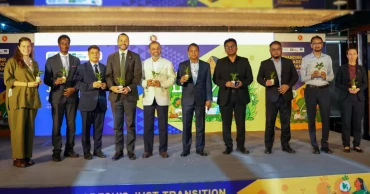
Bangladesh's Just Transition annex maps 69 activities, $1.85 billion investment envelope
Bangladesh's 'Just Transition' Chapter under its updated Nationally Determined Contributionzs (NDC 3.0) sets out 69 concrete, traceable activities across six sectors, backed by a combined $1.85 billion investment envelope, according to details presented Thursday at a national high-level dialogue held at a city hotel.
The dialogue, "Advancing Just Transition in Bangladesh," was led by the Department of Environment (DoE) under the Ministry of Environment, Forest and Climate Change (MoEFCC), with technical support from the International Labour Organization (ILO) and the South Asian Network on Economic Modeling (SANEM), funded by Sweden through the ILO–Sida Global Partnership.
Officials said the chapter was built on a cross-mapping of 14 national policy documents, including NDC 3.0, the National Adaptation Plan, the Bangladesh Delta Plan 2100, the 8th Five Year Plan and Perspective Plan 2041, identifying 258 aligned commitments that were distilled into 33 priority commitments.
These, in turn, anchor a consolidated action matrix of 69 activities spanning energy, transport, construction, agriculture, waste, and industrial processes and product use (IPPU), each with its own responsible institution, budget, timeframe and success measure.
Of the $1.85 billion envelope, $250.6 million represents direct cost covering training, grants and institutional strengthening, while $1,597.5 million reflects capital to be mobilised through commercial finance and development finance institutions such as IDCOL, rather than direct government spending.
The total envelope amounts to just 1.59 percent of the overall estimated cost of implementing NDC 3.0.
The chapter was shaped through six rounds of consultation between July and September, including a technical webinar, inter-ministerial tripartite sessions, sector-specific and thematic consultations, and two validation webinars, engaging close to 200 counterparts from ministries, employers, workers, the private sector, civil society, youth and academia.
The National Alliance for Just Transition Bangladesh (NAJTB), representing workers across 17 sectors, and the Bangladesh Employers' Federation (BEF) were among the key counterparts consulted.
On governance, presenters outlined a defined institutional network rather than a single lead ministry. The DoE and MoEFCC hold overall responsibility for the chapter, while a national-level Just Transition taskforce chaired by the Ministry of Labour and Employment (MoLE) serves as a dedicated channel for workers' and employers' organisations.
The NDC Advisory Committee, established in 2022, remains the central inter-ministerial coordination mechanism, with every ministry and agency appointing a Just Transition focal point.
Enterprise-level bipartite committees and sectoral collective bargaining are expected to carry the framework into workplace practice, with workers' organisations verifying that reported training and protections reach workers on the ground, and youth engaging through registered organisations with a seat in the coordination architecture.
Organisers said the costed, appraisal-ready annex gives ministries a concrete pipeline for approaching climate finance windows, with COP31 identified as a natural moment to present it to development partners.
2 days ago
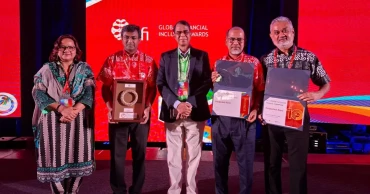
Bangladesh Bank awarded in two categories by global financial inclusion platform
Bangladesh Bank has won two international awards—the 'AFI Maya Declaration Commitment Award 2026' and the 'AFI Gender Inclusive Finance Champion Institution'—for its outstanding contributions to advancing financial inclusion and empowering women through institutional policies.
The central bank received the honors at the Alliance for Financial Inclusion (AFI) Global Policy Forum (GPF) held on September 3 in Port Moresby, Papua New Guinea.
Bangladesh Bank Deputy Governor Dr. Md. Habibur Rahman accepted both awards on behalf of the institution.
According to a press release issued on Thursday by Bangladesh Bank’s Department of Communications and Publications, the central bank achieved the 'AFI Maya Declaration Commitment Award 2026' after successfully meeting specific annual targets set for financial inclusion.
These targets were jointly pursued by relevant central bank departments, the Bangladesh Financial Intelligence Unit (BFIU), and the Microcredit Regulatory Authority (MRA) under the Maya Declaration framework. Notably, Bangladesh Bank won this same award in 2025 as well.
Additionally, Bangladesh Bank was named an 'AFI Gender Inclusive Finance Champion Institution' in recognition of its institutional commitments and innovative measures in furthering women's financial inclusion under the targets of the Denarau Action Plan.
AFI is a global network of financial policymakers and regulatory institutions. Currently, 89 institutions and regulatory bodies from 82 countries—including central banks, ministries of finance, and financial sector regulators—are members of AFI.
The annual GPF event recognizes members for exceptional contributions across various categories. This year's forum brought together over 700 delegates, including central bank governors, deputy governors, policymakers, and financial inclusion partners from around the world.
2 days ago