World
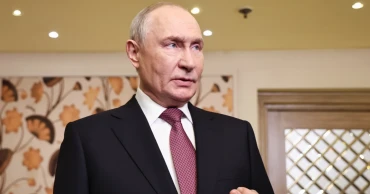
8 killed in Russian strikes on Ukraine as Putin warns Europe
Russian strikes killed eight civilians and wounded dozens in Ukraine on Saturday as President Vladimir Putin warned that deploying European troops would mean “a war with Russia.”
Two people were killed and one wounded in Zaporizhzhia, while one died and three were wounded in Kryvyi Rih, officials said. In Odesa, 35 people were wounded in a “massive attack,” regional head Oleh Kiper said. A residential high-rise was hit, destroying its upper floors. Three people were killed when drones struck cars in Kramatorsk, while two others died in an attack on a grocery store in Zhytomyr region.
Ukraine faces an intensifying Russian air campaign involving ballistic missiles and jet-powered drones, including attacks on its power grid ahead of winter.
President Volodymyr Zelenskyy said Ukrainian forces struck chemical facilities in Russia’s Samara and Perm regions. Russian officials did not immediately comment, while Astra reported drone attacks on plants there.
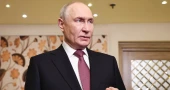
Putin, speaking at the BRICS summit in India, denied threatening Europe. Polish Prime Minister Donald Tusk warned of Russian provocations after attacks near Ukrainian border crossings with Moldova and Poland.
Zelenskyy said he would meet Putin at December’s G20 summit in Miami if both were invited. Putin adviser Yuri Ushakov said attendance had not been discussed. Kremlin spokesman Dmitry Peskov said Zelenskyy could meet Putin in Moscow.
Russian Foreign Minister Sergey Lavrov said Moscow remains ready for negotiations but would not suspend its “special military operation” during talks.
3 hours ago
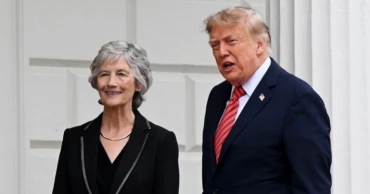
Ireland president tells Trump ‘normalisation of war, genocide’ unacceptable
Irish President Catherine Connolly met with U.S. President Donald Trump in Dublin on Saturday, emphasizing the Irish people's "strong commitment" to international relations, the United Nations and their pride in "Ireland’s contribution to UN peacekeeping since 1958".
In a statement released following her meeting with the U.S. president, Connolly said she "conveyed the strong view of the Irish people that the normalisation of war and genocide can never be accepted".
"As a country which has suffered famine, colonisation and the violence of the Troubles, but also the importance of the long and challenging road to peace, I emphasised the unique insight which Irish people can bring to the resolution of conflict," she said.
She told Trump that Ireland would "strongly support all those who have the strength to build a shared peace in all those parts of the world currently suffering from such horrific war and violence".
With inputs from Al Jazeera
4 hours ago
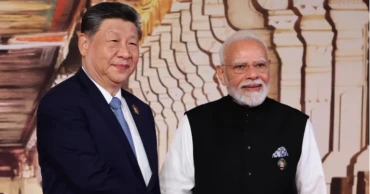
Modi, Xi meet on BRICS sidelines as India, China seek to reset ties
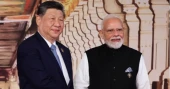
Indian Prime Minister Narendra Modi and Chinese President Xi Jinping met Saturday on the sidelines of the BRICS summit in New Delhi, marking the latest effort by the rival neighbors to repair relations damaged by a deadly border clash six years ago.
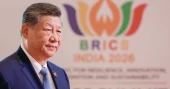
Xi said that China views its relationship with India from a "strategic and long-term perspective," calling on both nations to draw on each other's strengths, support one another and pursue common development. Urging "high-quality cooperation," Xi said China and India, as major members of the Global South, should promote a more multipolar world and contribute to global peace and stability.
BRICS world's most influential platform for emerging markets cooperation: Xi
Modi thanked Xi for China's cooperation in hosting the summit, noting that China will host the event next year. The leaders previously held talks in China last year when Modi attended a meeting of the Shanghai Cooperation Organization, a regional political, economic and security bloc founded by Beijing.
The summit marks Xi's first visit to India since 2019 and represents a cautious thaw six years after a 2020 military clash in the cold desert region of Ladakh left at least 20 Indian soldiers and four Chinese dead.
Although both nuclear-armed powers have taken steps to ease tensions, deep mistrust persists over unresolved border disputes, India's substantial trade deficit with China, restrictions on Chinese investment and technology, and competing Asian strategic interests. Additionally, India has significantly expanded military infrastructure along the disputed frontier, while Beijing has constructed roads and defensive positions on its side.
Xi's visit is expected to test whether recent progress can lead to broader diplomatic stabilization. Since their 1962 war, both economies have expanded substantially; however, China has far outpaced India and maintains a large trade surplus, fueling economic rivalry alongside territorial and strategic friction.
Seeking to leverage China's rising labor costs and Beijing's strained ties with the United States and Europe, India is positioning itself as an alternative base for foreign manufacturers. New Delhi also views China's multibillion-dollar Belt and Road Initiative with concern and remains strongly opposed to it. Conversely, India's growing strategic partnership with the U.S. has raised concern in Beijing, which views the alignment as an effort to counter China's rise.
7 hours ago
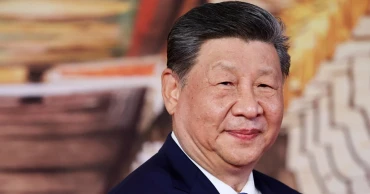
BRICS world's most influential platform for emerging markets cooperation: Xi
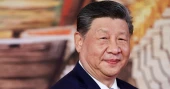
Chinese President Xi Jinping said here on Saturday that the BRICS cooperation mechanism has become the world's most influential platform for cooperation among emerging markets and developing countries.
When addressing the Session I of the 18th BRICS Summit in New Delhi, Xi noted that this year marks the 20th anniversary of BRICS cooperation, saying that over the past two decades, the BRICS cooperation mechanism has continued to grow and expand, and has demonstrated remarkable vitality and dynamism.
Xi said it has been 20 years of self-reliance and self-strengthening, adding that BRICS countries have actively explored development paths suited to their own national conditions, setting an example of self-strengthening through unity among emerging markets and developing countries.
This has also been 20 years of standing together through thick and thin, Xi noted.
BRICS countries, Xi said, have worked together to tackle challenges ranging from the global financial crisis, the COVID-19 pandemic to climate change.
The group has remained steadfast in safeguarding the common interests of the Global South, while providing the world with stability and positive momentum, he said.
Xi also hailed the past 20 years of BRICS cooperation as fruitful, saying that BRICS countries have undergone a historic expansion, established a comprehensive, multi-tiered framework for cooperation, and ushered in a new stage of high-quality development for greater BRICS cooperation.
Xi stressed that the world is undergoing accelerated transformation unseen in a century, the Global South is rapidly growing in strength, and the trend toward a multipolar world is unstoppable.
Meanwhile, countercurrents of unilateralism and power politics are surging, multilateralism and the international order are coming under strain, and deficits in peace, development, security and governance continue to widen, he added.
He said that BRICS countries should firmly stand on the right side of history, strive to be a pioneer of the times, steer the international order toward greater justice and equity, and work together to build a community with a shared future for humanity.
Xi called on BRICS to pioneer in advancing innovation-driven development. BRICS countries, he said, should firmly seize the initiative, strengthen cooperation in artificial intelligence, encourage open-source development, openness, cooperation and sharing, and push practical cooperation into new areas and to new heights.
BRICS countries are welcome to actively participate in the World Artificial Intelligence Cooperation Organization, he said.
China proposed an initiative to promote new industrialization through artificial intelligence among BRICS countries, and is willing to work with all parties to deliver more outcomes in research, development and application, and deepen cooperation in industrial and supply chains, he said.
Xi called on BRICS to be a pioneer in upholding peace and stability. BRICS countries should uphold a vision of common, comprehensive, cooperative and sustainable security, oppose the Cold War mentality and bloc confrontation, reject violations of other countries' sovereignty and interference in their internal affairs, and play a constructive role in resolving hotspot issues, making a distinctive BRICS contribution to finding solutions that address both symptoms and root causes, he said.
Noting that the situation in the Middle East remains complex and fluid, Xi said this war has inflicted serious losses on the people of all countries in the region, and it is against the common interests of the international community.
Xi said he has set out four propositions on safeguarding and promoting peace and stability in the Middle East, which are aimed at de-escalation, ending hostilities and promoting peace.
Xi urged relevant parties to keep to the direction of political settlement, and work for a permanent, comprehensive ceasefire.
China will work with fellow BRICS members to play a due role in bringing peace and tranquility to the Middle East, he said.
Xi called on BRICS to be a pioneer in facilitating mutual learning between civilizations. The countries, he said, should champion the common values of humanity and advocate exchanges and mutual learning among civilizations as well as harmonious coexistence. They should ensure the success of the BRICS forum on people-to-people and cultural exchanges, share experience in state governance, and build positive momentum for the steady development of relations between countries, Xi added.
Xi advocated efforts to deepen cooperation in culture, tourism and education, strengthen youth exchanges, and promote more frequent interactions and closer bonds among the peoples.
Xi called on BRICS to be a pioneer in reforming and improving global governance.
He urged the group to keep pace with the trend toward greater democracy in international relations, promote a more just and equitable global governance system, and uphold the authority of the United Nations.
Xi said BRICS should support a multilateral trading system centered on the World Trade Organization, and reject all forms of protectionist measures.
The grouping should lead global governance in emerging domains such as cyberspace, outer space and the deep sea, and amplify the voice of Global South countries, he added.
Over an extraordinary two-decade journey, solidarity and cooperation have remained the driving force behind the BRICS cause, Xi stressed.
Xi called on BRICS members to remain sincere and candid with one another, seek common ground while respecting differences, and respect each other's core concerns.
He also urged the group to deepen mutual understanding through communication and dialogue, properly handle differences, and ensure that BRICS cooperation continues to move forward steadily.
China, Xi said, will take over as the rotating chair of the BRICS and host the 19th summit next year.
The Chinese side stands ready to work with all parties to build consensus, create a better future, and embark on BRICS' third "golden decade," jointly opening up a bright future of prosperity and progress, he added.
At the summit, all parties spoke highly of the development achievements made by BRICS over the past 20 years, noting that the BRICS mechanism has broad representation and great potential for development.
In the face of escalating geopolitical conflicts and the rise of unilateralism, BRICS countries have a responsibility to speak up for the Global South, uphold multilateralism, support the central role of the United Nations, uphold the sovereign equality of all countries, abide by international law, oppose interference in the internal affairs of other countries, support free trade, and jointly address global challenges, they said.
All parties should uphold the BRICS spirit, deepen cooperation across various fields, enhance economic resilience, promote a more just and inclusive international order, and build a secure and prosperous multipolar world, they added.
All parties appreciated China's important contribution to the development and expansion of the BRICS mechanism and supported China, as next year's BRICS chair, in successfully hosting the 19th BRICS Summit, so as to jointly bring BRICS cooperation to a new level.
The leaders also adopted a joint declaration at the summit.
8 hours ago
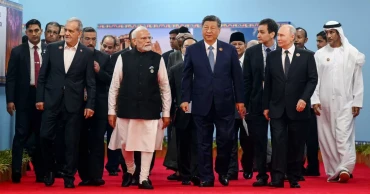
BRICS leaders concerned over rising Middle East tensions
The BRICS group of emerging economies on Saturday expressed concern over rising tensions in the Middle East and condemned the use of sanctions not authorized by the U.N., as the leaders met in New Delhi to strengthen their position in global affairs seen as dominated by the West.
The meeting, which included Iranian President Masoud Pezeshkian, voiced concern over “deliberate attacks” on civilian infrastructure and peaceful nuclear facilities under the U.N. atomic energy agency's safeguards, saying nuclear safety and security must be protected during armed conflicts. The statement was seen as indirect criticism of U.S. and Israeli strikes on Iranian nuclear facilities.
The leaders also took aim at unilateral sanctions not authorized by the U.N. Security Council. They did not name any countries, but Russia, one of the founding members of BRICS, has faced Western sanctions following its full-scale invasion of Ukraine in 2022.
“We call for the elimination of such unlawful measures, which undermine international law and the principles and purposes of the U.N. Charter,” the joint statement said.
Wars in Ukraine and the Middle East challenge BRICS unity
BRICS was founded in 2006 by Brazil, Russia, India and China, with South Africa joining in 2010. It has since expanded to 11 members, representing about half the world’s population and a significant share of global economic output. The group has increasingly called for greater representation for developing countries in global institutions.
It has sought to raise its profile by promoting alternatives to Western-dominated financial institutions and positioning itself as the voice of developing nations and emerging economies.
India is hosting this year's summit, attended by Russian President Vladimir Putin, Chinese President Xi Jinping, Pezeshkian and counterparts from the other eight BRICS members.
Concerns have grown that the Iran war, triggered by U.S.-Israeli strikes on Feb. 28, may expand as fighting escalated between Saudi Arabia and Yemen’s Houthi rebels. Wars in Ukraine and the Middle East, along with rising U.S.-China tensions, are also testing the bloc’s ability to find common ground among countries with competing geopolitical interests.
Modi stresses BRICS is not a counter to West
In his address, Modi sought to ease concerns that BRICS was intended to counter Western-led alliances.
“BRICS is not against anyone,” he said, adding that the bloc had reached a “coming of age” moment in which the Global South must evolve into a “rule-shaper” in global governance.
“It is time for us to translate our unity and consensus in BRICS into concrete outcomes,” he said.
Modi also proposed a BRICS seafarers’ network to strengthen the safety and welfare of maritime workers, particularly as disruptions to maritime trade from the war in Iran have heightened risks for mariners.
Russia and China seek to expand influence
China and Russia see BRICS as a way to reduce Western dominance, particularly that of the United States, while strengthening cooperation among developing economies.
Putin called for expanding the U.N. Security Council to give greater representation to Asia, Africa and Latin America, saying it would improve the body’s effectiveness, Russian state news agency Interfax reported Saturday.
Speaking at the summit, Putin said the shift toward a multipolar world was facing resistance from countries “accustomed to thinking in colonial categories,” accusing them of using tariffs, sanctions and “brute force” to contain rising competitors.
He said the tensions were undermining the international system but stressed that Russia still viewed the U.N. Charter as the foundation of international law.
Iran has also pushed for mechanisms that could reduce the bloc’s reliance on Western financial systems and shield members from economic pressure, as Tehran faces sweeping sanctions and a U.S. blockade.
“One of the most important steps is to expand the use of national currencies in trade among the members,” Pezeshkian told reporters on Friday.
China, meanwhile, is leveraging the grouping to deepen its influence within the bloc and position it as a counterweight to U.S. power.
Speaking at the summit, Xi said China will work with BRICS members in playing its “due role” to forge peace in the Middle East, according to Chinese state broadcaster CCTV.
BRICS countries should “serve as vanguards for maintaining peace and stability” and “oppose violations of other countries’ sovereignty,” Xi said.
India balances strategic partnerships
For India, the summit highlights its effort to maintain strategic ties with Russia and Iran while deepening relations with the U.S. and Europe. New Delhi has sought to balance its longstanding partnerships with Moscow and Tehran with efforts to expand economic, defense and technology ties with Washington and other Western nations.
India has maintained close ties with both Moscow and Tehran despite the war in Ukraine and tensions between Iran and the U.S., while calling for dialogue and diplomacy to resolve conflicts. Modi met Putin and Pezeshkian separately in New Delhi on Friday ahead of the summit.
India is also hoping the forum will help ease its longstanding strained ties with China. Modi and Xi are expected to hold talks later Saturday, a meeting that could help consolidate a diplomatic thaw between the two countries after border tensions escalated in 2020.
In May, BRICS foreign ministers failed to agree on a joint statement over the Iran war, forcing India to issue a chair’s summary instead.
8 hours ago
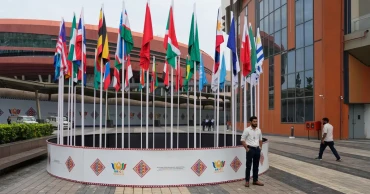
Wars in Ukraine and the Middle East challenge BRICS unity
BRICS was founded in 2006 by Brazil, Russia, India and China, with South Africa joining in 2010. It has since expanded to 11 members, representing about half the world’s population and a significant share of global economic output. The group has increasingly called for greater representation for developing countries in global institutions.
It has sought to raise its profile by promoting alternatives to Western-dominated financial institutions and positioning itself as the voice of developing nations and emerging economies.
India is hosting this year's summit, attended by Russian President Vladimir Putin, Chinese President Xi Jinping, Pezeshkian and counterparts from the other eight BRICS members.
Concerns have grown that the Iran war, triggered by U.S.-Israeli strikes on Feb. 28, may expand as fighting escalated between Saudi Arabia and Yemen’s Houthi rebels. Wars in Ukraine and the Middle East, along with rising U.S.-China tensions, are also testing the bloc’s ability to find common ground among countries with competing geopolitical interests.
8 hours ago
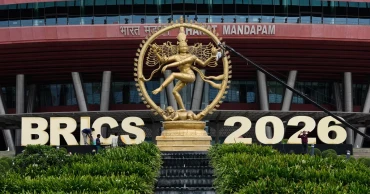
BRICS opens up new possibilities for more dynamic Global South
When the BRICS cooperation mechanism was formally launched in 2006, it opened a new chapter for cooperation among major emerging economies. Two decades on, BRICS has, through the ebbs and flows of the global economy, expanded through multiple rounds of enlargement and broadened the scope of its cooperation.
This evolution has ushered in a new era of greater BRICS cooperation, better reflecting the growing weight and aspirations of the Global South.
When BRICS leaders prepare to gather for this year's summit in New Delhi, India, the mechanism is playing a greater role in amplifying the collective voice of emerging economies, and expanding practical cooperation amid a changing international landscape beset by raging protectionism and economic fragmentation.
Its growing weight is reflected in its economic and demographic scale. BRICS countries now account for approximately 40 percent of global GDP at purchasing power parity and nearly half of the world's population. Data released by the UN Trade and Development in March showed that the intra-BRICS merchandise trade has expanded more than 13-fold since 2003, and exports reached 1.17 trillion U.S. dollars in 2024.
BRICS, however, is more than an economic force. Its growing significance lies in how countries with different development paths are pooling their strengths in resources, industry and technology to advance shared development.
A prominent area is financing. For many developing economies, access to affordable, long-term funding remains critical to turning development ambitions into reality. The New Development Bank (NDB), headquartered in Shanghai, has helped provide such an option by mobilizing resources for infrastructure and sustainable development projects. Figures released by the bank showed that by the end of the first quarter of 2026, the NDB had approved 42.9 billion dollars in financing for 140 projects.
Covering such areas as infrastructure, clean energy and digital transformation, these projects address the pressing development needs of Global South countries while echoing the priorities highlighted by the theme of the forthcoming BRICS Summit, "Building for Resilience, Innovation, Cooperation and Sustainability."
The ever-evolving BRICS cooperation is also helping developing countries gain new growth momentum. In recent years, BRICS cooperation has been expanding into areas like renewable energy, digital infrastructure, scientific and technological innovation.
A case in point is the BRICS Partnership on New Industrial Revolution Innovation Center in Xiamen, which was established in 2020 to provide a platform for cooperation in digitalization, advanced manufacturing and technological innovation.
These efforts point to the broader value of BRICS: it is not simply giving the Global South a stronger voice, but creating practical opportunities for countries to access financing, technology and cooperation suited to their development needs.
Such collaboration helps explain BRICS' growing appeal to countries seeking greater opportunities to participate and cooperate. As a founding member, China has contributed not only by building platforms for practical cooperation, but also by supporting greater openness and broader participation to promote high-quality cooperation within an expanded BRICS.
Some in the West portray BRICS as a rival bloc seeking to build a parallel order. Yet this claim bears little resemblance to reality. BRICS stands for openness, inclusiveness and mutual benefit, not confrontation or exclusion. That is fundamentally different from the exclusive blocs championed by some Western countries, and a key reason behind the growing vitality of BRICS.
Looking ahead, BRICS is poised to embark on its third "golden decade" after 20 years of growth and transformation. By rising up to the challenges of the times, BRICS countries can help shape a more equal and orderly multipolar world and a more universally beneficial and inclusive economic globalization, and, in doing so, write a new chapter of solidarity and cooperation across the Global South.
11 hours ago
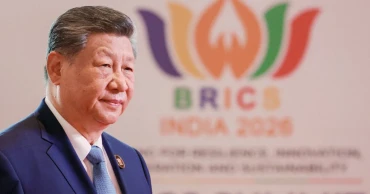
Xi warns against war in Middle East and Gulf region
Chinese President Xi Jinping said Saturday that as the situation in the Middle East and the Gulf region continues to evolve, the war there has caused serious losses to people across the region and does not serve the common interests of the international community.
He also urged BRICS to play pioneering role in maintaining peace and development.
Earlier in the day, Chinese President Xi Jinping arrived in New Delhi at the invitation of Indian Prime Minister Narendra Modi to attend the 18th BRICS Summit.
11 hours ago
Iraq faces fallout over Saudi pipeline attack
Iraq’s government was racing Saturday to contain the fallout after local Iran-backed militias were accused of attacking and shuttering a key Saudi pipeline. Iraq's government confirmed the attacks had originated from its territory, pledged to investigate and dismissed a military commander.
The country is under mounting pressure to prevent local militias from aiding other Iran proxy groups across the region. It's especially acute as the Iran-backed Houthi rebels make an advance across Yemen’s west coast in a major setback to the Saudi-backed coalition that risks escalating the war in the region.
The Iraqi government has set a Sept. 30 deadline for nonstate groups to disarm, but several of the most powerful militias have said they will not comply.
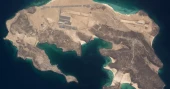
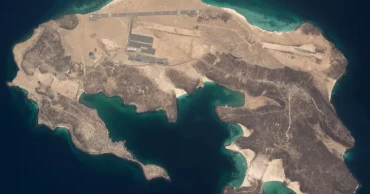
The Houthis on Friday seized an island in the Bab el-Mandeb Strait, a key shipping lane through which around 12% of global trade passes.
Their virtual control of the strait could send global oil prices — already inflated by the six-month Iran-U.S. war — spiraling. The strait has become a vital commercial lane for Saudi oil ever since the Iran war disrupted shipping in the Strait of Hormuz.
Iraq to investigate attack on Saudi pipeline
Iraqi authorities determined that attacks targeting the east-west Saudi pipeline were launched from a site in the country’s Maysan province on the borders with Iran, the government said in a statement early Saturday.
Prime Minister Ali al-Zaidi ordered an investigation into the province’s operations command and dismissed its commander, the Saturday statement said.
Saudi Arabia shut down the major, cross-country oil pipeline on Friday, saying it was a “precautionary measure” after the pipeline came under drone attack.
In a statement, the Saudi Foreign Ministry blamed the attacks on several drones that came from Iraq, but said the kingdom would not retaliate, to give the Iraqi government “an opportunity to take the necessary measures.”
Built in the 1980s, the East-West pipeline has played an important role in Saudi Arabia’s ability to export oil following the disruption of the Strait of Hormuz during the Iran war. By early June, Saudi Arabia had more than doubled oil exports from the Red Sea port at the pipeline’s end to more than 5 million barrels per day, according to the International Energy Agency.
Tehran-backed Iraqi militias have carried out strikes on U.S.-linked targets both inside and outside of Iraq since the U.S. and Israel attacked Iran on Feb. 28, and have coordinated with Yemen’s Houthi rebels to attack Saudi Arabia.
Iran closes border crossings with Iran
In a move possibly linked to the investigation, Iraq closed two key border crossings with Iran, Iraq’s state-run news agency reported Saturday.
The report said that Iraqi officials were at the border, investigating previous “violations and infractions” at the crossings.
Valiollah Hayati, the deputy governor of Iran’s southwestern Khuzestan province, named the closed crossings as Shalamcheh and Chazabeh. They are among the main official border crossings between Iran and Iraq.
Iranian state media said the measure would halt all passenger and commercial traffic through the two crossings until further notice.
Saudi Arabia and the United States bombed Iranian-backed militias in Iraq in July after blaming them for drone attacks on Saudi oil facilities that had been claimed by the Houthis. Regional officials told The Associated Press that the Houthis helped the Iraqi militias plan and execute the attacks.
The fighting threatens to reignite Yemen’s civil war
The escalating fighting threatens to end a fragile truce that had largely halted Yemen’s civil war since 2022. At stake are 40 million people in the Arab world’s poorest country. The conflict killed 150,000 and brought many others to the brink of famine.
The surge in fighting in the past week has sent over 46,000 people fleeing, the U.N. migration agency said Friday.
The Houthis have been at war with Yemen’s government since 2014, when the rebels seized much of northern and central Yemen and the capital, Sanaa. Saudi Arabia entered the war the following year on behalf of the government.
12 hours ago
BRICS leaders gather in India as wars, US tensions challenge bloc
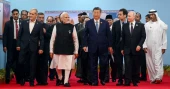
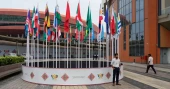
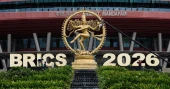
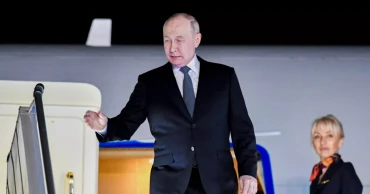
Leaders of the BRICS countries gathered in New Delhi on Saturday for a summit focused on trade, investment and major global conflicts, as the group seeks to strengthen its influence in international affairs and promote the interests of emerging and developing nations.
Indian Prime Minister Narendra Modi is hosting Russian President Vladimir Putin, Chinese President Xi Jinping, Iranian President Masoud Pezeshkian and leaders from the other eight BRICS member states.
The summit is taking place amid the ongoing wars in Ukraine and the Middle East, as well as growing tensions between the United States and China. The developments are testing the bloc's ability to reach consensus among members with different geopolitical interests and foreign policy positions.
Authorities have deployed thousands of police and paramilitary personnel across New Delhi, particularly around the summit venue. Traffic restrictions and diversions have also been introduced in several areas of the capital.
BRICS was established in 2006 by Brazil, Russia, India and China, while South Africa joined the group in 2010. The bloc has since expanded to 11 members, collectively representing about half of the world's population and a substantial portion of the global economy. It has increasingly demanded greater representation for developing countries in major international institutions.
The leaders are expected to address economic cooperation, investment, energy, food security, technology, supply chains and reforms to global institutions. Another major issue will be reducing dependence on the US dollar, with member states encouraging the use of national currencies for trade and payments and seeking alternatives to financial institutions dominated by Western countries.
For India, the summit provides an opportunity to demonstrate its strategy of maintaining strong relations with Russia and Iran while simultaneously strengthening ties with the United States and Europe.
New Delhi has sought to preserve its longstanding partnerships with Moscow and Tehran while expanding cooperation with Washington and other Western countries in areas including trade, defence and technology.
India has continued to maintain close relations with Russia and Iran despite the Ukraine war and tensions between Tehran and Washington. At the same time, it has repeatedly called for dialogue and diplomatic efforts to resolve international conflicts. Modi held separate meetings with Putin and Pezeshkian in New Delhi on Friday ahead of the summit.
The summit is also taking place as Iran, one of the expanded BRICS members, remains directly involved in the Middle East conflict. This has created another challenge for the group's unity as member countries hold differing views on the war and on their relationships with the United States.
A major challenge for India as the summit host will be securing a joint declaration from all participating leaders. Differences within the bloc were already visible in May, when BRICS foreign ministers failed to reach agreement on a joint statement concerning the Iran war.
17 hours ago