Liberation War of 1971
1971, 1990 and 2024 share same spirit of dignity, not conflict: Debapriya
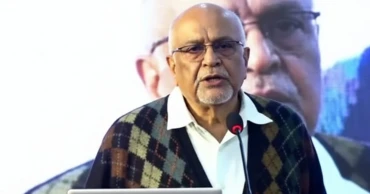
The Liberation War of 1971, the mass uprising against autocracy in 1990 and the student–people’s uprising of 2024 are all rooted in the same aspiration and are not contradictory to one another, said Debapriya Bhattacharya, Convener of the Citizen’s Platform, on Tuesday (January 13, 2026).
“According to the Proclamation of Independence of April 10, 1971, the goal was to establish a sovereign state ensuring equality, human dignity and social justice. The Liberation War was the principal means to build that state. The subsequent movements emerged from the same aspiration to realise those ideals,” Debapriya said.
He was speaking at a programme, titled ‘National Election 2026 and Citizens’ Expectations’, organised by the Citizen’s Platform in the city.
“The struggle for independence in 1971, the anti-autocracy movement in 1990 and the 2024 uprising were all driven by people’s quest for equality, dignity, justice and rights,” Debapriya said.
Read more: Politicians also face growing security concerns alongside citizens: Debapriya
After the Liberation War, he said people had hoped for dismantling the old structures and building a new Bangladesh, but that aspiration remained unfulfilled. “As a result, people united against autocracy in 1990.”
Referring to recent history, Debapriya said that over the past one and a half decades, freedom of expression has shrunk, power has become increasingly centralised, and corruption and misgovernance have intensified. “In protest against these developments and to establish a state based on equality and justice, students and ordinary people once again took to the streets, leading to the mass uprising of 2024.”
Emphasising that there is no conflict among the three historic moments, Debapriya said, “We believe there is no contradiction between 1971, 1990 and 2024. In all three periods, people stood up for their rights and dignity.”
He underscored that a credible national election is now the country’s most pressing need. “There are many questions, fears and uncertainties among people regarding the election and the post-election governance system.”
“The biggest question remains whether the election will be free and fair. Beyond that, another concern has now emerged— even if the election is fair, will it be meaningful at all, or will Bangladesh once again drift back to the old trajectory?” he added.
Debapriya said the Citizen’s Platform has reached out to people across all eight divisional cities, engaging them in dialogues to capture their hopes and aspirations. The platform has also conducted workshops at 15 universities to reflect young people’s perspectives on Bangladesh.
“Incorporating the views of marginalised and deprived communities along with collective national aspirations, we have prepared a citizens’ manifesto,” he said.
Calling it a non-flexible manifesto, Debapriya said the platform will not stop at drafting the document alone. “We have already launched a Reform Tracker. Through this, citizens will be able to monitor how much reform any government undertakes and to what extent citizens’ expectations are fulfilled.”
He said the manifesto was prepared through coordination with 150 national institutions and reflects the state vision of ordinary citizens and the younger generation.
Read more: Debapriya urges stronger govt, EC role to rebuild trust
“The manifesto is framed on the ethical foundation of the Proclamation of Independence of April 10, 1971. Our core objective is to amplify the voices of marginalised people, women and the disadvantaged—those whose voices do not usually reach the upper tiers of the state, namely the government and bureaucracy,” Debapriya said.
The Citizen’s Platform will prioritise programmes over rhetoric and work towards building an inclusive state to ensure the implementation of the manifesto, he said.
9 months ago

Role of Bangladeshi Women in the Liberation War of 1971
Generally, women have been treated as icons of beauty, softness, innocence, and magnificence. They are also considered passive, soft, and innocent. But it is hardly believed that they can be valiant fighters. Though it is almost difficult for the general women to join the front line of the war, they have great contributions to the Liberation war that occurred in 1971. They could do so because of their irrepressible thirst for the country’s freedom. Let’s find out how women participated in 1971’s liberation war. We will also highlight some great women freedom fighters of Bangladesh.
Contribution of Bangladeshi Women in 1971’s Independence war of Bangladesh
As a Guerilla
Cobra camp was set up in Kolkata where about 400 women freedom fighters were trained to participate in the frontal war. The Awami League woman leader Sajeda Chowdhury took care of the camp.
Read Achievements of Bangladesh in sports in 50 years since independence
Shirin Banu, Farquan Begum, Alamtaj Begum, Karuna Begum, Shobha Rani, Bithika Biswas, Meherunnesa, and many more women freedom fighters were trained there to fight for the country. But their stories remain unexplored; the nation is not aware of its contribution to the emergence of independent Bangladesh even today.
Run cultural activities to grow world sentiment
Women were in inspiration. They played a special role in maintaining the determination of the warriors during the liberation war. At that time, the country's most popular radio transistor was 'Shadhin Bangla Betar Kendra'. Most of the programs at this radio station were run by women. Its opening melody was 'Joy Bangla Banglar Joy'. When the song was played, everyone became stunned! Poet Rosie also recited different inspirational poems at Shadhin Bangla Betar Kendra.
Read Who was Sheikh Mujibur Rahman? A Short Biography of Bangabandhu, Father of the Nation
Women share information to get the world's opinion
Women freedom fighters contributed to develop public opinion for the liberation war inside and outside Bangladesh. Women both domestic and foreign, various women's organizations organized public meetings where they described the massacre of Pakistani forces to the people of the world.
4 years ago