Advisory Council

Fakhrul slams govt for creating situation to derail polls
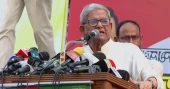
BNP Secretary General Mirza Fakhrul Islam Alamgir on Friday (7th November 2025) accused the interim government of creating a situation over the implementation of the July National Charter with the intention of delaying the national election.
Speaking before inaugurating the party’s rally marking National Revolution and Solidarity Day, Fakhrul said the people of Bangladesh will not accept anything other than holding the national election and the referendum on the July Charter on the same day in February next year.
“It is unfortunate that the interim government, which we fully supported, is now itself creating a situation so that the election may be disrupted,” Fakhrul said.
He alleged that some political parties pushing for a separate referendum are also conspiring to foil the national election.
Read more: Five BNP men wounded in Raozan gun attack
“If there is a referendum, it must be held on the same day as the election, and that election must take place in February 2026. Otherwise, the people of Bangladesh will not accept anything else,” the BNP leader warned.
Fakhrul said the BNP also extended full support to the interim government when it started working on reforms and preparing the National Charter.
“For almost a year, they worked on drafting the Charter. On October 17, in front of the Parliament, all political parties signed the document based on consensus reached through the National Consensus Commission,” he said.
The BNP leader, however, alleged that later, Consensus Commission Vice Chair Dr Ali Riaz, along with the Chief Adviser, came up with new proposals and recommendations that excluded several agreed points from the signed Charter.
He said it was unanimously agreed that if any party had objections, those objections or notes of dissent would be recorded in the final document. “But that was not done. We did not accept it and made our position clear in a press conference.”
Fakhrul said an adviser, at a recent press conference, stated that the advisory council had decided to give the political parties seven days to discuss among themselves and take a final decision on the implementation of the July Charter.
“Then what was the point of holding seven months of meetings under the National Consensus Commission, discussing every reform proposal and reaching an agreement to sign the National Charter? How could that happen? You spent so much money on this process, yet it brought no solution for the political parties.”
Read more: Prof Yunus orders security forces to hunt down attackers behind Ctg violence
Fakhrul also criticised Jamaat and some other political parties for putting pressure to hold the referendum before the election.
“Why should there be a referendum before the election? We have agreed to the referendum, but it must be held on the same day as the election. Holding two separate votes will cost a lot of money and disrupt the main national election,” he said.
Fakhrul said the spirit of November 7 is the spirit of democracy. “Our party, the BNP, was born through reform. Our leader, President Ziaur Rahman Bir Uttam, initiated that reform.”
He said BNP Acting Chairman Tarique Rahman has given the nation a new Magna Carta through his 31-point reform outline. “We will move forward with that goal. We will take part in the upcoming election and, Insha’Allah, by winning it, we will build a new Bangladesh.”
BNP Standing Committee Member Mirza Abbas also spoke at the event, accusing Bangladesh Jamaat-e-Islami of conspiring against the country’s independence and sovereignty.
He urged Jamaat to stop all conspiracies to delay the election and the restoration of democracy.
“Otherwise, BNP leaders and activists will resist them on the streets,” Abbas warned.
Later, thousands of leaders and workers of BNP’s Dhaka South and North units took out a massive rally in front of the party’s Nayapaltan central office on the occasion of National Revolution and Solidarity Day, commemorating the “civil-military uprising” of November 7, 1975.
The rally, which began around 4pm, ended at the Sonargaon Hotel intersection after parading through Shantinagar, Malibagh, Mouchak, Moghbazar and Bangla Motor.
Carrying portraits and posters of BNP founder Ziaur Rahman, Chairperson Khaleda Zia and Acting Chairman Tarique Rahman, participants waved the party’s flags and the ‘sheaf of paddy’, its election symbol.
Read more: BNP’s Mosharraf calls on people to unite for fair Feb election
10 months ago
Munshiganj contingent of Advisory Council joins district-level consultation on LDC graduation
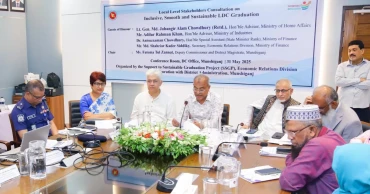
Adviser to the Ministry of Home Affairs, Lt. Gen. (Retd.) Md. Jahangir Alam Chowdhury, on Saturday emphasized the need for Bangladesh’s agriculture sector to become more harmonised with global best practices, in order to effectively tackle the challenges of the country’s post-graduation from Least Developed Country (LDC) status.
He made the remarks while speaking at a workshop titled “Local Level Stakeholders Consultation on Inclusive, Smooth and Sustainable LDC Graduation”, held at the Deputy Commissioner’s office in Munshiganj.
CA Prof Yunus seeks quick, coordinated actions for LDC graduation
The event was organized by the Support to Sustainable Graduation Project (SSGP) under the Economic Relations Division (ERD), in collaboration with the Munshiganj district administration.
“Good governance must be prioritized to prepare the country for the post-graduation era,” said Chowdhury, a son of Munshiganj who also oversees the Ministry of Agriculture.
Industries Adviser Adilur Rahman Khan, who also hails from the district, also attended the event and in his address noted that Munshiganj holds strong potential to become a significant hub for small and medium enterprises (SMEs).
Dr. Anisuzzaman Chowdhury, Special Assistant to the Ministry of Finance, drew attention to the development trajectories of East and Southeast Asian nations and called for greater national unity and solidarity to achieve Bangladesh’s long-term development goals.
Speaking at the event, ERD Secretary Md. Shahriar Kader Siddiky emphasized the critical role of the private sector, alongside the government, in navigating the transition from LDC status. He also proposed the establishment of a biotechnology village in Munshiganj, considering its potential.
Chairing the session, Munshiganj Deputy Commissioner Fatema Tul Jannat expressed hope that insights from the consultation would contribute meaningfully to national strategies related to LDC graduation.
Earlier, A. H. M. Jahangir, Additional Secretary of ERD and Project Director of SSGP, delivered the welcome remarks. He highlighted the importance of engaging local private sector stakeholders—particularly those in export-oriented industries—on the prospects and challenges of LDC graduation.
Speakers at the event underlined the vast potential for agro-processing and tourism industries in Munshiganj, calling for improvements in infrastructure, transportation, energy supply, and youth skills development to fully harness these opportunities.
Bangladesh met all three criteria for graduation from LDC status in the United Nations Committee for Development Policy’s (CDP) triennial reviews in 2018 and 2021. The country is on track to officially graduate from the LDC category by 2026, following a preparatory period of five years.
To ensure a smooth and sustainable transition, the government has formulated a Smooth Transition Strategy (STS) with input from various stakeholders. The SSGP is playing a key role in identifying the impacts of graduation, supporting capacity-building for ministries, and promoting public awareness through research and publications.
Govt urged to move to defer the country's graduation from LDC as it lacks readiness
As part of these efforts, ERD and SSGP are conducting local-level workshops to sensitize grassroots stakeholders about the LDC graduation process and engage them in shaping a sustainable post-graduation future.
The Munshiganj workshop brought together officials from ERD and SSGP, representatives of the district administration, private sector, and civil society organizations.
1 year ago
Council of Advisers adopts condolence motion for Adviser Hassan Ariff
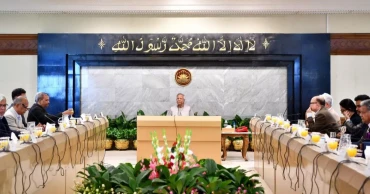
The Council of Advisers on Sunday formally adopted a condolence motion on the death of Civil Aviation, Tourism and Land Adviser AF Hassan Ariff, recalling his contributions and paying deep respect to him.
The condolence motion was adopted at a special meeting of the Council of Advisers held at the Chief Adviser's Office with CA Dr Muhammad Yunus in the chair.
Forest, Environment and Climate Change Adviser Syeda Rizwana Hasan placed the condolence motion proposal in the meeting which was unanimously adopted.
Adviser AF Hassan Ariff passes away
Hassan Ariff will be buried at the Mirpur intellectual graveyard at 10:30 am on Monday next to the grave of Bir Shreshtha Sipahi Hamidur Rahman.
At the beginning of the meeting, one-minute silence was observed paying respect to Hassan Ariff.
Chief Adviser Prof Muhammad Yunus and other advisors paid tributes to Hassan Ariff.
"Today, I remember many things that keep coming to my mind. He kept reminding me that we belong to the same age. He had a simple approach like a child. He appeared to solve any problem that arose, wherever he saw any conflict. This wonderful man has left us," Prof Yunus said.
Finance and Planning Adviser Dr Salehuddin Ahmed said Hassan Ariff was a rare personality with his always smiling face.
Reminiscing about his past working life, Jute Textiles and Shipping Adviser M Sakhawat Hossain said he is personally deeply saddened by the death of Hassan Ariff.
Adviser to the Ministry of Social Welfare and Women and Children Sharmeen Murshid said a beautiful relationship was developed with him after coming to work together here in the Council of Advisers. "He was an inspiration for us.
Journalist Mahmodul Hoque no more
Fisheries and Livestock Adviser Farida Akhtar said they miss Hassan Ariff Arif today in the Council of Advisers' meeting. "Without him, we will face irreparable loss."
Housing and Public Works Adviser Adilur Rahman Khan described his experience working with Hassan Ariff Arif as a lawyer and said that he was always vocal in protecting human rights.
Adilur Rahman said Hassan Ariff also worked as the founding vice-president of the human rights organisation Odhikar.
Law Adviser Asif Nazrul said that Hassan Ariff was a dedicated and hardworking person who used to examine all the documents thoroughly.
Foreign Affairs Adviser Md Touhid Hossain said that Hassan Ariff never took any work lightly.
Home Affairs and Agriculture Adviser Jahangir Alam Chowdhury said Hassan Ariff was an amiable person that any problem could be solved by discussing with him.
Energy and Road Transport Adviser M Fawzul Kabir Khan said there is a lot of division in the society and the number of people who can bridge this division is gradually decreasing. "He was accepted by all quarters."
Recalling Hassan Ariff’s role during the signing of the Chittagong Hill Tracts Peace Accord in 1997, Adviser on Chittagong Hill Tracts Affairs Supradeep Chakma said he (Ariff) used to think a lot about the people of the CHT.
Local Government and Sports Adviser Asif Mahmud Sajeeb Bhuiyan said, "I got to know Hassan Ariff when I became part of the Council of Advisers, and I always found him by my side like a teacher."
Information Adviser Nahid Islam said while working with Adviser Ariff, he never felt the difference in terms of age gap as he used to mix with everyone sincerely.
Food Adviser Ali Imam Majumder said he saw Adviser Ariff working sincerely in organizing a participatory election in 2008. "This time too, he worked with utmost dedication."
Cabinet Secretary, Civil Aviation Secretary, and Land Secretary also spoke at the meeting.
1 year ago

Govt okays 11-day Eid-ul-Fitr, Eid-ul-Azha holidays, 2-day for Durga Puja
The Council of Advisers on Thursday approved the proposed list of 26 holidays including 5-day holiday for Eid-ul-Fitr, 6-day for Eid-ul-Azha and two-day for Durga Puja for 2025 calendar year.
The approval came from a meeting of the Council of Advisers chaired by Chief Adviser Dr Muhammad Yunus at his office.
The holidays included 12 general holidays and 14 holidays by the executive order. Nine holidays would coincide weekends (Fridays and Saturdays).
Durga Puja holiday: Banks to close nationwide on Oct 10
There will be 12 general holidays including five weekly holidays and holidays for festivals of different religions.
Besides, there will be 14 holidays by the executive orders which include four days of weekly holidays for Pahela Baishakh and other important holidays on religious occasions.
Meanwhile, the indigenous people will get a three-day holiday on the occasion of Baisabi.
1 year ago

Advisory Council approves draft 'Export Policy 2024-27'
The Advisory Council approved the export policy for 2024-27 on Thursday, setting a target to achieve merchandise exports worth $110 billion by the end of the 2026-27 fiscal year.
According to an official release from the Cabinet Division, the new export policy includes several new products, such as vegetables and handicrafts, designated as thrust products.
Dyeing, printing, finishing, spinning, and fabric manufacturing units have also been categorised as special development sectors with the highest priority.
The government will also provide special assistance to sectors like pharmaceuticals and medical equipment under this policy. The new policy updates the lists of banned export products and those that can be exported under specific conditions.
The government has followed the rules and regulations of the World Trade Organisation (WTO) in making the new export policy, according to the statement.
In the new policy, specific policies are recommended for engaging women and small entrepreneurs in exports.
Besides, the export policy now includes the composition and terms of reference for the National Committee on Exports, the Monitoring and Evaluation Committee and the Technical Committee on Exports.
1 year ago

Draft ordinance for repealing security for family of Father of the Nation approved
The Advisory Council meeting on Thursday gave final approval to the draft of 'Security of Family Members of the Father of the Nation (Repeal) Ordinance, 2024', subject to vetting by the Legislative and Parliamentary Affairs Department.
Interim Government Chief Adviser Professor Muhammad Yunus chaired the meeting at state guesthouse Jamuna.
“Our government is an outcome of anti-discrimination movement. It (the security ordinance) was seen as discriminatory,” Adviser on Environment, Forest, and Climate Change Syeda Rizwana Hasan told reporters after the meeting.
The Public Security Division of the Ministry of Home Affairs initiated the issue as they feel there is “no necessity” of such special security.
As per the decision of the previous government, the 'Father of the Nation Security of Family Members Act, 2009' (Act No. 63 of 2009) was enacted and promulgated. Later, a gazette was issued to provide special security and facilities as per the Act.
The law was enacted only to provide state privileges to members of a family which is a clear discrimination, said the Advisory Council.
The current interim government is committed to eradicating all discrimination after the anti-discrimination student uprising, according to the press wing of the Chief Adviser.
It is necessary to take immediate action and issue an ordinance to repeal this Act, the Council viewed.
The family members of Father of the Nation Bangabandhu Sheikh Mujibur Rahman were getting foolproof state security everywhere in the country, including their residences and free utility services.
Meanwhile, the Advisory Council in its meeting also gave final approval to the draft of 'Special Security Force (Amendment) Ordinance, 2024'.
The 'Special Security Force Act, 2021' was formulated to provide security to the President, Prime Minister of the People's Republic of Bangladesh, family members of Father of the Nation Bangabandhu Sheikh Mujibur Rahman.
In view of the popular uprising of the students, an interim government was formed on August 8, 2024, consisting of the Chief Adviser and other advisers.
In such a changing situation, it is necessary to ensure the security of the Chief Adviser under the 'Special Security Force Act, 2021'.
It was also necessary to cancel some of the provisions of the said law with the addition of the security provision of the Chief Adviser to the Interim Government of the People's Republic of Bangladesh. 'Special Security Force Amendment Ordinance 2024' was unanimously approved in the advisory council meeting.
2 years ago

Newly-elected AL committees, advisory council pay tributes to Bangabandhu
The newly-elected Awami League National Committee, Central Working Committee and Advisory Council on Saturday paid tributes to Father of the Nation Bangabandhu Sheikh Mujibur Rahman on Saturday.
Led by party President and Prime Minister Sheikh Hasina they placed a wreath on the Mausoleum of the great leader at Tungipara in Gopalganj.
Read more: New AL central committee pays tribute to Bangabandhu
During the time, the leaders offered Fateha and joined a munajat seeking eternal peace of the departed souls of Father of the Nation and other martyrs of August 15, 1975 carnage.
Prayers were also offered seeking continued peace, progress and prosperity of the country and the nation.
Sheikh Hasina was elected President of Bangladesh Awami League for the 10th consecutive term, while Obaidul Quader was re-elected as general secretary for the third time in the 22nd National Council held December 24.
Read more: PM pays homage to Bangabandhu at Tungipara
3 years ago
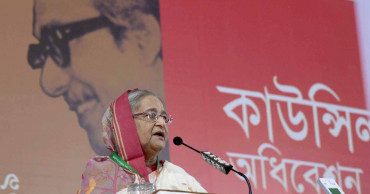
A well-organised party a great strength for govt: PM
Prime Minister Sheikh Hasina on Friday said a government having a well-organised party behind it can develop a country fast.
"A government can work successfully when there’ll be a well-organised party behind it…a well-organised party is a great strength for a government…this strength works most in developing a country, and I feel that," she said.
The Prime Minister made the remarks in her introductory speech at the first joint meeting of the newly-formed Awami League Central Working Committee and Advisory Council at its Bangabandhu Avenue central office.
Sheikh Hasina dedicated this first meeting to late AL general secretary Syed Ashraful Islam as today is his first death anniversary.
On January 3, 2019, Syed Ashraf, also the then Public Administration Minister, died at the age of 68 while undergoing treatment at a hospital in Bangkok. He had been suffering from lung cancer.
Hasina said she always put highest importance to her party and instructed that different district, upazila, union and ward-level AL units which are yet to hold their councils have to do that quickly for having a stronger party across the country. "We’ve to build the entire party in a stronger way."
She also put emphasis on holding the councils of various associate organisations of Awami League.
Sheikh Hasina, also the AL chief, said those who came to power after the assassination of Father of the Nation Bangabandhu Sheikh Mujibur Rahman in 1975 never believed in the liberation of the country. "That’s why they had tried hard to make the country a failed state and that was their main intention."
On the contrary, she said, the aim of Awami League is to prove meaningful the country’s hard-earned independence that comes after the struggle of 24 years under the leadership of Bangabandhu and that must not go in vain.
Hasina also said the killing of Bangabandhu along other AL leaders was to keep AL away from power. "They had wanted to make it sure that AL can never come to power."
Terming 2020 a very important year for Bangladesh, the Prime Minister said this year the country will celebrate ‘Mujib Borsho’.
"With a new spirit, we’ll make the independence that was given by the Father of the Nation more meaningful, we’ll make Bangladesh a developed country so that people can roam around the world keeping their heads high, and that’s our promise," she said.
Briefly describing conspiracies and propaganda against Awami League after 1975, the Prime Minister said the conspirators had often said that AL leaders are not smart, modern and educated ones.
"Those who had come to power claiming themselves as smart got indulged in looting, money laundering and corruption. Their smartness was to make money for themselves," she said.
Hasina said that AL has proved that only this party can develop the country and make it a prosperous one and advance it.
After returning to power, the Prime Minister said she now can see that Awami League gained the trust and confidence of people in the last 11 years. "The people of Bangladesh know that only AL can ensure the development of the country."
She said Awami League grassroots leaders and activists always took the right decisions and devoted themselves to the organisation sacrificing their lives.
"Today, AL is a strong political party in Bangladesh. Since its establishment in 1949, it has been working for people and we’ve to upholding this tradition," she said.
6 years ago