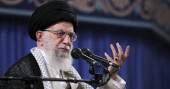
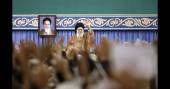
Iran's Supreme Leader
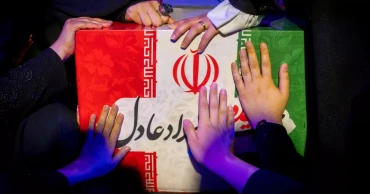
What to know about the funeral and burial of Iran's Supreme Leader Ayatollah Ali Khamenei
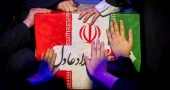
Iran is preparing for a dayslong funeral and burial ceremony for its late Supreme Leader Ayatollah Ali Khamenei, months after he was killed during the war involving Iran, the United States and Israel.
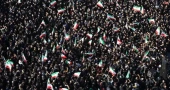
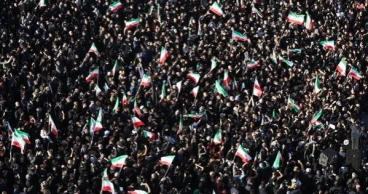
The ceremonies, beginning Saturday in Tehran, are expected to draw large crowds as authorities seek to demonstrate public support for the country's leadership. Khamenei, who led Iran for nearly 40 years, was killed on Feb. 28 after the United States and Israel jointly launched military strikes. His funeral was postponed because of the ongoing conflict.
The event is seen as a major test for Iran's leadership following months of unrest and a nationwide crackdown on anti-government protests.
Officials are expected to encourage government workers, supporters and paramilitary groups to participate in the funeral processions. However, large crowds also raise concerns about possible stampedes, similar to deadly incidents during previous state funerals in Iran.
The ceremonies will also take place during a fragile ceasefire and an interim agreement between Iran and the United States, which has reduced tensions enough for senior Iranian officials to appear publicly.
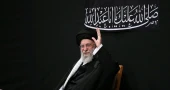
It remains unclear whether Iran's new Supreme Leader, Ayatollah Mojtaba Khamenei, the late leader's son, will attend the ceremonies. He is believed to have been injured in the attack that killed his father and has not appeared in public since.
Khamenei's body will lie in state at Tehran's Grand Mosalla on Saturday and Sunday. On Monday, it will be carried through the streets of Tehran before being taken to the holy city of Qom, about 120 kilometers south of the capital, where ceremonies will continue on Tuesday.
On Wednesday, the body will be taken to Karbala in neighboring Iraq, home to the shrine of Imam Hussein, an important religious site for Shiite Muslims. The same day also marks the anniversary of the nationwide protests against Khamenei's rule, during which thousands of people were reportedly killed in a security crackdown.
The final stop will be Mashhad, Iran's second-largest city, where Khamenei will be buried at the Imam Reza shrine.
The shrine, dedicated to Imam Reza, the eighth imam in Shiite Islam, is one of the religion's holiest sites and attracts millions of pilgrims every year. Several prominent Shiite clerics, including former Iranian President Ebrahim Raisi, who died in a helicopter crash in 2024, are also buried there.
Authorities are taking precautions to avoid a repeat of deadly crowd crushes seen at previous high-profile funerals.
During the funeral of Ayatollah Ruhollah Khomeini, founder of the Islamic Republic, in 1989, millions gathered in Tehran. The crowd overwhelmed security, causing Khomeini's coffin to fall into the crowd. Reports at the time said at least eight people were killed and around 11,000 were injured.
A similar tragedy occurred during the funeral of Revolutionary Guard General Qassem Soleimani in 2020, when a stampede killed at least 56 people and injured more than 2,000.
Meanwhile, efforts to reach a permanent agreement to end the Iran war continue. An interim deal reached in June opened a 60-day period for negotiations covering Iran's nuclear programme and the future of the Strait of Hormuz.
Technical-level talks began in Qatar this week, but progress has been slowed by major differences between the two sides and renewed exchanges of fire involving Iran and the United States over the strategic waterway.
3 months ago
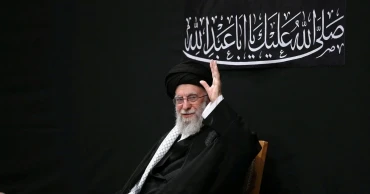
Dhaka saddened over assassination of Iran's Supreme Leader
Expressing deep sorrow over the assassination of Iran’s Supreme Leader Ayatollah Ali Khamenei in a targeted attack, Bangladesh on Monday said ensuring the safety and security of more than six million Bangladeshis living in the Middle East remains its top priority.
"Our embassies in the countries concerned have been asked to issue appropriate advisories for our nationals to remain vigilant and strictly follow the guidance issued by the respective host governments," said the Ministry of Foreign Affairs.
PM consults experts to overhaul Dhaka's traffic system
Foreign Minister Dr Khalilur Rahman sat in a meeting in the afternoon to discuss the situation in the Middle East as Bangladesh continues to be 'deeply concerned' at the safety and security of Bangladeshi nationals, a senior official told UNB.
State Minister for Foreign Affairs Shama Obaed, Foreign Secretary Asad Alam Siam and representatives from the relevant Ministries are attending the meeting.
The Foreign Minister is scheduled to brief the media at 4:30pm today.
Meanwhile, the MoFA in a statement said the government is "saddened to learn" that Iran's Supreme Leader Ayatollah Ali Khamenei was assassinated in a targeted attack which is a violation of international law and norms.
Bangladesh extended heartfelt condolences to the brotherly people of Iran.
"Bangladesh believes that conflict brings no solution and only dialogue, mutual respect and adherence to the international law can resolve disputes," MoFA said
The government of the People's Republic of Bangladesh is "deeply saddened" to inform that two Bangladeshi nationals have lost their lives and seven others have sustained injuries due to missile and drone attacks in different parts of the Middle East.
In the United Arab Emirates, Saleh Ahmed, a Bangladeshi national from Baralekha, Sylhet, tragically lost his life in Ajman after being struck by debris resulting from an aerial attack on a civilian installation.
The Embassy of Bangladesh in the United Arab Emirates is in close contact with the local authorities regarding the matter and is extending necessary assistance to repatriate the mortal remains once commercial flights resume.
It has been reported that one Bangladeshi national has been killed and three more have been injured in Bahrain.
Bangladesh Mission in Manama is in touch with the local authorities regarding the incident.
In the State of Kuwait, four Bangladeshi nationals, Aminul Islam from Nabinagar, Brahmanbaria; Rabiul Islam from Sathia, Pabna; Masudur Rahman from Begumganj, Noakhali; and Dulal Miah from Chandina, Cumilla, sustained injuries following a drone attack in the vicinity of the civilian airport.
They have received necessary medical treatment and are currently reported to be in stable condition.
The Embassy of Bangladesh in Kuwait remains in regular contact with them and the Ambassador personally visited them at the hospital.
Separately, the Bangladesh Shipping Corporation vessel Banglar Joyjatra is currently stranded at Jebel Ali Port in the United Arab Emirates.
The Embassy is maintaining close communication with the vessel's captain. All crew members are reported to be safe.
The government of Bangladesh reiterates its deep concern over the escalating situation in the Middle East and continues to monitor developments closely.
7 months ago
Iran to pick next supreme leader in ‘one or two days’, foreign minister says
Iran's foreign minister says a new supreme leader will be chosen in 'one or two days.'
Iran's president Masoud Pezeshkian says new leadership council 'has begun its work' after killing of supreme leader.
The death of Supreme Leader Ayatollah Ali Khamenei after almost 37 years in power raises paramount questions about Iran's future.
Khamenei’s death: Who will be Iran’s next supreme leader?
The contours of a complex succession process began to take shape the morning after Khamenei's killing in an airstrike campaign by the United States and Israel.
7 months ago
Khamenei’s death: Who will be Iran’s next supreme leader?
The death of Iran's Supreme Leader Ayatollah Ali Khamenei after almost 37 years in power raises paramount questions about the country's future. The contours of a complex succession process began to take shape the morning after Khamenei's assassination.
Here is what to know:
A temporary leadership council assumes duties
As outlined in its constitution, Iran on Sunday formed a council to assume leadership duties and govern the country.
The council is made up of Iran’s sitting president, the head of the country’s judiciary and a member of the Guardian Council chosen by Iran’s Expediency Council, which advises the supreme leader and settles disputes with parliament.
Iran’s reformist President Masoud Pezeshkian and hard-line judiciary chief Gholamhossein Mohseni Ejei are its members who will step in and “temporarily assume all the duties of leadership.”
A panel of clerics selects a new supreme leader
Though the leadership council will govern in the interim, an 88-member panel called the Assembly of Experts “must, as soon as possible” pick a new supreme leader under Iranian law.
The panel consists entirely of Shiite clerics who are popularly elected every eight years and whose candidacies are approved by the Guardian Council, Iran’s constitutional watchdog. That body is known for disqualifying candidates in various elections in Iran and the Assembly of Experts is no different. The Guardian Council barred former Iranian President Hassan Rouhani, a relative moderate whose administration struck the 2015 nuclear deal with world powers, from election for the Assembly of Experts in March 2024.
Khamenei's son could be a possible contender
Clerical deliberations about succession and machinations over it take place far from the public eye, making it hard to gauge who may be a top contender.
Previously, it was thought Khamenei's protégé, hard-line President Ebrahim Raisi, may try to take the mantle. However, he was killed in a May 2024 helicopter crash. That has left one of Khamenei's sons, Mojtaba, a 56-year-old Shiite cleric, as a potential candidate, though he has never held government office. But a father-to-son transfer in the case of a supreme leader could spark anger, not only among Iranians already critical of clerical rule, but also among supporters of the system. Some may see it as un-Islamic and in line with creating a new, religious dynasty after the 1979 collapse of the U.S.-backed Shah Mohammad Reza Pahlavi's government.
A transition like this has happened only once before
There has been only one other transfer of power in the office of supreme leader of Iran, the paramount decision-maker since the country's 1979 Islamic Revolution.
In 1989, Grand Ayatollah Ruhollah Khomeini died at age 86 after being the figurehead of the revolution and leading Iran through its bloody eight-year war with Iraq. This transition now comes after Israel launched a 12-day war against Iran in June 2025 as well.
The vast powers of a supreme leader
The supreme leader is at the heart of Iran’s complex power-sharing Shiite theocracy and has final say over all matters of state.
He also serves as the commander-in-chief of the country's military and the powerful Revolutionary Guard, a paramilitary force that the United States designated a terrorist organization in 2019 and which Khamenei empowered during his rule. The Guard, which has led the self-described “Axis of Resistance,” a series of militant groups and allies across the Middle East meant to counter the U.S. and Israel, also has extensive wealth and holdings in Iran.
7 months ago
.jpg)
COVID-19: Iran's top leader urges full adherence to health guidelines
Iran's Supreme Leader Ayatollah Ali Khamenei on Sunday called on the people to fully adhere to health guidelines amid the resurgence of COVID-19 in most parts of the country.
6 years ago
.jpg)
Khamenei: Mass Ramadan events in Iran may stop over virus
Iran's supreme leader suggested Thursday that mass gatherings in the Islamic Republic may be barred through the holy Muslim fasting month Ramadan amid the coronavirus pandemic.
6 years ago
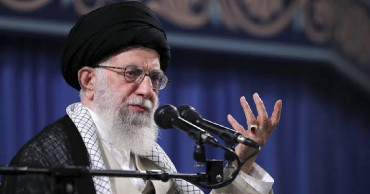
Iran's top leader urges nations' active participation in parliamentary election
Iran's Supreme Leader Ayatollah Ali Khamenei on Wednesday urged the Iranians to actively participate in the upcoming parliamentary elections, official IRNA news agency reported.
6 years ago
Iran can call on powerful friends if conflict engulfs region
If Iran decides to follow through on its vow of harsh retaliation for the killing of its top general, it can call upon heavily armed allies across the Middle East that are within easy striking distance of U.S. forces and American allies.
6 years ago