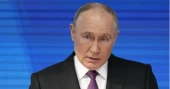
Russian President Vladimir Putin
Putin hosts Southeast Asian leaders, pushes for stronger trade ties
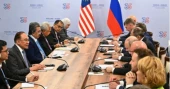
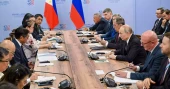
Russian President Vladimir Putin on Wednesday hosted leaders of the Association of Southeast Asian Nations (ASEAN) in a bid to strengthen economic and political ties with the regional bloc.
The two-day meeting is taking place in Kazan and is focused on expanding Russia’s “strategic partnership” with ASEAN members, which include Brunei, Cambodia, Indonesia, Laos, Malaysia, Myanmar, the Philippines, Singapore, Thailand, East Timor and Vietnam, according to Kremlin foreign policy adviser Yuri Ushakov.
Ushakov said ASEAN has long maintained relations with Russia as a “dialogue partner” and has engaged in annual high-level meetings. This year’s summit marks 35 years of Russia-ASEAN relations.
In a message to a business forum held alongside the summit, Putin said the gathering would help create “new opportunities” for expanding trade, investment and industrial cooperation, while also deepening business-to-business contacts.
The Kremlin aide said discussions would also cover global and regional issues, as well as efforts to further develop Russia-ASEAN relations. He added that participants were expected to reaffirm support for a “just and democratic multipolar world order” based on international law and the UN Charter.
Ushakov described Russia-ASEAN engagement as “fruitful, equal and constructive.”
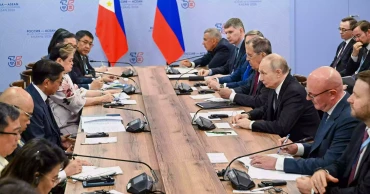
Putin is also holding bilateral meetings with several leaders attending the summit, which he is co-chairing with Philippine President Ferdinand Marcos Jr., whose country currently holds the rotating ASEAN chairmanship.
During a meeting with Marcos, Putin said bilateral cooperation between the two countries was based on “good traditions, mutual respect and consideration of each other’s legitimate interests.” Marcos, in turn, thanked Putin for hosting the summit in Kazan and invited him to the ASEAN summit in Manila in November.
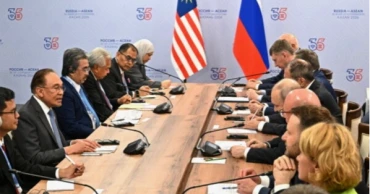
Putin also met Brunei’s Sultan Hassanal Bolkiah and Malaysian Prime Minister Anwar Ibrahim on the sidelines of the event.
Speaking at a reception for delegation heads, Putin said Russia and ASEAN countries jointly support a “fair world order” based on sovereign equality and non-interference in internal affairs.
“All our states follow their own models of development and don’t impose their views on anyone. And this is, indeed, our strength,” he said, adding that Russia was ready to deepen cooperation for the “security, well-being and prosperity” of the region.
Separately, Putin held talks with Turkish Foreign Minister Hakan Fidan, who had also met Russian Foreign Minister Sergey Lavrov a day earlier in Moscow. Putin described Russia-Turkey relations as steadily developing and “truly friendly.”
ASEAN members maintain diverse global alignments, with some closer to the United States and others heavily engaged with China and Russia. Several countries in the bloc, including the Philippines, Indonesia, Thailand and Vietnam, have imported Russian crude oil or shown interest in doing so amid global energy price volatility linked to the war in Iran.
3 months ago
Putin hosts ASEAN leaders in bid to deepen trade and strategic ties
Russian President Vladimir Putin on Wednesday hosted leaders of the Association of Southeast Asian Nations (ASEAN) in Kazan, seeking to strengthen economic, trade and strategic cooperation with the regional bloc amid Moscow’s efforts to expand its partnerships in Asia.
The two-day summit, marking the 35th anniversary of Russia-ASEAN relations, is focused on enhancing what Russian officials describe as a strategic partnership between Russia and the 11-member Southeast Asian grouping.
According to Kremlin foreign affairs adviser Yuri Ushakov, discussions will cover trade, investment, industrial cooperation and key regional and global issues, while also reviewing progress in Russia-ASEAN relations.
In a message to participants at a business forum held alongside the summit, Putin expressed confidence that the gathering would create new opportunities for expanding mutually beneficial trade, investment and industrial cooperation, while fostering closer engagement between business communities.
Ushakov said Russia and ASEAN members would reaffirm their commitment to building what he described as a fair and democratic multipolar world order based on international law and the principles of the United Nations Charter.
He praised the relationship between Russia and ASEAN as a productive, equal and constructive dialogue and noted that Putin would hold a series of bilateral meetings with regional leaders during the summit.
The Russian president co-chaired the meeting with Philippine President Ferdinand Marcos Jr., whose country currently holds ASEAN’s rotating chairmanship.
During talks with Marcos, Putin highlighted the longstanding cooperation between Russia and the Philippines, describing it as mutually beneficial and based on respect for each other’s legitimate interests.
Marcos thanked Putin for hosting the summit and invited him to attend the ASEAN Summit scheduled to be held in Manila in November.
Putin also met Brunei’s Sultan Hassanal Bolkiah on the sidelines of the gathering.
Addressing a formal reception later, Putin said Russia and ASEAN countries shared support for a just international order, sovereign equality of states and non-interference in internal affairs.
He emphasized that each nation follows its own development path without imposing its views on others, calling that diversity a source of strength.
Russia remains committed to expanding cooperation with ASEAN members in areas including security, economic development and regional stability, Putin said.
ASEAN comprises Brunei, Cambodia, Indonesia, Laos, Malaysia, Myanmar, the Philippines, Singapore, Thailand, East Timor and Vietnam.
While some ASEAN members maintain close ties with the United States, others have significant economic and security relations with China and Russia.
Several ASEAN countries, including the Philippines, Indonesia, Thailand and Vietnam, have either imported Russian crude oil or shown interest in doing so following sharp increases in global energy prices linked to the conflict involving Iran.
3 months ago
Putin criticises NATO, defends Ukraine war at subdued Victory Day parade
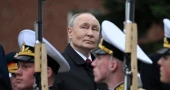
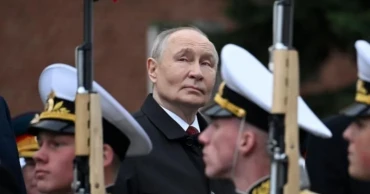
Russian President Vladimir Putin used his Victory Day address in Moscow’s Red Square to defend the war in Ukraine and criticise NATO, as the annual parade took place on a reduced scale this year.
Addressing military personnel and a limited number of foreign leaders, Putin described the conflict in Ukraine as a “just” war and accused NATO of backing Kyiv.
“They are confronting an aggressive force armed and supported by the whole bloc of NATO. And despite this, our heroes move forward,” he said, referring to Russian troops involved in what Moscow calls its “special military operation.”
The ceremony marked Russia’s most important national holiday, commemorating the Soviet Union’s victory over Nazi Germany in World War II. However, celebrations were more subdued compared to previous years.
For the first time in recent years, the parade did not feature armoured vehicles or ballistic missiles, though large numbers of troops marched across Red Square under heightened security.
Putin began his speech by honouring the sacrifices of Soviet soldiers during World War II, saying their legacy continues to inspire Russian forces today.
“The great feat of the generation of victors inspires the soldiers carrying out the goals of the special military operation today,” he said.
He also praised the contributions of ordinary citizens, including scientists, doctors, teachers and workers, to the country’s war effort.
Ahead of the event, Russia and Ukraine agreed to observe a three-day ceasefire, announced by US President Donald Trump.
Among the leaders present at the parade were Belarusian President Alexander Lukashenko, Kazakhstan’s President Kassym-Jomart Tokayev and Uzbekistan’s President Shavkat Mirziyoyev. Fewer international leaders attended compared to last year’s event.
Following the ceremony, Putin laid flowers at the Tomb of the Unknown Soldier and later hosted a reception at the Kremlin.
Victory Day events were also held earlier in Russia’s eastern regions, including Vladivostok, where people took part in the traditional “Immortal Regiment” march to honour war veterans.Source: BBC
5 months ago
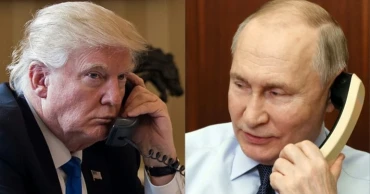
Trump, Putin hold phone conversation on Iran and Ukraine, says Kremlin
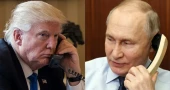
Russian President Vladimir Putin and US President Donald Trump have held a phone conversation discussing issues related to Iran and Ukraine, the Kremlin has said.
According to a Kremlin aide, during the call Putin put forward proposals aimed at resolving the conflict over Iran’s nuclear programme. He also suggested a temporary ceasefire in Ukraine to coincide with the upcoming anniversary of the end of World War II next month.
Meanwhile, US media outlet Axios reported that Trump has rejected Iran’s peace proposal and said the US military blockade of Iranian ports will continue until Tehran agrees to a nuclear deal.
Trump Declares “NO MORE MR. NICE GUY” in Sharp Warning to Iran
“The blockade is somewhat more effective than the bombing. They are choking like a stuffed pig, and it is going to be worse for them. They can’t have a nuclear weapon,” Trump was quoted as saying by Axios.
Iran had earlier this week reportedly proposed ending the ongoing conflict and reopening the Strait of Hormuz, while suggesting that nuclear negotiations be postponed to an unspecified future date.
Source: Al Jazeera
5 months ago
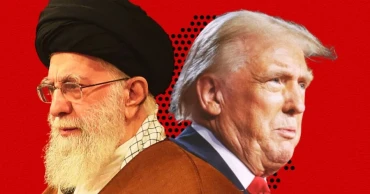
Tensions surge as Trump hints at regime change in Iran
Tensions in the Middle East have intensified after former US President Donald Trump suggested the possibility of a leadership change in Iran — just hours after his team had insisted that regime change was not the objective of recent American strikes.
The situation deteriorated further after Iran’s military vowed a “decisive response” to what Trump described as “monumental damage” inflicted on Iranian nuclear sites by US attacks.
The International Atomic Energy Agency (IAEA), the UN’s nuclear watchdog, has since called for an immediate ceasefire to allow inspectors access to the affected areas.
In a sign of growing international concern, Iran’s Foreign Minister is currently in Moscow for high-level talks with Russian President Vladimir Putin, discussing what both sides termed “common challenges and threats.”
Iran vows retaliation over US strikes; Trump hints at regime change
Meanwhile, the UK’s Foreign Secretary has joined other Western leaders in urging Tehran to exercise restraint and avoid further escalation.
Despite diplomatic calls for calm, hostilities have continued. Israel launched what it described as “one of the most intense attacks” on Iranian military infrastructure overnight, followed by a fresh “series of strikes” directed towards Tehran earlier this morning.
Adding to the geopolitical strain, the United States has called on China to use its influence to persuade Iran not to shut down the Strait of Hormuz — a vital maritime corridor through which a significant portion of the world’s oil supply passes.
Trump says Iran 'must now make peace' after US strikes nuclear sites
With the situation deteriorating rapidly, global powers are scrambling to prevent a wider regional conflict, even as the rhetoric and military actions on all sides continue to escalate.
#With inputs from BBC
1 year ago
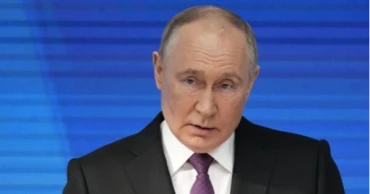
No need to use nuclear weapons in Ukraine, says Putin
Russian President Vladimir Putin said in comments broadcast Sunday that the need to use nuclear weapons in Ukraine had not arisen and that he hopes it will not.
In a preview of an upcoming interview with Russian state television, published on Telegram, Putin said Russia has the strength and the means to bring the conflict in Ukraine to a “logical conclusion.”
Responding to a question about Ukrainian strikes on Russian territory, Putin said: “There has been no need to use those (nuclear) weapons ... and I hope they will not be required.”
“We have enough strength and means to bring what was started in 2022 to a logical conclusion with the outcome Russia requires,” he said, AP reports.
Putin signed a revamped version of Russia’s nuclear doctrine in November 2024, spelling out the circumstances that allow him to use Moscow’s atomic arsenal, the world’s largest.
That version lowered the bar, giving him that option in response to even a conventional attack backed by a nuclear power.
Russia and Ukraine are at odds over competing ceasefire proposals.
Ukrainian President Volodymyr Zelenskyy said Friday, in comments made public Saturday, that Moscow’s announcement of a 72-hour ceasefire next week in Ukraine to mark Victory Day in World War II is merely an attempt to create a “soft atmosphere” ahead of Russia’s annual celebrations.
Israeli ministers to vote on whether to expand Gaza offensive
Zelenskyy instead renewed calls for a more substantial 30-day pause in hostilities, as the US had initially proposed. He said the proposed ceasefire could start anytime as a meaningful step toward ending the war.
Putin on Monday declared a unilateral 72-hour ceasefire in Ukraine to mark Victory Day in World War II, as the US presses for a deal to end the 3-year-old war. The Kremlin said the truce, ordered on “humanitarian grounds,” will run from the start of May 8 and last through the end of May 10 to mark Moscow’s defeat of Nazi Germany in 1945 — Russia’s biggest secular holiday.
Meanwhile, 11 people were wounded in a Russian drone attack overnight on the Ukrainian capital, Kyiv, Ukraine’s State Emergency Service said Sunday. Two children were among the wounded.
1 year ago
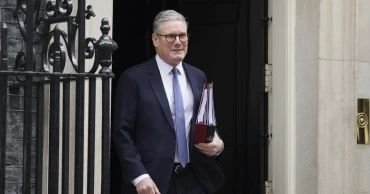
Starmer urges world leaders keep pressure on Putin for ceasefire
UK Prime Minister Keir Starmer has urged global leaders to maintain pressure on Russian President Vladimir Putin to support a ceasefire in Ukraine.
US resumes military aid as Ukraine signals ceasefire possibility
Speaking on Saturday at the opening of a virtual meeting of what he calls the “coalition of the willing,” Starmer stated that Putin will “sooner or later” have to “come to the table.”
Ukraine says it is open to a 30-day ceasefire; US resumes military aid and intelligence sharing
The discussion is set to explore ways countries can provide military and financial assistance to Ukraine while also assessing support for any potential future peacekeeping mission.
1 year ago
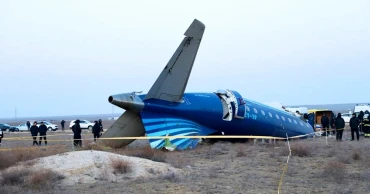
Putin apologizes for 'tragic incident' but stops short of saying Azerbaijani plane shot down
Russian President Vladimir Putin on Saturday apologized to his Azerbaijani counterpart for what he called a “tragic incident” following the crash of an Azerbaijani airliner in Kazakhstan that killed 38 people, but stopped short of acknowledging that Moscow was responsible.
Putin's apology came as allegations mounted that the plane had been shot down by Russian air defenses attempting to deflect a Ukrainian drone strike near Grozny, the regional capital of the Russian republic of Chechnya.
An official Kremlin statement issued Saturday said that air defense systems were firing near Grozny airport as the airliner “repeatedly” attempted to land there on Wednesday. It did not explicitly say one of these hit the plane.
The statement said Putin apologized to Azerbaijani President Ilham Aliyev “for the fact that the tragic incident occurred in Russian airspace.”
The readout said Russia has launched a criminal probe into the incident, and Azerbaijani state prosecutors have arrived in Grozny to participate. The Kremlin also said that “relevant services” from Russia, Azerbaijan and Kazakhstan are jointly investigating the crash site near the city of Aktau in Kazakhstan.
The plane was flying from Azerbaijan’s capital, Baku, to Grozny when it turned toward Kazakhstan, hundreds of kilometers (miles) across the Caspian Sea from its intended destination, and crashed while making an attempt to land. There were 29 survivors.
According to a readout of the call provided by Aliyev’s press office, the Azerbaijani president told Putin that the plane was subject to "external physical and technical interference," although he also stopped short of blaming Russian air defenses.
Aliyev noted that the plane had multiple holes in its fuselage and that the occupants had sustained injuries “due to foreign particles penetrating the cabin mid-flight.”
Read: Ukrainian drone attack linked to Azerbaijani plane crash, says Russian aviation chief
He said that a team of international experts had begun probing the incident at Azerbaijan's initiative, but provided no details. Earlier this week, the Azerbaijani Prosecutor General's office confirmed that investigators from Azerbaijan are working in Grozny.
On Friday, a U.S. official and an Azerbaijani minister made separate statements blaming the crash on an external weapon, echoing those made by aviation experts who blamed the crash on Russian air defense systems responding to a Ukrainian attack.
President Joe Biden, responding on Saturday to a reporter asking whether he thought Putin should take responsibility for the crash, said: “Apparently he did but I haven’t spoken to him.” Biden made the comment after leaving church in St. Croix, U.S. Virgin Islands.
Passengers and crew who survived the crash told Azerbaijani media that they heard loud noises on the aircraft as it was circling over Grozny.
Dmitry Yadrov, head of Russia’s civil aviation authority Rosaviatsia, said Friday that as the plane was preparing to land in Grozny in deep fog, Ukrainian drones were targeting the city, prompting authorities to close the area to air traffic.
Yadrov said that after the captain made two unsuccessful attempts to land, he was offered other airports but decided to fly to Aktau.
Earlier in the week, Rosaviatsia had cited unspecified early evidence as showing that a bird strike led to an emergency on board.
In the days following the crash, Azerbaijan Airlines blamed “physical and technical interference” and announced the suspension of flights to several Russian airports. It didn’t say where the interference came from or provide any further details.
If proven that the plane crashed after being hit by Russian fire, it would be the second deadly civil aviation accident linked to fighting in Ukraine. Malaysia Airlines Flight 17 was downed with a Russian surface-to-air missile, killing all 298 people aboard, as it flew over the area in eastern Ukraine controlled by Moscow-backed separatists in 2014.
Read more: Kazakhstan Reports 42 Feared Dead in Azerbaijan Airlines Plane Crash
Russia has denied responsibility, but a Dutch court in 2022 convicted two Russians and a pro-Russia Ukrainian man for their role in downing the plane with an air defense system brought into Ukraine from a Russian military base.
Following Wednesday’s suspension of flights from Baku to Grozny and nearby Makhachkala, Azerbaijan Airlines announced Friday that it would also halt service to eight more Russian cities.
Several other airlines have made similar announcements since the crash. Kazakhstan’s Qazaq Air on Friday said it would stop flying from Astana to the Russian city of Yekaterinburg in the Ural Mountains for a month.
Turkmenistan Airlines, the Central Asian country’s flagship carrier, on Saturday halted flights to Moscow for at least a month, citing safety concerns. Earlier this week, Israel’s El Al carrier suspended service from Tel Aviv to the Russian capital, citing “developments in Russia’s airspace.”
1 year ago

Ukraine conflict casts shadow on Russia as it enters 2023
Russian President Vladimir Putin’s New Year’s address to the nation usually is rather anodyne and backed with a soothing view of a snowy Kremlin. This year, with soldiers in the background, he lashed out at the West and Ukraine.
The conflict in Ukraine cast a long shadow as Russia entered 2023. Cities curtailed festivities and fireworks. Moscow announced special performances for soldiers’ children featuring the Russian equivalent of Santa Claus. An exiled Russian news outlet unearthed a video of Volodymyr Zelenskyy, now the Ukrainian president despised by the Kremlin, telling jokes on a Russian state television station's New Year’s show just a decade ago.
Putin, in a nine-minute video shown on TV as each Russian time zone region counted down the final minutes of 2022 on Saturday, denounced the West for aggression and accused the countries of trying to use the conflict in Ukraine to undermine Russia.
“It was a year of difficult, necessary decisions, the most important steps toward gaining full sovereignty of Russia and powerful consolidation of our society,” he said, echoing his repeated contention that Moscow had no choice but to send troops into Ukraine because it threatened Russia’s security.
Read more: Sarajevo’s agony echoes as Ukraine braces for a dark winter
“The West lied about peace, but was preparing for aggression, and today it admits it openly, no longer embarrassed. And they cynically use Ukraine and its people to weaken and split Russia,” Putin said. “We have never allowed anyone and will not allow anyone to do this."
The Kremlin has muzzled any criticism of its actions in Ukraine, shut independent media outlets and criminalized the spread of any information that differs from the official view — including diverging from calling the campaign a special military operation. But the government has faced increasingly vocal criticism from Russian hardliners, who have denounced the president as weak and indecisive and called for ramping up strikes on Ukraine.
Russia has justified the conflict by saying that Ukraine persecuted Russian speakers in the eastern Donbas region, which had been partly under the control of Russian-backed separatists since 2014. Ukraine and the West says these accusations are untrue.
“For years, the Western elites hypocritically assured all of us of their peaceful intentions, including the resolution of the most difficult conflict in the Donbas,” Putin said.
Western countries have imposed wide sanctions against Russia, and many foreign companies pulled out of the country or froze operations after Moscow sent troops into Ukraine.
Read more: Russia hits key infrastructure with missiles across Ukraine
“This year, a real sanctions war was declared on us. Those who started it expected the complete destruction of our industry, finances, and transport. This did not happen, because together we created a reliable margin of safety,” Putin said.
Despite such reassurances, New Year’s celebrations this year were toned down, with the usual fireworks and concert on Red Square canceled.
Some of Moscow’s elaborate holiday lighting displays made cryptic reference to the conflict. At the entrance to Gorky Park stand large lighted letters of V, Z and O – symbols that the Russian military have used from the first days of the military operation to identify themselves.
“Will it make me a patriot and go to the front against my Slavic brothers? No, it will not,” park visitor Vladimir Ivaniy said.
Moscow also announced plans to hold special pageant performances for the children of soldiers serving in Ukraine.
The Russian news outlet Meduza, declared a foreign agent in Russia and which now operates from Latvia, on Saturday posted a video of Zelenskyy, who was a hugely popular comedian before becoming Ukraine’s president in 2019, performing in a New Year’s Day show on Russian state television in 2013.
Zelenskyy jokes that the inexpensive sparkling wine Sovietskoe Shampanskoye, a popular tipple on New Year’s, is in the record books as a paradox because “the drink exists but the country doesn’t.”
Adding to the irony, the show’s host was Maxim Galkin, a comedian who fled the country in 2022 after criticizing the military operation in Ukraine.
3 years ago

11 Russian troops killed at shooting range as fighting continues
At least 11 Russian soldiers were killed Saturday in a shooting incident that underlined the challenges posed by Russian President Vladimir Putin’s hasty mobilization, just as Ukrainian troops pressed an offensive to reclaim the areas in the country’s south that were illegally annexed by Moscow.
The Russian Defense Ministry said two men opened fire at volunteer soldiers during a target practice session in western Russia, killing 11 of them and wounding 15 others before being killed themselves. The ministry called it a terror attack.
Russia has lost ground in the nearly seven weeks since Ukraine’s armed forces opened their southern counteroffensive. This week, the Kremlin launched what is believed to be its largest coordinated air and missile raids on Ukraine’s key infrastructure since Russia’s invasion of Ukraine on Feb. 24.
In the continuation of those attacks, a missile strike Saturday seriously damaged a key energy facility in Ukraine’s capital region, the country’s grid operator said. Following mounting setbacks, the Russian military has worked to cut off power and water in far-flung populated areas while also fending off Ukrainian counterattacks in occupied areas.
In the Zaporizhzhia region, Gov. Oleksandr Starukh said the Russian military carried out strikes with suicide drones from Iran and long-range S-300 missiles. Some experts said the Russian military’s use of the surface-to-air missiles may reflect shortages of dedicated precision weapons for hitting ground targets.
Dmytro Pocishchuk, a hospital medic in the Zaporizhzhia region’s capital who has treated dozens of people wounded during Russian attacks in recent weeks, said people sought safety outdoors or in his building’s basement when the familiar blasts started at 5:15 a.m. Saturday.
“If Ukraine stops, these bombings and killings will continue. We can’t give up to the Russian Federation,’” Pocishchuk said several hours later. He put a small Ukrainian flag on the broken windshield of his heavily damaged car.
Kyiv region Gov. Oleksiy Kuleba said the missile that hit a power facility Saturday morning didn’t kill or wound anyone. Citing security, Ukrainian officials didn’t identify the site, one of many infrastructure targets the Russian military tried to destroy after an Oct. 8 truck bomb explosion damaged the bridge that links Russia to the annexed Crimean Peninsula.
Ukrainian electricity transmission company Ukrenergo said repair crews were working to restore electricity service, but warned residents about further possible outages. Kyrylo Tymoshenko, the deputy head of the Ukrainian president’s office, urged residents of the capital and three neighboring regions to conserve energy.
“Putin may hope that by increasing the misery of the Ukrainian people, President (Volodymyr) Zelenskyy may be more inclined to negotiate a settlement that allows Russia to retain some stolen territory in the east or Crimea,” said Ian Williams, a fellow at the Center for Strategic and International Studies, a policy organization based in Washington. “A quick look at history shows that the strategic bombing of civilians is an ineffective way to achieve a political aim.”
This week’s wide-ranging retaliatory attacks, which included the use of self-destructing explosive drones from Iran, killed dozens of people. The strikes hit residential buildings as well as infrastructure such as power stations in Kyiv, Lviv in western Ukraine, and other cities that had seen comparatively few strikes in recent months.
Putin said Friday that Moscow didn’t see a need for additional massive strikes but his military would continue selective ones. He said that of 29 targets the Russian military planned to knock out in this week’s attacks, seven weren’t damaged and would be taken out gradually.
The Institute for the Study of War, a think tank based in Washington, interpreted Putin’s remarks as intended to counter criticism from pro-war Russian bloggers who “largely praised the resumption of strikes against Ukrainian cities, but warned that a short campaign would be ineffective.”
In the southern Kherson region, one of the first areas of Ukraine to fall to Russia after the invasion and which Putin also illegally designated as Russian territory last month, Ukrainian forces pressed their counteroffensive Saturday.
Kyiv’s army has reported recapturing 75 villages and towns there in the last month, but said the momentum had slowed, with the fighting settling into the sort of grueling back-and-forth that characterized Russia’s months-long offensive to conquer Ukraine’s eastern Donbas region.
On Saturday, Ukrainian troops attempted to advance south along the banks of the Dnieper River toward the regional capital, also named Kherson, but didn’t gain any ground, according to Kirill Stremousov, a deputy head of the occupied region’s Moscow-installed administration.
“The defense lines worked, and the situation has remained under the full control of the Russian army,” he wrote on his messaging app channel.
The Kremlin-backed local leaders asked civilians Thursday to leave the region to ensure their safety and to give Russian troops more maneuverability. Stremousov reminded them they could evacuate to Crimea and cities in southwestern Russia, where Moscow offered free accommodations to residents who agreed to leave.
Maj. Gen. Igor Konashenkov, the Russian Defense Ministry’s spokesman, said the military destroyed five crossings on the Inhulets River, another route Ukraine’s fighters could take to progress toward the Kherson region.
Konashenkov claimed Russian troops also blocked Ukrainian attempts to make inroads in breaching Russian defenses near Lyman, a city in the annexed Donetsk region of eastern Ukraine that the Ukrainians retook two weeks ago in a significant defeat for the Kremlin.
Amid the fighting, two men from an unnamed former Soviet nation fired on volunteer soldiers during target practice at a firing range in the Belgorod region that borders Ukraine and were killed by return fire, the Russian Defense Ministry said.
The shooting comes amid a mobilization ordered by Putin to beef up Russian forces in Ukraine — a hasty and poorly executed move that triggered protests and caused hundreds of thousands to flee Russia. Some of the mobilized reservists were sent to the front lines without receving proper training and equipment, according to activists and media reports.
Putin said on Friday that more than 220,000 reservists already had been called up as part of an effort to recruit 300,000.
To the north and east of Kherson, Russian shelling killed two civilians in the Dnipropetrovsk region, Gov. Valentyn Resnichenko said. He said the shelling of the city of Nikopol, which is located across the Dnieper from the Russian-occupied Zaporizhzhia Nuclear Power Plant, damaged a dozen residential buildings, several stores and a transportation facility.
Fighting near the nuclear plant, Europe’s largest, has been an ongoing concern during the nearly eight-month war. The power station temporarily lost its last remaining outside electricity source twice in the past week, fueling fears the reactors could eventually overheat and cause a catastrophic radiation leak.
International Atomic Energy Agency Director-General Rafael Grossi reported that such fears were somewhat eased late Friday, because Ukrainian engineers had managed after several weeks to restore backup power lines that can serve as a “buffer” in case of further war-related outages.
“Working in very challenging conditions, operating staff at the Zaporizhzhia Nuclear Power Plant are doing everything they can to bolster its fragile offsite power situation,” Grossi said. “Restoring the backup power connection is a positive step in this regard, even though the overall nuclear safety and security situation remains precarious.”
3 years ago