energy crisis
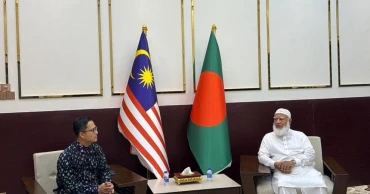
Shafiqur, Malaysian envoy discuss energy crisis, Rohingya repatriation
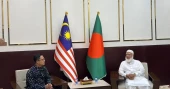
Malaysian High Commissioner to Bangladesh Mohd Shuhada Othman met Leader of the Opposition and Bangladesh Jamaat-e-Islami Ameer Dr Shafiqur Rahman on Thursday, with discussions focusing on bilateral relations, Bangladesh’s energy crisis and the repatriation of Rohingyas.
The meeting was held at 10:30am at the Leader of the Opposition’s official residence on Minto Road in Dhaka.
During the meeting, the two sides held an open and cordial exchange of views on issues of mutual interest and stressed the need to further strengthen the long-standing friendly and historic ties between Bangladesh and Malaysia, according to a press release.
The Malaysian high commissioner praised Jamaat’s positive role as the opposition in Parliament, it said.
The meeting also discussed in detail Malaysia’s possible role in addressing Bangladesh’s ongoing energy crisis and the issue of Rohingya repatriation.
The two sides discussed expanding bilateral cooperation in areas of mutual interest, as well as issues related to development and economic progress.
They expressed hope that cooperation between the two countries will continue to grow in the coming days.
Leader of the Opposition’s Adviser on Foreign Affairs Barrister Mir Ahmad Bin Quasem, MP, and member of the Leader of the Opposition’s Foreign Affairs Advisory Committee Ali Ahmad Mabrur were present at the meeting.
15 days ago
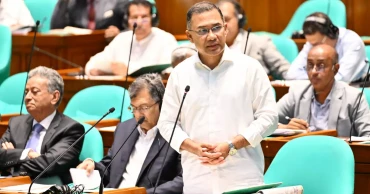
PM outlines 5-point plan to tackle Bangladesh’s energy crisis
Prime Minister Tarique Rahman on Wednesday outlined a five-point comprehensive government plan to tackle the country’s ongoing energy crisis by boosting domestic gas production, intensifying exploration, strengthening BAPEX, expanding LNG infrastructure and reducing dependence on imported gas.
Replying to a question from MP Selina Sultana (Women Seat-35) during the question-answer session in Parliament, Tarique said the energy sector was left “crippled” during the previous fascist rule, resulting in inadequate gas exploration and growing import dependence.
He said the government has adopted an integrated action plan to bring the country out of the existing energy crisis and build a self-reliant and sustainable energy system.
As part of efforts to increase domestic gas production, Tarique said 30 wells have already been drilled under a programme to drill or carry out workovers on 150 wells, adding 140 million cubic feet per day (mmcfd) of gas to the national grid.
“Once the seven wells currently under drilling are completed, another 85 mmcfd of gas will be added to the national grid,” he said, adding that projects are being taken up in phases to drill the remaining wells.
The Prime Minister said the government has also planned 4,500 line-kilometre of 2D seismic surveys and 4,200 square kilometres of 3D seismic surveys to explore domestic gas reserves.
He said the government is also taking steps to strengthen Bangladesh Petroleum Exploration and Production Company Limited (BAPEX) including the procurement of two new rigs.
On offshore and onshore exploration, Tarique said the Offshore Model Production Sharing Contract (PSC) 2026 has been approved and a bidding round invited, while the Onshore Model PSC was under the approval process.
“Gas discoveries through offshore and onshore exploration will play a significant role in ensuring the country’s energy security,” he said.
The Prime Minister said negotiations are underway with interested companies to establish a floating LNG terminal at Kutubjom in the deep sea off Maheshkhali in Cox’s Bazar.
“We hope to be able to supply regasified LNG from the terminal by December 2028. As a result, LNG imports are expected to increase by another 600 mmcfd within the next two years,” he said.
Tarique also said feasibility studies have also been initiated for setting up one or two additional floating LNG terminals on an urgent basis near Payra or Mongla ports or along the coastal areas of the southwestern region.
Tarique said the proposed terminals would help strengthen the country’s overall energy security.
PM rejects report on factory closures
Replying to a supplementary question from MP Norul Hasan (Mymensingh-6) about reports that 92 or even 200-300 factories had closed due to electricity and gas shortages, Tarique rejected the figures.
“Had you taken a little more information, you would have seen that those who used the reference you mentioned about 95 factories being closed apologised the following day and said their information was completely wrong,” he said.
He said the report apparently cited an old news report or data, possibly from 2022, and was later retracted with an apology.
The first 30 minutes of Wednesday’s parliamentary session were allocated for the Prime Minister’s question-answer session.
16 days ago
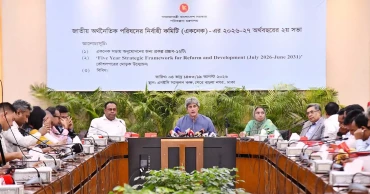
Govt may need up to 2 years to overcome energy crisis: State Minister Saki
The government may need one and a half to two years to overcome the existing energy crisis and make the fuel and power sector suitable for supporting the country’s productive economy, State Minister for Planning Zonayed Abdur Rahim Saki said on Wednesday.
“The energy sector is one of the most important areas. We cannot move forward without resolving its problems,” he told reporters after an ECNEC meeting.
Her said the government is working to increase emergency oil reserves from the current one and a half months to three months, with plans to establish another storage unit to eventually raise the reserve to six months.
He said the government is also exploring new sources in different countries to meet the immediate fuel requirement through imports.
However, importing gas alone would not solve the problem, as LNG receiving and conversion facilities are also required, he said, adding that setting up such infrastructure would take time.
“So, people will have to give us the minimum time required to implement these projects,” the state minister said expressing hope that people would understand the need for the transition period.
He described the power and energy sector as a major challenge, saying it was made heavily import-dependent and became an area of widespread irregularities.
The state minister said the recent power and gas crisis was partly caused by faults in several boilers, which have already been repaired.
As a result, the situation has improved to a relatively tolerable level compared with the situation a month ago, he added.
“Even then, we do not have enough fuel and electricity to meet the existing demand for gas, power and other energy,” he said.
Saki said the government is making all-out efforts to increase domestic gas production while simultaneously pursuing a major shift towards renewable energy.
Referring to the government’s Five-Year Strategic Framework for Reform and Development, he said the government inherited a fragile and damaged economy and would therefore have to pass through a recovery period before moving towards transformation and reconstruction.
“The first two years will be the recovery period, the next three years will be the transition period, and within five years we aim to rebuild the economy with acceleration,” he said.
Saki said the government has prepared a roadmap titled “From Fragility to Prosperity” to guide the country towards a democratic, humane and welfare-oriented Bangladesh.
30 days ago
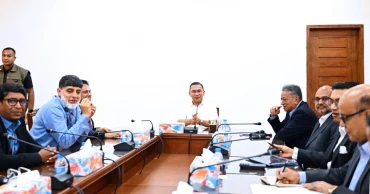
PM issues three directives to tackle energy crisis, boost solar power
Prime Minister Tarique Rahman on Monday issued three key directives to help ease the country's energy crisis – installing solar panels on major government buildings, supporting local solar inverter production and making solar power more affordable for consumers.
The directives were issued at a meeting on solar power chaired by the Prime Minister at his office in the Cabinet Division of the Secretariat, said PM's Deputy Press Secretary Hasan Shiplu.
As per the directives, solar panels will be installed in phases on important government buildings across the country.
The government will also provide support for importing raw materials used in manufacturing solar inverters to encourage local production.
The Prime Minister also directed the authorities concerned to develop a practical economic model to make solar power affordable, easily accessible and financially attractive for ordinary people.
Under the plan, solar panels will first be installed at Bangabhaban, the Prime Minister's Office in Tejgaon, the Jatiya Sangsad Bhaban, the Prime Minister's Office and the Finance Ministry buildings at the Bangladesh Secretariat, the Planning Commission building and other important government establishments.
Tarique Rahman said introducing solar power in government buildings will encourage wider public use of the technology and help expand the country's renewable energy sector.
During the meeting, PRAN-RFL Group and Walton Group gave separate presentations on installing rooftop solar panels in residential buildings and integrating the generated electricity into the national grid.
The presentations highlighted that such initiatives could help reduce dependence on conventional power sources, create new employment opportunities and improve energy efficiency.
The meeting also stressed the need to raise public awareness about the economic and practical benefits of solar power, noting that solar energy can be used to operate air conditioners, fans, lifts and other electrical appliances.
Finance and Planning Minister Amir Khosru Mahmud Chowdhury, Prime Minister's Adviser on Finance and Planning Rashed Al Mahmud Titumir, State Minister for Local Government, Rural Development and Co-operatives Mir Shahe Alam, Bangladesh Investment Development Authority (BIDA) Executive Chairman Ashik Chowdhury, National Board of Revenue (NBR) acting Chairman Ahsan Habib, PRAN-RFL Group Chairman Ahsan Khan Chowdhury, group's AGM for Solar and Renewable Energy Towhidul Ahad, Walton Group Managing Director SM Mahbubul Alam, and secretaries and senior officials from different ministries.
1 month ago
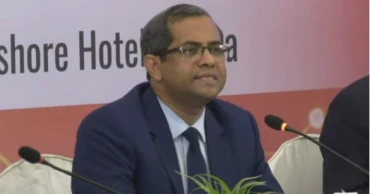
Bangladesh’s energy crisis to persist without renewable transition: CPD
Bangladesh’s ongoing energy crisis may ease temporarily but it cannot be fully resolved without a decisive shift to renewable energy, said the Centre for Policy Dialogue (CPD) on Monday.
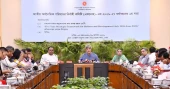
“We must think beyond fossil fuels,” CPD Research Director Dr Khondaker Moazzem said at the 4th Bangladesh-China Renewable Energy Forum organised by CPD under the theme “Transforming Crisis into Opportunities: Renewable Energy Development under the New Government”, at a hotel in Dhaka.
“The crisis that fossil-fuel dependency has created across the world is not something that will be resolved overnight. Bangladesh needs to seriously consider alternatives in its energy sector,” he said.
The veteran economist underscored China's pioneering role in the global renewable energy revolution and called for maximising bilateral cooperation in the sector.
“China is at the forefront of renewable energy through its innovations. Chinese investment in Bangladesh's renewable energy sector is already substantial. This forum will deliberate on how to further enrich that investment going forward,” he said
CPD's presentation introduced a conceptual framework: ‘3F-3R’: ‘Fallen Fossil Fuel, Rising Resilient Renewables’, to describe the structural shift Bangladesh must make.
The think tank warned that even if the ongoing Middle East conflict subsided and the Strait of Hormuz reopened immediately, Bangladesh would continue bearing the economic burden of energy-supply disruptions for years to come.
Using econometric modelling, CPD projected that geopolitical oil shocks would inflict limited but persistent macroeconomic damage through multiple channels: GDP losses in the range of 0.21 to 0.53 percent, inflationary pressure between 0.6 and 13.6 percent, and taka depreciation of 0.56 to 4.5 percent in the medium to long term.
The BNP government has announced a target of generating 10,000 megawatts of electricity from renewable sources by 2030, and CPD estimated the associated investment requirement at approximately USD 9.36 billion, spanning utility-scale solar, rooftop and distributed solar, wind, and biomass and biogas installations.
The 4th Forum, unlike its three predecessors, drilled down specifically on Power Purchase Agreements (PPAs) as the central contractual instrument through which investment either flows into or is repelled from Bangladesh's energy sector.
CPD's research found that Bangladesh's PPAs have progressively deteriorated in terms of investor protection.
The country's first renewable energy PPA, drafted with external legal expertise, contained strong sovereign guarantees, well-structured international arbitration clauses, and balanced risk coverage. Subsequent revisions have steadily tilted the framework in the government's favour, the think tank said.
Compounding the problem, the interim government's decision to discontinue Implementation Agreements, which had previously provided sovereign backing for investor commitments removed a critical layer of payment security precisely when renewable investment was beginning to scale. No credible substitute mechanism has since been introduced, it observed.
CPD flagged that Chinese investors account for over 50 percent of total foreign direct investment in Bangladesh's renewable energy sector, making the health of PPA arrangements disproportionately consequential for Sino-Bangladeshi energy cooperation.
The forum presentation catalogued a series of persistent contractual and institutional failures that have deterred investment across four successive forums since 2023.
On the contractual side, normal payment cycles of two to three months routinely stretch to five to eight months in practice.
Payments are nominally denominated in local currency with US dollar equivalence, yet the PPA structure provides no compensation for exchange rate depreciation during the payment gap, a growing liability as the taka weakens.
In at least one documented case, investors who had signed both a PPA and an Implementation Agreement and completed construction subsequently faced government attempts to revise the agreed tariff, with no contractual remedy available to them.
On the institutional side, approvals required from multiple agencies, including BPDB, PGCB, REB, SREDA, and local authorities, proceed sequentially rather than in parallel, with no coordinated timeline or accountability mechanism for delays, said CPD.
Land deemed officially cleared at the central level has in multiple cases faced challenges from local actors, with different ministries operating in silos and unaware of approvals issued by others, it added.
The cancellation of 31 solar project Letters of Intent by the interim government, representing approximately 5.68 gigawatts and USD 6 billion in prospective investment, with USD 300 million already committed through banking channels and 15 companies having purchased land was cited as a particularly damaging signal to the investment community.
CPD benchmarked Bangladesh's PPA template against those of India, Pakistan, Kenya, Tanzania, Vietnam, the Philippines, and Saudi Arabia.
The analysis revealed that Bangladesh's BPDB tender document, unlike frameworks in Pakistan, the Philippines, and Saudi Arabia, lacks payment security instruments, Implementation Agreement-equivalents, and lender step-in rights, provisions considered standard in bankable renewable energy contracts internationally.
The think tank's diagnostic assessment found that enforcement was the single weakest dimension of Bangladesh's PPA architecture, followed by an imbalanced risk allocation that structurally disadvantages the investor. “In a fair ecosystem, these two dimensions cannot be weak simultaneously.”
Reform Roadmap: Immediate and Medium-Term
In the immediate term, the think tank called for the introduction of a revolving Letter of Credit covering three to six months of payments, backed by a sovereign guarantee or central bank support, describing it as the single most important bankability improvement available within the existing PPA structure.
CPD also recommended that when BPDB extends a Commercial Operations Date deadline, the corresponding Ready for Commercial Operations Date must be extended in parallel, a structural inconsistency that currently exposes developers to liquidated damages for delays of the government's own making.
Over the medium term, CPD urged the establishment of an Inter-Agency Task Force with binding standard operating procedures and time-stamped approval responsibilities; the development of a dedicated Renewable Energy Procurement Guideline covering the post-award phase; the incorporation of lender step-in rights and a Dispute Adjudication Board into the standard BPDB template; and the restoration of a credible sovereign commitment mechanism functionally equivalent to the discontinued Implementation Agreement.
CPD also called on the government to declare the power and energy sector a national priority sector, expand company courts with specialised commercial law expertise, and introduce mandatory tax and duty exemptions on renewable energy equipment, particularly inverters and batteries, on which import levies currently stand at around 61.8 per cent.
On the financing side, the think tank urged Bangladesh Bank to establish a dedicated low-cost fund for rooftop solar and advocated for the use of land from cancelled fossil-fuel power plants and upcoming stranded assets to host renewable energy installations.
It also highlighted the potential of Chinese technology, including solar panels, inverters, and lithium iron phosphate batteries and the possibility of establishing local battery assembly facilities in partnership with Chinese companies to reduce both cost and import dependence.
The EU's Carbon Border Adjustment Mechanism, taking effect in 2027, was cited as an additional structural incentive for urgency: Bangladesh's export-oriented garment and textile sector would be required to demonstrate green energy sourcing to avoid carbon levies and maintain market access in Europe.
CPD noted that the Bangladesh Investment Development Authority is set to open its first overseas office in China within approximately six months, a step expected to directly facilitate Chinese investment inquiries in Bangladesh's renewable energy sector.
Power, Energy and Mineral Resources Minister Iqbal Hassan Mahmood attended the event as the chief guest.
The forum was also attended by Chinese investors, development finance institutions, government officials, and energy sector stakeholders.
4 months ago
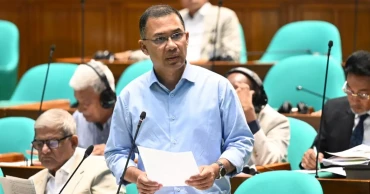
Govt to hold talks with opposition on energy crisis, open to pragmatic proposals: PM
Prime Minister Tarique Rahman on Wednesday said the government will invite the opposition for talks on the country’s ongoing energy crisis, stressing that any practical and implementable proposals will be accepted in the interest of the people.
“As the Leader of the House, I would like to inform Parliament that we will certainly invite the opposition. From our side, we are ready to sit together, hold discussions and review their proposals. If any of their suggestions are realistic and can be implemented, we will certainly act on them,” he said.
The Leader of the House said regardless of whether the MPs sit on the treasury or opposition benches, they have all been sent by the people of Bangladesh to serve public interests.
“So, whatever discussions or actions best protect the interests of the people of Bangladesh, Inshallah, we will certainly do that,” he added.
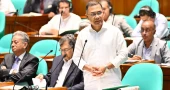
The Prime Minister made the remarks while taking part in a discussion on a motion moved by Leader of the Opposition Shafiqur Rahman under Rule 68, seeking immediate, effective and visible steps to resolve the energy crisis and reduce public suffering.
Placing the motion, Shafiqur Rahman emphasised the urgency of easing public suffering, saying the opposition was ready to extend all possible cooperation to the government in this regard.
He said the current energy crisis is a global issue and not unique to Bangladesh.
Shafiqur Rahman noted that the mismatch between demand and supply has created the situation, affecting all sectors, including transport, industries, agriculture, mills and factories.
At the outset of his speech, the Prime Minister thanked the opposition leader and members of the opposition for raising what he described as a “highly important issue” for the country.
He said the current parliament stands on the sacrifices of many martyrs and reflects the hopes and aspirations of the people of Bangladesh for a better future.
Tarique Rahman noted that while there may be differences of opinion among political parties, there is no disagreement when it comes to protecting national interests and public welfare.
He observed that the energy crisis is not unique to Bangladesh, but part of a broader global challenge, affecting countries and people around the world amid prevailing international realities.
“As political leaders, we may differ on many issues, but we are united when it comes to safeguarding the interests of the country and its people,” the Prime Minister said.
He also reiterated that his party remains open to discussions, proposals and constructive suggestions from any quarter if they serve the national interest.
A total of eight members from both treasury and opposition benches took part in the discussion on the motion.
While all agreed that the energy situation is an important issue, differences emerged over whether it should be described as a “severe crisis” or an “artificial crisis.”
State Minister for Power and Energy Aninda Islam Amit was the first to speak when he said global energy markets have been under pressure due to geopolitical tensions in the Middle East.
He said when the current government took office on February 17, the country had only seven days of fuel reserves. However, through rapid procurement and supply management, fuel availability has now been secured until May, with preparations underway for June and July.
In the concluding speech, Power, Energy and Mineral Resources Minister Iqbal Hassan Mahmood said the situation is not a “crisis” but an “artificial line.”
He claimed that some individuals are creating queues at petrol pumps and diverting fuel to the informal market for profit, causing inconvenience to genuine consumers. “We are supplying as much fuel as needed,” he said, urging journalists to investigate whether the queues reflect real demand or manipulation for profit.
Home Minister Salahuddin Ahmed also said he does not consider the situation a crisis. He noted that despite price adjustments, economic activities such as agriculture, industry, education and trade have not been disrupted.
He acknowledged instances of black marketing, hoarding and smuggling attempts, but said law enforcement agencies have uncovered those.
4 months ago
Energy crisis, inflation strain economy despite reserve gains: GED
The General Economics Division (GED) of the Planning Ministry has released its March 2026 economic update, highlighting mounting challenges from the energy crisis and persistent inflation, despite some improvement in foreign exchange reserves.
The report warns that the ongoing energy crisis is affecting fiscal balances, external accounts, and investment activities.
Although strong remittance inflows and recent reserve gains have provided temporary relief, elevated global energy prices are likely to increase import bills and widen the trade deficit, it said.
The GED noted that policymakers face difficult trade-offs. Maintaining exchange rate stability could strain reserves, while further depreciation of the taka may intensify inflationary pressures.
Similarly, energy subsidies continue to shield consumers but are adding to fiscal burdens, the report noted.
It recommends prioritising energy efficiency, rationalising pricing with targeted subsidies, and tightening external sector management to contain balance of payments risks.
Headline inflation climbed to 9.13% in February 2026, up from 8.58% in January, driven mainly by food prices. Food inflation rose to 9.30%, surpassing non-food inflation for the first time in recent months.
Rice prices, a major concern earlier, eased to 2.39%. However, rising prices of perishables – particularly vegetables and fish – offset this relief. Vegetables alone accounted for 29.13% of total food inflation.
The GED highlighted a widening gap between inflation and wage growth. While inflation reached 9.13%, wage growth remained subdued at 8.06$, intensifying real income pressures, especially for lower-income households.
Banking indicators showed slight moderation. Total deposits stood at Tk 1,967,907 crore in January, marginally lower than December levels.
Public sector credit remained elevated at Tk 611,258.6 crore, indicating continued reliance on domestic borrowing, while private sector credit growth was modest at 6.03%.
Revenue collection by the National Board of Revenue (NBR) fell significantly short of its February target.
Against a revised target of Tk 42,051 crore, collections reached Tk 30,559 crore – over 27% below the target. Although this marked an 8.15% increase year-on-year, revenue declined by 17.48% compared to January.
Implementation of the Annual Development Programme (ADP) weakened during the July-February period compared to the previous fiscal year, according to the report.
The GED attributed the slowdown to land acquisition delays, procurement inefficiencies, and rising project costs linked to the energy crisis.
A sharp increase in spending in February suggests “back-loaded implementation”, raising concerns about oversight and quality of expenditure.
Foreign exchange reserves rose to USD 35.11 billion in February (USD 30.36 billion under BPM6 standards), supported by strong remittance inflows exceeding USD 3 billion.
However, the GED cautioned that this stability remains fragile amid rising energy import costs.
Export performance weakened, with ready-made garment (RMG) exports falling to USD 2.81 billion in February from USD 3.61 billion in January, reflecting softer global demand and higher domestic production costs.
The exchange rate remained relatively stable at around Tk 122.3 per US dollar due to central bank interventions.
However, the Real Effective Exchange Rate (REER) declined slightly to 124.05, indicating a gradual depreciation in real terms.
While this may improve export competitiveness, the benefits are currently being offset by elevated energy-related production costs, the report noted.
5 months ago
DCCI urges stronger public-private coordination to tackle energy crisis, support CMSMEs
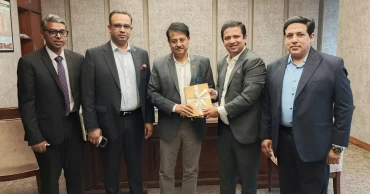
The office-bearers of the Dhaka Chamber of Commerce and Industry (DCCI), led by its President Taskeen Ahmed, paid a courtesy call on Principal Secretary to the Prime Minister ABM Abdus Sattar at the Bangladesh Secretariat on Monday.
During the meeting, Taskeen Ahmed said the government has already taken several timely and effective measures to mitigate the impact of the ongoing energy crisis stemming from the Middle East war.
However, he stressed that sustaining people’s livelihoods, employment, industrial production and overall economic activities should remain a top priority.
DCCI urges govt to adopt proactive policy measures to safeguard economy amid Middle East tension
Taskeen underscored the need for effective initiatives and their proper implementation through stronger coordination with the private sector.
The DCCI president also welcomed the government’s consideration to defer Bangladesh’s graduation from the least developed country (LDC) status, noting that continued engagement with relevant international institutions is essential.
He urged the authorities to take more proactive measures to address post-LDC graduation challenges by incorporating private sector participation and implementing their recommendations.
Highlighting the impact of multiple global shocks since the Covid-19 pandemic, Taskeen said the country’s CMSME sector has been the worst affected, despite contributing around 30 percent to national GDP and generating nearly 80 percent of industrial sector employment.
To address challenges faced by SME entrepreneurs, he called for low-interest loan facilities, easier access to credit, simplified loan procedures, incentives and tax exemptions.
Principal Secretary Abdus Sattar said the government remains committed to fulfilling people’s aspirations and will continue engaging with the private sector through dialogue to address emerging challenges, accelerate industrial activities and achieve future economic goals.
DCCI Senior Vice President Razeev H Chowdhury, Vice President Md. Salem Sulaiman and Acting Secretary General Dr A K M Asaduzzaman Patwary were also present at the meeting.
5 months ago
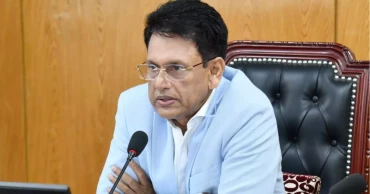
Govt mulls hybrid classes at schools amid energy crisis: Education Minister
The Ministry of Education is considering introducing both online and offline classes at the school level amid the global energy crisis.
“A proposal in this regard will be placed before the Cabinet and a decision will be taken following discussions,” Education minister ANM Ehsanul Haque Milon told reporters in the morning after a meeting with Prime Minister Tareque Rahman at the Secretariat.
“The global crisis is not only affecting Bangladesh and we don’t know how long it will continue. That is why we are thinking of bringing our school system online and adapting a blended system,” he added.
He said school hours have already been disrupted due to holidays during Ramadan and various other disturbances.
“Previously, classes were held five days a week. Now, we have lost many sessions, so we are considering extending school hours to a six-day week. Meanwhile, due to the international fuel crisis we are also exploring the possibility of online classes at certain times,” he said.
The minister added that a recent survey showed around 85% of respondents want online learning options but cautioned that fully shifting to online education could lead to social isolation among students. “We are thinking about a balanced approach,” he said.
Earlier in the morning, Minister Milon and State Minister for Mass Education Bobby Hajja met with the Prime Minister at the secretariat.
5 months ago
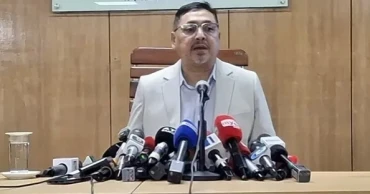
Bangladesh has one month's fuel reserves, government working to increase stock: Cabinet Secretary
Bangladesh currently has about a month’s supply of fuel, Cabinet Secretary Nasimul Ghani said on Wednesday, noting that the country normally maintains a 15-day reserve.
Ghani made the remarks during a briefing at the Press Information Department following a Cabinet meeting chaired by Prime Minister Tarique Rahman at the Secretariat. He said the government is taking steps to further increase fuel reserves to ensure stability amid the ongoing international energy crisis.
Asked about the Prime Minister’s response to the ongoing international energy crisis, the Cabinet Secretary said, “The Prime Minister reviewed all available government resources, assessed progress, and examined the steps taken by the ministries. I can briefly say that the reserves are sufficient.”
Commenting on panic buying, Ghani said, “Excess fuel purchased unnecessarily could go to waste. The situation should normalize in a few days once public confidence returns. Under the government’s plan, the reserves are being increased further.”
PM calls for unity, tolerance to accelerate Bangladesh’s development
Regarding the rise in jet fuel prices, Ghani explained, “The international price of jet fuel has increased. Airlines operating here also follow the international rate, so the price movement is aligned with global trends.”
He confirmed that the one-month reserve includes all types of fuel and added that the Cabinet Committee on Purchase has approved the acquisition of two cargoes of LNG.
Ghani also said that fuel not immediately available under contracts is purchased from the spot market, and decisions have to be made quickly, often within 10 hours of the cargo’s arrival.
Responding to rumors about a fuel price hike, he said, “I am not aware of any such plan, and there are no signs of it at this stage.”
The Cabinet Secretary reiterated that fuel is being procured from multiple sources to maintain and expand the country’s reserves.
5 months ago