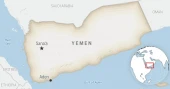
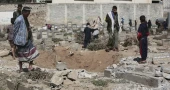
Yemen
Fighting intensifies in Yemen as Houthis launch more attacks on Saudi Arabia
Fighting in Yemen intensified Sunday as government forces launched attacks on Iran-backed Houthi rebels along the Red Sea, while the Houthis fired missiles and drones toward neighboring Saudi Arabia, which supports Yemen’s government.
Yemen’s government said it would send more forces to the Red Sea coast after the Houthis captured the port city of Mokha and an island in the Bab el-Mandeb Strait last week. A senior official described the defeat as “painful.”
The Bab el-Mandeb is a key shipping route and an alternative to the Strait of Hormuz.
The escalation, particularly Houthi attacks on Saudi oil facilities and shipping in the Red Sea, is adding pressure on global oil supplies and prices and could give Iran greater leverage in its conflict with the United States.
As Yemen faces the risk of another civil war, the United Nations said more than 82,000 people had been displaced by fighting since the beginning of September.
A woman who fled the Red Sea town of Khawkha in Hodeida province shortly before it fell to the Houthis said a mortar shell landed nearby as she escaped during the night.
“I saw with my own eyes cars and buses burning, and bodies of children and women were lying on the road in a horrific scene,” she said. She spoke anonymously because of concerns for her and her family’s safety.
Houthis claim attacks on Saudi ArabiaSaudi authorities activated warning sirens Sunday afternoon in the southern city of Abha and Khamis Mushait province, urging residents to take shelter from possible incoming attacks. Both areas have been targeted by the Houthis several times in recent weeks.
Houthi military spokesperson Brig. Gen. Yahya Saree said the group had used drones and missiles to attack targets in Saudi Arabia, including a military base near the Yemeni border. He did not provide evidence or specify when the attack took place.
Saudi civil defense authorities said overnight that a projectile landed in another area near the Yemeni border along the Red Sea, injuring two people and damaging a mosque and several other buildings. Saudi authorities blamed the Houthis.
Saudi Arabia did not report any new attacks against Houthi positions.
The Houthis have been targeting Saudi oil facilities and shipping as part of a recently announced blockade. They have said, however, that they do not intend to target commercial shipping from other countries.
Yemen says more than 500 government fighters killedThe National Resistance, a government-allied force that had controlled parts of the western coast, said more than 500 government fighters had been killed there over the past four weeks. It was the group's first comprehensive casualty figure.
The force also claimed that more than 1,000 Houthis had been killed in Hodeida and Taiz provinces. A Houthi spokesperson did not respond to a request for comment.
More than 40 million people live in Yemen, where many fear a return to the civil war that began more than a decade ago. The conflict killed about 150,000 people and pushed millions toward famine. Yemen’s internationally recognized government and Saudi Arabia have fought the Houthis for years, although a ceasefire that began in 2022 largely halted the fighting.
A senior Yemeni government official said government forces would return to the Red Sea coast and fight back. Residents fleeing the Houthi advance told The Associated Press that they saw government forces withdrawing and telling civilians to flee.
Sultan al-Arada, a member of Yemen’s ruling Presidential Leadership Council, described the loss of Mokha and other areas along the western coast as “painful and regrettable.” In a televised interview late Saturday, he said government forces were regrouping and would return to the fighting.
Presidential council leader Rashad al-Alimi sought Sunday to play down the setbacks, calling them “incidental,” according to comments published by the state-run SABA news agency. He said the government remained committed to restoring state institutions and reclaiming sovereignty over all national territory.
The Yemeni military said Sunday that it carried out airstrikes on Houthi positions in Mokha, the coastal town of Dhubab and other areas of Taiz province. The Houthis reported attacks by Saudi-backed forces in Taiz and artillery shelling in Saada province, a Houthi stronghold near the Saudi border.
Houthi advance brings them closer to US base in DjiboutiThe Houthi advance has brought the group to within about 20 miles (32 kilometres) of a US military base in Djibouti, across the Bab el-Mandeb Strait.
The base is the main US military facility in Africa. Djibouti also hosts military bases operated by China, France and Japan.
The small Horn of Africa country is already receiving Yemenis fleeing the fighting across the dangerous waters. More than 2,000 Yemenis have arrived in Djibouti, the International Organization for Migration said Sunday.
Djibouti’s Economy and Finance Minister Ilyas M. Dawaleh said on X that the country’s navy, coast guard and other specialized agencies were carrying out rescue operations and providing emergency assistance.
Displaced Yemenis fear for their futureThe UN migration agency said more than 82,000 people had been displaced across Yemen since the start of September.
“The displaced people are in a very bad condition,” said Ahmad al-Masawi, director of the Al Salam camp in Aden. He appealed to international organizations for help.
“They left their homes quickly without any clothing or anything. They are crammed in camps, houses and even on roads,” he said.
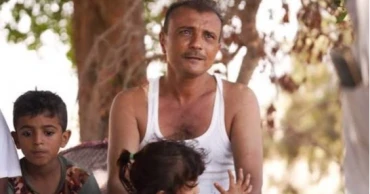
Hussein Haydara sat outside a shelter at the camp while his children waited to be assigned a tent. He said he was worried about the shelter’s distance from schools, hospitals and markets and questioned how his family would survive in the coming weeks and months.
Haydara had previously fled his home in Hodeida when the Houthis took control of the area in 2015. But he said the latest displacement was more difficult.
“With the first displacement, we had time to plan things, but this time we were forced to escape all of a sudden. One could hardly take their children and the lightest stuff possible,” he said.
5 days ago
4 Houthi missiles target Yemen's western coast: government
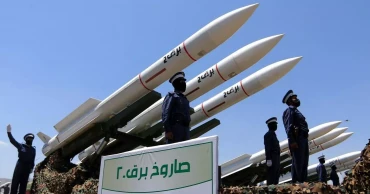
Yemen's Houthi group fired four ballistic missiles at government-held areas along the country's western coast on Wednesday evening as fighting between the two sides intensified, government forces said.
The media center of the Yemeni government forces said three missiles targeted the Red Sea port of Mocha in southwestern Taiz province, while the fourth struck the coastal city of Al-Khawkhah in neighboring Hodeidah province.
The missiles were launched from mountainous areas east of Taiz city controlled by the Houthis, the statement said, citing a military source.
Local residents told Xinhua they heard three loud explosions in Mocha.
No casualties were reported immediately, while the Houthis have not commented on the attacks.
Mocha, a strategic Red Sea port under government control, has faced repeated Houthi missile and drone attacks in recent weeks.
Fighting has also intensified on several fronts, with government forces increasing drone and artillery attacks on Houthi positions, while the Houthis have continued targeting government-held areas.
23 days ago

Saudi Arabia backs Yemen request for talks to end southern fighting
Saudi Arabia has welcomed a request from Yemen’s Saudi-backed Presidential Leadership Council (PLC) to convene talks in Riyadh aimed at easing a violent power struggle in southern Yemen that has intensified fighting and heightened tensions among Gulf states.
In a statement issued Saturday, the Saudi foreign ministry urged southern Yemeni factions to attend the proposed forum in the capital, saying the goal is to develop a unified and fair approach to addressing southern grievances.
Earlier the same day, PLC Chairman Rashad al-Alimi called on political leaders and armed groups in southern Yemen to take part in the Riyadh meeting, according to Yemen’s SABA news agency. Al-Alimi stressed the importance of the southern issue and rejected any one-sided or exclusionary solutions to the conflict.
Violence has escalated in recent days after the Southern Transitional Council (STC), a separatist group, launched a major offensive in Hadramout and Al-Mahra provinces, which together account for nearly half of Yemen’s territory. Oil-rich Hadramout, which borders Saudi Arabia and has deep historical ties to the kingdom, was viewed by Riyadh as strategically sensitive. The STC’s seizure of parts of the province last month raised alarm in Saudi Arabia.
Although the STC is part of the anti-Houthi coalition, it is widely believed to seek an independent southern state, putting it at odds with the internationally recognised Yemeni government led by the PLC. Saudi Arabia has accused its coalition partner, the United Arab Emirates, of supplying arms to the STC—claims Abu Dhabi has denied, saying it supports Saudi security.
The UAE, meanwhile, voiced serious concern over the escalating violence and urged restraint to preserve Yemen’s stability. It also announced the withdrawal of its remaining troops from Yemen, citing the completion of counterterrorism missions, a move that may signal easing tensions with Saudi Arabia.
Saudi Arabia bombs Yemen over shipment of weapons for separatists that arrived from UAE
The Saudi-led coalition was formed in 2015 to push back Iran-aligned Houthi rebels, but after years of war, the Houthis still control the north while rival Saudi- and Emirati-backed groups are now clashing in the south.
Analysts warn that unless the conflict is contained, the latest violence could usher in a dangerous new phase of the war, with competing forces fighting to redraw territorial control—an outcome that could have repercussions beyond Yemen itself.
8 months ago
Israel strikes Yemen’s Hodeida port as Houthis activate air defenses
Israel carried out airstrikes on Yemen’s port city of Hodeida on Tuesday, prompting Iran-backed Houthi rebels to activate their air defenses.
The Israeli military said it targeted “military infrastructure” at the Hodeida port, claiming it was being used by the Houthis to transfer Iranian weapons for attacks against Israel and its allies.
“Our air defenses are currently confronting Israeli aircraft launching aggression against our country,” Houthi spokesperson Yahya Saree wrote on X. He added that Houthi defenses “caused great confusion” for Israeli fighter jets, forcing some formations to withdraw before carrying out deeper strikes inside Yemen.
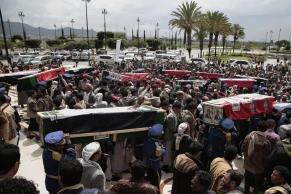
Funerals for slain journalists
The latest strikes came as hundreds attended funerals in Sanaa for 31 Yemeni journalists reportedly killed in Israeli airstrikes last week. Those attacks followed a Houthi drone strike that penetrated Israel’s air defenses and hit a southern Israeli airport, injuring one person.
According to the Houthi-run health ministry, last week’s Israeli strikes killed dozens in Sanaa, including the journalists, and damaged residential areas, a military headquarters, a fuel station, and the National Museum of Yemen. A government facility in Hazm, the capital of northern Jawf province, was also hit.
Israel said the strikes targeted Houthi intelligence and propaganda facilities, as well as a fuel depot.
Al-Masirah TV broadcast Tuesday’s funerals, showing coffins carried into a mosque. Despite what mourners described as a “huge loss,” turnout was lower than expected, with heavy rain blamed for keeping many away.
Concerns for press freedom
The Committee to Protect Journalists (CPJ) said it is still working to verify the reported deaths but noted that strict Houthi censorship makes confirmation difficult. Human Rights Watch added that Israeli strikes also hit a media center in Sanaa housing two newspapers, calling it another example of the grave risks facing journalists in Yemen.
The Houthis, who say their attacks are in solidarity with Palestinians amid the war in Gaza, have been targeting Israel with drones and missiles, and striking ships in the Red Sea for more than 22 months.
1 year ago
Israeli airstrikes kill at least 35 in Yemen: Houthi officials
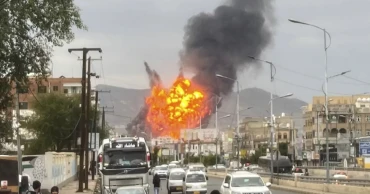
Israel launched another round of heavy airstrikes in Yemen on Wednesday, killing at least 35 people and wounding more than 130, just days after Houthi rebels carried out a drone attack on an Israeli airport, according to the Houthi-run health ministry. Rescue teams continued searching through the rubble.
Most of the casualties were reported in Sanaa, Yemen’s capital, where a military headquarters and a fuel station were among the sites hit. Al-Masirah, a Houthi-controlled news channel, said nearby homes were also damaged. Houthi military spokesman Brig. Gen. Yahya Saree said rebels fired surface-to-air missiles at Israeli jets in response.
The strikes came amid rising international scrutiny of Israel’s ongoing offensive in Gaza. European Commission President Ursula von der Leyen said she would push for sanctions and a partial trade suspension against Israel over its operations in the Gaza Strip. The EU remains divided on the issue.
Israel has urged around 1 million Palestinians to evacuate Gaza City as it steps up its offensive targeting Hamas’ remaining stronghold, while the Gaza Health Ministry reported 41 more deaths and 184 injuries in the past 24 hours, including 12 people seeking humanitarian aid. Thousands remain displaced, struggling with limited food, shelter, and fuel.
The war in Gaza began on October 7, 2023, when Hamas militants attacked southern Israel, killing over 1,200 people and abducting 251. Israel’s retaliatory campaign has so far killed more than 64,600 Palestinians, with women and children accounting for about half of the deaths, according to Gaza authorities.
Meanwhile, Israel’s strike on Qatar, a U.S. ally, targeting senior Hamas figures drew widespread condemnation and added to Israel’s diplomatic isolation. Hamas said its senior leaders survived the attack, though several bodyguards were killed.
The humanitarian situation in Gaza is worsening, with famine declared in parts of the city. Von der Leyen described it as a “man-made famine” and urged immediate action to protect civilians, especially children. Israel maintains that it allows sufficient humanitarian aid and blames Hamas for civilian casualties.
1 year ago

Houthi rebels attack Red Sea ship after claiming to sink another
Yemen’s Houthi rebels launched a prolonged attack on a Liberian-flagged cargo ship in the Red Sea on Tuesday, following their claim of sinking another vessel earlier this week — a series of incidents that threaten to escalate tensions and reignite conflict in the strategically vital waterway.
According to the United Kingdom Maritime Trade Operations (UKMTO) center, the Greek-owned bulk carrier Eternity C remained “surrounded by small craft and is under continuous attack.” At least two people aboard the ship were reported injured, and two others were missing as of Tuesday.
The ship, which was heading north toward the Suez Canal, came under assault late Monday by men in small boats and bomb-laden drones. Security personnel on board returned fire in defense, according to reports from the European Union’s anti-piracy mission Operation Atalanta and private maritime security firm Ambrey.
Though the Houthis have not officially claimed responsibility for this latest incident, Yemen’s exiled government and EU officials have squarely blamed the Iran-backed rebel group for the attack.
Just two days earlier, the Houthis targeted another Liberian-flagged, Greek-owned bulk carrier, Magic Seas, using drones, missiles, rocket-propelled grenades, and small arms fire. The 22-member crew was forced to abandon the vessel, which the rebels later said had sunk in the Red Sea.
The back-to-back attacks, combined with Israeli airstrikes targeting Houthi positions early Monday, have raised concerns about the potential for a renewed Houthi campaign against commercial shipping.
Israel launches airstrikes on Yemen’s Houthis; rebels retaliate with missile fire
Such a campaign could again prompt a military response from U.S. and Western forces, as seen during the administration of U.S. President Donald Trump, which launched airstrikes against the group.
These developments unfold at a critical juncture in the region. A possible ceasefire in the ongoing Israel-Hamas conflict remains uncertain, and Iran is reportedly weighing its options about returning to nuclear negotiations following U.S. strikes on its key nuclear sites during the brief Israel-Iran conflict in June.
The Houthis, who control much of northern Yemen, have continued to justify their maritime attacks as a means to pressure Israel to halt its offensive in Gaza. From November 2023 to January 2025, the group targeted over 100 merchant ships with missiles and drones, sinking two and killing four sailors.
Their actions have significantly disrupted trade along the Red Sea corridor, a route that typically facilitates $1 trillion in annual global commerce.
Although Red Sea shipping had begun to recover in recent weeks, the recent Houthi attacks could threaten that progress. The rebels had paused maritime assaults since the U.S. launched a major campaign against them in mid-March, but their latest attacks mark a potential return to hostilities.
However, they had continued sporadic missile launches targeting Israel during that period
1 year ago
Yemeni Island Socotra: The Most Alien-Looking Place On Earth Drawing Global Wanderers
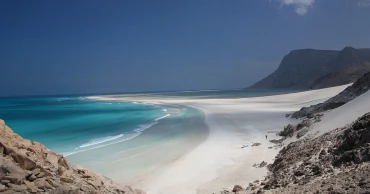
Strange, contorted trees stretch toward a sky so vast it feels unworldly. Bare, jagged cliffs rise from a stark, wind-blasted terrain that seems untouched by time or civilisation. Crystalline waters border bizarre landforms, creating a surreal contrast. Among the world’s many awe-inspiring locations, from Africa’s endless sands to North America’s ancient canyons. Few evoke such profound disbelief as this remote island. Long whispered about in niche travel circles, it now draws increasing global attention. The name? Socotra, locally known as Saqatri. Let’s uncover what's behind this alien-looking island in the Indian Ocean that draws modern explorers.
Geography of Socotra
Tucked between the Guardafui Channel and the Arabian Sea, Socotra forms the largest island in a six-island archipelago. While it falls under Yemen's political boundary, its proximity to Africa gives it a different geographic rhythm. Just 236 miles south of the Arabian Peninsula, this closeness shapes its distinct character.
This remote outpost stands among the most isolated continental landmasses on Earth. It parted ways with the ancient supercontinent of Gondwana millions of years ago. That deep-time isolation shaped its singular environment.
Read more: Chongqing, The 3D City: Chinese Megacity Looking Like AI-Generated
The island is renowned for its extraordinary biodiversity. Many species found here exist nowhere else on the planet, drawing scientific and ecological interest from across the globe. This exceptional natural wealth earned it UNESCO World Heritage status in 2008, marking it as a vital ecological treasure.
Unique Landscape and Discrete Demography
The distinctiveness of this ancient island lies in its terrain, with Socotra shaped over millennia by time, climate, and isolation. Towering limestone plateaus stretch across the island, rising above arid plains and wind-carved dunes. At the heart of it all, a central mountain range climbs to nearly 5,000 feet. It offers an imposing backdrop to an otherwise barren interior. The terrain breaks into elevations that shift with the landscape. Dry mountains and scattered vegetation tell a stark story of nature’s endurance.
This archipelago, over 25 million years old, balances contrasting features- coastal plains brushing against desert stretches, and rocky plateaus giving way to shrub-covered slopes. But what sets Socotra apart is its inimitable biological character. Nearly one-third of its plant species are endemic, including the most iconic locale- the Dragon’s Blood Tree. This umbrella-shaped marvel, known for its crimson resin, casts haunting silhouettes throughout the horizon, lending the landmass its surreal, alien quality.
Read more: Wales’s Stream in the Sky: World’s Tallest Navigable Aqueduct Pontcysyllte
Despite its remoteness, Socotra is home to a modest community of approximately 60,000 people. The Socotrans speak Soqotri, a pre-Arabic language that survives only here. Their cultural fabric, enriched by centuries of isolation, is preserved through an annual poetry competition.
1 year ago
Israel launches airstrikes on Yemen a day after Houthi rebels strike Israeli airport
On Monday, Israel’s military launched a series of intense airstrikes against Houthi rebels in Yemen’s Red Sea province of Hodeida, resulting in at least one death and 35 injuries. The attacks followed the rebels’ missile strike a day earlier that hit Israel’s main airport.
According to the Houthis’ media office, at least six airstrikes targeted the vital Hodeida port during the afternoon. Additional strikes reportedly hit a cement plant in the Bajil district, located about 55 kilometers (34 miles) northeast of Hodeida city. The full extent of the damage at both sites remains unknown.
The Israeli military confirmed that over 20 fighter jets participated in the assault, releasing more than 50 bombs on multiple targets.
Residents in Hodeida reported hearing loud explosions at the port, with smoke and flames visible in the area. They also said ambulance sirens echoed throughout the city.
“The blasts were extremely powerful,” said Ahmed Saleh, a local resident living near the port.
In Bajil, fires and thick columns of smoke were seen over the cement factory, which the Houthis said was hit by both U.S. and Israeli strikes. Ambulances also rushed to the area, said resident Khalid Seif.
The Houthi-run health ministry said at least one person was killed and 35 others were wounded in the Israeli strikes on the factory. It said rescuers were still searching for missing people.
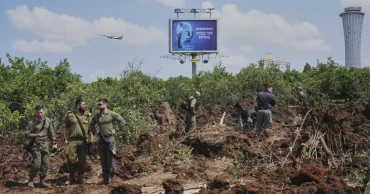
On Sunday, the Houthis launched a missile from Yemen that struck an access road near Israel’s main airport, briefly halting flights and commuter traffic. Four people were lightly injured. It was the first time a missile struck the grounds of Israel’s airport since the start of the war.
The Houthis claimed that the strikes were a joint Israeli-American operation. However, a U.S. defense official said U.S. forces did not participate in the Israeli strikes on Yemen on Monday. The strikes were not part of Operation Rough Rider, which is the ongoing U.S. military operation against the Houthis in Yemen to prevent them from targeting ships in the Red Sea that started March 15. The official spoke on the condition of anonymity to discuss sensitive matters.
Iran's top diplomat holds talks in Pakistan to mediate in escalation with India over Kashmir attack
Separately, the U.S. military launched multiple strikes Monday on Sanaa, another U.S. official said. That official also spoke on condition of anonymity to discuss military operations.
Nasruddin Amer, head of the Houthi media office, said the Israeli strikes won’t deter the rebels, vowing they will respond to the attack.
“The aggressive Zionist-American raids on civilian facilities will not affect our military operations against the Zionist enemy entity,” he said on social media.
He said the Houthis will escalate their attacks and won’t stop targeting shipping routes and Israel until it stops the war in Gaza.
The Houthis have targeted Israel throughout the war in solidarity with Palestinians, raising their profile at home and internationally as the last member of Iran’s self-described “Axis of Resistance” capable of launching regular attacks on Israel. The U.S. military under President Donald Trump has launched an intensified campaign of daily airstrikes targeting the Houthis since March 15.
Houthi rebels have fired at Israel since the war with Gaza began on Oct. 7, 2023. The missiles have mostly been intercepted, although some have penetrated Israel’s missile defense systems, causing damage. Israel has struck back against the rebels in Yemen.
The Israeli military said it targeted the Hodeida port because Houthi rebels were using it to receive weapons and military equipment from Iran. Rebel-held Hodeida, about 145 kilometers (90 miles) southwest of the capital Sanaa, has been key for food shipments into Yemen as its decade-long war continues.
Israel has struck Yemen, and specifically the port city of Hodeida, multiple times. It previously struck Hodeida and its oil infrastructure in July after a Houthi drone attack killed one person and wounded 10 in Tel Aviv. In September, Israel struck Hodeida again, killing at least four people after a rebel missile targeted Israel’s Ben Gurion airport as Prime Minister Benjamin Netanyahu was arriving back to the country. In December, Israeli strikes killed at least nine people in Hodeida. The Houthis have launched multiple missiles toward Israel in the past week.
The attack on Ben-Gurion International Airport on Sunday came hours before Israeli Cabinet ministers voted to expand the war in Gaza, including to seize the Gaza Strip and to stay in the Palestinian territory for an unspecified amount of time. While air traffic resumed after an hour, the attack could lead to cancelations of many airlines, which had recently resumed flights to Israel.
1 year ago

US airstrike that hit Yemen prison holding African migrants kills 68: Houthi rebels
Yemen’s Houthi rebels on Monday alleged a U.S. airstrike hit a prison holding African migrants, killing at least 68 people and wounding 47 others. The U.S. military had no immediate comment.
The strike in Yemen's Saada governorate, a stronghold for the Houthis, is the latest incident in the country's decadelong war to kill African migrants from Ethiopia and other nations who risk crossing the nation for a chance to work in neighboring Saudi Arabia.
It also likely will renew questions from activists about the American campaign, known as “Operation Rough Rider,” which has been targeting the rebels as the Trump administration negotiates with their main benefactor, Iran, over Tehran's rapidly advancing nuclear program.
More than 100 immigrants detained at an illegal after-hours nightclub in Colorado
The U.S. military's Central Command, in a statement early Monday before news of the alleged strike broke, sought to defend its policy of offering no specific details of its extensive airstrike campaign. The strikes have drawn controversy in America over Defense Secretary Pete Hegseth's use of the unclassified Signal messaging app to post sensitive details about the attacks.
“To preserve operational security, we have intentionally limited disclosing details of our ongoing or future operations,” Central Command said. “We are very deliberate in our operational approach, but will not reveal specifics about what we’ve done or what we will do.”
It did not immediately respond to questions from The Associated Press about the alleged strike in Saada.
Graphic footage shows aftermath of explosion
Graphic footage aired by the Houthis' al-Masirah satellite news channel showed what appeared to be dead bodies and others wounded at the site. The Houthi-run Interior Ministry said some 115 migrants had been detained at the site.
The rebels' Civil Defense organization said at least 68 people had been killed and 47 others wounded in the attack.
Footage from the site analyzed by the AP suggested some kind of explosion took place there, with its cement walls seemingly peppered by debris fragments and the wounds suffered by those there.
A woman's voice, soft in the footage, can be heard repeating the start of a prayer in Arabic: “In the name of God.” An occasional gunshot rang out as medics sought to help those wounded.
African migrants caught in middle of Yemen's war
Ethiopians and other African migrants for years have landed in Yemen, braving the war-torn nation to try and reach Saudi Arabia for work. The Houthi rebels allegedly make tens of thousands of dollars a week smuggling migrants over the border.
Migrants from Ethiopia have found themselves detained, abused and even killed in Saudi Arabia and Yemen during the war. An Oct. 3, 2022, letter to the kingdom from the U.N. said its investigators “received concerning allegations of cross-border artillery shelling and small arms fire allegedly by Saudi security forces, causing the deaths of up to 430 and injuring 650 migrants.”
Saudi Arabia has denied killing migrants.
Monday's alleged strike recalled a similar strike by a Saudi-led coalition battling the Houthis back in 2022 on the same compound, which caused a collapse killing 66 detainees and wounding 113 others, a United Nations report later said. The Houthis shot dead 16 detainees who fled after the strike and wounded another 50, the U.N. said. The Saudi-led coalition sought to justify the strike by saying the Houthis built and launched drones there, but the U.N. said it was known to be a detention facility.
“The coalition should have avoided any attack on that facility,” the U.N. report added.
That 2022 attack was one of the deadliest single attacks in the yearslong war between the coalition and the Houthi rebels and came after the Houthis struck inside the UAE twice with missiles and drones, killing three in a strike near Abu Dhabi's international airport.
US military says over 800 strikes conducted in campaign so far
Meanwhile, U.S. airstrikes overnight targeting Yemen's capital killed at least eight people, the Houthis said. The American military acknowledged carrying out over 800 individual strikes in their monthlong campaign.
The overnight statement from Central Command also said “Operation Rough Rider” had “killed hundreds of Houthi fighters and numerous Houthi leaders,” including those associated with its missile and drone program. It did not identify any of those officials.
“Iran undoubtedly continues to provide support to the Houthis,” the statement said. “The Houthis can only continue to attack our forces with the backing of the Iranian regime.”
"We will continue to ratchet up the pressure until the objective is met, which remains the restoration of freedom of navigation and American deterrence in the region," it added.
The U.S. is targeting the Houthis because of the group’s attacks on shipping in the Red Sea, a crucial global trade route, and on Israel. The Houthis are also the last militant group in Iran’s self-described “Axis of Resistance” that is capable of regularly attacking Israel.
US discusses deadly port strike
The U.S. is conducting strikes on Yemen from its two aircraft carriers in the region — the USS Harry S. Truman in the Red Sea and the USS Carl Vinson in the Arabian Sea.
On April 18, an American strike on the Ras Isa fuel port killed at least 74 people and wounded 171 others in the deadliest-known attack of the American campaign. Central Command on Monday offered an explanation for why it hit the port.
“U.S. strikes destroyed the ability of Ras Isa Port to accept fuel, which will begin to impact Houthi ability to not only conduct operations, but also to generate millions of dollars in revenue for their terror activities,” it said.
North Korea confirms it sent troops to Russia to support its war against Ukraine
Meanwhile, the Houthis have increasingly sought to control the flow of information from the territory they hold to the outside world. It issued a notice Sunday that all those holding Starlink satellite internet receivers should “quickly hand over” the devices to authorities.
“A field campaign will be implemented in coordination with the security authorities to arrest anyone who sells, trades, uses, operates, installs or possesses these prohibited terminals,” the Houthis warned.
Starlink terminals have been crucial for Ukraine in fighting Russia’s full-scale invasion and receivers also have been smuggled into Iran amid unrest there.
1 year ago
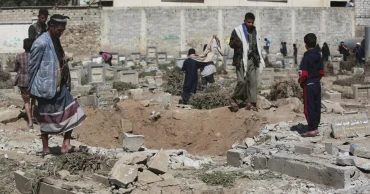
US airstrikes killed 12 people in Yemen’s capital, the Houthi rebels say
U.S. airstrikes targeting Yemen’s capital killed 12 people and wounded 30 others, the Houthi rebels said early Monday.
Zelenskyy says Russia is trying to create an ‘impression of a ceasefire’ as attacks continue
The deaths mark the latest in America’s intensified campaign of strikes targeting the rebels. The U.S. military’s Central Command declined to answer questions about the strike or discuss civilian casualties from its campaign.
The Houthis described the strike as hitting the Farwa neighborhood market in Sanaa’s Shuub district. That area has been targeted before by the Americans.
Footage aired by the Houthis’ al-Masirah satellite news channel showed damage to vehicles and buildings in the area, with screaming onlookers holding what appeared to be a dead child. Others wailed on stretchers heading into a hospital
Strikes overnight into Monday also hit other areas of the country, including Yemen’s Amran, Hodeida, Marib and Saada governorates.
The strikes come after U.S. airstrikes hit the Ras Isa fuel port in Yemen last week, killing at least 74 people and wounding 171 others.
The strikes follow the resumption of negotiations in Rome between the U.S. and Iran over Tehran’s rapidly advancing nuclear program, which Washington has linked to its attacks in Yemen.
The U.S. is targeting the Houthis because of the group’s attacks on shipping in the Red Sea, a crucial global trade route, and on Israel. The Houthis are the last militant group in Iran’s self-described “Axis of Resistance” that is capable of regularly attacking Israel.
The new U.S. operation against the Houthis under Trump appears more extensive than attacks on the group were under President Joe Biden, an AP review found. The new campaign started after the rebels threatened to begin targeting “Israeli” ships again over Israel blocking aid from entering the Gaza Strip.
From November 2023 until this January, the Houthis targeted more than 100 merchant vessels with missiles and drones, sinking two of them and killing four sailors. That has greatly reduced the flow of trade through the Red Sea corridor, which typically sees $1 trillion of goods move through it. The Houthis also launched attacks targeting American warships without success.
1 year ago