BADC

Bangladesh to import 480,000 tonnes of potash fertiliser from Canada
Bangladesh Agricultural Development Corporation (BADC) will import 480,000 tonnes of potash fertiliser from Canada, with an option to purchase an additional 120,000 tonnes.
Bangladesh and Canada have signed a government-to-government contract recently to import Canada’s world leading potash fertiliser between September 2026 and March 2027.
The Canadian Commercial Corporation - Corporation commerciale canadienne (CCC), Government of Canada and Bangladesh Agricultural Development Corporation (BADC) signed the deal.
Canada’s potash partnership with Bangladesh spans more than 30 years, with approximately 3.5 million tonnes of Canadian potash supplied through the government-to-government mechanism since 2014, said the Canadian High Commission in Dhaka.
Canadian potash is recognised globally for its high quality, consistency and reliable supply, backed by some of the world’s largest and most advanced potash reserves and production capabilities in Saskatchewan.
Unlike many alternative sources, Canada offers a stable, long-term, and trusted supply through Canpotex and the government-to-government mechanism, providing greater predictability for farmers and food security, said the High Commission.
The signing ceremony held recently was attended by Secretary of Ministry of Agriculture, Bangladesh Md Salim Khan, Chairman of BADC Md Azizul Islam, and High Commissioner of Canada Ajit Singh, alongside senior officials from Canada, Bangladesh and Canpotex International Pte Ltd.
Secretary Salim Khan highlighted the importance of ensuring a reliable supply of quality fertiliser to support Bangladesh’s farmers and agricultural production.
High Commissioner Ajit Singh said Canada is proud to be a reliable partner in supporting Bangladesh’s farmers and food security in this time of need with the world’s best quality potash fertiliser.
"Today’s agreement builds on more than 30 years of cooperation on potash and opens the door to deeper collaboration between our countries across the agriculture sector.”
Canada looks forward to expanding cooperation in agricultural technology such as food processing and value addition, cold-chain and supply-chain technologies, genetics, biofertilizers, sustainable and climate-smart agriculture, research and knowledge partnership, helping strengthen productivity and resilience in Bangladesh’s agriculture sector.
22 days ago
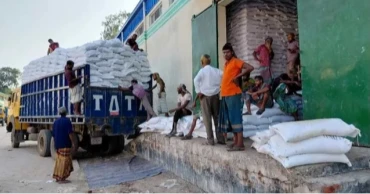
Hidden hands in the fields: Dealers blamed for artificial fertiliser shortage in north
Farmers across five northern districts — Rangpur, Lalmonirhat, Kurigram, Gaibandha and Nilphamari — are facing mounting difficulties due to what they describe as an artificial crisis of non-urea fertilisers such as TSP, DAP and MOP.
Many have been forced to pay extra or delay cultivation, raising fears of reduced crop yields.
Although the Agriculture Department has dismissed the situation as artificial, farmers say fertilisers are simply unavailable through official dealers.
They allege that retailers are selling fertilisers at inflated prices, taking advantage of the high seasonal demand.
Officials insist that there is no genuine shortage, claiming that sufficient stock is available in the Bangladesh Agricultural Development Corporation (BADC) warehouses.
They blame a section of unscrupulous dealers for creating an artificial crisis to earn higher profits.
Farmers struggling to prepare land
With the potato and maize planting season approaching, many farmers have been unable to prepare their fields in time.
Abdar Hossain, a farmer from Karanpur village in Lalmonirhat, said, “When we go to dealers, they say fertiliser is out of stock. But retail shops have plenty—only they charge Tk 8–10 more per kilogramme.”
Govt approves purchase of 65,000 MT of fertilizer
Abu Taleb, a farmer from Baura in Patgram upazila, echoed similar concerns, “Land cannot be prepared without non-urea fertiliser. Fertiliser is needed most now, and demand will rise further in November. If we do not get it on time, we will suffer a big loss.”
In Rangpur’s Gangachara, farmer Sujan Mia said they are unable to get fertiliser even after offering to pay extra. “We are at a loss as to how to cultivate maize in the pasture,” he said.
Another farmer, Joynal Abedin of Kaunia, expressed frustration, saying, “Fertiliser is not available from dealers, but retailers sell it at a higher price. In which country do we live? Nothing seems to be in order.”
BADC Lalmonirhat warehouse assistant director Ekramul Haque said fertilisers are being sold through 144 authorised dealers in the district at government-fixed prices.
“The government sells TSP at Tk 25 per kg, DAP at Tk 19 and MOP at Tk 18 to dealers, who may add a Tk 2 profit per kg,” he explained.
Haque maintained that the warehouse holds sufficient stocks as per government allocation, though he acknowledged that the allocation is around 25 percent lower than total demand.
Similarly, the BADC additional director in Rangpur claimed there was no shortage in any district and blamed dishonest traders for creating panic in the market. “We are closely monitoring the market, and the problem will be resolved soon,” he added.
Sirajul Islam, additional director of the Department of Agricultural Extension in Rangpur, agreed that the crisis was being fuelled by a few profiteering traders. “There is sufficient fertiliser stock in BADC warehouses. Some traders are creating an artificial shortage in the hope of higher profits. Mobile courts are being conducted against such unscrupulous traders,” he said.
416 bags of fertilizer unauthorised for sale seized in Lalmonirhat
10 months ago
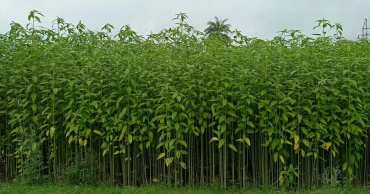
Magura farmers reject government jute seeds over poor yield
Farmers in Sreepur upazila of Magura are increasingly rejecting jute seeds supplied by the Bangladesh Agricultural Development Corporation (BADC), citing longer maturation periods, excessive height, entanglement issues and poor yields.
Despite the government's push to promote BADC-distributed seeds, a significant number of farmers have instead turned to Indian-origin varieties such as Sebayan JRO 524, Chakra-marked JRO 524 and Shankha-marked seeds, which they say perform better in local conditions.
This season, jute has been cultivated on approximately 9,150 hectares of land across the upazila.
Farmers generally receive jute seeds and chemical fertilisers from two key sources—the Upazila Agriculture Office and the Upazila Jute Department.
For this season, the Agriculture Office distributed 1,530 one-kg packets of seeds, while the Jute Department provided another 2,400 packets.
Jamal Molla from Kamalapur village and Bokkar Molla from Ghasiara village reported that jute grown from BADC seeds tends to grow excessively tall and turns reddish, resulting in weak fibre that easily entangles, complicating the harvesting process.
Adverse weather pushes up jute cultivation costs in Faridpur, farmers fear losses
They also noted that yields drop if the crop is harvested at the usual time.
Golam Ali, another farmer from the area, criticised the overall system: “Every year, the government distributes crores worth of BADC seeds, but they are practically of no use to farmers. It’s high time this issue was reconsidered.”
Kadirpara Union Parishad Chairman Ayub Hossain Khan said that despite using loudspeakers to urge farmers to collect the government-supplied seeds, very few responded. Most of the distributed packets now remain unused in storage.
Acknowledging the situation, Upazila Agriculture Officer Salma Jahan Nipa explained that BADC seeds require a longer life cycle—120 to 125 days—compared to the typical 90 to 95 days for other varieties, which may account for the farmers’ reluctance.
Similarly, Upazila Jute Officer Mohammad Saddam Hossain noted that fibre from BADC seeds takes longer to mature and strengthen. Since farmers often prefer early harvesting to accommodate follow-up crops, they cut the jute prematurely, leading to the reported issues.
Jute production increased by 33 lakh bales since 2015: Agriculture Minister
He added that efforts such as workshops are ongoing to raise awareness among farmers about the importance of timely harvesting, though success has been limited so far.
1 year ago

Will achieve self-sufficiency in jute seeds: Agriculture Minister
The agriculture and jute ministries are working with stakeholders to help Bangladesh achieve self-reliance in jute seeds and end dependence on India, Agriculture Minister Abdur Razzak said Thursday.
5 years ago

Cabinet purchase body nods import of rice, fertiliser, petroleum
The Cabinet Committee on Public Purchase has approved 12 procurement proposals including the import of rice, fertiliser and petroleum.
5 years ago
.jpg)
Govt reduces BADC charge to 50 pc
The government on Thursday reduced the irrigation charge rate of Bangladesh Agricultural Development Corporation (BADC) to 50 percent for continuing the production of agricultural products.
Quamrul Islam Bhuiyan, Public Relation Officer of Agriculture Ministry, confirmed the decision.
6 years ago
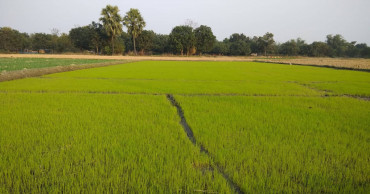
Khulna farmers losing interest in boro paddy cultivation
Low prices for crops in the previous season, the burden of loans and costly labour are discouraging an increasing number of farmers from growing boro paddy this year.
Agricultural experts said farmers in the southern region are turning away for various reasons, including increasing agriculture labour wage. This year, Khulna farmers did not buy 900 metric tonnes of boro seed of BADC.
Locals said aman paddy on 25,000 hectares and vegetables on 864 hectares of land were damaged during cyclone ‘Bulbul’. Besides, pest infestation damaged crops on several hundred acres in Rupsha, Botiaghata and Dumuria upazilas.
Farmers could not harvest anything but straws. Thousands of farmers were affected. Besides, they did not get fair prices for their produces in the aman season.
Md Liaqat Ali, Deputy Director of Khulna BADC (Seed), said cyclones ‘Fani’ and ‘Bulbul’ caused massive damage to farmers.
“There was a high demand for hybrid variety of,seed. Besides, many farmers opted for onion due to the unexpected price hike,” he said.
Sources at the agricultural office said 2,000 metric tonnes of seeds were allocated in the BADC’s warehouse of Satkhira, Kaliganj and Bagerhat for the current season. These include BR-26, BR-28, BRI-29, BRI-47, BRI-58, BRI-63, BRI-67, BRI-74, BRI-81 and BRI-86 varieties of paddy.
6 years ago