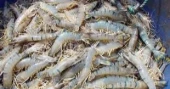
Vannamei Shrimp
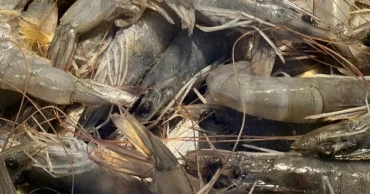
Bangladesh suspends Vannamei shrimp fry imports amid disease concerns
The Ministry of Fisheries and Livestock on Thursday (January 15, 2026) suspended all new and existing approvals for importing shrimp fry for Vannamei farming, citing risks of disease transmission and environmental pollution linked to the exotic species.
In a media release issued in the afternoon, the ministry said the decision was taken following a high-level meeting held on January 7, chaired by Fisheries and Livestock Adviser Farida Akhter, to review the environmental, social and economic impacts of Vannamei shrimp farming in Bangladesh and determine future actions.
Read more: Safe, quality shrimp production must be prioritised: Adviser Farida
The meeting noted that Vannamei shrimp is an import-dependent species and that the import of its fry poses risks of disease outbreaks, environmental degradation, and adverse impacts on indigenous species, including Bagda (black tiger shrimp) and Galda (freshwater prawn).
In this context, participants opined that unregulated expansion of Vannamei shrimp farming would not be appropriate.
The discussion emphasised keeping Vannamei shrimp farming limited to controlled, intensive and environmentally compliant systems. It was also decided that the activities of already approved Vannamei farmers would be closely monitored, with on-site evaluations to ensure full compliance with stipulated farming conditions.
Until such evaluations are completed, all forms of new and existing approvals for importing Vannamei shrimp fry will remain suspended, the media release said.
The meeting further decided to undertake necessary research to assess the environmental, social and economic impacts of Vannamei shrimp farming. Future policy and administrative decisions will be taken based on the findings of these studies.
At the same time, the ministry underscored the need to prioritise the expansion of domestic shrimp farming by boosting the production of indigenous Bagda and Galda shrimp, rather than relying on imported species, and to take up suitable projects to support this goal.
Read more: Human chain demands enforcement of law to stop saline shrimp farming in cropland
Fisheries and Livestock Secretary Abu Tahir Muhammad Zaber, Additional Director General of the Department of Fisheries Md Zia Haider Chowdhury, senior ministry officials, and fisheries officers from relevant districts, also attended the meeting.
9 months ago
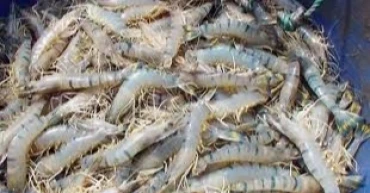
Bangladesh’s shrimp sector eyes $5bn boost with better policies
Bangladesh’s shrimp industry, once a $500 million export engine but now earning less than $300 million, could scale up to $5 billion within five years with the right policy support, industry leaders say.
An analysis of export data from the Export Promotion Bureau (EPB) shows that in the 2015-16 fiscal year, the country earned $529 million from shrimp exports. Since then, exports have dropped sharply.
While shrimp exports rose by 19 percent in the 2024-25 fiscal year, the figure is still far from the sector’s past heights.
Addressing why this promising industry has faltered and whether the current upward trend signals a strong future, Professor Asif Wares Newaz of Sher-e-Bangla Agricultural University’s Department of Fishing and Post-Harvest Technology said that the use of antibiotics against international standards, White Spot Disease in Bagda shrimp, and issues like jelly-pushing and using inappropriate antibiotics have negatively affected shrimp exports.
“Even if exporters process shrimp properly, most farmers remain outside monitoring. Without monitoring disease detection, control measures, and proper drug use, regaining lost reputation will be challenging,” he explained.
Asif added that Belgium once was a major market for Bangladeshi shrimp. That market is now dominated by India, the Netherlands, and Vietnam. India alone exports nearly $100 million worth of shrimp to this market, while Bangladesh’s share remains below $25 million.
Shrimp: Khulna’s ‘white gold’ eyes Tk 22,600cr export goal
Entrepreneurs believe Bangladesh has the potential to compete with India in shrimp exports. “India produces shrimp on 102,000 hectares of land. Bangladesh cultivates over 250,000 hectares. Yet India produces over one million metric tons of shrimp, while Bangladesh produces around 100,000 metric tons of Bagda shrimp,” said SK Kamrul Alam, vice president of the Bangladesh Frozen Food Exporters Association (BFFEA).
Kamrul noted that India’s lead is primarily due to its production of Vannamei (white leg) shrimp. Bangladesh received approval to produce Vannamei shrimp several years ago but has not yet started exports. He said leveraging Bangladesh’s shrimp farming land for Vannamei production could break records in exports.
“Once Vannamei shrimp exports start, it will be possible to earn $5 billion solely from shrimp by 2030,” Kamrul added.
Experimental Vannamei shrimp farming began in 2021 at the research center in Paikgacha, Khulna. The following year, eight companies received experimental cultivation permission, followed by approval for four more firms. Commercial production began last year.
Businessmen cite bureaucratic delays as a major reason for the slow roll-out of Vannamei farming. They said an investment of 2–2.5 million Vannamei shrimp could yield sales worth BDT 4.5 million.
“Per hectare, Bagda production is around 500 kg, while Vannamei yields 12–15 tons. Eighty percent of the world’s shrimp exports are Vannamei. Yet we are still stuck with Bagda shrimp. Bureaucratic hurdles delayed approval for almost a decade,” said Kamrul.
500 shrimp enclosures washed away after an embankment collapsed in Satkhira
Farmers, however, still face challenges obtaining permits for Vannamei shrimp farming. Farmers in Satkhira and Bagerhat said that special approval from the Department of Fisheries is required, which is a lengthy process, preventing them from taking advantage of this profitable crop.
“Vannamei shrimp farming requires compliance with multiple guidelines. While it can yield 30–50 percent profit, high initial investment deters common farmers,” said Awal Haque, a shrimp farmer from Shyamnagar, Satkhira.
Seafood manufacturers say they are ready to enter contract farming with shrimp farmers once Vannamei cultivation starts, which would reduce costs for farmers and ensure profits for companies. BFFEA Senior Vice President Tariqul Islam Zaheer emphasized that adequate preparation is essential before starting Vannamei shrimp exports.
“Initial investment exceeds BDT 2 million. If farmers are not properly trained, starting Vannamei cultivation could backfire. Training is needed for pond preparation and shrimp rearing practices,” he said.
Zaheer also highlighted old challenges in shrimp farming, noting that despite being a large sector, farmers have no insurance, and loans for shrimp farming do not enjoy special benefits. Even with low-interest loans available for other crops, fish farmers get no similar support. Subsidies in electricity for fish farming are also absent. Faced with these difficulties, many farmers are filling ponds and moving to land-based farming, causing the fading of the once-famous “white gold” shrimp legacy.
“Although exports reportedly increased, the real picture is different. The rise largely reflects higher dollar prices, not actual export volumes,” Zaheer said.
BFFEA members revealed that while around 100 companies are engaged in shrimp exports, 70 have shut down due to raw material shortages. Without government support, there are fears that the sector could collapse again.
Read more: Chinese Ambassador expresses interest in importing hilsa from Bangladesh
Experts also stress the need for further research on the genetics of Vannamei shrimp. Unlocking the genetic potential, as done with hilsa and jute, could enable Bangladesh to produce high-quality shrimp seedlings adapted to its climate, reducing reliance on harmful antibiotics.
Adviser to the Ministry of Fisheries and Livestock, Farida Akhter, told UNB that while shrimp farming has potential, Bangladesh is yet to fully benefit. The ministry is observing how countries like Vietnam and India are succeeding and will soon introduce business-friendly measures for shrimp farming.
“One cannot look only at the business side; climate and environmental factors also matter. In areas like Satkhira-Bagerhat, lands have been illegally acquired for shrimp farming, increasing salinity and reducing crop yields. Scientific decisions are needed,” she said.
Farida added that low-interest loans are being arranged for fish farmers. Steps have been taken to free farmers from predatory lending and restrictive enclosures, and special emphasis is being placed on subsidised electricity.
BFFEA has independently prepared a research report on measures to boost shrimp farming. They will soon present their findings to the government, believing that with support, Bangladesh can revolutionize shrimp exports and reclaim its “White Gold” legacy.
Read more: Shrimp: Khulna’s ‘white gold’ eyes Tk 22,600cr export goal
11 months ago
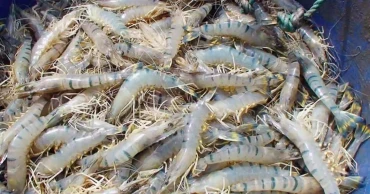
Shrimp: Khulna’s ‘white gold’ eyes Tk 22,600cr export goal
Shrimp, once known as the ‘white gold’ of Bangladesh’s southwest and a major export from Khulna, has declined due to fierce global competition and the growth of vannamei shrimp farming in neighbouring countries.
Now, after years of stagnation, the sector is showing signs of recovery as the Department of Fisheries has rolled out a series of measures aimed at restoring the industry’s lost luster, and the results are beginning to show.
According to the Export Promotion Bureau (EPB), shrimp exports from Khulna over the last five years totalled Tk 11,300 crore.
Authorities have now set an ambitious goal to double that figure within the next five years.
Department of Fisheries data reveal that the region exported 1,53,388 metric tonnes of fish between FY2020 and FY2025, generating Tk 13,456 crore in revenue. Of this, shrimp accounted for 1,02,339.629 tonnes, bringing in Tk 11,301 crore.
500 shrimp enclosures washed away after an embankment collapsed in Satkhira
In FY2024-25 alone, Khulna produced 1,23,151.17 metric tonnes of shrimp, with 19,512 tonnes exported — earning Tk 2,499 crore. The shrimp export rate for the region during the year stood at 42.19%.
To boost output, the Khulna office of the Department of Fisheries has adopted several strategic initiatives. These include advanced training in shrimp cultivation for 10,750 farmers, supplying equipment to 7,500 of them, and promoting cluster-based farming to help traditional farmers multiply their yields two- to fivefold.
Demonstrations under ‘Field Days’ are motivating farmers, while biosecurity and hygiene measures are being enforced to ensure better quality. Officials are also encouraging farmers to pursue third-party certification for improved prices in international markets.
Lipton Sardar, Divisional Fisheries Inspection and Quality Control Officer in Khulna, stressed the need for long-term, shrimp-focused projects.
“There needs to be a dedicated policy framework for shrimp, including zoning of shrimp farming areas, infrastructure development, timely supply of disease-free larvae and guaranteed access to quality feed,” he said.
He also highlighted the importance of strict testing of fry, feed, medicines and chemicals, alongside the establishment of a separate staffing structure to oversee production and quality control in shrimp-rich districts.
“Building institutional capacity to diagnose and treat shrimp diseases, while ensuring responsible practices among exporters, is essential to restore buyer confidence,” Sardar added.
Tariqul Islam Zahir, Senior Vice President of the Frozen Foods Exporters Association, said the region once had 63 shrimp processing companies, but declining production and global market demand forced 33 to close.
“Despite increased bank interest rates and rising electricity bills, some companies are still operating. The frozen shrimp sector is now beginning to recover,” he said, urging the government to provide subsidies for power and production costs.
Exporters say shrimp remains vital to the national economy. However, falling demand and prices in Europe, coupled with irregular payments from foreign buyers, have hurt earnings.
Viral outbreaks have further dented production, while the COVID-19 pandemic, the Russia-Ukraine war and domestic political turbulence compounded challenges.
Repeated shipment cancellations pushed many exporters to the brink of collapse. Yet a recent surge in exports has rekindled hope across the industry.
Stakeholders in Khulna believe that, with continued policy support and improved production standards, the ‘white gold’ can reclaim its former glory and secure an even stronger foothold in the global seafood market.
Read more: Khulna falls short of jute production target for lack of incentives
1 year ago

Vannamei shrimp: Govt approves commercial cultivation
The government has approved the commercial cultivation of vannamei shrimp -- also known as king prawn -- in Bangladesh.
The Ministry of Fisheries and Livestock approved the cultivation of vannamei shrimp in a letter to the Director General of the Fisheries Department on March 29. At the same time, guidelines for commercial shrimp cultivation in Bangladesh were provided.
Vannamei shrimp now accounts for 77 percent of the world's shrimp trade. This species of shrimp – also known as the whiteleg shrimp is now being commercially cultivated in 62 countries. Of these, 15 are in Asia.
The demand for vannamei shrimp in the global market is high as the price is lower than that of Bagda shrimp.
Read more: Climate change: Shrimp farming endangered in Khulna
Bangladesh’s shrimp export has been in decline in the past few years as the country mainly cultivates and exports freshwater shrimp species such as black tiger shrimp, or ‘bagda’, and scampi shrimp, or ‘galda’.
Exporters have been urging the government to allow commercial cultivation of King Prawn. The shrimp exporters of Khulna thanked the authorities for implementing their long-standing demand.
Meanwhile, local shrimp producers have expressed concern over the development as they’re not well equipped to produce vannamei shrimp locally.
Abdur Rahim, a local shrimp producer from Khulna’s Paikgacha upazila said: “If the commercial cultivation of vannamei shrimp starts locally, we will face a huge loss in terms of shrimp production as the demand will decrease in the market.”
Read more: Shrimp farmers in Bagerhat stare at starvation
Among the shrimp exporting countries of Asia, commercial cultivation of the king shrimp was banned only in Bangladesh.
Following approval from the Fisheries Department of the Fisheries and Livestock Ministry, Vannamei Shrimp has been harvested experimentally in six ponds of Bangladesh Fisheries Research Institute (BFRI) in Khulna’s Paikgacha upazila. And it has demonstrated significant commercial potential.
What is vannamei shrimp?
The vannamei species of shrimp, popularly known as the king prawn, is originally from the US state of Hawaii.
Neighbouring India began commercial cultivation of vannamei shrimp in 2008. Meanwhile, in 1998, Thailand and China started commercial vannamei shrimp cultivation.
Read More: Vannamei Shrimp pilot project shows commercial potential
In 1987, the Philippines initiated commercial vannamei shrimp cultivation. Myanmar and Vietnam entered the market in the year 2000.
According to the Food and Agriculture Organization of the United Nations and the Global Aquaculture Alliance, The global vannamei shrimp production in 2018 was 35.5 lakh metric tons, while the bagda and galda shrimp production was 5.5 lakh metric tons and 2.4 lakh metric tons respectively. Apart from this, 3 lakh metric tons of other species of shrimps have been produced.
Of the total global production of vannamei shrimp in 2018, 23.91 lakh metric tons were produced in China, India, Vietnam, Thailand, Indonesia, and Malaysia. In 2019, production in these countries increased to 31.12 lakh metric tons while Bangladesh's contribution to the market remained zero.
According to experts, commercial production and export of Vanami shrimp can earn 3 to 4 billion US dollars in revenue and it will help Bangladesh regain its position in the global shrimp market.
Read More: Shrimp industry reels from changing demand patterns, slump in world economy
3 years ago

Vannamei Shrimp pilot project shows commercial potential
Pilot project of producing Vannamei Shrimp or King Prawn in Khulna is showing chances for the fish to emerge as an alternative to Bagda Shrimp or Tiger Prawn.
Once produced successfully, the fish has the potential to increase the presence of the country’s potential shrimp industry in the global arena.
Vannamei Shrimp has been experimentally harvested for the second time in six ponds of Bangladesh Fisheries Research Institute (BFRI) in Khulna’s Paikgasa upazila following the approval from Fisheries Department under the Fisheries and Livestock Ministry.
Also read: Gel-injected shrimps seized in Khulna, 18 held
The project was proved successful during the harvesting programme on Friday.
According to project sources, 72 percent of the world’s shrimp market is occupied by Vannamei Shrimp. As production of this fish isn’t widespread in Bangladesh, the country has to compete for 28 percent of market share through exporting Freshwater Prawn (Golda Shrimp) and Tiger Prawn.
Besides, the prices of Vannamei Shrimp are much lower than Freshwater and Tiger Prawns. As a result, Bangladeshi Shrimp traders have to incur losses due to exporting costly Golda and Bagda Shrimps at the rate of Vannamei Shrimp.
Through semi-intensive process, around 1,500 kilograms of Golda and Bagda Shrimps can be produced in an acre of area, while the production capacity is at least 5,000kg for Vannamei Shirmp within the same space. If commercial production of Vannamei Shrimp gains pace in Bangladesh, Shrimp production will increase fivefold in the next five years.
Also read: Shrimps inflated with jelly seized in Jashore
The Vannamei Shrimp harvesting programme was inaugurated by Mohammad Yamin Chowdhury, Secretary of the Fisheries and Livestock Ministry. Kh Mahbubul Haque, Director General of the Fisheries Department, Yahia Mahmud, Director General of BFRI, and Momotaz Begum, Paikgasa Upazila Nirbahi Officer (UNO), among others, were present at the programme.
4 years ago