Foreign Policy
Bangladesh buries submissive foreign policy, will never bow to anyone: FM
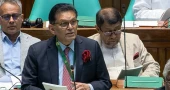
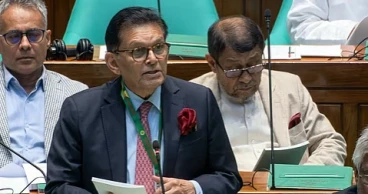
Foreign Minister Dr Khalilur Rahman on Thursday said Bangladesh has buried the submissive foreign policy of the past and will never bow to any country again.
Responding to a supplementary question from Naogaon-3 lawmaker Md Fazley Houda during the question-answer session in Parliament, the minister outlined the government’s foreign policy.
“Thanks to the strong and successful foreign policy pursued by our honourable Prime Minister, we are now standing tall with our heads held high,” he said.
“Under the Prime Minister’s leadership, we will continue to pursue this foreign policy, and Bangladesh will never again bow its head before anyone. We have buried the submissive foreign policy,” Khalilur said.
Referring to the previous Awami League regime, he said Bangladesh’s foreign policy had, to a large extent, not remained under its own control during the 15 years of what he described as misrule.
The minister said the government is now preparing Key Performance Indicators for every Bangladeshi mission abroad and will evaluate their performance accordingly.
“We will place all the relevant information before Parliament when we present the next budget. You have the right to know this information,” he said.
Ganges Treaty
Replying to another supplementary question from Bagerhat-4 lawmaker Abdul Aleem, Khalilur said Bangladesh remains active in pursuing its fair share of water from common rivers.
He said a team has been formed to prepare a new agreement following the expiry of the Ganges Water-sharing Treaty, and the Indian authorities have been informed accordingly. “We are now waiting for their response,” he said.
Teesta project
The minister said Bangladesh has started a technical evaluation with China regarding the Teesta project, adding that further steps will be taken based on the outcome of the assessment.
The third session of the current Parliament began at 3:00pm with Speaker Hafiz Uddin Ahmad in the chair.
The first hour of the day’s proceedings was devoted to the question-answer session.
22 days ago
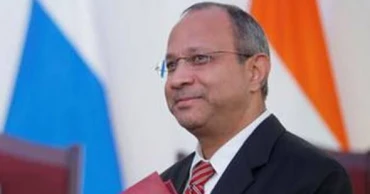
Security key to India’s neighborhood policy: Pankaj Saran
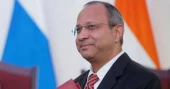
The aspect of security for India is a very important element of India's policy in the neighborhood, said Pankaj Saran, Convenor of NatStrat, a Delhi-based independent centre for research on strategic and security issues, noting that India is keen to build ‘new page’ in ties with Bangladesh after elections.
"We have to see how the new government in Bangladesh will manage its relations with China, Pakistan, and the United States, and where India will fit into this," said the expert, who served in key positions within the Government of India in the Prime Minister’s Office, the National Security Council Secretariat, the Ministry of External Affairs, and in several Indian Missions abroad.
On the one hand, India has a focus on security for its own interests but on the other hand, what India also wants to do is to ensure that it pursues policies in the neighborhood, minus Pakistan, he said.
"China has borders with Afghanistan, Pakistan, Nepal, Bhutan, and Myanmar. So, China's relationship with all these countries also becomes important for us," said Pankaj Saran, a former diplomat with forty years of experience in foreign, strategic, and national security affairs.
4 months ago

FM reaffirms Bangladesh’s commitment to strengthen ties with Belgium
Foreign Minister Dr Khalilur Rahman on Monday met Deputy Prime Minister and Foreign Minister of Belgium Maxime Prevot in Brussels, reaffirming Bangladesh’s commitment to strengthening bilateral relationship.
They discussed key areas of mutual interest including trade and investment, multilateral cooperation (including at the United Nations), migration, visa and consular issues, and the Rohingya crisis, said the Ministry of Foreign Affairs.
Prime Minister’s Foreign Affairs Adviser Humaiun Kobir and Secretary of the Ministry of Foreign Affairs Dr Md Nazrul Islam, among others, were present at the meeting.
The Foreign Minister is currently visiting Brussels.
On his way back home, the Foreign Minister is expected to make a stopover in Addis Ababa, Ethiopia and will return to Bangladesh on April 24, said a senior official.
4 months ago
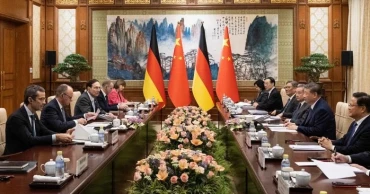
China, Germany vow closer cooperation despite differences amid global uncertainty
China and Germany on Wednesday pledged to strengthen ties despite major differences, including over Russia’s war in Ukraine, as both sides seek stability in a turbulent global environment.
The commitment came as German Chancellor Friedrich Merz met separately in Beijing with Chinese President Xi Jinping and Premier Li Qiang. The leaders of the world’s second- and third-largest economies stressed the need for deeper communication and trust at a time of rising geopolitical tensions and shifting global dynamics.
Xi said that the more complex and uncertain the world becomes, the more China and Germany should enhance strategic communication and mutual trust. He also noted that the world is facing the most profound changes since World War II.
Merz responded that while challenges and disagreements exist, both countries should focus on shared interests and tackle global challenges together.
On his first China visit since taking office in May, Merz highlighted Beijing’s key role in addressing global issues, including the Ukraine conflict. After the meetings, he said he had urged Chinese leaders to use their influence to help end the war, noting that signals from Beijing are taken seriously in Moscow.
China reiterated support for a political settlement, saying any solution must address the legitimate concerns of all sides and involve equal participation.
The visit comes as many world leaders head to Beijing while China seeks broader support against US tariff policies introduced by President Donald Trump and challenges to the post-World War II global order.
Merz stressed that Europe wants a balanced, reliable and fair partnership with China. However, trade imbalances remain a concern. Germany’s imports from China rose 8.8% to 170.6 billion euros last year, while exports to China fell 9.7% to 81.3 billion euros.
European leaders also want more Chinese investment in local manufacturing and reduced industrial overcapacity in sectors like electric vehicles and solar panels.
Merz said he was satisfied with the talks and pointed to potential business cooperation, including a possible Chinese order for up to 120 Airbus planes. He also plans to visit Hangzhou’s tech hub, including robotics firm Unitree, before heading to Washington for further talks.
6 months ago

Time to view Bangladesh differently: Shama Obaed
State Minister for Foreign Affairs Shama Obaed on Thursday said Bangladesh has issues and challenges with all countries, which will be addressed through discussions at bilateral and multilateral forums.
“We want to look forward, keeping our backbone strong and straight. That backbone has now become stronger after a long time as the government came through people’s mandate. All now need to look at Bangladesh from a different perspective,” she told reporters at the Ministry of Foreign Affairs, sharing how the foreign policy of a democratic government should be.
Asked about the interim government's reported policy position regarding deployment of Bangladeshi troops to Gaza and renewal of the 30-year-old Ganges water-sharing treaty with India, the State Minister said these issues have not yet been discussed at the political level.
"These are not discussed yet. To be honest, this is only the second day of the government. But you will have to wait…those political decisions will definitely,” she said.
On relations with India, China and the United States, Shama said Bangladesh has issues and challenges with all countries and would address them through both bilateral and multilateral engagements.
"We will maintain relations with all states and governments. Our foremost priority is to safeguard the interests of Bangladesh and its people," she said.
The State Minister said they will keep in touch with all countries, talk and advance relations through friendship.
She said the current administration is a democratically elected government after many years and will pursue foreign policy with a firm and principled stance, placing the interests of people first.
The State Minister said Bangladesh will continue its engagement with all countries and affirmed that the government’s foreign policy would reflect the will and aspirations of the people.
She said the government would safeguard the interests of the people of Bangladesh while maintaining cordial relations with all nations.
Diplomacy, she said, will be conducted in a manner that effectively protects national interests.
She said the officials of the Ministry of Foreign Affairs are very experienced and they will work as a team.
She also highlighted the need to conduct foreign policy with a united stance in the national interest, regardless of political party, opinion and religion.
On visa restrictions imposed by several countries, Shama said the Ministry is aware of the challenges and is actively working to resolve them through diplomatic channels.
"We are examining how these issues can be addressed and how we can move forward in a constructive manner," she said
Foreign Minister Dr Khalilur Rahman and the State Minister held a series of meetings with senior officials of the Ministry in the morning.
7 months ago

Next Bangladesh govt will need to navigate tricky foreign policy issues: Crisis Group
The International Crisis Group has said the incoming administration in Bangladesh will need to address a raft of challenges, from weak institutions to a sluggish economy heavily dependent on garment exports and remittances to the growing effects of climate change in one of the world’s most densely populated countries.
It will also need to 'navigate tricky foreign policy issues, particularly relations with India, the implications of the intensifying U.S.-China rivalry' and the lack of progress toward resolving the status of more than one million Rohingya refugees languishing in camps near the Myanmar border, said Thomas Kean, Crisis Group’s Senior Consultant on Myanmar and Bangladesh.
He said an elected government with a five-year term will be better positioned to manage the country’s political rancour and social and economic challenges than an interim administration, but the tasks at hand are many and complex.
"If the result is contested, it could spiral into a political crisis, testing the fragile consensus that has underpinned the transition," said Kean.
He made the remarks while commenting further on the latest Q&A, 'Curtain Falls on Bangladesh’s Interim Government as Critical Elections Approach', which examines what is at stake in Bangladesh’s 12 February election.
Even if the vote passes peacefully, Kean said the next government will face mounting pressure to meet the aspirations of a youthful and frustrated population and to deliver reforms, starting with the July Charter, or risk reinforcing perceptions that the promised political change has been largely cosmetic.
“Predicting the outcome of the 12 February poll is challenging because Bangladesh’s electoral landscape has shifted so much," he said.
The biggest risks revolve around security: political violence is already on the rise - at least sixteen politicians have been killed since the election schedule was announced, Kean said.
He said there is a real danger of further attacks on candidates, as well as reprisals against Awami League supporters or Bangladesh’s Hindu minority.
The International Crisis Group is an independent organisation working to prevent wars and shape policies that will build a more peaceful world.
Crisis Group has offices in Bogotá, Brussels, Dakar, Istanbul, London, Nairobi, New York and Washington, DC and has a presence in more than 25 different locations in Africa, Asia, Europe, the Middle East and the Americas.
Highlighting the main challenges facing the next government, Kean said the 12 February elections are crucial for several reasons.
There are also concerns over the growing influence of radical Islamist groups, such as Hizb ut-Tahrir, which have become more prominent since former Prime Minister Sheikh Hasina’s ouster, and the capacity of state forces to watch out for violent extremist activity, he observed.
Perhaps, Kean said, the most important threat to stability in the years ahead would stem from a failure to meet the aspirations of Bangladesh’s youthful population.
Roughly half are under 30, and many struggle to find work that matches their education level, leaving a deep sense of frustration.
Any stumble in seeing through reforms, starting with the July Charter, would risk reinforcing a perception that the political change they were promised has been cosmetic, he said.
The incoming government will also have to grapple with the 'thorny issue of political reconciliation.'
Given its prominence in the country’s history and its strong electoral base, the Awami League cannot remain on the sidelines forever, Kean said.
But the party’s actions under Hasina, particularly in July-August 2024, mean that allowing it to come back to the electoral arena, even under new leadership, will be politically fraught, he said.
India and other foreign governments with influence could help broker dialogue between the party and the future government to come to an agreement, Kean said.
Foreign governments, he said, many of which have cheered on Prof Muhammad Yunus and his colleagues, should extend support to the incoming government as it seeks to turn the page on Bangladesh’s recent turbulence.
7 months ago
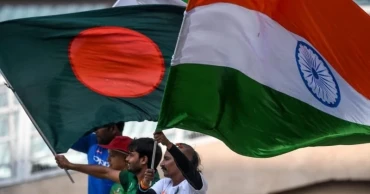
‘Goodwill prevails’ as Bangladesh, India prioritise cooperation over confrontation
Despite occasional tensions, Bangladesh and India continue to value goodwill and good neighbourliness, recognising that cooperation, not confrontation, best serves the interests of the two close neighbours bound by shared history, borders and cultural ties.
The recent visit by India’s External Affairs Minister Dr S Jaishankar to Bangladesh signals a renewed emphasis on advancing this spirit of good neighbourliness and partnership based on mutual respect.
“For any country in diplomacy, relations with neighbors get priority, especially for those who are not global powers - for example, Bangladesh. For them, relations with neighbors are very important,” said Foreign Affairs Adviser Md Touhid Hossain, highlighting the importance of relations with big and small neighbors.
The Adviser, who believes in the country’s permanent interest, said one of their key tasks is to maintain good relations with all small and big neighbors and try to get benefits out of that.
Bangladesh is connected with India through trade, connectivity, water sharing, security and people-to-people exchanges.
“When Bangladesh and India remain sensitive to each other’s concerns and avoid actions that undermine the other’s interests, it helps reduce misunderstandings and build confidence,” said a diplomat.
Prepared to engage with any govt emerges through inclusive polls in Bangladesh: India
Such an approach, the diplomat thinks, strengthens regional stability, supports economic growth, and enables both nations to address common challenges through dialogue.
Adviser Hossain said foreign policy is, to a large extent, influenced by domestic policy. “You can’t forget it.”
During an event at IIT Madras in Chennai, Jaishankar on Friday replied to a question on India’s neighborhood policy and Bangladesh issues, days after attending the funeral of former Prime Minister Begum Khaleda Zia in Dhaka.
Good Neighbours
He highlighted the difference between “good neighbors” and “bad neighbors,” and said India supports and assists countries that maintain cooperative ties. He cited examples such as vaccine diplomacy, economic aid and crisis support.
At the same time, he asserted India’s right to defend itself against neighbors that persist with terrorism, stressing that New Delhi’s approach is guided by common sense and national interest.
“If you have a neighbor who is good to you, or at least who is not harmful to you, your natural instinct is to be kind and to help that neighbor. If the neighbor has a problem, you would like to contribute in some way. If nothing else, you will say hello, you will try to build friendships and bonding, and that is what we do as a country,” Jaishankar said.
He said whenever there is a spirit of good neighborliness, India chooses to invest, help and share. “With good neighbors, India invests, helps and shares, whether it was vaccines during COVID, fuel and food support during the Ukraine conflict, or the $4 billion assistance to Sri Lanka during its financial crisis.”
Wishing Bangladesh well for the upcoming national election, Jaishankar said the sense of neighborliness in the region will grow once things settle down.
"Right now, they (Bangladesh) are heading for elections. We wish them well in that election. We hope that once things settle down, the sense of neighborliness in this region will grow," he said.
Jaishankar wishes Bangladesh well for polls, hopes deepened neighbourly ties
Highlighting the growth of India, Jaishankar said if India grows, all its neighbors will grow with them.
"We will have many more opportunities. I think that in a sense is the message that I also took to Bangladesh," said Jaishankar who visited Bangladesh recently.
Bad Neighbours
Jaishankar also spoke about India’s “bad neighbours” and said if a country decides to “deliberately, persistently, unrepentantly continue with terrorism” India has the right to protect itself from such “neighbours”.
“We will exercise that right. How we exercise that right is up to us. Nobody can tell us what we should do or not. We will do whatever we have to do to defend ourselves. It is a common sense proposition,” he said.
South Asian nations’ gesture highlights Khaleda’s respect, stature: Foreign Adviser
The Indian External Affairs Minister said if there is no good neighbourliness, “you do not get the benefits of that good neighbourliness. You cannot say, "Please share water with me, but I will continue terrorism with you.”
Economic Interests
Finance Adviser Dr Salehuddin Ahmed has recently said Bangladesh manages its ties with India by keeping economic interests distinct from political rhetoric, with trade-related decisions driven by competitiveness and national interest rather than diplomacy.
“Our trade policy is not driven by political considerations. If importing rice from India is cheaper than sourcing it from Vietnam or elsewhere, then it makes economic sense to buy from India,” he said while talking to reporters after a meeting of the Advisers Council Committee on Government Purchase.
Salehuddin said Bangladesh would import essentials such as rice from India if prices remain competitive, regardless of the prevailing political discourse between the two neighbours, mentioning that imports from alternative markets could cost Tk 10 more per kilogram.
Khaleda's passing leaves irreplaceable void, but her vision, legacy will endure: Modi
Salehuddin stressed that Bangladesh has never pursued punitive trade measures against India for political reasons. “We do not believe in using trade as a tool for political retaliation. Our priority is to ensure supplies at the best possible price for our people,” he added.
Deep Relations
“Relations between Bangladesh and India are so deep ... .it will remain good in the future. There is no alternative to maintaining good relations between the two countries,” said Chief Adviser Prof Muhammad Yunus recently.
Referring to huge "interdependencies" on each other, he said the relationship between Bangladesh and India is historically, politically and economically very close and they cannot deviate from this.
Bangladesh will hold a high-stakes national election on February 12 the first polls since mass uprising last year, excluding the Bangladesh Awami League, activities of which remain suspended.
The Chief Adviser said Bangladesh is fully prepared to hold 'free, fair, and peaceful' elections on February 12 next year.
Jaishankar hands over PM Modi’s personal letter to Tarique Rahman
Highlighting the importance of stability and inclusive elections in Bangladesh, India said it wants close and friendly relations with the people of Bangladesh, which is rooted in the liberation struggle and strengthened through various development and people-to-people initiatives.
“We are in favour of peace and stability in Bangladesh and have consistently called for free, fair, inclusive and credible elections conducted in a peaceful atmosphere,” Randhir Jaiswal, official spokesperson at the Ministry of External Affairs (MEA).
8 months ago

Maintaining balanced relations extremely important for Bangladesh: Touhid Hossain
Foreign Affairs Adviser Md Touhid Hossain has laid emphasis on maintaining "balanced relations" while pursuing its broader foreign policy, noting that the term "non-aligned" has become actually almost “defunct” these days.
"For a country like Bangladesh, it is extremely important that we maintain a balanced relationship," he said on Monday, adding that very few (countries) are truly non-aligned.
Hossain made the remarks while responding to a question at an international seminar at the Foreign Service Academy.
While speaking at the closing session of the seminar, the Foreign Adviser said Bangladesh has been very firm on many issues of foreign policy, including the Rohingya crisis.
He also referred to the relations between India and China while Bangladesh is maintaining good relations with both.
The Foreign Adviser also highlighted the importance of Bangladesh’s relations with the United States where Bangladesh has a huge market and a huge diaspora.
In terms of balancing relations with the important countries, Hossain said, they are doing quite well though the evaluation will come at the end of their term, not now.
Responding to a question, the Foreign Adviser said technically the Rohingyas are not refugees and they do not address them as refugees but they accept the position of the UNHCR to take care of them.
Read: India hopeful of greater trade connectivity, economic engagement with Bangladesh
The Foreign Adviser laid emphasis on a complete roadmap in terms of repatriation of the Rohingyas to their place of origin – Rakhine – ensuring their safety and dignity.
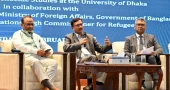
The Department of International Relations and the Center for Genocide Studies at the University of Dhaka in collaboration with the Foreign Service Academy and the United Nations High Commission for Refugees organized the seminar titled “The Rohingyas in Bangladesh: In Search of a Sustainable Future.”
1 year ago
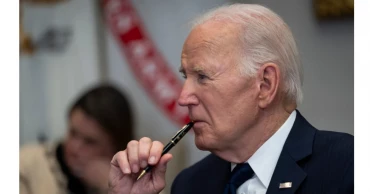
Biden to deliver capstone address on foreign policy legacy
President Joe Biden plans to deliver a capstone address Monday on his foreign policy legacy, according to the White House.
The outgoing president is expected to use his address at the State Department to highlight his administration's efforts to expand NATO, rally dozens of allies to provide Ukraine with a steady stream of military aid to fight Russia, forge a historic agreement between Japan and South Korea to expand security and economic cooperation and more, according to a senior administration official who requested anonymity to preview plans for the address.
US SC rejects Trump’s bid to delay sentencing in his hush money case
Biden also picked the State Department for his first major foreign policy speech at the start of his presidency nearly four years ago.
During that February 2021 address, Biden sought to send an unambiguous signal to the world that the United States was ready to resume its role as a global leader after four years in which President Donald Trump pressed an “America First” agenda.
But the one-term Democrat will bid farewell to U.S diplomats and make the case for his worldview as Trump prepares to return the White House with plans to drastically overhaul American foreign policy.
The president-elect has decried the cost of US support for Ukraine's war effort, called for NATO members to dramatically increase defense spending and said he would not rule out the use of military force to seize control of the Panama Canal and Greenland, as he insists US control of both is vital to American national security.
1 year ago
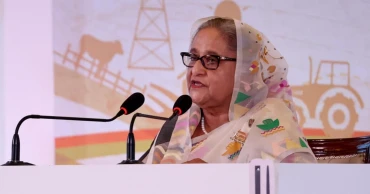
Bangladesh’s strong position in int’l arena due to AL’s successful foreign policy: PM
Prime Minister Sheikh Hasina has said if her party Awami League is re-elected, Bangladesh's development cooperation with all the countries will continue.
“Bangladesh has occupied a strong and prestigious place in the international arena due to the success of Awami League’s foreign policy, following the principle of ‘friendship to all, malice towards none’ as directed by the Father of the Nation, Bangabandhu Sheikh Mujibur Rahman,” she said today while announcing AL’s manifesto for the 12th National Parliamentary Election.
The AL President said cooperation with neighboring countries will continue in various areas, including cross-border communication, transit, energy partnership, and equitable water-sharing.
Read: Come to polling centres early, cast votes for Boat: PM Hasina at Pirganj rally
She said Bangladesh is firmly determined to prevent the presence of militants, international terrorists, and separatist groups on its territory.
The Awami League government will play an important role in forming the South Asia Task Force to combat terrorism and militancy and eliminate them from the entire region, Hasina said.
“We believe in peace, not war,” she said, adding that to enhance the defense capability of the armed forces to protect the security, sovereignty, and integrity of the country, the formulation and implementation of ‘Forces Goal-2030’ is ongoing in light of the ‘Defense Policy, 1974’ formulated by the Father of the Nation, Bangabandhu Sheikh Mujibur Rahman.
Read: Bangladesh and Kosovo can boost bilateral trade: PM tells outgoing envoy
She said the efficiency and discipline of the defense forces will continue to improve, and management will continue to develop in light of Forces Goal 2030.
Hasina said necessary measures will continue to be taken to increase the professional skills of the officers and soldiers of the armed forces and their job opportunities according to the country's capability.
“To ensure the security of the country and the people, the capacity building of the defense system will continue. New welfare-oriented schemes and programs will be taken up for all ranks of the armed forces,” PM Hasina said.
Read more: In Smart Bangladesh Awami League pledges more safeguards for minorities, end of intolerance
2 years ago