Metro Rail
ECNEC clears three metro rail projects involving Tk 2.50 lakh crore
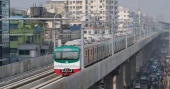
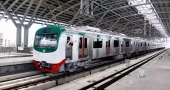
The government has approved three metro rail projects involving a combined estimated cost of about Tk 2.50 lakh crore including a new MRT Line-5 Southern Route project and revised costs for Japan-funded MRT Line-1 and MRT Line-5 Northern Route.
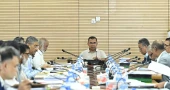
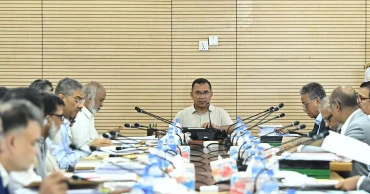
The projects were approved at a meeting of the Executive Committee of the National Economic Council (ECNEC) held at Secretariat on Wednesday, with Prime Minister and ECNEC Chairperson Tarique Rahman in the chair.
The new 17.20-kilometre MRT Line-5 Southern Route connecting Gabtoli with Dasherkandi has been approved at an estimated cost of Tk 45,503.76 crore.
Of the amount, the government will provide Tk15,197.66 crore, while Tk 30,306.10 crore will come as project loans from the Asian Development Bank and South Korea’s Economic Development Cooperation Fund.
The route will include 13.10 kilometres of underground tracks and is scheduled to be implemented from September 2026 to August 2033.
The project will pass through Technical intersection, Kalyanpur, Shyamoli, College Gate, Asad Gate, Sukrabad, Karwan Bazar, Hatirjheel, Tejgaon, Aftabnagar, Nasirabad and Dasherkandi.
The ECNEC also approved revised cost proposals for MRT Line-1 and MRT Line-5 Northern Route, both of which were originally approved in 2019.
The revised cost of the 31.24-kilometre MRT Line-1 connecting Hazrat Shahjalal International Airport with Kamalapur has been set at Tk1,14,394.89 crore, up from the original Tk52,561.43 crore.
The increase is Tk61,833.46 crore, or 117.64 percent.
Under the revised proposal, the government’s contribution will rise to Tk30,552.26 crore, while the Japan International Cooperation Agency (JICA) loan will increase to Tk83,842.63 crore.
The revised proposal cited delays in design and tender preparation during the Covid-19 pandemic and complexities associated with implementing the country’s first underground metro rail project as some reasons for the higher cost.
Changes during detailed design included larger stations, relocation of station entrances, exits and ventilation shafts, a three-storey Rajarbagh station and around 20 kilometres of detour roads for traffic management during construction.
The cost of the 20-kilometre MRT Line-5 Northern Route from Hemayetpur to Bhatara has been revised to Tk 89,848.36 crore from Tk 41,238.54 crore, an increase of Tk48,609.82 crore, or 117.88 percent.
The government contribution will rise by 84.22 percent to Tk22,330 crore, while the JICA loan will increase by 131.89 percent to Tk67,518 crore.
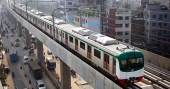
Hemayetpur-Amin Bazar section of the Northern Route will be elevated, while Amin Bazar-Bhatara section will run underground through densely populated areas.
The project was originally scheduled for completion by 2028. The revised proposal extends the completion target to 2032.
The combined original cost of MRT Line-1 and MRT Line-5 Northern Route was Tk93,799.97 crore.
Their combined revised cost now stands at Tk2,04,243.25 crore, an increase of Tk1,10,443.28 crore, or 117.74 percent.
The revised combined figure is Tk9,741.84 crore lower than the Tk2,13,985.09 crore proposed earlier by Dhaka Mass Transit Company Limited following a reassessment of construction, land development, buildings, electrical and mechanical systems, utility relocation and equipment costs.
The ECNEC meeting also approved other development projects from several ministries, including Roads and Highways, Defence, Rural Development and Cooperatives, Railways, Labour and Employment, and Power, Energy and Mineral Resources.
2 days ago
27 metro rail bearing pads critical, cracks found in 46 piers: Minister
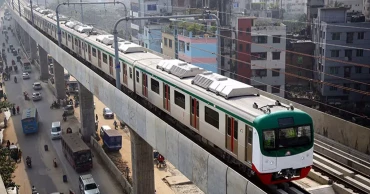
Twenty-seven defective bearing pads on the Dhaka Metro Rail route have been identified as critical, while cracks of varying degrees have been detected in 46 piers, Road Transport and Bridges Minister Shaikh Rabiul Alam told Parliament on Wednesday.
He disclosed the information while replying to a question from Cumilla-9 MP Abul Kalam during the question-answer session in Parliament.
According to the minister, a safety audit found that all 730 bearing pads along the metro rail route were not in critical condition.
Of the total, defects in 147 bearing pads were classified as minor, while defects in 297 pads were primarily related to installation workmanship. The remaining 27 defective bearing pads were categorised as critical.
The safety audit committee also identified cracks of varying degrees in 46 piers.
The minister said steps have already been initiated to implement the recommendations of the committee.
As part of the measures, steel brackets have been installed at 10 locations where problems such as displacement of bearing pads could occur, he said.
Rabiul said settlement markers have also been installed for the 27 critical bearing pads, while a programme has been taken to replace all 27 pads by November 30.
He said the Bangladesh University of Engineering and Technology (BUET) is being appointed as a structural consultant to assess the risks associated with the cracks in the 46 piers and determine appropriate repair strategies.
Structural crack gauges are also being installed at 102 locations to measure and monitor cracks in the structure, the minister added.
100 more electric vehicles planned for women’s bus service
Replying to a question from reserved-seat MP Shacot Ara Akter, Rabiul said 14 women-only buses, known as Pink Buses, were currently operating on 13 routes in Dhaka, Bogura and Chattogram.
He said the government is taking steps to import another 100 electric vehicles (EVs) to expand the women-only bus service across the country.
BRTC has 1,298 buses, 525 trucks
In reply to a question from reserved-seat MP Sanjida Islam, the minister said the Bangladesh Road Transport Corporation (BRTC) currently has 1,298 buses and 525 trucks.
Of the buses, 1,172 are operational and 126 are non-operational. Of the trucks, 494 are operational and 31 are non-operational, he said.
Railway network spans 3,428 km
Replying to a question from Cox’s Bazar-3 MP Lutfur Rahman, Rabiul, who is also railways minister, said Bangladesh currently has 3,428 km of railway routes and 4,828 km of tracks.
He said the government is working to bring all districts under the railway network in phases in line with the government’s election manifesto and the Bangladesh Railway Master Plan.
In reply to a question from reserved-seat MP Shamsunnahar Begum, Rabiul said the government plans to procure 200 broad-gauge carriages to make railway services modern, safe, passenger-friendly and suited to contemporary needs.
The first consignment of 19 carriages is expected to arrive this month, he said, adding that a Development Project Proposal (DPP) is also being prepared for procuring 200 metre-gauge carriages.
Roof-top travel on trains not permitted
Replying to a question from Rajshahi-4 MP Md Abdul Bari Sarder, the railways minister said travelling on train roofs is not an authorised practice of Bangladesh Railway.
He said passengers sometimes travel on train roofs forcibly during different festivals, describing the practice as undesirable.
A decision to stop the carrying of passengers on train roofs will be taken after considering the technical aspects, Rabiul said.
He also said families of passengers killed in railway accidents are entitled to compensation under existing railway laws.
Battery-run rickshaws banned on highways
Replying to a question from reserved-seat MP Nilufar Chowdhury Moni, the road transport minister said battery-powered rickshaws are considered non-motorised vehicles under the Road Transport Act.
Their operation on national and regional highways is completely prohibited under the law, he said.
The government is taking measures, including conducting mobile court drives, to prevent battery-powered rickshaws from operating on roads and highways, Rabiul added.
9 days ago
Metro rail to run on Eid holidays except Eid day: DMTCL
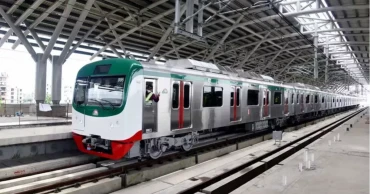
Dhaka Mass Transit Company Limited (DMTCL) has announced a special metro rail schedule for the upcoming Eid-ul-Azha holidays, with services to remain suspended only on Eid day.
According to a schedule published on Thursday, metro rail services in the capital will operate under limited timings and fixed headways to ensure passenger convenience during the holiday period.
The government has declared a seven-day holiday for Eid-ul-Azha from May 25 to May 31 while Eid will be celebrated on May 28 (Thursday).
Under the special schedule, the first train from Uttara North Station will depart at 6:30am, while the first train from Motijheel Station will leave at 7:15am.
The last train from Uttara North will depart at 9:30pm, and the final train from Motijheel Station will leave at 10:10pm.
Authorities said trains will operate throughout the day within the fixed schedule, maintaining headways of 12 to 15 minutes, according to a DMTCL press release.
Around 140 trips are initially planned using seven train sets, with services to be adjusted depending on passenger demand.
Under the arrangement, passengers will be able to purchase single-journey tickets and recharge MRT and Rapid Pass cards from 6:40am to 9:20am. Rapid Pass cards will also be available at all stations during these hours.
On Fridays, ticket sales at Uttara North Station will begin at 2:45pm, while sales at Motijheel Station will start at 3:05pm.
Authorities further said all ticket counters and vending machines will be closed after 9:20pm.
3 months ago
Metro rail gets Ramadan timetable; only 250ml water allowed for iftar
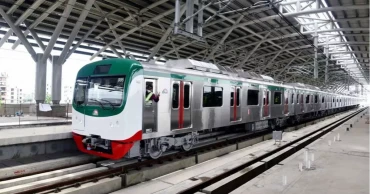
Dhaka Mass Transit Company Limited (DMTCL) on Tuesday announced a revised metro rail schedule for Ramadan, aligning train services with the government’s adjusted office hours, and said no iftar items other than a small bottle of water will be allowed inside trains and stations.
In a notification issued in the afternoon, DMTCL said the special timetable will be effective from the first day of Ramadan until the day before Eid-ul-Fitr on weekly working days.
However, the schedule on Fridays, Saturdays and other government holidays will remain unchanged.
Under the revised schedule, the first train from Uttara North to Motijheel will depart at 6:30am and the last train at 9:30pm.
From Motijheel to Uttara North, the first train will leave at 7:15am while the last train will depart at 10:10pm.
Special metro rail services to carry Khaleda’s janaza attendees
DMTCL said that during Ramadan, each passenger will be allowed to carry only a 250ml bottle of water for iftar within metro trains and station premises, and passengers must ensure that water does not spill. Used water bottles must be disposed of in designated dustbins at stations.
No other food items may be consumed on platforms, concourses or inside metro trains under any circumstances, the company added.
Earlier, on February 8, the Ministry of Public Administration fixed new office hours for Ramadan.
According to a government notification, all government, semi-government, autonomous and semi-autonomous institutions will operate from 9:00am to 3:30pm during the holy month, considering sehri and iftar timings.
The revised metro rail schedule has been set in line with the adjusted office hours, DMTCL said.
7 months ago
NBR extends VAT exemption on Metro Rail services
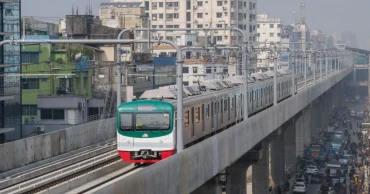
The National Board of Revenue (NBR) has extended the value-added tax (VAT) exemption on Metro Rail services until June 30, 2026, aiming to promote the use of the environment-friendly mass transit system.
According to an official release issued on Wednesday (December 24, 2025), the government earlier granted a VAT exemption on Metro Rail services.
The existing exemption is scheduled to expire on December 31, 2025.
Read more: Nagad brings metro rail card recharge facility for commuters
In the greater public interest and following a recommendation from the Ministry of Road Transport and Bridges, the government decided to continue the VAT waiver for a further six months.
A gazette notification to this effect was issued on December 23, 2025, extending the exemption up to June 30, 2026.
The move is expected to help keep Metro Rail fares affordable for city dwellers while encouraging a shift from private vehicles to mass transit, thereby reducing traffic congestion and carbon emissions in the capital.
Read more: Online recharge system launched for metro rail rapid, MRT Pass
8 months ago
‘Faulty design, contractor’s negligence’ behind Metro bearing pad fall: DMTCL MD
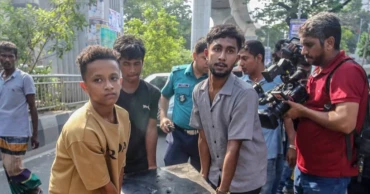
Faulty design and negligence by the contractor and consulting firms may have caused the recent Metro route’s bearing pad fall incident that claimed the life of a pedestrian, said Dhaka Mass Transit Company Limited (DMTCL) Managing Director Faruque Ahmed on Monday (3rd November 2025).
“After last year’s incident, we carried out inspections both physically and using drones. Another inspection was conducted two months ago. Our top priority is ensuring safety. There may have been faults in the design,” he said at a press briefing held at the DMTCL headquarters in Uttara.
The accident might have occurred due to several factors, including the use of substandard materials or a lack of proper understanding of the work, which will be confirmed after an investigation, he added.
“It was the consultancy firm’s responsibility to verify the work. Due to their lack of expertise, deficiencies exist,” said the DMTCL MD.
Read more: Construction worker dies after falling from Kamalapur metro rail station
He also pointed out that the Line-1 project currently has no project director, but four to five new directors will be appointed soon.
“We have to build the metro ourselves. We want to move forward by prioritising local expertise through smart financing. There is a conflict of interest with the investor. I have been given a 50-year warranty, but within that framework, my authority is quite limited,” he said, adding that design changes could be made if necessary.
Faruque Ahmed urged political parties and others to refrain from pasting posters on metro rail pillars.
“If physical cracks are hidden under them, they remain undetected. Based on our expenditure, this metro was expected to be among the best in the world—but the reality is different. Those responsible for approving or certifying the work will be held accountable if any irregularities are found,” he said.
Read more: Metro Rail’s Friday schedule revised
Referring to the fatal incident at Farmgate Metro Rail Station, he said the family of Abul Kalam Azad—who died after a bearing pad fell on him—has been provided with Tk 5 lakh in initial financial assistance.
“This amount is not compensation for the loss of life; it is immediate assistance,” said the DMTCL MD. “Right after the incident, we went to the spot and managed all arrangements—from hospital procedures to the funeral—along with the ministry. Later, an adviser from the ministry also provided some emergency support.”
He added that long-term support initiatives have been taken for the deceased’s family. “We have met with the victim’s wife and arranged a job for her according to her qualifications. She will be appointed once she submits the required documents,” said Faruque Ahmed.
He mentioned that the victim’s wife is expected to complete her honours degree in about six months, after which she will be eligible for promotion based on her qualifications.
Read more: HC issues rule on compensation of Tk 2 cr for metro bearing pad fall death
10 months ago
Farmgate pedestrian killed as bearing pad falls; metro services suspended
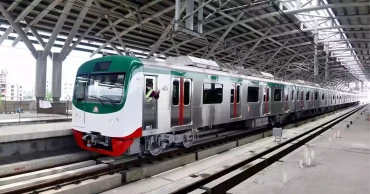
A pedestrian was killed after a bearing pad (spring) fell from a metro rail pillar near Farmgate Station in the capital on Sunday noon, prompting authorities to suspend metro services.
The incident took place around 12:15 pm in front of the Bangladesh Agricultural Institute, adjacent to the Farmgate Metro Station, said Tejgaon Police Station officer-in-charge (OC) Mobarak Hossain.
Sub-inspector (SI) Nazrul Islam said they had informed metro authorities about the fallen bearing pad. “Metro services have been halted for now and legal procedures are underway after recovering the body,” he added.
The deceased was identified as Abul Kalam Azad, a resident of Kishorkathi village in Naria upazila of Shariatpur district.
Dhaka's street chaos takes root beneath its Metro Rail
Witnesses said a heavy metal object suddenly fell from above and struck the man on the head while he was walking past the area.
He suffered critical injuries and severe bleeding on the spot and locals rushed him to a nearby hospital, where doctors declared him dead.
According to Dhaka Mass Transit Company Limited (DMTCL), metro services between Uttara and Motijheel were suspended from 12:30 pm following the accident. The resumption time has yet to be confirmed.
A similar incident occurred on September 18 last year when a bearing pad got loose, halting metro operations for about 11 hours but causing no casualties.
Bearing pads are specialised rubber components installed at the joints between piers and viaducts to absorb vibration and support structural movement.
10 months ago
Dhaka Metro extends operation schedule by one hour
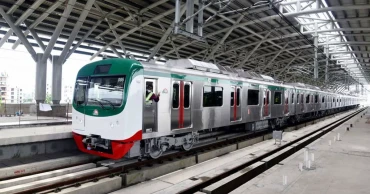
The metro rail has extended its operation hours by one hour from Sunday, with trains now running half an hour earlier in the morning and half an hour later at night.
According to Dhaka Mass Transit Company Limited (DMTCL), the first metro trip will now begin at 6:30 am instead of 7:10 am, while the last trip will depart at 10:10 pm instead of 9:40 pm.
On Fridays, the weekly holiday, metro services will start at 2:30 pm instead of 3:00 pm.
Metro rail takes Eid break Saturday
DMTCL announced the decision to extend the operation hours last Wednesday, and the new schedule took effect today (Sunday).
Besides the extended hours, DMTCL said it plans to increase the number of daily trips within a month.
Currently, more than 400,000 passengers commute daily on the Uttara-Motijheel route, which operates with 24 train sets—each comprising six coaches. Of these, 12 sets are currently in service throughout the day.
Once the number of trips is increased, 19 sets will be operated simultaneously, which is expected to raise the daily passenger count to over 500,000, according to DMTCL estimates.
11 months ago
Metro rail takes Eid break Saturday
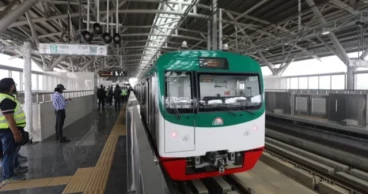
The metro rail service in Dhaka will remain closed on Saturday, as the country celebrates Eid-ul-Azha, the second major religious festival for Muslims, with joy and devotion.
Commonly known as the “Qurbani Eid”, Eid-ul-Azha is being observed across Bangladesh with prayers, the ritual slaughtering of animals, and the distribution of meat among relatives, neighbours, and the underprivileged.
In Dhaka, while many residents have left the capital to spend the holiday in their hometowns, those who remain often can think of visiting family and friends to distribute meat among relatives or simply enjoy an outing with their loved ones.
By afternoon, it is not uncommon to see families stepping out to breathe in the rare calm of a traffic-free city.
Sacrifice and Celebration: The spirit of Eid-ul-Azha lives on
Many city dwellers, especially in recent times, have come to rely on the metro rail as a convenient and time-saving mode of transport. On special occasions like this, the thought of using the metro rail to save time often comes to mind.
However, holiday-goers will have to look for alternative travel options today, as authorities have suspended metro rail operations for Eid-ul-Azha.
For many Dhaka residents, the metro rail has become more than just a mode of transport — it is a reliable companion in the daily rush, but on the joyous occasion of Eid-ul-Azha, the capital’s most popular commuter service is taking a short break.
According to a notice issued by Dhaka Mass Transit Company Limited (DMTCL) on Wednesday, metro rail services will remain completely closed on Saturday (June 7), the day of Eid.
The announcement comes as many city dwellers prepare for the festive holiday, with thousands expected to leave the capital or head out to visit loved ones.
While the pause may cause a temporary inconvenience for regular commuters, the break allows for observance of one of the country’s most sacred religious celebrations by its staff.
Metro rail operations will resume on Sunday (June 8), from 8am, with trains running every 30 minutes.
From June 9 onwards, the services will follow the regular government holiday timetable.
1 year ago
Dhaka's street chaos takes root beneath its Metro Rail
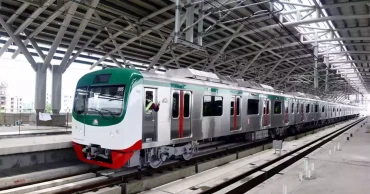
When Dhaka’s metro rail was launched, it was seen as a symbol of a modern, well-organised city.
The sleek tracks above and smooth train rides offered hope that the capital was finally moving forward. But beneath the elevated tracks, a different picture is emerging.
The open space below the metro line was designed for greenery and public use. Some trees were planted as part of that plan, but many have since been uprooted.
Dhaka metro rail services resume two hours after disruption
Instead of trees and walkways, these areas are now home to the homeless.
Since the inauguration of MRT Line-6 on December 28, 2022—from Uttara to Agargaon—the city has gradually extended its metro services to Motijheel.
Yet the space under the tracks, once intended as clean, open zones for pedestrians or communal use, has become overrun.
From Farmgate to Karwan Bazar, Kazipara to Mirpur, hawkers and beggars now dominate the area.
Makeshift stalls, street children, and piles of waste line the footpaths, forcing commuters to navigate through chaos.
“It’s like we’ve built a metro rail on top of a slum,” said Tanvir Hasan, a university student in Farmgate.
“We thought this was going to change the look of the city. Instead, it just pushed the same problems to a new place,” he said.
Locals describe the scenes as disturbing. Plastic sheets serve as roofs, old mattresses lie on the ground, and vendors fry snacks dangerously close to foot traffic. Beggars sit near the station gates, competing for attention.
“This place turns into a mini bazaar every afternoon,” said Asma Khatun, a garment worker in Mirpur-10, adding, “It’s noisy, crowded, and filthy. We don’t feel safe walking here anymore.”
The transformation didn’t happen overnight. It began with a single vendor, followed by others. Soon, small groups of homeless people began using the space for shelter. Now, entire stretches resemble informal markets.
No visible action has been taken by the authorities to regulate or reclaim these spaces. What was meant to be a revolution in urban transport is becoming another layer of the same old disorder.
“This was supposed to be a cleaner, more modern Dhaka,” said Mahbub Alam, a private sector employee who commutes daily via metro.
“But now, under every station, it feels like the same old mess we were trying to get away from,” he said.
Shopkeepers near Karwan Bazar metro station are also struggling.
“It’s difficult for customers to walk through,” said Rina Akter, who runs a grocery nearby.
“The footpath is blocked by vendors, and the area is getting dirty again,” he said.
Urban experts point to a lack of post-construction planning.
“If there had been a designated purpose for these spaces—like walkways, green zones, or small parks—this wouldn’t have happened,” said Dr Shafiq Rahman, a regular metro user.
The open areas were originally planned to be used for public benefit. These included:
Pedestrian Walkways
Spaces were meant to allow smooth foot traffic under the tracks, giving people clear access without interference from street vendors.
Green Spaces and Parks
Some sections were to feature parks or green belts to beautify the area and give residents a break from the concrete jungle.
VAT waived on Dhaka Metro Rail tickets
Parking Areas or Bicycle Stands
Designated parking for two-wheelers and bicycles was also part of the plan, supporting eco-friendly commuting.
Controlled Commercial Zones
There was discussion of setting up regulated kiosks or retail booths to serve metro users. These would have been organised, not chaotic.
Public Amenities
Basic facilities such as seating, toilets, and information booths were also proposed to make metro travel more comfortable.
1 year ago