Food inflation

Govt working to cut logistics costs to curb food inflation: Commerce Minister
Commerce Minister Khandakar Abdul Muktadir on Thursday said the government is prioritising a reduction in logistics costs, describing them as one of the biggest obstacles to bringing down Bangladesh's persistently high food inflation.
“While logistics cost stands at around 10 percent of GDP in other countries of the world, it is 16 percent in Bangladesh. If we can rein in logistics costs, food inflation can be brought down,” the commerce minister said at an event on Bangladesh's food chain, organised by the Centre for Policy Dialogue (CPD) at the BRAC Centre in the captial.
Noting that inflation which has been rising since the post-Covid period and currently stands above 9 percent, was brought under control by other countries around six months ago but Bangladesh has failed to do so due to the complexity of its market system, he said.
“Our market system is quite complex. Alongside logistics costs, we need to bring down input costs and unaccountable financial transactions such as extortion as much as possible,” he said.=
The minister said every government in Bangladesh has focused on the agriculture sector separately, but there has been a lack of coordination among them.
“Since the famine of 1974, every government in Bangladesh has received the same message that staying in power requires paying attention to the agriculture sector. Since then, almost every government has worked for farmers. But due to a lack of coordination in this work farmers have not always received the maximum benefit,” he said.
Muktadir said accurate information does not reach farmers in Bangladesh which causes them losses.
“A farmer who cultivated potatoes extensively over the past few years and got a good yield but did not get a fair price in the market, why does he still grow potatoes in excess of demand the following year and incur losses? This is a question. The major reason is that market information does not reach the farmer. He cannot understand what would be profitable for him to cultivate,” he said.
The minister also said Bangladesh’s agriculture sector has seen very little scientific and planned work, with most agricultural activities being carried out in a “natural way,” stressing the need to bring this under a proper plan.
Muktadir stressed the need for improving farmers’ living standards and bringing the entire market system under an integrated plan.
CPD Executive Director Fahmida Khatun presided over the event.
2 months ago
Rice prices keep food inflation high despite slight easing in Nov: GED
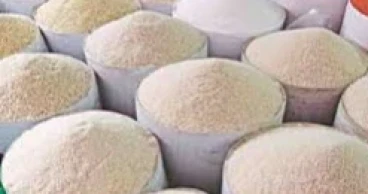
Bangladesh’s overall inflation rose slightly in November and rice remained the single largest contributor to food inflation, accounting for 40.28 per cent, according to the Monthly Economic Update and Outlook released by the General Economics Division (GED) of the Planning Ministry.
The government report said general inflation increased to 8.29 per cent in November from 8.17 per cent in October.
Food inflation rose to 7.36 per cent from 7.08 per cent, while non-food inflation remained broadly stable at around 9 per cent.
Overall rice inflation fell to 12.26 per cent in November from 13.77 per cent in October, with medium rice declining to 10.96 per cent, fine rice to 15.43 per cent and coarse rice to 11.04 per cent.
Read more: Rice procurement faces disruption due to 0.5% source tax
Despite the downward trend, rice prices remained elevated and continued to exert significant pressure on food inflation.
Fish and dry fish contributed 40.77 percent to food inflation, slightly higher than the previous month.
Contributions from meat, edible oil and fat declined, while milk, cheese and eggs recorded a modest increase and vegetables continued to have a strong disinflationary impact, though the negative contribution eased in November.
At a detailed level, inflationary contributions from all major rice varieties declined. Among protein items, beef, hilsa and pangash fish showed higher inflationary pressure, while soybean oil and liquid milk eased. Potato and onion continued to post negative contributions, with potato remaining strongly disinflationary.
The report noted that the gap between price inflation and wage inflation narrowed in October but widened slightly in November.
Govt approves import of 1 lakh mt rice from India, Pakistan
In November, price inflation stood at 8.29 per cent compared to wage inflation of 8.04 per cent, indicating continued pressure on real incomes despite partial adjustment through wage growth.
On the monetary front, bank deposits reached Tk 19.24 crore in October, registering a year-on-year growth of 9.62 per cent, reflecting sustained depositor confidence.
Credit growth moderated, with public sector credit growth slowing to 21.43 per cent and private sector credit growth easing slightly to 6.23 per cent.
Total domestic credit growth decelerated to 9.62 per cent in October.
Weighted average interest rate (WAIR) spreads varied across banking groups.
Foreign commercial banks recorded the highest spread at 8.88 per cent while specialised and development banks posted the lowest at 3.37 per cent.
State-owned and private commercial banks showed similar spreads of around 5.6 per cent, a level the GED said is desirable for improving banking sector efficiency.
Revenue collection by the National Board of Revenue (NBR) fell short of the monthly target in November 2025 although it posted double-digit year-on-year growth.
Govt to procure 50,000 mt of non-basmati parboiled rice, 80,000 mt fertiliser
Against a monthly target of Tk 36,326 crore, collections stood at Tk 29,658 crore, achieving 83.95 per cent of the target.
However, revenue increased by Tk 3,688 crore or 14.2 per cent compared to November 2024.
The report said Annual Development Programme (ADP) utilisation improved year-on-year during July–November of FY2025-26, but overall implementation remained sluggish.
Despite higher spending, utilisation continued to lag behind targets due to administrative bottlenecks, slow approvals and procurement delays.
Bangladesh’s external sector showed strong performance in November.
Remittance inflows reached a record USD 2.89 billion while export earnings stood at about USD 3.89 billion, driven largely by the ready-made garments (RMG) sector.
Foreign exchange reserves peaked for the year, with gross reserves at approximately USD 32.34 billion and BPM6 reserves at USD 27.58 billion, strengthening external stability.
RMG exports accounted for over 80 per cent of total export earnings underscoring continued dependence on the sector and the need for diversification.
Read more: Rice biggest driver of October’s food inflation in Bangladesh: GED
The GED also highlighted a growing divergence between the real effective exchange rate and the bilateral taka–US dollar rate, indicating potential real appreciation pressures and risks to external competitiveness.
9 months ago

Bangladesh inflation rises to 8.29% in November
Bangladesh’s general point-to-point inflation rate rose slightly to 8.29 %in November 2025 from 8.17 % in October, according to the latest data from the Bangladesh Bureau of Statistics (BBS).
The modest increase in overall inflation was primarily driven by a rise in food prices.
Read more: Bangladesh economy shows external stability despite internal challenges: Report
Food inflation edged up to 7.36 % in November from 7.08 % in October.
In contrast, non-food inflation eased marginally to 9.08 %in November from 9.13 % in the previous month.
The BBS data also indicated a slight uptick in inflation in both rural and urban areas during the month.
Read more: Rice biggest driver of October’s food inflation in Bangladesh: GED
10 months ago
Rice biggest driver of October’s food inflation in Bangladesh: GED
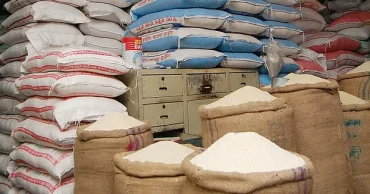
Rice alone contributed about 47 percent of total food inflation in October while vegetables posted a strong negative impact because of seasonal abundance, according to the latest Economic Update and Outlook for November 2025 prepared by the General Economics Division (GED).
Protein items including beef, chicken and fish saw steady inflation during the month, driven by feed prices and transport costs, the report said.
Overall inflation dropped to 8.17 percent in October 2025, from 10.87 percent a year earlier, driven almost entirely by a sharp fall in food inflation.
Food inflation plunged from 12.66 percent in October 2024 to 7.08 percent in October 2025 as rice supply improved due to the Aman harvest, imports and public procurement.
Read more: High price of rice in Bangladesh bucks the trend of easing inflation
However, non-food inflation inched up to 9.13 percent, reflecting persistent pressure in housing, transport and healthcare—an indication that inflation remains far from under control.
Election-related spending and possible disruptions during the transition are expected to add further pressure on inflation and the foreign exchange market, complicating stabilisation efforts, said the report.
The report warns that large-scale dollar purchases by the central bank unless sterilized could fuel inflation and distort market-based exchange rate mechanisms.
Bangladesh’s economic recovery depend heavily on political stability following the February national election and the next government’s willingness to carry out meaningful reforms, said the GED reprot.
The report offers a cautiously optimistic view but warns that deep structural weaknesses along with the political transition period could constrain economic momentum.
According to the analysis, the economy could regain pace if the election produces a clear political direction and the next government decisively undertakes long-delayed reforms, particularly in improving the business climate, stabilising the banking system, and ensuring fiscal and energy security.
Without such reforms, the recovery may be short-lived, it said.
Read more: Bangladesh economy in ‘waiting vortex’; experts urge credible elections
The Asian Development Bank (ADB) has forecast around 5 percent GDP growth for FY26 following a sluggish period.
Remittances and garment exports continue to provide much-needed resilience but the GED notes that the broader economic environment remains fragile as both investors and entrepreneurs appear to be “waiting” for political stability before committing to new ventures.=
While bank deposits grew at nearly double-digit rates through August and September, private-sector credit growth fell to just 6.29 percent—the lowest in at least four years and well below the Bangladesh Bank’s FY26 target of 7.2 percent.
High lending rates, cautious bank behaviour and political uncertainty have depressed investment appetite. Meanwhile, government borrowing from commercial banks surged 24.45 percent in September, raising concerns about crowding out private borrowers.
Interest rate spreads also exposed deep structural distortions. Foreign commercial banks maintained spreads close to 9 percent—far higher than state-owned and private banks—highlighting issues such as high operational costs, non-performing loans and market concentration.
Rising rice prices push food inflation higher in Bangladesh: Report
Revenue collection in October 2025 fell short of the target by Tk 8,324 crore, achieving only 77.37 percent of the month’s goal.
All major revenue streams—import duties, domestic VAT, and income tax—underperformed.
Although collection was slightly higher than in October 2024, the growth of just 2.2 percent was described as “pessimistic” given inflationary pressures and increased public spending needs.
ADP utilisation continues to lag despite marginal improvements. Up to October, utilisation stood at 8.33 percent, only a slight increase from 7.90 percent last year. Lower overall allocations and reduced spending under own-financing components indicate financial strain and weak project execution.
The report notes that while utilisation rates improved marginally in some categories, the decline in total expenditure—from Tk 8,762 crore last year to Tk 7,720 crore this year—reflects ongoing bottlenecks in planning, fund release and implementation.
Foreign exchange reserves improved significantly, rising from USD 24.35 billion in November 2024 to USD 32.34 billion in October 2025.
BPM6 reserves also rose sharply, supported by stronger remittances and prudent reserve management.
Bangladesh’s June inflation remains high with food inflation at 10.42%
Remittances surged in the first four months of FY26, with each month outperforming the previous year and September recording the highest inflows.
However, export earnings remained volatile. Exports peaked in July at USD 4.77 billion but suffered sharp declines in April and June.
RMG exports mirrored these fluctuations, while non-RMG exports also experienced mid-year downturns.
Imports especially capital machinery saw steep contractions year-on-year, signalling depressed investment demand.
A slight month-on-month recovery in August and September suggests only tentative stabilisation.
The real effective exchange rate (REER) appreciated notably, indicating eroding external competitiveness.
Read more: Inflation in Bangladesh edges up to 8.36% in September
10 months ago
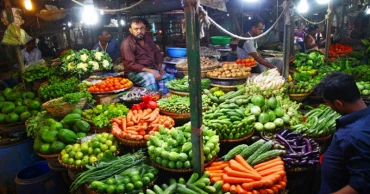
Ramadan nears; escalating food prices spark worries in Bangladesh
With inflation already near record levels and traders raising the prices of essential commodities ahead of Ramadan, low- and middle-income families fear greater struggles as the fasting month approaches.
The interim government has assured that it has taken measures to ensure a steady supply of essential commodities and prevent syndicate-created market instability during the holy month.
Prices are usually increased during Ramadan almost every year using various excuses and the past experiences raise no hope among general people despite the government's assurance.
Commerce Adviser Sk. Bashir Uddin told UNB that various initiatives have been taken to keep the prices stable and ensure adequate stock of essentials ahead of Ramadan and Eid.
"The government is making every effort to control prices during Ramadan. Strict monitoring will be ensured to keep the market free of syndicates," the adviser said.
No change in duties until Ramadan ends: Finance Adviser
The government is ready to maintain the supply of essential items such as dates, chickpeas, lentils and other staples during Ramadan. “The food market will remain stable and prices are expected to decrease."
Adviser Bashir Uddin said he warned traders against unethical practices and urged them to act responsibly and help keep the market stable during Ramadan.
The government’s main aim is to protect the sanctity of Ramadan and create a market environment that brings relief to consumers, he added.
Meanwhile, Chief Adviser Dr Muhammad Yunus has instructed field-level officials to prioritise the smooth supply of goods and keep the prices of essentials within people’s purchasing capacity during the fasting month, he said.
The government has taken some steps, including market monitoring, syndicate control and ensuring uninterrupted supply of essentials, he said.
Controlling Syndicates
The adviser said monitoring has been intensified to prevent artificial crises and price hikes caused by syndicates of traders.
Keep prices under control during Ramadan: CA to officials
The Directorate of National Consumer Rights Protection (DNCRP) and other law enforcement agencies will work to check unethical practices.
Uninterrupted Supply
Adequate stocks of essential items such as rice, lentils, sugar, cooking oil, onions and garlic have been ensured and measures have been taken to prevent any disruptions in import and supply chains.
Daily Market Monitoring
Daily surveillance will be enhanced to detect and penalise unscrupulous traders and instant action will be taken against those attempting to create artificial crises.
The adviser said consumers have been urged to avoid panic buying and purchase goods at fair prices.
Expansion of TCB Activities
The distribution of essentials through the Trading Corporation of Bangladesh (TCB) at subsidised rates have been scaled up to ensure availability of goods throughout Ramadan.
Govt trying to keep prices of essentials tolerable till Ramadan: Finance Adviser
Special Task Force
A special task force under the Ministry of Commerce has been formed to monitor market trends and prevent artificial crises.
According to Commerce Ministry officials, the imports of essential commodities such as chickpeas, lentils, dates, sugar and soybean oil have been expedited to ensure steady supply until Ramadan.
The government has also planned to establish storages to control potato prices.
Inflation
Bangladesh’s economy in 2024 faced major challenges as rampant inflation not only eroded purchasing power but also overshadowed the country’s progress in other areas.
Commodity prices to stay below normal during Ramadan: Commerce Adviser
The inflation rate in Bangladesh reached an alarming average of 11.38% in November 2024, marking the highest level in over a decade. It hit 11.66 percent in July, the highest at least since the 2010-11 fiscal year, driven mainly by food prices reflecting the worsening of the purchasing capacity of people.
This sharp increase was fuelled primarily by escalating food prices, which constitute a significant portion of household expenditure and the Consumer Price Index (CPI).
Food inflation, in particular, hovered around 12%-14% for most of the year, as prices of essentials like rice, cooking oil, and vegetables surged.
Non-food inflation also rose steadily, driven by increased transportation costs, higher utility bills, and imported goods becoming more expensive due to currency depreciation.
1 year ago
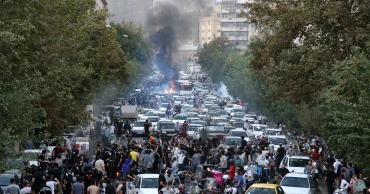
Iran’s problem: Politics or food inflation?
Global food inflation is a major problem that goes unnoticed by the media in general. Politics is more exciting so the issue comes only when linked to it. Street movements are more interesting than data on extreme food denial. The causal factors that lead to many of these unrests are ignored. Two cases in point are Sri Lanka and Iran.
Iran’s inflation misery
Iran was considered an economically stable country but events show that era is largely over.
Iran’s overall annual inflation rose to 41.5 percent according to the Statistical Center of Iran (SCI) at the end August 2022. The rate has accelerated since May.
Rents, medicine, restaurant food, and snack foods have gone up but prices of chicken and hydrogenated cooking oil dropped slightly. However, this was marginal and so was the effect as prices were already very high. General food price inflation continues to hit Iran which is continuing for the last several years.
Read: At least 26 dead from protests in Iran, suggests its state TV
“The overall nationwide point-to-point annual food inflation rate in June 2022 compared with the same period in 2021 was 87 percent but the rate reached 100 percent in parts of Iran.” (SCI)
Prices sprinted up since May when Iran decided to drop a food import subsidy costing $15 billion dollars every year. It was billed as the ‘great economic surgery’ but led to extreme price rise for food staples, such as bread, pasta, dairy products, cooking oil and meat.
Iranian media report that President Ebrahim Raisi announced on TV that the government would pay a monthly stipend of “around 4 million rials (about $15) to 30 percent of the population at the lowest-income groups, and around 3 million to 60 percent of the population. The 10 percent at the highest income level would receive no cash handouts”
It’s obvious that such payments could be worth as high as $10 billion annually which means more money printing and hence more inflation. Food subsidies had less risk of inflation.
“Economists say lower income people experience a higher rate of inflation as they spend more of their income on essential foods and often forsake anything deemed as luxury. With back-to-back high inflation since 2018, many missile class people have dropped to low-income status.” Tejarat News
Lowest income groups spend more than 40% of their budget for food while the better off spend less than 17% in Iran. Iranian media says that goods are not in shortage but buying is less.
Mahasa Amini and US sanctions
Meanwhile, media coverage is focused on the death of activist Mahasa Amini who died while in custody. She was arrested for wearing “inappropriate clothes” as described by the Iranian police. Al Jazeera reports, “the US Department of the Treasury sanctioned the country’s “morality police”, as well as seven leaders of Iranian security organisations that it said “routinely employ violence to suppress peaceful protesters and members of Iranian civil society, political dissidents, women’s rights activists, and members of the Iranian Baha’i community”. This basically means the Islamic Revolutionary Guard Core ( IRGC) or the “morality police''.
Read: Protests over hijab: Iranians experience near-total internet blackout
Iranian police have denied “torturing her to death” in custody but the public resentment against the official world is high among the younger section that have held demos and chanted slogans. The Iranian regime's source of strength is the lower income groups but if they are hit hard as it’s happening now, political turmoil is inevitable.
That doesn’t translate into regime change as many are hoping but the turmoil is here to stay. Once more, events show that economics, not ideology, decides the fate of states.
4 years ago