Iran protest
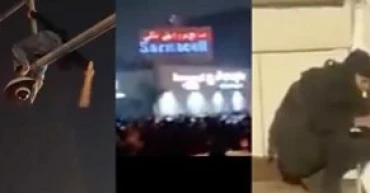
Videos show body piles, rooftop snipers in Iran protest crackdown
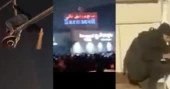
Newly verified videos from Iran show bodies stacked inside a hospital, armed men positioned on rooftops and surveillance cameras being destroyed, offering rare glimpses of a sweeping crackdown on anti-government protests as authorities enforce a near-total internet blackout.
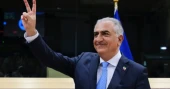
BBC Verify said it has authenticated multiple videos filmed on January 8 and 9, believed to be among the deadliest days since nationwide unrest erupted in late December. The protests intensified after calls for mass demonstrations by Reza Pahlavi, the exiled son of Iran’s late shah.
Human rights groups have reported sharply differing death tolls. The US-based Human Rights Activists News Agency said it has confirmed nearly 6,000 deaths, most of them protesters, and is reviewing thousands more reports received despite the communications shutdown. Norway-based Iran Human Rights has warned the final toll could exceed 25,000. Iranian authorities have acknowledged more than 3,100 deaths, saying most were security personnel or bystanders harmed by what they described as rioters.
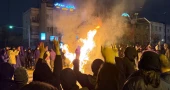
One verified clip shows dozens of bodies inside a mortuary at Tehranpars Hospital in east Tehran, with additional footage showing body bags outside the entrance. Other videos capture large crowds protesting on highways as gunfire is heard, and protesters attempting to disable CCTV cameras to evade surveillance.
Footage from cities including Kerman and Mashhad shows armed men in military attire firing weapons and individuals positioned on rooftops with rifles. BBC Verify said it has tracked protests across at least 71 towns and cities, though the actual number is likely higher.
Since January 8, most of the country has experienced an internet blackout, severely limiting independent reporting. Some Iranians have briefly accessed the internet using satellite services or virtual private networks, allowing videos to surface despite restrictions.
With inputs from BBC
8 months ago

Trump urges Tehran to show humanity toward protesters
President Donald Trump was consulting with his national security team Tuesday about next steps with Iran as he looked to get a better understanding of the number of Iranian citizens who have been killed and arrested in more than two weeks of unrest throughout the country.
Trump said he believes that the killing is “significant” and that his administration would “act accordingly.” He added that he believed the Iranian government was “badly misbehaving.”
But the president said he has yet to receive a confirmed number of Iranians killed in the protests that began late last month, saying he has heard “five different sets of numbers” about the death toll.
Since the protests began Dec. 28, 16,700 people have been arrested and more than 2,000 have been killed, the vast majority protesters, according to Human Rights Activists News Agency. The organization relies on a network of activists inside Iran that confirms all reported fatalities.
“The message is they’ve got to show humanity,” Trump said of the Iranian government. “They’ve got a big problem. And I hope they’re not going to be killing people.”
The comments came after Trump earlier in the day announced he was cutting off the prospect of talks with Iranian officials amid a protest crackdown, telling Iranian citizens “help is on its way.”
Iran protest death toll jumps to 2,571
Trump did not offer any details about what the help would entail, but his remarks come just two days after the Republican president said Iran wants to negotiate with Washington after his threat to strike the Islamic Republic.
But Trump appeared to make an abrupt shift about his willingness to engage with the Iranian government.
“Iranian Patriots, keep protesting and take over your institutions if you can,” Trump said in speech Tuesday at an auto factory in Michigan. “Save the names of the killers and abusers that are abusing you. You are being very badly abused."
Iranian ambassador responds to Trump
Iran's chief envoy to the United Nations, Ambassador Amir Saeid Iravani, denounced Trump's latest comments in a letter to U.N. officials as “interventionist rhetoric.”
“This reckless statement explicitly encourages political destabilization, incites and invites violence and threatens the sovereignty, territorial integrity and national security of the Islamic Republic of Iran,” Iravani wrote.
Iranian state media has aired at least 97 confessions from protesters, many expressing remorse for their actions, since the protests began, according to a rights group that is tracking the videos.
Iran alleges these confessions, which often include references to Israel or America, are proof of foreign plots behind Iran’s nationwide protests. Activists say they are coerced confessions, long a staple of Iran’s hard-line state television, the only broadcaster in the country. And these videos are coming at an unprecedented clip.
Trump tells Iranians “help is on its way” amid deadly protests
Trump, in an exchange with reporters during the factory visit, demurred when asked what kind of help he would provide.
“You’re going to have to figure that one out,” he said.
The U.S. president has repeatedly threatened Tehran with military action if his administration found the Islamic Republic was using deadly force against antigovernment protesters. Trump on Sunday told reporters he believed Iran is “starting to cross” that line and has left him and his national security team weighing “very strong options” even as he said the Iranians had made outreach efforts to the U.S.
And on Monday, the president’s team offered guarded hope that a diplomatic solution could still be found.
Later Monday, Trump said he would slap 25% tariffs on countries doing business with Tehran “effective immediately,” but the White House has not provided details on that move. China, the United Arab Emirates, Turkey, Brazil and Russia are among economies that do business with Tehran.
Administration leaders weigh US options
Vice President JD Vance, Secretary of State Marco Rubio and key White House National Security Council officials began meeting Friday to develop options for Trump, ranging from a diplomatic approach to military strikes.
“We don’t want to see people killed and we want to see a little bit of freedom for these people," Trump said. "These people have been living in hell for a long time.”
Iraq PM race: al-Sudani withdraws in favor of Maliki
Iran, through the country’s parliamentary speaker, has warned that the U.S. military and Israel would be “legitimate targets” if Washington uses force to protect demonstrators.
Trump said he was undeterred by threats of Iranian retaliation.
“Iran said that the last time I blew them up,” said Trump, referring to threats from the government ahead of U.S. military strikes in June on key Iranian nuclear facilities. “They better behave.”
More than 600 protests have taken place across all of Iran’s 31 provinces, the Human Rights Activists News Agency reported Tuesday. The activist group said 1,850 of the dead were protesters and 135 were government-affiliated. It said more than 16,700 people had been detained.
Understanding the scale of the protests has been difficult. Iranian state media has provided little information about the demonstrations. Online videos offer only brief, shaky glimpses of people in the streets or the sound of gunfire.
Trump's push on the Iranian government to end the crackdown comes as he is dealing with a series of other foreign policy emergencies around the globe.
It’s been more than a week since the U.S. military launched a successful raid to arrest Venezuela’s Nicolás Maduro and remove him from power. The U.S. continues to mass an unusually large number of troops in the Caribbean Sea.
Trump is also focused on trying to get Israel and Hamas onto the second phase of a peace deal in Gaza and broker an agreement between Russia and Ukraine to end the nearly four-year war in Eastern Europe.
But advocates urging Trump to take strong action against Iran say this moment offers an opportunity to further diminish the theocratic government that’s ruled the country since the Islamic revolution in 1979.
The demonstrations are the biggest Iran has seen in years — protests spurred by the collapse of Iranian currency that have morphed into a larger test of supreme leader Ayatollah Ali Khamenei’s repressive rule.
9 months ago
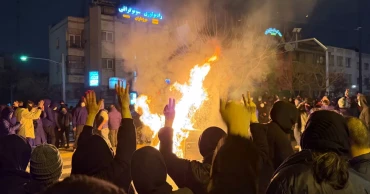
Iran protest death toll jumps to 2,571
The death toll from a crackdown on protests in Iran jumps to at least 2,571, activists said early Wednesday.
The figure came from the U.S.-based Human Rights Activists News Agency, which has been accurate in multiple rounds of unrest in Iran in recent years.
The activist group said 2,403 of the dead were protesters and 147 were government-affiliated. Twelve children were killed, along with nine civilians it said were not taking part in protests. More than 18,100 people have been detained, the group said.
With the internet down in Iran, gauging the demonstrations from abroad has grown more difficult. The Associated Press has been unable to independently assess the toll. Iran’s government has not offered overall casualty figures.
Trump urges Tehran to show humanity toward protesters
That death toll dwarfs the death toll from any other round of protest or unrest in Iran in decades and recalls the chaos surrounding the country’s 1979 Islamic Revolution.
Iranians reach out, but world can't reach in
Several people in Tehran were able to call the AP on Tuesday and speak to a journalist. The AP bureau in Dubai, United Arab Emirates, was unable to call those numbers back. Witnesses said text messaging was still down, and internet users in Iran could connect to government-approved websites locally but nothing abroad.
Anti-riot police officers wore helmets and body armor while carrying batons, shields, shotguns and tear gas launchers, according to the witnesses. Police stood watch at major intersections. Nearby, witnesses saw members of the Revolutionary Guard's all-volunteer Basij force, who carried firearms and batons. Security officials in plainclothes were visible in public spaces.
Several banks and government offices were burned during the unrest, witnesses said. Banks struggled to complete transactions without the internet, they added.
Trump tells Iranians “help is on its way” amid deadly protests
Shops were open, though there was little foot traffic in the capital. Tehran's Grand Bazaar, where the demonstrations began Dec. 28 over the collapse of Iran's rial currency, opened Tuesday. A witness described speaking to multiple shopkeepers who said security forces ordered them to reopen no matter what. Iranian state media did not acknowledge that order.
The witnesses spoke on condition of anonymity for fear of reprisal.
It also appeared that security service personnel were searching for Starlink terminals, as people in northern Tehran reported authorities raiding apartment buildings with satellite dishes. While satellite television dishes are illegal, many in the capital have them in homes, and officials broadly had given up on enforcing the law in recent years.
On the streets, people also could be seen challenging plainclothes security officials, who were stopping passersby at random.
State television also read a statement about mortuary and morgue services being free — a signal that some likely charged high fees for the release of bodies amid the crackdown.
Khamenei, in a statement carried by state TV, praised the tens of thousands who took part in pro-government demonstrations nationwide on Monday.
Russia strikes Ukraine with drones and missiles amid freezing winter
“This was a warning to American politicians to stop their deceit and not rely on traitorous mercenaries,” he said. “The Iranian nation is strong and powerful and aware of the enemy.”
State TV on Monday aired chants from the crowd, which appeared to number in the tens of thousands. They chanted “Death to America!” and “Death to Israel!” Others cried out, “Death to the enemies of God!” Iran’s attorney general has warned that anyone taking part in protests will be considered an “enemy of God,” a death-penalty charge.
9 months ago
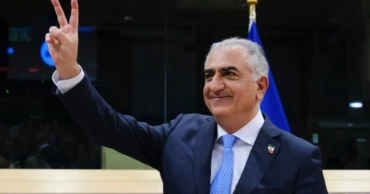
Reza Pahlavi returns to spotlight as protests shake Iran
Iran’s exiled crown prince Reza Pahlavi, whose father was overthrown nearly five decades ago, is once again seeking a role in shaping Iran’s future as nationwide protests challenge the country’s Islamic rulers.
Pahlavi, 65, has lived in exile in the United States since the 1979 Islamic Revolution forced his father, Shah Mohammad Reza Pahlavi, from power after mass uprisings across the country. Though the monarchy was widely despised for corruption, repression and deep inequality, Pahlavi is now trying to position himself as an alternative to Iran’s struggling theocracy.
Iran’s supreme leader warns of harsh response as protests continue
He recently called on Iranians to return to the streets, helping trigger large demonstrations that began over economic hardship but have evolved into a broader challenge to the Islamic Republic. The protests come after years of unrest and a recent 12-day conflict with Israel that included U.S. strikes on Iranian nuclear facilities.
It remains unclear how much genuine support Pahlavi commands inside Iran. Some protesters may favor a return to monarchy, while others simply want an end to clerical rule. Iranian state media dismissed the unrest as the work of “monarchist terrorists” and accused Pahlavi’s supporters of violence.
Born into privilege in 1960, Pahlavi grew up in Tehran’s royal palaces and was educated at a private school inside Niavaran Palace. His father’s rule, strengthened by a 1953 CIA-backed coup, relied heavily on U.S. support and a feared intelligence service known for torturing dissidents. Rising oil wealth in the 1970s failed to prevent widening inequality, and millions eventually took to the streets against the monarchy.
As protests intensified, Pahlavi left Iran in 1978 for flight training in the United States. A year later, the shah fled the country and Shiite clerics consolidated power, establishing the Islamic Republic and executing thousands of opponents. After his father’s death in 1980, royalists in exile declared Reza Pahlavi the new shah.
Since then, Pahlavi has spent decades abroad, mainly in the U.S., trying to maintain influence. His efforts included a brief clandestine television broadcast into Iran in the 1980s. However, memories of his father’s rule, repression inside Iran and perceptions that he is disconnected from everyday life in the country have limited his appeal.
Younger Iranians, born long after the revolution, have grown up under strict social controls, economic crisis, corruption and sanctions. Pahlavi has sought to reach them through social media and foreign-based Persian-language media.
In recent years, he has spoken of a possible constitutional monarchy or another system chosen by Iranians themselves. He has also drawn criticism for his ties to Israel and for meeting Prime Minister Benjamin Netanyahu.
Iran protests intensify as citizens call for political change
Pahlavi argues the Islamic Republic is beyond reform and says only fundamental change can save Iran. Whether he can become a central figure in that transformation remains uncertain.
9 months ago
Iran execution: Man publicly hanged from crane amid protests
Iran executed a second prisoner on Monday convicted over crimes committed during the nationwide protests challenging the country's theocracy, publicly hanging him from a construction crane as a gruesome warning to others.
The execution of Majidreza Rahnavard came less than a month after he allegedly fatally stabbed two members of a paramilitary force after purportedly becoming angry about security forces killing protesters.
The development underscores the speed at which Iran now carries out death sentences handed down for those detained in the demonstrations that the government hopes to put down.
Activists warn that at least a dozen people already have been sentenced to death in closed-door hearings. At least 488 people have been killed since the demonstrations began in mid-September, according to Human Rights Activists in Iran, a group that's been monitoring the protests. Another 18,200 people have been detained by authorities.
Iran’s Mizan news agency, which falls under the country’s judiciary, published a collage of images of Rahnavard hanging from the crane, his hands and feet bound, a black bag over his head.
Masked security force members stood guard in front of concrete and metal barriers that held back a gathered crowd early Monday morning in the Iranian city of Mashhad.
Read more: Second Iranian detainee executed over alleged protest crime
Mizan alleged Rahnavard had stabbed two security force members to death Nov. 17 in Mashhad and wounded four others.
Footage aired on state TV showed a man chasing another around a street corner, then standing over him and stabbing him after he fell against a parked motorbike. Another showed the same man stabbing another immediately after. The assailant, which state TV alleged was Rahnavard, then fled.
The Mizan report identified the dead as "student" Basij, paramilitary volunteers under Iran's Revolutionary Guard. The Basij (ba-SEEJ’) have deployed in major cities, attacking and detaining protesters, who in many cases have fought back.
A heavily edited state television report aired after Rahnavard's execution showed clips of him in the courtroom. In the video, he says he came to hate the Basijis after seeing video clips on social media of the forces beating and killing protesters.
The Mizan report accused Rahnavard of trying to flee to a foreign country when he was arrested.
Mashhad, a Shiite holy city, is located some 740 kilometers (460 miles) east of the Iranian capital, Tehran. Activists say it has seen strikes, shops closed and demonstrations amid the unrest that began over the Sept. 16 death in custody of Mahsa Amini, a 22-year-old woman who had been detained by Iran's morality police.
Mizan said Rahnavard was convicted in Mashhad's Revolutionary Court. The tribunals have been internationally criticized for not allowing those on trial to pick their own lawyers or even see the evidence against them.
Rahnavard had been convicted on the charge of “moharebeh,” a Farsi word meaning “waging war against God.” That charge has been levied against others in the decades since the 1979 Islamic Revolution and carries the death penalty.
Read more: Iran executes first known prisoner arrested in protests
In the images of his execution, a banner bearing a Quranic verse: “Indeed the requital of those who wage war against Allah and His Apostle, and try to cause corruption on the earth, is that they shall be slain or crucified, or shall have their hands and feet cut off from opposite sides, or be banished from the land.”
Executions conducted in public with a crane have been rare in recent years, though Iran used the same manner of hanging to put down unrest following the disputed 2009 presidential election and the Green Movement protests that followed.
Typically, those condemned are alive as the crane lifts them off their feet, hanging by a rope and struggling to breathe before they asphyxiate or their neck breaks.
Activists have put pressure on companies providing cranes to Iran in the past, warning they can be used for executions.
From Brussels, the European Union's foreign ministers expressed dismay at the latest execution. The bloc approved on Monday a fresh series of sanctions against Iran over its crackdown on protesters, and also for supplying drones to Russia for use in its war against Ukraine, the bloc’s top diplomat said.
EU foreign policy chief Josep Borrell said he spoke to Iran’s foreign minister regarding Tehran’s response to the protests and the latest execution and that it was “not an easy conversation.”
“We are going to approve a very, very tough package of sanctions,” Borrell told reporters as he arrived to chair the ministerial meeting in Brussels. Finland’s foreign minister said that he also called his Iranian counterpart.
German Foreign Minister Annalena Baerbock described the execution as “a blatant attempt at intimidation” of Iranians.
“We are making clear that we stand beside innocent people in Iran,” Baerbock said as she arrived at the Brussels meeting. “A system that treats its people in this way cannot expect to continue to have halfway normal relations with the European Union.”
Iran is one of the world’s top executioners and typically executes prisoners by hanging. It executed the first prisoner detained during demonstrations last Thursday. So far this year, it has executed over 500 prisoners, the highest number in five years, according to the Oslo-based group Iran Human Rights.
"In the absence of serious measures to deter the Islamic Republic from executing protesters, we will be facing even more horrific crimes like the 1980s mass execution of political prisoners," the group warned Monday. That refers to the 1988 executions in part overseen by Iran's current hard-line President Ebrahim Raisi that activists believe saw as many as 5,000 inmates put to death.
Amnesty International has said it obtained a document signed by one senior Iranian police commander asking that the execution for one prisoner be “completed ‘in the shortest possible time’ and that his death sentence be carried out in public as ‘a heart-warming gesture towards the security forces.’”
Amid the unrest, Iran is also battered by an economic crisis that has seen the national currency, the rial, drop to new lows against the U.S. dollar.
3 years ago
Second Iranian detainee executed over alleged protest crime
Iran said Monday it executed its second prisoner detained amid the nationwide protests now challenging the country's theocracy.
Iran's Mizan news agency, under the country's judiciary, identified the man executed as Majidreza Rahnavard. He had been convicted over allegedly stabbing two security force members to death Nov. 17 in Mashhad and wounding four others.
Read more: Iran executes first known prisoner arrested in protests
Iran executed the first prisoner detained amid the demonstrations Thursday.
The protests have expanded into one of the most serious challenges to Iran’s theocracy since the 1979 Islamic Revolution.
Activists warn that others could also be put to death in the near future, saying around a dozen people so far have received death sentences over their involvement in the demonstrations.
Read more: Iran morality police status unclear after 'closure' comment
3 years ago

Iran executes first known prisoner arrested in protests
Iran said Thursday it executed a prisoner convicted for a crime allegedly committed during the country's ongoing nationwide protests, the first such death penalty carried out by Tehran.
The execution of Mohsen Shekari comes as other detainees also face the possibility of the death penalty for their involvement in the protests, which began in mid-September, first as an outcry against Iran's morality police. The protests have expanded into one of the most serious challenges to Iran's theocracy since the 1979 Islamic Revolution.
Activists warn that others could also be put to death in the near future, saying that at least a dozen people so far have received death sentences over their involvement in the demonstrations.
The execution “must be met with strong reactions otherwise we will be facing daily executions of protesters,” wrote Mahmood Amiry-Moghaddam, the director of the Oslo-based group Iran Human Rights. “This execution must have rapid practical consequences internationally.”
The Mizan news agency, run by Iran's judiciary, said Shekari had been convicted in Tehran’s Revolutionary Court, which typically holds closed-door cases. The tribunals have been internationally criticized for not allowing those on trial to pick their own lawyers or even see the evidence against them.
Read more: Iran morality police status unclear after 'closure' comment
Shekari was accused of blocking a street in Tehran and attacking with a machete a member of the security forces, who required stitches for his wounds, the agency said.
The Mizan report also alleged that Shekari said he had been offered money by an acquaintance to attack the security forces.
Iran's government for months has been trying to allege — without offering evidence — that foreign countries have fomented the unrest. Protesters say they are angry over the collapse of the economy, heavy-handed policing and the entrenched power of the country's Islamic clergy.
Mizan said Shekari had been arrested on Sept. 25, then convicted on Nov. 20 on the charge of "moharebeh," a Farsi word meaning “waging war against God.” That charge has been levied against others in the decades since 1979 and carries the death penalty. Mizan said an appeal by Shekari's lawyer against the sentence failed.
After his execution, Iranian state television aired a heavily edited package showing the courtroom and parts of Shekari’s trial, presided over by Judge Abolghassem Salavati.
Salavati faces U.S. sanctions for meting out harsh punishments.
“Salavati alone has sentenced more than 100 political prisoners, human right activists, media workers and others seeking to exercise freedom of assembly to lengthy prison terms as well as several death sentences,” the U.S. Treasury said in sanctioning him in 2019.
“Judges on these Revolutionary Courts, including Salavati, have acted as both judge and prosecutor, deprived prisoners of access to lawyers and intimidated defendants.”
German Foreign Minister Annalena Baerbock condemned Shekari’s execution in a Twitter post, saying “the Iranian regime’s contempt for humanity is limitless.”
Read more: Iran executes four people accused of working for Israel’s Mossad: State news
James Cleverly, the United Kingdom’s foreign secretary, described himself as “outraged” and said: “The world cannot turn a blind eye to the abhorrent violence committed by the Iranian regime against its own people.”
France’s Foreign Ministry said the “execution is yet another instance of the serious, unacceptable violations of fundamental rights and freedoms committed by the Iranian authorities.”
Iran has been rocked by protests since the Sept. 16 death of 22-year-old Mahsa Amini, who died after being detained by the country's morality police. At least 475 people have been killed in the demonstrations amid a heavy-handed security crackdown, according to Human Rights Activists in Iran, a group that's been monitoring the protests since they began. Over 18,000 have been detained by authorities.
Iran is one of the world's top executioners. It typically executes prisoners by hanging. Already, Amnesty International said it obtained a document signed by one senior Iranian police commander asking an execution for one prisoner be “completed ‘in the shortest possible time’ and that his death sentence be carried out in public as 'a heart-warming gesture towards the security forces.'”
U.N. spokesman Stephane Dujarric on Thursday reiterated the organization's strong opposition to the death penalty.
“And we deplore what we see today in Iran and sadly we see in other countries,” Dujarric said. “What we would want to see is a world where there is no death penalty.”
3 years ago

Iranian general acknowledges over 300 dead in unrest
An Iranian general on Monday acknowledged that more than 300 people have been killed in the unrest surrounding nationwide protests, giving the first official word on casualties in two months.
That estimate is considerably lower than the toll reported by Human Rights Activists in Iran, a U.S.-based group that has been closely tracking the protests since they erupted after the Sept. 16 death of a young woman being held by the country's morality police.
The activist group says 451 protesters and 60 security forces have been killed since the start of the unrest and that more than 18,000 people have been detained.
The protests were sparked by the death of 22-year-old Mahsa Amini, who was detained for allegedly violating the Islamic Republic’s strict dress code. They quickly escalated into calls for the overthrow of Iran's theocracy and pose one of the most serious challenges to the ruling clerics since the 1979 revolution that brought them to power.
Read more: Activists: Iranian forces unleash heavy fire on protesters Activists: Iranian forces unleash heavy fire on protesters
Gen. Amir Ali Hajizadeh, the commander of the aerospace division of the paramilitary Revolutionary Guard, was quoted by a website close to the Guard as saying that more than 300 people have been killed, including “martyrs,” an apparent reference to security forces. He also suggested that many of those killed were ordinary Iranians not involved in the protests.
He did not provide an exact figure or say where his estimate came from.
Authorities have heavily restricted media coverage of the protests. State-linked media have not reported an overall toll and have largely focused on attacks on security forces, which officials blame on shadowy militant and separatist groups.
Hajizadeh reiterated the official claim that the protests have been fomented by Iran's enemies, including Western countries and Saudi Arabia, without providing evidence. The protesters say they are fed up after decades of social and political repression, and deny having any foreign agenda.
The protests have spread across the country and drawn support from artists, athletes and other public figures. The unrest has even cast a shadow over the World Cup, with some Iranians actively rooting against their own national team because they see it as being linked to the government.
The niece of Iran's Supreme Leader Ayatollah Ali Khamenei recently called on people to pressure their governments to cut ties with Tehran over its violent suppression of the demonstrations.
In a video posted online by her France-based brother, Farideh Moradkhani urged “conscientious people of the world” to support Iranian protesters. The video was shared online this week after Moradkhani's reported arrest on Nov. 23, according to the activist group.
Moradkhani is a long-time activist whose late father was an opposition figure married to Khamenei's sister and is the closest member of the supreme leader's family to be arrested. The branch of the family has opposed Khamenei for decades and Moradkhani has been imprisoned on previous occasions for her activism.
“I ask the conscientious people of the world to stand by us and ask their governments not to react with empty words and slogans but with real action and stop any dealings with this regime,” she said in her video statement.
Read more: Iran sentences anti-government protester to death: Report
The protests, now in their third month, have continued despite a brutal crackdown by Iranian security forces using live ammunition, rubber bullets and tear gas.
Iran refuses to cooperate with a fact-finding mission that the U.N. Human Rights Council recently voted to establish.
“The Islamic Republic of Iran will not engage in any cooperation, whatsoever, with the political committee,” Foreign Ministry spokesman Nasser Kanaani said Monday.
In a separate development, Iran released a 76-year-old dual Iranian-Austrian citizen from prison for health reasons, the Austria Press Agency reported.
APA quoted the Austrian Foreign Ministry confirming that Massud Mossaheb was given indefinite medical leave. The ministry said “intensive diplomatic efforts” had led to his release, which was first reported by Austrian daily Die Presse. There was no immediate comment from Iran.
Mossaheb was arrested on suspicion of espionage in early 2019 during a visit to the capital, Tehran, and later sentenced to 10 years in prison. He must remain in Iran and report to authorities every other week, APA reported.
Iran has detained several dual nationals in recent years on charges of threatening national security. Analysts and rights groups accuse hard-liners in Iran’s security agencies of using foreign detainees as bargaining chips in negotiations or prisoner swaps with the West, which Tehran denies.
3 years ago