sue
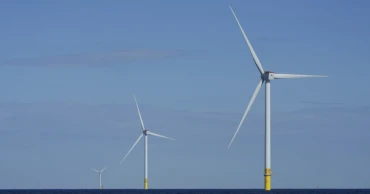
States sue Trump administration for blocking the development of wind energy
On Monday, a coalition of state attorneys general filed a lawsuit challenging President Donald Trump’s decision to halt wind energy development.
The group—comprising attorneys general from 17 states and Washington, D.C.—is contesting an executive order Trump issued on his first day in office. The order placed a freeze on all approvals, permits, and federal loans for wind energy projects, both on land and at sea. The coalition argues that the president does not have the legal authority to unilaterally suspend the permitting process and warns that the move undermines a crucial energy source vital to their economies, energy strategies, public health, and climate objectives.
They are urging a federal court to rule the executive order illegal and to block federal agencies from enforcing it.
“This unjustified and harmful order puts thousands of well-paying jobs and billions in clean energy investments at risk,” said New York Attorney General Letitia James, who is spearheading the lawsuit. “It’s also stalling our much-needed shift away from fossil fuels, which continue to damage our health and our environment.”
AI app supports families navigating ADHD and autism
White House spokesperson Taylor Rogers said Democratic attorneys general are “using lawfare to stop the president’s popular energy agenda,” instead of working with him to unleash American energy and lower prices for families.
“The American people voted for the president to restore America’s energy dominance, and Americans in blue states should not have to pay the price of the Democrats’ radical climate agenda,” Rogers said in a statement to The Associated Press.
Trump vowed during the campaign to end the offshore wind industry if he returned to the White House. His order said there were “alleged legal deficiencies underlying the federal government’s leasing and permitting” of wind projects, and it directed the Interior secretary to review wind leasing and permitting practices for federal waters and lands.
The lawsuit was filed in federal court in Massachusetts.
Trump’s order targeted a priority of Biden’s climate plan
The Biden administration saw offshore wind as a climate change solution, setting national goals, holding lease sales and approving nearly a dozen commercial-scale projects. Trump is reversing those energy policies. He’s boosting fossil fuels such as oil, natural gas and coal, which cause climate change, arguing it’s necessary for the U.S. to have the lowest-cost energy and electricity in the world.
The Trump administration took a more aggressive step against wind in April when it ordered the Norwegian company Equinor to halt construction on Empire Wind, a fully permitted project located southeast of Long Island, New York, that is about 30% complete. Interior Secretary Doug Burgum said it appeared the Biden administration rushed the approval.
Equinor went through a seven-year permitting process before starting to build Empire Wind last year to provide power to 500,000 New York homes. Equinor is considering legal options, which would be separate from the complaint filed Monday. The Norwegian government owns a majority stake in Equinor.
Wind provides about 10% of the electricity generated in the United States, making it the nation’s largest source of renewable energy. The attorneys general argue that Trump’s order is at odds with years of bipartisan support for wind energy and contradicts his own declaration of a “national energy emergency,” which called for expanding domestic energy production.
States have already invested large sums to develop wind energy
The coalition includes Arizona, California, Colorado, Connecticut, Delaware, Illinois, Maine, Maryland, Massachusetts, Michigan, Minnesota, New Jersey, New Mexico, New York, Oregon, Rhode Island, Washington and Washington, D.C. They say they’ve invested hundreds of millions of dollars collectively to develop wind energy and even more on upgrading transmission lines to bring wind energy to the electrical grid.
1 year ago

EC sues Jubo League leader for snatching EVM ballot unit in Chattogram:Official
The Election Commission has filed a case against a Jubo League leader on charge of snatching an Electronic Voting Machine’s ballot unit panel from a polling centre during the Boalkhali Upazila Parishad election in Chattogram.
Presiding officer of the centre, Sajal Das, filed the case with Boalkhali Police Station last night against Nirmalendu Dey Sumon, the joint general secretary of Sreepur-Kharandwip Union Jubo League and son of late Gaurang Dey of ward-9.
Confirming the case, Boalkhali Police Station Officer-in-Charge Md Abdur Razzaque said, an investigation is underway regarding the matter.
Also Read: Pabna rickshaw-puller murder: Jubo League activist put on 3-day remand
Earlier yesterday, the Boalkhali Upazila Parishad by-election was held. However, there was no voter turnout throughout the day. Almost all the centres were empty.
In the meantime, around noon, Sumon entered room-5 of Jaistyapura Ramni Mohan High School centre in Sreepur-Kharandwip union and took away the EVM ballot unit panel from the polling room.
Assistant Presiding Officer Harunur Rashid protested, but the Jubo League leader did not pay heed to it.
Later, Union Awami League President Ratan Chowdhury recovered the EVM ballot unit panel and returned it to the centre.
Police detained Ratan for questioning in this connection and later released him.
3 years ago

Seattle schools sue tech giants over social media harm
The public school district in Seattle has filed a novel lawsuit against the tech giants behind TikTok, Instagram, Facebook, YouTube and Snapchat, seeking to hold them accountable for the mental health crisis among youth.
Seattle Public Schools filed the lawsuit Friday in U.S. District Court. The 91-page complaint says the social media companies have created a public nuisance by targeting their products to children.
It blames them for worsening mental health and behavioral disorders including anxiety, depression, disordered eating and cyberbullying; making it more difficult to educate students; and forcing schools to take steps such as hiring additional mental health professionals, developing lesson plans about the effects of social media, and providing additional training to teachers.
“Defendants have successfully exploited the vulnerable brains of youth, hooking tens of millions of students across the country into positive feedback loops of excessive use and abuse of Defendants’ social media platforms,” the complaint said. “Worse, the content Defendants curate and direct to youth is too often harmful and exploitive ....”
Meta, Google, Snap and TikTok did not immediately respond to requests for comment Saturday.
While federal law — Section 230 of the Communications Decency Act — helps protect online companies from liability arising from what third-party users post on their platforms, the lawsuit argues that provision does not protect the tech giants' behavior in this case.
“Plaintiff is not alleging Defendants are liable for what third-parties have said on Defendants’ platforms but, rather, for Defendants’ own conduct,” the lawsuit said. “Defendants affirmatively recommend and promote harmful content to youth, such as pro-anorexia and eating disorder content."
Also Read: Musk says he can't get fair trial in California, wants Texas
The lawsuit says that from 2009 to 2019, there was on average a 30% increase in the number of Seattle Public Schools students who reported feeling “so sad or hopeless almost every day for two weeks or more in a row" that they stopped doing some typical activities.
The school district is asking the court to order the companies to stop creating the public nuisance, to award damages, and to pay for prevention education and treatment for excessive and problematic use of social media.
While hundreds of families are pursuing lawsuits against the companies over harms they allege their children have suffered from social media, it's not clear if any other school districts have filed a complaint like Seattle's.
Internal studies revealed by Facebook whistleblower Frances Haugen in 2021 showed that the company knew that Instagram negatively affected teenagers by harming their body image and making eating disorders and thoughts of suicide worse. She alleged that the platform prioritized profits over safety and hid its own research from investors and the public.
3 years ago