Greenland
Denmark cautiously optimistic over Greenland deal with US
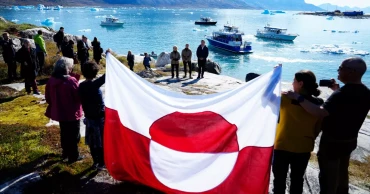
Denmark's government on Saturday cautiously welcomed US President Donald Trump's announcement of an agreement on Greenland that would expand the US military presence on the Arctic island while keeping it under Danish control.
The announcement follows months of threats by Trump to take control of Greenland, a semiautonomous territory within the Kingdom of Denmark and a NATO ally.
Greenland's top diplomat also welcomed the development, saying the agreement had been a long time coming.
Trump said Friday that the deal would give the United States “permanent control over security” and address its security concerns in Greenland.
Danish Prime Minister Mette Frederiksen's office later said the agreement would be signed by the US, Denmark and Greenland next week during the United Nations General Assembly. However, it still requires approval by the Danish and Greenlandic parliaments before it can take effect.
“Next week could be a good week … for Greenland, Denmark, and the United States alike,” Danish Foreign Minister Lars Løkke Rasmussen wrote on Instagram.
He said the agreement could replace a period of uncertainty with a binding arrangement that strengthens security in the Arctic and North Atlantic while respecting Denmark's and Greenland's red lines.
Greenland Foreign Minister Múte B. Egede said he was pleased that an agreement was now within reach.
“It has taken some time,” he told Danish broadcaster TV2. “I'm pleased that we finally have an end product within reach. And it's about time.”
Trump said the United States would immediately begin expanding its military presence in Greenland, which is rich in mineral resources.
The US maintained several military bases and installations on the island during the Cold War but later reduced its presence. It still operates the Pituffik Space Base in northwestern Greenland, which supports missile warning, missile defense and space surveillance operations for the US and NATO.
Few details of the new agreement have been made public. A US State Department official said it would prohibit non-NATO military bases in Greenland, restrict investments by potential adversaries and prevent China and Russia from establishing bases there. The official spoke anonymously because they were not authorized to comment publicly.
US, Danish and Greenlandic officials had been holding quiet negotiations for months to address Trump's security concerns about Greenland, which has about 56,000 residents.
After returning to the White House, Trump repeatedly urged Denmark to sell Greenland to the US and said the territory was important to American security. He also refused to rule out using military force to take control of the island.
Denmark and Greenland have repeatedly said Greenland is not for sale and rejected reports that the US had been gathering intelligence there. Russia and several European countries also strongly opposed the US push for Greenland.
Greenland pro-sovereignty activist Orla Joelsen said on X that the fight against Trump's plan to take over Greenland had been won.
The new agreement, the activist said, explicitly recognizes Denmark's sovereignty and territorial integrity and the Greenlandic people's right to self-determination.
44 minutes ago
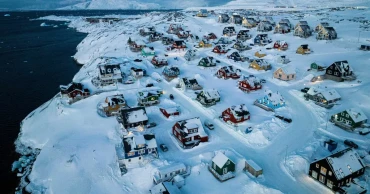
Why Greenland remains central to Trump's strategic ambitions
Greenland’s strategic location, vast mineral resources and growing importance in Arctic security continue to make the autonomous Danish territory a focal point of US President Donald Trump’s foreign policy ambitions.
Situated largely above the Arctic Circle between North America and Europe, Greenland has gained renewed geopolitical significance amid rising tensions involving Russia and China, the effects of climate change and the prospect of new Arctic shipping routes.
Trump has repeatedly argued that US control over Greenland is essential for national and global security, saying the island is critical to protecting North America and safeguarding the Arctic region. Although he previously suggested military action was an option, he has since indicated that force is no longer under consideration.
His renewed interest in Greenland has unsettled NATO allies and drawn firm opposition from both Denmark and Greenland's government, which insists the island’s future must be decided by its own people.
Greenland, home to around 56,000 people—mostly Indigenous Inuit—has been a strategic military asset since World War II, when the United States established a presence there to prevent Nazi Germany from gaining control and to protect North Atlantic shipping routes.
The island has become increasingly important as climate change reduces Arctic sea ice, opening the possibility of new international trade routes while intensifying competition over access to natural resources.
Security analysts note that Russia has expanded its military infrastructure across the Arctic in recent years, while China has sought a greater role in the region through its self-declared status as a "near-Arctic state" and plans for a Polar Silk Road under its Belt and Road Initiative.
The United States already maintains a significant military presence in Greenland through the Pituffik Space Base in the island’s northwest. The installation plays a key role in missile warning, missile defence and space surveillance operations for both the US and NATO.
Greenland also overlooks the strategically important Greenland-Iceland-United Kingdom (GIUK) Gap, a vital maritime corridor used by NATO to monitor Russian naval movements in the North Atlantic.
Despite Trump's arguments, some defence experts say the US already enjoys extensive military access to Greenland under long-standing agreements with Denmark, making formal control of the territory unnecessary from a security standpoint.
Denmark has also expanded defence cooperation with Washington by allowing greater US military access to Danish bases, while making clear it would oppose any attempt to annex Greenland.
Beyond security, Greenland's vast reserves of rare earth minerals have attracted growing international attention. These critical minerals are essential for manufacturing advanced technologies, including electric vehicle batteries, smartphones, computers and defence equipment.
Western countries have sought to diversify supplies of these strategic minerals as they attempt to reduce dependence on China, which dominates global rare earth production.
However, Greenland's harsh Arctic climate, limited infrastructure and strict environmental regulations continue to pose major challenges to large-scale mining and resource development.
2 months ago
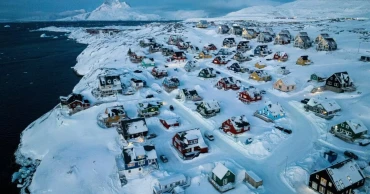
Greenland rejects negotiation on self-determination after meeting Trump envoy
Greenland’s Prime Minister Jens-Frederik Nielsen has said he held a “respectful and positive” meeting with a special envoy of US President Donald Trump, but made it clear that the island’s right to self-determination is non-negotiable.
Nielsen said the Greenlandic people continue to firmly reject any idea of external control over the territory, which is a semiautonomous part of NATO member Denmark. He noted that while discussions with US officials were cordial, Greenland’s political status is not open for negotiation.
“The Greenlandic people are not for sale. Greenlandic self-determination is not something that can be negotiated,” he was quoted as saying by Danish broadcaster TV 2 after meeting Louisiana Governor Jeff Landry, Trump’s special envoy to the Arctic territory.
At the same time, Nielsen stressed that Greenland seeks constructive cooperation with the United States. He described the meeting as a courtesy call held in a positive atmosphere with mutual respect.
According to Danish public broadcaster DR, Landry said on arrival in Greenland that Trump had instructed him to “go over there and make as many friends as we can get.”
Greenland’s Foreign Minister Mute B. Egede said a joint working group involving the United States, Greenland, and Denmark is continuing discussions aimed at addressing repeated US interest in gaining control over the island. Trump has previously suggested that rival powers such as Russia or China could move to take strategic advantage of Greenland, a claim widely rejected by regional experts.
Egede said Greenland has not created obstacles to cooperation with Washington. He added that progress depends on the outcome of the working group, which he said now appears “more promising” than before.
Meanwhile, US Ambassador to Denmark Ken Howery, who is part of the visiting delegation, is expected to open new US consulate offices in Nuuk and attend a business fair along with Landry in the coming days, according to local media reports.
4 months ago
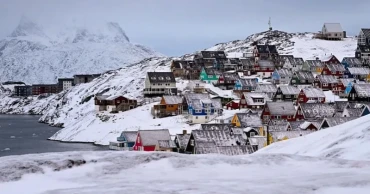
Canada and France open consulates in Greenland after US threats
Canada and France are set to open diplomatic consulates in Greenland on Friday, marking a historic expansion of foreign engagement in the Arctic territory, officials said.
A Canadian delegation led by Governor General Mary Simon and Foreign Minister Anita Anand will formally inaugurate Canada’s first diplomatic outpost in Nuuk, accompanied by a Canadian Coast Guard vessel. French officials are scheduled to open their consulate on the same day.
Governor General Simon, Canada’s Crown representative, said in a pre-trip statement that Canada “stands firmly in support of the people of Greenland who will determine their own future.” The visit also underscores the cultural and ethnic connections between Canadian Inuit and Greenlandic Inuit, Simon’s own Inuk heritage highlighting these longstanding ties.
Until this week, only Iceland and the United States maintained formal diplomatic missions in Greenland. The opening of Canadian and French consulates is viewed as a strategic move amid former US President Donald Trump’s prior remarks suggesting the US should “own” Greenland for national security purposes. Trump later softened his stance, citing ongoing discussions with Denmark, European allies, and Canada.
The Canadian consulate had been planned since early 2024 under Ottawa’s review of its Arctic policy but was delayed due to weather. The opening now comes amid increasing focus on Arctic security and infrastructure, with Canadian officials noting the proximity of Nuuk to Iqaluit in Nunavut, and the broader significance for regional cooperation.
Inuit leaders, including Natan Obed of Inuit Tapiriit Kanatami, said the consulate represents years of advocacy to strengthen ties with Greenland and emphasized concern over US threats, given historical colonization and recent geopolitical tensions. Approximately 50 Canadian Inuit are expected to attend the inauguration ceremony.
Foreign Minister Anand described Arctic defence as “an unquestionable national security priority,” highlighting Canada’s ongoing investments in northern infrastructure and a year-round military presence. During the visit, Anand will meet with Greenland’s Foreign Minister Vivian Motzfeldt, while Simon will meet Prime Minister Jens-Frederik Nielsen.
The consulate openings signal continued NATO ally support for Greenland amid past US claims and reinforce Canada’s strategic presence in the Arctic.
With inputs from BBC
7 months ago
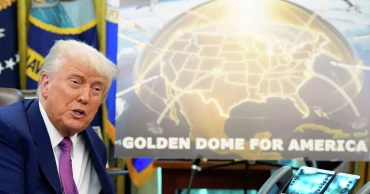
Greenland’s strategic role in nuclear defense comes into focus amid Trump’s ‘Golden Dome’ push
Greenland’s location in the Arctic places it at the heart of global nuclear defense planning, a reality highlighted anew by U.S. President Donald Trump’s renewed push for his proposed “Golden Dome” missile defense system.
In any hypothetical nuclear conflict involving the United States, Russia and China, intercontinental ballistic missiles would likely travel along the shortest routes, over the Arctic. That trajectory makes Greenland a critical point for early detection and potential interception.
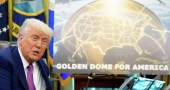
Trump has argued that U.S. ownership of Greenland is essential for the success of the multibillion-dollar “Golden Dome,” a layered missile defense system he claims will be operational before 2029. He has said modern offensive and defensive weapons systems make control of the territory especially important, sparking alarm in Denmark and among Greenlanders.
A key element of Greenland’s importance is the Pituffik Space Base, formerly known as Thule Air Base. Located above the Arctic Circle, the base hosts a powerful early-warning radar capable of detecting and tracking ballistic missile launches from thousands of kilometers away, including missiles fired from Russia or China toward the United States.
Defense analysts note that the base gives Washington valuable extra minutes to assess and respond to potential attacks. The radar can monitor large swaths of the Arctic and detect objects as small as a car, according to the U.S. Air Force.
However, experts question Trump’s claim that U.S. ownership of Greenland is necessary. The United States has operated at Pituffik for decades under a 1951 defense agreement with Denmark, without sovereignty over the island. Analysts also point out that other allied locations, such as early-warning radar sites in the United Kingdom, play similar roles without any U.S. ownership claims.
Some experts argue that emerging space-based sensors planned under the “Golden Dome” could eventually reduce Greenland’s strategic importance. They also note that Denmark has historically been a highly cooperative U.S. ally, making expanded military access possible without drastic political steps.
As debates continue, Greenland remains a pivotal, and sensitive, crossroads in global nuclear defense calculations.
7 months ago
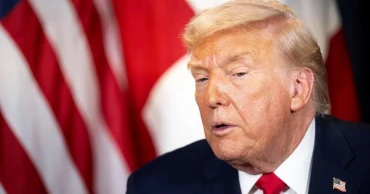
Nato says Greenland sovereignty not discussed after Trump talks of deal framework
Nato said the issue of Greenland’s sovereignty was not discussed in a meeting between US President Donald Trump and Nato Secretary General Mark Rutte, after Trump claimed a “framework of a future deal” had been discussed.
Trump said the United States is exploring a potential deal on Greenland following the talks with Nato. He also dropped planned tariffs on eight European countries and repeated that he would not use force to take the island.
Diplomatic sources, cited by US media, said there was no agreement for American control or ownership of Greenland.
Rutte said he did not discuss Denmark’s sovereignty over Greenland during his meeting with Trump.
Denmark’s Prime Minister Mette Frederiksen said Denmark is open to talks on security, investment and the economy, but sovereignty is not negotiable. She said decisions on issues related to Denmark and Greenland can only be taken by Denmark and Greenland.
UK Foreign Secretary Yvette Cooper said allies have been working on ideas to strengthen Arctic security, including an “Arctic sentry” plan under Nato. She said the UK has stayed firm in supporting Danish and Greenlandic sovereignty.
UK Prime Minister Keir Starmer is due to meet Frederiksen for talks later.
With inputs from BBC
7 months ago
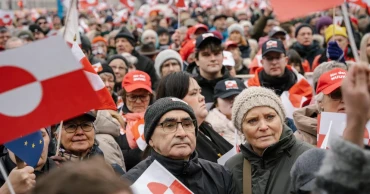
Pro-Greenland protesters mock Trump's MAGA slogan with 'Make America Go Away' caps
Red baseball caps spoofing Donald Trump’s iconic MAGS hats have become a symbol of Danish and Greenlandic defiance against the U.S. president's threat to seize the frozen territory.
The caps reading “Make America Go Away” — parodying Trump’s “Make America Great Again” slogan — have gained popularity along with several variants on social media and at public protests, including a weekend demonstration held in freezing weather in the Danish capital.
European governments are rallying behind Denmark, citing the need to defend Arctic regions and warning that threats against Greenland undermine Western security.
Protesters, however, are less diplomatic.
“I want to show my support to Greenland and also show that I don’t like the president of the United States,” said 76-year-old Copenhagen resident Lars Hermansen, who wore one of the red caps at a protest Saturday.
The mock hats were created by Copenhagen vintage clothing store owner Jesper Rabe Tonnesen. Early batches flopped last year — until the Trump administration recently escalated its rhetoric over Greenland. Now there are popping up everywhere.
“When a delegation from America went up to Greenland, we started to realize this probably wasn’t a joke — it’s not reality TV, it’s actually reality,” said Tonnesen, 58. “So I said, OK, what can I do?” Can I communicate in a funny way with a good message and unite the Danes to show that Danish people support the people of Greenland?”
Read More: Trump vows to impose Greenland tariffs as EU warns against threats
Demand suddenly surged from a trickle to selling out in the space of one weekend. Tonnesen said he has now ordered “several thousand.”
The original version designed by Tonnesen featured a play on words: “Nu det NUUK!” — a twist on the Danish phrase “Nu det nok,” meaning “Now it’s enough,” substituting Nuuk, Greenland’s tiny capital.
Protesters at Saturday’s rally waved red-and-white Danish and Greenlandic flags and carried handmade signs mocking U.S. claims over the territory, which is slightly larger than Saudi Arabia.
“No Means No,” read one sign. Another declared, “Make America Smart Again.”
Wearing one of the spoof hats, protester Kristian Boye, 49, said the gathering in front of Copenhagen City Hall struck a lighthearted tone while delivering a serious message.
“I’m here to support the Greenlanders, who are going through a very hard time right now,” he said. “They are being threatened with having their country invaded. I think it’s totally unacceptable.”
7 months ago

Trump blasts UN, presses Greenland control in rare White House briefing
President Donald Trump delivered a rare, nearly two-hour-long appearance at a White House press briefing on Tuesday, using the platform to highlight what he described as his administration’s achievements, criticise the United Nations and double down on his push for the United States to take control of Greenland, a move that has drawn sharp resistance from America’s European allies.
The extended briefing came on the anniversary of Trump’s inauguration and a day before he is scheduled to address global leaders, billionaires and policymakers at the World Economic Forum in Davos, Switzerland. His trip comes at a time of rising tensions with NATO allies over his aggressive posture on Greenland and his threat to impose new retaliatory tariffs on several European countries.
During the wide-ranging and often meandering session with reporters, Trump leafed through a thick packet of documents that he said listed hundreds of accomplishments from his first year back in office. He claimed his administration had achieved more than any previous government in a similar period and said it would take more than a week to read through the full list.
At several points, Trump turned his focus to foreign policy, renewing his argument that the United States must take control of Greenland for national security reasons, citing concerns about growing strategic competition in the Arctic. While he struck a slightly more conciliatory tone near the end of the briefing, saying Washington and NATO would “work something out,” he repeated his view that U.S. control of the territory is necessary.
Trump also took aim at the United Nations, saying the global body has failed to live up to its potential and has been ineffective in resolving conflicts. He promoted his idea of a Trump-led “Board of Peace,” initially conceived as a small group of world leaders to oversee the Gaza ceasefire plan, but now envisioned as a broader body that could help mediate international disputes.
“The United Nations just hasn’t been very helpful,” Trump said, adding that while he believes the organisation should continue, his proposed board could one day play a major role in peacemaking efforts.
The president’s remarks come as European leaders have warned that his threats to impose new tariffs on countries backing Denmark over Greenland could trigger a major trade dispute and strain long-standing trans-Atlantic ties. France and several other EU members have already signalled they are prepared to respond if Washington moves ahead with punitive measures.
Trump said his speech in Davos on Wednesday would focus on what he called the “tremendous success” of his administration and would recap progress made over the past year. The White House has previously said his address would centre on his affordability agenda, particularly housing, in an effort to convince Americans that his policies can ease cost-of-living pressures.
Speaking to reporters, Trump said other countries needed to hear his views on energy and immigration and suggested that his leadership had brought stability in several conflict zones, a claim that has been disputed by critics and fact-checkers.
The marathon briefing, marked by frequent digressions and a mix of domestic and foreign policy topics, underscored Trump’s combative style and his willingness to use high-profile appearances to press his most controversial priorities.
With European leaders already gathered in Davos and Greenland expected to dominate the agenda, Trump’s appearance at the forum is likely to be closely watched for signs of whether he will seek to defuse tensions or continue his hardline approach.
7 months ago
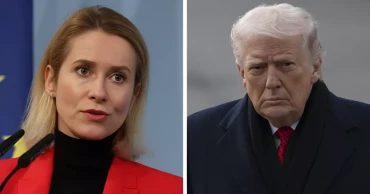
Trump vows to impose Greenland tariffs as EU warns against threats
US President Donald Trump has said he will “100 percent” go ahead with his threat to impose tariffs on European countries that oppose his demand for Washington to take control of Greenland, as the European Union vowed to defend its interests and sovereignty.
Speaking to NBC News, Trump confirmed he would press ahead with the tariff plan, including a 10 percent duty on all goods from Britain from February 1, rising to 25 percent from June 1, until a deal is reached for the United States to purchase Greenland from Denmark.
The US president said the same measures would apply to Denmark, Norway, Sweden, France, Germany, the Netherlands and Finland, all Nato allies.
“I will, 100 percent,” Trump said when asked if he would follow through on the tariff threat.
European leaders have rallied behind Greenland’s sovereignty, rejecting Trump’s claims. Danish Foreign Minister Lars Løkke Rasmussen said Europe must show Washington that tariffs and threats are “not the way forward.”
“You can’t threaten your way to ownership of Greenland. We have red lines that can’t be crossed,” Rasmussen said.
EU foreign policy chief Kaja Kallas said the bloc has “no interest to pick a fight, but we will hold our ground,” adding that “sovereignty is not for trade.”
The European Union is set to hold an emergency summit in Brussels on Thursday to discuss its response to Trump’s latest statements.
Trump also declined to rule out the use of force when asked whether he would seize Greenland, replying: “No comment.”
Denmark has warned that any US military action in Greenland would threaten the future of Nato, while several European allies have voiced firm support for Denmark and Greenland’s position.
With inputs from BBC
7 months ago
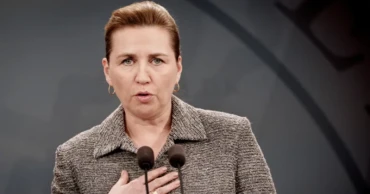
Europe rejects Trump tariff threat over Greenland
Danish Prime Minister Mette Frederiksen has said Europe will not bow to pressure from US President Donald Trump, as European leaders rallied behind Greenland in response to Washington’s threat of tariffs over the autonomous Danish territory.
Trump has warned he will impose new tariffs on eight US allies – Denmark, Finland, France, Germany, the Netherlands, Norway, Sweden and the UK – from February if they oppose his plan to take control of Greenland. He has described the island as vital for US security and has not ruled out using force, triggering strong criticism across Europe.
In a joint statement, the countries threatened with tariffs said Trump’s move could spark a “dangerous downward spiral” and undermine transatlantic relations.
“We stand in full solidarity with the Kingdom of Denmark and the people of Greenland,” the statement said, stressing that Arctic security is a shared Nato interest and that sovereignty and territorial integrity must be respected.
Writing on Facebook, Frederiksen said Europe wanted cooperation, not conflict, but would stand firm on its core values.
“Europe will not be blackmailed,” she wrote.
UK Prime Minister Sir Keir Starmer said he had spoken with Frederiksen, European Commission President Ursula von der Leyen and Nato Secretary-General Mark Rutte before holding talks with Trump. A Downing Street spokeswoman said Starmer made clear that Greenland’s security was a priority for all Nato members and that imposing tariffs on allies over collective security was wrong.
Trump has threatened a 10 percent tariff on goods from the eight countries from February 1, with the possibility of raising it to 25 percent until a deal is reached.
European leaders have warned the move would damage long-standing alliances, while public protests have already taken place in Denmark and Greenland against Trump’s takeover plan.
With inputs from BBC
8 months ago