shutki
Turning your nose? How ‘shutki’ can be a mainstay of Bangladesh’s robust fisheries export sector
Bangladesh’s traditional dried fish industry, locally known as shutki, is gaining renewed attention as a potent earner of foreign currency, with exports showing signs of strong growth that marks it out as a highly promising item in the country's fisheries export portfolio.
According to the Department of Fisheries and the Export Promotion Bureau, Bangladesh exported 3,038 tonnes of dried fish in FY 2023–24, earning approximately Tk 765 million ($8.5 million), marking a significant increase from the previous fiscal year’s earnings of Tk 488 million ($5.5 million). The growth has been driven by rising global demand in niche markets such as Hong Kong, Singapore, the Middle East, the United States, and parts of Europe.
Though the industry is still far from attaining even a fraction of the heights achieved by the country's readymade garment industry, stakeholders say the potential is "enormous", if proper investments and reforms are introduced.
Only 13 percent of dried fish produced in Bangladesh were found to contain traces of pesticides, while the remaining 87 percent are considered safe for consumption, according to findings of a new study. Researchers noted that even in the dried fish samples where pesticide residues were detected, the levels dropped significantly after cooking.
The findings were presented recently at a seminar organised by the Bangladesh Food Safety Authority at its headquarters in Shahbagh.
The Department of Fisheries informed that Bangladeshi shutki, essentially dried sea fish, has strong export prospects due to its unique taste, low cost, and availability. However, it must address hygiene and quality concerns to enter premium markets.
Golden fibre glows again; Faridpur fields promise Tk 2,000cr harvest
The current domestic production stands at over 20,000 tonnes annually, with major production hubs located in Chattogram, Cox’s Bazar, Dublar Char, and Ashar Char. However, the country still imports dried fish to meet domestic demand, which exceeds 55,000 tonnes per year.
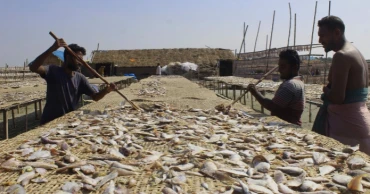
Industry insiders say lack of modern drying infrastructure, post-harvest handling, and quality control have kept the sector from reaching its full export potential. Many producers rely on traditional sun-drying methods, leaving the products vulnerable to contamination, pest infestations, and harmful chemical use.
A recent study by the Bangladesh Council of Scientific and Industrial Research (BCSIR) revealed that while 13% of dried fish samples tested had pesticide residues, that number is considered low within the industry, and so it was good news. The large majority were within safe limits and posed minimal risk when properly cooked.
To improve product quality and safety, initiatives supported by the FAO and various NGOs have introduced solar dryers, covered drying racks, and other hygienic methods in coastal communities. These are expected to boost both export viability and domestic consumer confidence.
In addition to its economic promise, shutki plays a key role in food security, especially in low-income and disaster-prone regions, due to its affordability, long shelf-life, and high protein content.
Experts and policymakers are calling for a national action plan to support dried fish producers with access to finance, modern technology, and international market linkage.
As global demand for clean, shelf-stable seafood grows, Bangladesh’s shutki sector may indeed find its place in the billion-dollar bracket—provided it gets the attention it deserves.
In recent years, Bangladesh has emerged as a notable player in the dried fish export market, leveraging its rich marine resources and favorable geographical location. The country boasts an extensive coastline along the Bay of Bengal, providing access to a wide range of fish species that are ideal for drying and preserving. Dried fish products from Bangladesh are gaining increasing attention in international markets, particularly in Southeast Asia, the Middle East, and Europe.
According to the Bangladesh Export Promotion Bureau (EPB), the country's seafood exports, including dried fish, exceeded $400 million in 2022. This market potential is expected to expand further, as demand for dried fish continues to rise globally. In the 2023-2024 fiscal, the country was able to earn Tk4,376 crore by exporting fish and fish products.
According to Business Research Insights, the global dried seafood market was valued at approximately $4 billion in 2023 and is projected to reach $6.8 billion by 2032, reflecting a compound annual growth rate (CAGR) of 6% during the forecast period.
Bangladesh's dried fish exports have primarily targeted markets in the Middle East, particularly Saudi Arabia, the UAE, and Kuwait, where dried fish is a staple in local cuisine. What is also noticeable is that each of those destinations is home to fairly large communities of Bangladeshi expatriates, and ultimately they may be the ones to drive the demand for shutki from abroad.
While Bangladesh's dry fish export industry is poised for growth, several challenges need to be addressed to fully capitalize on its potential. One of the key challenges is improving the quality and consistency of dried fish products to meet international standards.
Bangladesh's exporters must ensure proper drying, processing, packaging, and adherence to hygiene regulations to compete effectively in global markets. However, opportunities abound for Bangladesh to expand its dry fish exports by investing in value-added products such as packaged dried fish snacks and ready-to-eat meals, consumers in foreign countries have often said.
With global trends moving toward sustainable seafood sourcing, Bangladesh can also benefit from initiatives aimed at promoting eco-friendly fishing practices and improving traceability.
According to export analysts, the increasing demand for ready-to-eat, high-protein foods in diaspora communities, particularly in the UK, US, and Middle Eastern countries, has opened up new doors for Bangladesh’s dried fish market. With improved packaging, branding, and cold-chain logistics, Bangladeshi exporters can tap into ethnic supermarkets and gourmet seafood outlets abroad.
“Bangladeshi shutki is a delicacy in many migrant communities, but it has not yet been scaled for mass export due to quality and certification gaps,” said Md. Asadul Islam, a seafood exporter based in Chattogram. “If we meet EU and FDA standards consistently, we can easily triple our export figures within a few years.”
Local dried fish hubs like Nazirartek in Cox’s Bazar, one of the country’s largest processing zones, are showing early signs of modernization. Several small and medium enterprises (SMEs) have begun adopting solar tunnel drying systems, plastic net enclosures, and vacuum-sealed packaging to enhance safety and shelf-life.
However, challenges remain. Producers cite rising production costs, poor electricity access in coastal regions, seasonal labor shortages, and limited access to affordable credit as key barriers to growth.
Women play a significant role in the dried fish value chain—particularly in cleaning, drying, sorting, and packaging. According to the Bangladesh Fisheries Research Institute (BFRI), over 1.4 million women are directly or indirectly involved in fisheries and post-harvest processing, many of whom work informally with little legal or financial protection.
To ensure long-term sustainability, experts are also urging for better coastal resource management and sustainable fishing practices, as overfishing and climate change increasingly threaten marine biodiversity in the Bay of Bengal.
Can Bangladesh reverse the decline in farming hands?
In a recent roundtable held in Khulna, organized by the Marine Fisheries Association, stakeholders recommended the formation of a dedicated “Dried Fish Export Promotion Cell” under the Ministry of Commerce, as well as a national certification and grading system to ensure consistency in export quality.
“If Bangladesh can standardize shutki production and position it as an ethnic delicacy and health food, it could soon rival shrimp and hilsa in export value,” said Dr. S.M. Nizam Uddin, a marine economist at the University of Dhaka.
While the billion-dollar mark may still be a distant goal, the dried fish sector is clearly undergoing a transformation. With the right policy support, technological investment, and branding efforts, Bangladesh could turn its ancient shutki tradition into a globally competitive industry.
1 year ago

10,000 fishermen likely to gather at Dublar Char as dried fish processing season starts
A total of 10,000 fishermen from coastal areas are expected to gather at Dublar Char, popularly known as “Shutki Polli” or Dried Fish Village, as dried fish processing season kicked off.
Every year, several thousand fishermen and hired hands flock to the area to catch fish and make shutki (dried fish).
According to the forest department, this year, the authorities concerned have given permission to erect 108 makeshift houses and 78 depots for accommodation of fishermen and preservation of dried fish.
Bagerhat's Dublar Char abuzz as fish drying season begins
The fishermen will catch fish using 1500 trawlers in the Sundarbans. They will process the fish and keep those under the sun for drying.
Dublar Char is already buzzing with workers and traders after the authorities issued permits to fishermen to catch fish.
Thousands of Dublar Char fishermen take oath together with PM on Victory Day
Last year, the government earned Tk 6 crore revenue from Dublar Char and this year, a Tk 7 crore target has been set.
Different species of fish including Loitta, Faissa, Koral, Pomfret, Chhuri, Tuna and many more are being processed at Dublar Char. The demand of dried fish from the area is high as they are processed without using chemicals and formalin.
Dublar Char comes alive as Sutki fish season gets underway
Rabiul Islam, a fisherman from Rampal upazila, said he came to Dublar Char on Friday and spent a busy day making makeshift houses with bamboo, polythene and hogla (long dry grass used for sheds).
Shahid Mallik, president of Matsyajibi Samity, said thousands of fishermen have already reached the area while many went to the sea to catch fish.
Dilip Majumdar, officer-in-charge of Alorkol camp, said the fishermen are busy erecting makeshift houses and it takes two to three days to complete.
Some fishermen were busy processing their catch under the open sky, he said.
Rana Deb, assistant forest conservator of Sundarbans East zone, said the dried fish processing season began on November 3 and will continue till March 31, next year.
The fishermen will live in Alorkol, Majherkella, Narikelbaria and Shelar Char for five months.
Sheikh Mahbub Hasan, assistant conservator of Forests under Sharankhola Range, said the forest department has been asked to remain vigilant so that no one in the guise of fishermen can commit crimes on Dublar Char.
2 years ago
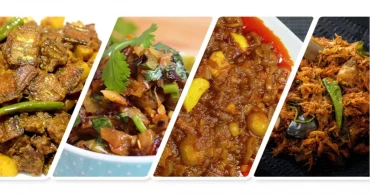
Love shutki? 7 spicy Bangladeshi dried fish recipes you can try
Shutki or dried fish are rich in protein and healthy fats like long-chain omega-3 fatty acid. They are also an excellent source of essential nutrients, including iodine, zinc, copper, selenium, and calcium. Dried fish is a common ingredient in many recipes from Bangladesh's Hill Tracts and coastal districts. Here are top 7 Bangladeshi dried fish recipes to try in your kitchen.
7 Dried Fish Recipes for Bangladeshi Kitchen
Chhuri Shutki Bhuna
Ingredients:
Chhuri Shutki 100 gm, garlic (chopped)- 2 tbsp, onion (chopped)- 1/4 cup, tomato (chopped)- 1/4 cup, green chili- 3-4 pieces, red chili powder- 1/2 ts, turmeric powder- 1/4 ts, cumin powder- 1/4 ts, coriander powder- 1/4 ts, oil- 3 Tbs, salt- 1/2 ts to or taste, and coriander leaf (chopped)- 1 Tbs.
Procedures:
First, fry the dried fish for 5 minutes. Then boil the fried fish with water for 4 minutes. Use a strainer to drain the water. Then remove the bones from the fish. Next, put oil in a pan and fry the chopped garlic for 10-12 seconds. Then add the chopped onion and fry as long as the onion becomes soft and tender.
Read more: These are the 10 Most Expensive Teas in the World
Add the tomato (chopped), green chili, red chili powder, turmeric powder, cumin powder, coriander powder, and salt. Cook as long as the oil starts to come out from the masala. Add the boiled fish and mix well. Pour some water and cook for 5-7 minutes. Finally, add the chopped coriander leaf and mix, and transfer to a dish. Serve with rice or khichuri.
Roasted Loitta Shutki Salad
Ingredients
5-7 pieces of Loitta Shutki, 15-20 pcs green chili, ½ cup onion (chopped), ¼ cup coriander leaves (chopped), and salt (as required).
Procedures:
You can use a charcoal BBQ grill if you have one. But if you don’t have one, you just place a net over your gas stove. Then put the dred fish over it. You need to put the heat on medium low. Burn both sides of the fish to make all parts crispy and well-cooked.
Read More: Top 10 Most Expensive Water Bottle Brands in the World
After charring, remove all burnt parts using a knife. Then cut or break the dried fish.
Next, roast all green chilies and make a coarse paste by grinding. Mix together the chopped onion, coriander leaves, salt, and roasted dried fish pieces. Enjoy with hot rice.
Chepa Shutki Bhorta
Ingredients
Chepa Shutki 6 pcs, garlic 1/2 cup (chopped), onion chopped 2 cups, green chili 6-8 pcs, mustard oil 1 tbsp, and salt (as required).
Read More: 10 Healthy Gluten-free Breakfast Recipes
Procedures:
First, heat oil in a pan and fry the shutki for 4 minutes on both sides. Chepa shutki can stick to the pan easily so you need to stir frequently. When done, transfer to a dish.
Then add some oil to the same pan and fry the chopped onions for 2 minutes, or as long as they turn lightly golden. Keep aside. Next, roast the green chili and garlic for 2 minutes.
Now, to prepare the bhorta, mix everything and use a blender or a sheel pata. Serve with white rice.
Read more: 7 Dosa Recipes for Bangladeshi Kitchen
3 years ago