election preparations
Election schedule to be announced Thursday evening
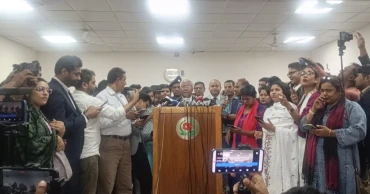
The much-sought schedule for the 13th parliamentary election and the national referendum will be announced at 6pm on Thursday (December 11, 2025), Election Commission (EC) Senior Secretary Md Akhtar Ahmed said on Wednesday.
“The schedule will be announced at 6pm on Thursday, with Bangladesh Television and Bangladesh Betar airing the Chief Election Commissioner’s national address,” he said while talking to reporters at Nirbachan Bhaban in the afternoon.
The CEC’s speech was already recorded by Bangladesh Television and Bangladesh Betar on Wednesday afternoon, which will be aired at 6 pm on Thursday.
Replying to a question, the secretary said the schedule would be declared for elections in all 300 constituencies.
When asked about the Appellate Division’s directive to reinstate four constituencies in Bagerhat district, he said, “The schedule will be announced tomorrow. As of now, the decision is to announce the schedule for 300 seats because we have not received any court order yet. If corrections are needed later, that can be done accordingly.”
The Appellate Division on Wednesday upheld a High Court verdict declaring the Election Commission's gazette—reducing the number of parliamentary seats in Bagerhat by one—as illegal.
On September 4, the Election Commission finalised the delimitation of 300 constituencies, bringing changes to the boundaries of 46 parliamentary seats in 16 districts. The changes reduced the number of seats in Bagerhat from four to three and increased Gazipur’s seats from five to six.
Following the Appellate Division’s verdict, now the Election Commission would need to reinstate four constituencies in Bagerhat and five constituencies in Gazipur district.
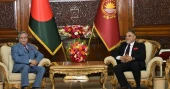
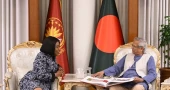
Earlier on Wednesday, the Election Commission, headed by Chief Election Commissioner AMM Nasir Uddin, met President Mohammed Shahabuddin at Bangabhaban to brief overall preparations to hold the upcoming parliamentary elections and the referendum.
Four election commissioners Abdur Rahmanel Masud, Tahmida Ahmad, Anwarul Islam Sarker and Brig Gen (Retd) Abul Fazal Md Sanaullah as well as EC Senior Secretary Akhtar Ahmed were present in the meeting.
The President expressed satisfaction over the overall preparations undertaken by the EC for the upcoming election and the referendum.
“The President expressed satisfaction after we informed him in detail,” EC Secretary Akhtar Ahmed said while talking to reporters after a meeting.
The Secretary said they informed the President about extending the balloting hours by one hour—now set from 7:30am to 4:30pm. “When we said that we extended the balloting hour by one hour from 7:30am to 4:30pm, he termed the decision logical and expressed his satisfaction,” he said.
During the meeting, he said, they apprised the President of various preparatory activities, including the updating of electoral rolls, the registration of new political parties and Out-of Country Voting (OCV) and In-Country Postal Voting (ICPV).
The President was also briefed on the Commission’s plan to use two types of ballot papers—one for the national election and another for the referendum—to be held simultaneously on the same day, said Akhtar Ahmed.
The President assured them that he would extend all necessary cooperation and support for the arrangement of a free, fair and meaningful election.
There are some 12.76 crore voters under 42,761 polling stations across the country’s 300 constituencies. White ballot papers will be used for the national election and pink ballot papers for the referendum.
Though the postal balloting system has been in the laws for a long time, it was never practiced in the previous elections.
Read more: Prof Yunus calls upcoming election a historic chance to shape ‘new Bangladesh’
This is the first time the Election Commission is introducing a hybrid postal balloting system, enabling expatriates, government staff, polling personnel, and the persons who will be in the legal custody to exercise their franchise through a combination of digital registration and manual voting.
Till Wednesday (December 10), nearly 300,000 expatriate voters from some 120 countries across the world have already registered through ‘Postal Vote Bd’ app to vote in the national election and referendum. The registration process for expatriates will continue till December 25.
The ICPV (In-Country Postal Voting) registration process for the government staff on duty outside their voting places, polling personnel, and the persons under the legal custody (jails) will start after the announcement of election schedule and continue for 15 days.
According to EC’s projection, some 10 lakh people from inside the country may vote through the postal ballot papers in the election.
9 months ago

President expresses satisfaction over EC’s preparations for polls, referendum
President Mohammed Shahabuddin expressed satisfaction over the preparations undertaken by the Election Commission (EC) ahead of the upcoming 13th parliamentary election and the national referendum, EC Senior Secretary Akhtar Ahmed said on Wednesday (December 10, 2025).
“The President expressed satisfaction after we informed him in detail,” Akhtar Ahmed said while talking to reporters after a meeting between Chief Election Commissioner AMM Nasir Uddin, four election commissioners and the EC Secretary with the President at Bangabhaban.
CEC briefs President on polls preparations announcement
The Secretary said they informed the President about extending the balloting hours by one hour—now set from 7:30am to 4:30pm. “When we said that we extended the balloting hour by one hour from 7:30am to 4:30pm, he termed the decision logical and expressed his satisfaction,” he said.
During the meeting, he said, they apprised the President of various preparatory activities, including the updating of electoral rolls and the registration of new political parties.
The President was also briefed on the Commission’s plan to use two types of ballot papers—one for the national election and another for the referendum—to be held simultaneously on the same day, said Akhtar Ahmed.
Election Commission to meet President Dec 10
9 months ago
Preparations complete for upcoming national election: Home Adviser
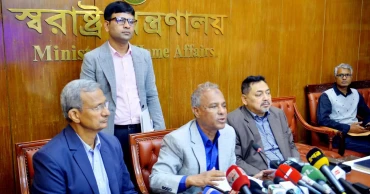
All preparations have been taken for the upcoming national parliamentary elections, said Home Affairs Adviser Lt Gen (retd) Jahangir Alam Chowdhury on Monday (December 08, 2025).
“All necessary preparation including training for law enforcement agencies, purchase of body-worn cameras and ensuring electricity at every polling station have been taken,” he said.
The Home Adviser came up with the remarks while briefing reporters after the 17th meeting of the Advisory Council Committee on law and order, held at the Secretariat.
Read more: National election will be a major test for law enforcers: Adviser Touhid
“Training is essential for carrying out any preparation effectively. There is no alternative to proper training. We are continuing training programmes for law enforcement personnel to ensure a free, fair, safe and acceptable election. These will be completed by January,” Jahangir Alam said.
“This year, the voting hours have been extended by one hour from 7:30am to 4:30pm which means the counting will continue even after sunset, so we are making arrangements to ensure uninterrupted electricity at all polling centers,” he added.
Responding to a question about the killing of a police officer’s parents in Rangpur, the adviser said instructions have been given to arrest the perpetrators soon and bring them under the law.
Regarding the recovery of looted firearms, Jahangir Alam said the process is underway.
Asked about ensuring a level playing field for the election, the adviser said the government is committed to ensuring a free and fair election.
Referring to the Jatiya Party’s allegation, the adviser said, “It is not correct and there are some internal disputes among them.”
Read more: Election schedule soon as request made for recording CEC’s address
9 months ago
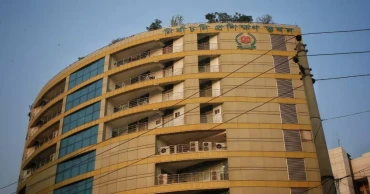
EC meets Sunday to set course for Bangladesh election, referendum
The Election Commission, led by Chief Election Commissioner AMM Nasir Uddin, will meet on Sunday (Dec 7) to review overall preparations and finalise the date for announcing the schedule for the upcoming national election and referendum, both slated for February 2026.
The Commission has finished all necessary preparations to announce the election schedule and the date for the election schedule is most likely to be finalised in Sunday’s meeting, said EC officials.
“We’ve completed 100 percent preparations and the date for the election schedule has not finalised yet,” EC’s senior secretary Akhtar Ahmed told a training workshop at the Electoral Training Institute (ETI) in the city’s Agargaon area.
He, however, trashed news published by several media outlets that disclosed the specific dates for schedule and election saying that the dates have not been fixed yet.
Read more: BNP places 3 fresh proposals before EC, raises no objection to election schedule
Quoting the CEC, he said the election schedule will be declared in the second week of December.
The Secretary said the white ballot paper would be used for the general election, while the pink ballot papers would be for the referendum.
Later talking to UNB, the Secretary said they reviewed pre-schedule preparation in a meeting on Saturday as well.
Replying to a question if the polls schedule date to be decided on Sunday’s meeting, he said, “It’s up to the commission and it may finalise the date tomorrow (Subnday).”
About the preparation regarding amendment to electoral laws, he said the amendment to Representation of the People Order has already been approved by the government (the Council of Advisers), while the revised election code of conduct and election conducting rules are in the Law Ministry for vetting. The gazettes of these laws will be published within a couple of days, he added.
According to the EC officials, there will be nine agenda for Sunday's meeting. The agenda includes the overall preparation for arrangement of the 13th parliamentary election and referendum, pre- and post-schedule activities, coordination with field-level administration, registration of political parties and reviewing National Identity Card (NID) correction application system and finalisation of SOP in this regard.
Read more: BD Polls: EC rejects proposal to increase polling centres, cites voting time
Since this time the national election and referendum on July National Charter (reform charter) will be held simultaneously in a single day, the EC considers setting up two marking (secret stamping corners) places in each booth of the polling stations if there is enough space, while increasing the number of booths in other polling stations.
But the Commission has yet to assess how many additional polling booths will be installed and how many polling booths will have two marking places.
In this regard, the EC Secretary said the decision over installation of additional booths and two marking places in a booth could be taken later even after the announcement of the election schedule.
Besides, the Commission considers extending the eight-hour balloting period by one hour (from 7:30am to 4:30pm) as every voter will need to cast two votes –one for an MP candidate and another for the referendum.
Read more: Bangladesh Polls: EC considers picking a symbolic number of returning officers from its own staff
The Election Commission on October 27 released the list of 42,761 polling stations throughout the country for the 13th parliamentary election, raising the number by around 611 from what was in the 2024 national election.
9 months ago
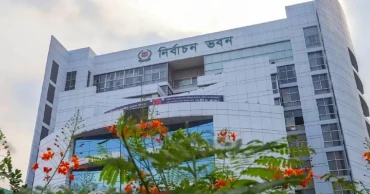
Bangladesh Polls: EC considers picking a symbolic number of returning officers from its own staff
The Election Commission (EC) is considering appointing a symbolic number of returning officers (ROs) from its own officials—alongside Deputy Commissioners—for the first time in a parliamentary election in Bangladesh.
The Commission has begun preparing a list of qualified senior officials, primarily regional election officers and senior district election officers, with the intention of appointing a small number of ROs from within the EC during the upcoming national election and referendum, likely to be held in a single day in February, 2026, officials said.
Election experts have welcomed the move, describing it as a positive step towards strengthening the Commission’s control over the electoral process.
Election Commissioner Md Anwarul Islam Sarker hinted that the Commission may appoint some ROs from its own staff in the 13th parliamentary election if suitable officers are found.
Read more: EC urges caution against creating confusion over election schedule, voting date
“If we find fitted persons among them, they might be made returning officers,” he told UNB on Thursday.
The Election Commissioner, however, said no decision has been taken yet in this regard.
Although EC officials have previously served as ROs in various local government elections—city corporations, upazilas, municipalities and union parishads—they have never been appointed to the role in a national election or by-election.
Former commissions argued that EC officials lack full control over the entire local administration including magistrates, different service officers and law enforcement agency members, which is a barrier for them to conduct a peaceful and fair parliamentary election.
BNP has recently demanded the appointment of ROs and assistant returning offices (AROs) from the EC officers. Several political parties, civil society members and EC officers themselves have also long been urging the Commission to appoint ROs from among EC officials.
Besides, the Electoral System Reform Commission formed by the current interim government recommended the EC’s own staff shall be prioratised in appointment of ROs and AROs in the election. If there is no adequate number of EC’s staff to perform such duty, then appointment shall be made from the administration and other cadre services, the Reform Commission’s report recommended.
BNP places 3 fresh proposals before EC, raises no objection to election schedule
Chief of Electoral System Reform Commission Dr Badiul Alam Majumdar told UNB that the move to appoint some ROs from their own staff would be a positive initiative, noting that the Commission often distances itself from responsibility for flawed elections.
“The Commission usually says returning officers—not they—are liable for a bad election. If the returning officers are chosen from their own staff, the Commission will no longer be able to shift the blame,” he said.
According to the Article 7 of the Representation of the People Order 1972, the Commission shall appoint a Returning Officer for each constituency for the purpose of election of a member for that constituency; and a person may be appointed as Returning Officer for two or more constituencies.
The RPO Article also states that the Commission may appoint as many Assistant Returning Officers as may be necessary but provided that no Assistant Returning Officer shall be appointed for more than one constituency.
On November 19 last, a BNP delegation headed by its Standing Committee member Dr Abdul Moyeen Khan at the EC’s pre-election dialogue demanded the Election Commission to appoint returning officers (ROs) and assistant returning officers (AROs) from the EC’s own staff in the elections to bring a positive change in the country’s politics.
“If you show courage once to take a decision that the returning officers and assistant returning officers would be appointed from the dedicated persons of your election commission, Bangladesh would witness a qualitative change in its politics,” said Dr Moyeen Khan in the dialogue.
Read more: Over 156,000 Bangladeshi expats registered so far to vote
The EC usually appoints a returning officer for all the constituencies in a district with some exceptions.
In the last 12th parliamentary election held on January 7, 2024, a total of 66 returning officers were appointed for the country’s 300 constituencies – one RO for each 62 district and two ROs each for Dhaka and Chattogram districts.
Deputy Commissioners were made ROs for 62 districts, while respective Divisional Commissioner and Deputy Commissioner for the constituencies in Dhaka and Chattogram districts at that time.
The RPO article also defined the duty of ROs stating that it shall be the duty of a Returning Officer to do all such acts and things as may be necessary for effectively conducting an election in accordance with the provisions of this RPO and the electoral rules.
The RPO article 7(4) also states “Subject to the superintendance, direction, and control of the Commission, the Returning Officer shall supervise all works in the district [or constituency] in connection with the conduct of elections and shall also perform such other duties and functions as may be entrusted to him by the Commission.
Read more: BNP places 3 fresh proposals before EC, raises no objection to election schedule
9 months ago
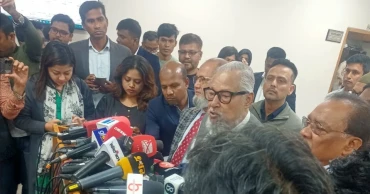
BNP places 3 fresh proposals before EC, raises no objection to election schedule
BNP on Thursday (December 04) placed three new election-related proposals before the Election Commission (EC) and said it has no objection to the EC announcing the election schedule in time.
A three-member BNP delegation led by Standing Committee Member Nazrul Islam Khan met Chief Election Commissioner AMM Nasir Uddin at the EC headquarters in Agargaon.
Talking to reporters after the nearly 90-minute meeting, Nazrul said BNP is not in favour the deferment of the national election unless there are unavoidable circumstances. “Therefore, BNP has no objection if the EC declares the poll schedule within its stipulated timeline.”
BNP announces 36 more possible candidates for national election
Asked whether Khaleda Zia’s illness might affect the election, Nazrul said, “We expect she will recover and return to us soon, and be able to participate in election-related activities.”
Regarding Tarique Rahman’s voter status, he said, “He is a Bangladeshi citizen. There is no barrier to him becoming a voter. The Commission can enrol him anytime it wishes.”
Nazrul said the BNP proposed increasing the number of polling booths, marking places, and ballot seals for the upcoming 13th national election.
“We want every voter in the country to have the opportunity to cast their vote. The number of voters has increased significantly compared to the previous election, so we made this proposal. This time, a national referendum will be held alongside the parliamentary election, which will add additional pressure. The Commission will give its decision on Sunday,” he said.
BNP also urged the EC to allow expatriate Bangladeshis without National ID cards to register as voters using their passports. “If needed, the Commission can verify passports. Many expatriates do not have NIDs. They should be given the opportunity to register with their passports,” Nazrul noted.
Khaleda led from the streets, not from palaces: Moyeen Khan
To ensure transparency in the election, BNP reiterated its objection to printing ballot papers at any non-government institution.
“At present, ballot papers are printed at three government facilities. BNP insists that no private institution be given this responsibility,” he said.
The other members of the BNP delegation were Ismail Jabiuallah, member of the party’s EC-related committee and former secretary, and Md Zakaria, former election commissioner and BNP EC-related committee member.
BNP to shift investment focus from megaprojects to grassroots: Amir Khosru
9 months ago
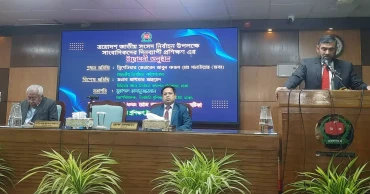
BD Polls: EC rejects proposal to increase polling centres, cites voting time
Election Commissioner Brig Gen (retd) Abul Fazal Md Sanaullah on Wednesday (December 03) said each voter would take an average of three minutes and 52 seconds to cast their vote but rejected increasing polling centres for the next election.
Sanaullah made the remarks while addressing the inaugural session of a daylong journalist training programme at Agargaon, Dhaka ahead of the national election.
Highlighting the importance of the election, he said, “The upcoming election is going to set the tone for what kind of country and democratic journey we want in the future.”
Read more: EU preparing large observer mission for Bangladesh election: Miller
Seeking cooperation from all in holding an acceptable election, Sanaullah said the election system has been heavily damaged and they are trying to repair it.
For the nation’s sake, he said, all must ensure a good election and everyone must responsibly play their part.
To prevent fake journalists from entering polling areas with bogus cards, the election commission is going to initiate a QR‑code system, Sanaullah added.
Read more: Over 156,000 Bangladeshi expats registered so far to vote
9 months ago
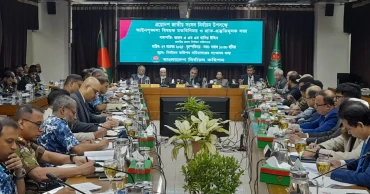
EC shares force deployment plan with law enforcers ahead of Bangladesh polls
The Election Commission on Thursday (November 27) provided law enforcement agencies with detailed deployment plans for engaging their personnel during the upcoming national election, expected to be held in early February 2026.
“We’ve provided the outline of the deployment plan—now the respective forces will prepare the detailed version. Whether they will deploy their teams as static, reserve, or striking forces at the polling stations is entirely up to them. How many personnel will be deployed and for how many days—that will be determined by the Home Ministry,” EC Senior Secretary Akhtar Ahmed said on Thursday.
He said this while briefing reporters after the commission’s meeting with law enforcement agencies, including the armed forces, held at Nirbachan Bhaban in the city.
BD Election Security Plan: EC begins 2-phase talks with law enforcers
Top representatives from three armed forces – Army, Navy and Air Force– as well as the Home Affairs Ministry, Police, RAB, Border Guard Bangladesh (BGB), Coast Guard, Ansar and VDP, the Armed Forces Division, DGFI, NSI, NTMC, SB and CID attended the meeting.
The meeting was held with Chief Election Commissioner AMM Nasir Uddin in the chair, focusing on the deployment of security personnel, maintaining the law and order during the election, providing the security to election officials, election materials and polling stations, recovery of illegal arms and removal of illegal campaign materials like posters.
The EC Senior Secretary said the Commission does not have its own security force, rather it relies on the coordinated efforts of law enforcement agencies during the elections.
“They (law enforcement agencies) have assured us that they will start working in the field from day one and will play an effective role,” he said.
Responding to a question about the armed forces’ magistracy power, currently in effect, Akhtar Ahmed said the armed forces are now under the definition of law enforcement agencies. “Their (armed forces’s magistracy power will remain valid until February 2026,” he said.
Bangladesh election: Voter registration in KSA, 6 other countries suspended
When asked whether this magistracy power (with magistrates and the armed forces) might conflict with the legal framework after the announcement of the election schedule, he replied, “I don’t see anything contradictory here.”
Raising the details of the deployment outline, he said the plan is divided into three major components - static deployment for security personnel to be stationed at polling stations; installation of both static and mobile checkposts at various points and deployment of patrolling teams depending on geographical locations and access roads; and forming a central reserve force
“There will also be a central reserve force. So essentially, three components—static, mobile and central reserve. These will be prepared in advance based on the guidelines we’ve provided,” he said adding now the respective forces will design their arrangements.
He said that what is conventionally referred to as the striking force will also fall under these three components, aimed at ensuring mobility, deterrence and effective response according to the situation.
Bangladesh Election: Expat voters can register anytime from any region to vote
“We will also utilise NTMC’s capabilities. Cybersecurity issues will be closely monitored,” said the EC Secretary.
Talking further on the security plan, he said “Actually it is our strategic plan.”
9 months ago
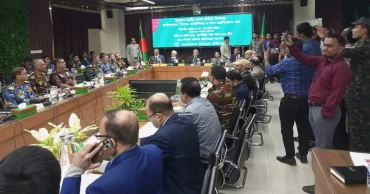
BD Election Security Plan: EC begins 2-phase talks with law enforcers
The Election Commission (EC) on Thursday morning (November 27) started its second phase meeting with law enforcement agencies including armed forces in a bid to finalise the security men deployment strategy during the upcoming national election and referendum to be held in February 2026.
The meeting began with Chief Election Commissioner AMM Nasir Uddin in the chair at the Nirbachan Bhaban in the city.
Top representatives from three armed forces – Army, Navy and Air Force– as well as the Home Affairs Ministry, Police, RAB, Border Guard Bangladesh (BGB), Coast Guard, Ansar and VDP, the Armed Forces Division, DGFI, NSI, NTMC, SB and CID attended the meeting.
Read more: Everything will be fine before the voting day: CEC over law and order
The meeting is being held focusing on the deployment of security personnel, maintaining the law and order during the election, providing the security to election officials, election materials and polling stations, recovery of illegal arms and removal of illegal campaign materials like posters l.
About the election-time security, CEC AMM Nasir Uddin at an event on Wednesday said the law and order situation will continue to improve and everything will be in order before the voting day.
“It will improve gradually. As the polling day approaches, you will see everything will fall in line. Everything will be fine,” he told reporters, replying to a question after inspecting an election-related training and mock exercise organised by BGB at Pilkhana in the capital.
The CEC said, “I won’t say the law and order situation has reached a perfect level. You saw what the situation was on August 5, 2024. Now compare it with the current situation….. So, it will improve further, gradually.”
About the security meeting, he said the Election Commission will sit again with law enforcement agencies over specific proposals. “The development strategy will be finalised there,” he said.
Nasir Uddin said law enforcement agencies are being deployed on the field with maximum preparedness to ensure a free, peaceful and neutral election.
Read more: Motivate voters to go to polling stations: CEC to political leaders
Earlier on October 20 last, the held its first security meeting with law enforcement agencies in a bid to conduct the 13th parliamentary election in free, participatory and fair manners.
The Election Commission will also hold a coordination meeting with the heads of various ministries, departments and authorities on November 30 as part of the preparatory activities for the upcoming general election.
The Cabinet Secretary, Bangladesh Bank Governor, Senior Secretaries of the Home Affairs Ministry, the Public Administration Ministry, the Shipping Ministry and the Expatriates' Welfare and Overseas Employment Ministry, Principal Staff Officer of the Armed Forces Division, Foreign Secretary are among the 34 invitees for the coordination meeting on November 30.
Earlier, the Election held dialogues with 47 registered political parties, including BNP, Jamaat and National Citizen Party-NCP on November 13, 16, 17 and 19 last.
In late September 2025, the Commission opened a series of electoral dialogues with different stakeholders amid talks with civil society representatives on September 28.
Later, the EC held separate dialogues with 47 registered political parties, including BNP, Jamaat and National Citizen Party-NCP, as well as the representatives of teachers, senior journalists from different media outlets, election experts and election observers.
The Election Commission is likely to announce the schedule in early December for holding the next general election in early February 2026.
Read more: Don’t hire politically linked election observers: CEC Nasir
9 months ago
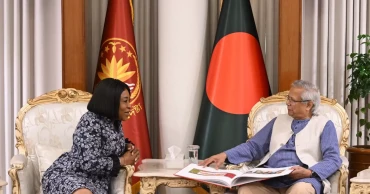
Commonwealth SG renews support for Bangladesh’s aspirations for "inclusive, just, prosperous future"
Commonwealth Secretary-General Shirley Botchwey on Monday (November 24) reaffirmed support for the Bangladeshi people’s aspirations for an "inclusive, just and prosperous" future for all
Botchwey met Chief Adviser Prof Muhammad Yunus at the State Guest House Jamuna and discussed the country’s national transition and the Commonwealth’s role in supporting the people’s democratic expectations.
"During our meeting, we discussed Bangladesh’s national journey and our renewed partnership to support the Bangladeshi people’s aspirations for an inclusive, just and prosperous future for all," she said after the meeting.
The Secretary-General said she is grateful to the Chief Adviser of the interim government and the people of Bangladesh for their generous hospitality.
The Chief Adviser sought the Commonwealth’s full support for holding the upcoming general election, scheduled for the first half of February.
“We need your support in our democratic transition as well as in the upcoming general election,” he said during the meeting.
The Chief Adviser thanked the Secretary-General for her strong interest in Bangladesh’s forthcoming election process. He reaffirmed the Interim Government's commitment to holding a free, fair, credible, and festive election.
In response, the Secretary-General assured the Chief Adviser of the Commonwealth’s full support for Bangladesh’s election and the post-election transition, said the Chief Adviser’s press wing.
“There are vast resources within the Commonwealth—56 countries, including members of the G7 and G20"—that Bangladesh could draw on to strengthen one another, she said.
The Secretary-General added that she had held meetings with a wide range of stakeholders, including the Chief Justice, the Law Adviser, Foreign Affairs Adviser and the Chief Election Commissioner, noting, “I’m very hopeful about the future of the country.”
She also confirmed that the Commonwealth is preparing to deploy several observer teams ahead of the elections.
The two leaders also discussed youth empowerment, entrepreneurship, creating more social businesses and advancing the three-zero vision aimed at reducing unemployment, carbon emissions, and inequality.
She also met Foreign Affairs Adviser Md Touhid Hossain at the Ministry of Foreign Affairs.
"We discussed ways to deepen cooperation at the national and international levels in our shared efforts to improve the lives of all Bangladeshi people," said the Secretary-General after her meeting with Foreign Adviser Hossain.
Read more: Jatiya Party meets Commonwealth delegation in Dhaka
Her first official visit to Bangladesh came ahead of the general election in the country expected to be held in February 2026.
On Sunday, Botchwey said their Commonwealth family remains firmly committed to the people of Bangladesh.
“I had fruitful discussions with Dhaka-based High Commissioners on how the Commonwealth can continue supporting Bangladesh to advance the values of the Commonwealth Charter for the benefit of its people,” she said on Sunday commenting on the meeting.
Indian High Commissioner to Bangladesh Pranay Verma, British High Commissioner Sarah Cooke, Canadian High Commissioner Ajit Singh, Malaysian High Commissioner Mohd Shuhada Othman, Pakistan High Commissioner Imran Haider, Sri Lankan High Commissioner Dharmapala Weerakkody, High Commissioner of Maldives Shiuneen Rasheed, among others, joined the meeting.
The Commonwealth Secretary-General also met Chief Election Commissioner AMM Nasir Uddin and thanked him for updating me on preparations for the upcoming general election.
“We discussed the importance of an inclusive and credible process, and how the Commonwealth can support in facilitating the full participation of all Bangladeshis,” she said.
She met all major Bangladeshi political parties. "I valued hearing their views for a peaceful, credible and participatory election, as reflected in our Commonwealth Charter," Botchwey said.
The Secretary-General said they will always stand with and support Bangladesh on its democratic journey.
During her meeting with Chief Justice of Bangladesh Dr Syed Refaat Ahmed, the Commonwealth Secretary-General appreciated his reflections on the rule of law and judicial independence – values central to their Commonwealth Charter – and on the judiciary’s role in contributing to inclusive governance under a democratic dispensation.
“The Commonwealth will support Bangladesh to build the capacity of its judiciary and benefit from best practices from our family of nations,” she said.
Her first meeting in Bangladesh was with youth leaders. “I was moved by their passion as they spoke about this moment of transition and their expectations for a democracy that works for all, for a future they are working hard to shape.”
Read more: Bhutanese PM leaves Dhaka after 2-day state visit
Botchwey said the Commonwealth will always work alongside their young people to build a just and prosperous future for all.
The Commonwealth Secretary-General is listening to a wide range of stakeholders and discussing how the Commonwealth can continue to support the people of Bangladesh at this important moment and beyond.
During the engagements, the Secretary-General is briefing stakeholders on the Commonwealth’s new Strategic Plan – which places democracy among its three core pillars – and listens to how tailored support can best assist the people of Bangladesh.
Speaking ahead of her visit, Shirley Botchwey described Bangladesh as a valued member of the Commonwealth, noting that it was the first intergovernmental organisation the country joined soon after independence.
“The Commonwealth and Bangladesh have a strong partnership, one that matters even more now as the country heads towards the polls next year,” she said.
9 months ago