Volker Türk
Aware of growing misinformation challenge, says UN rights chief offering support to combat
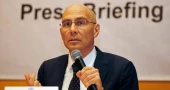
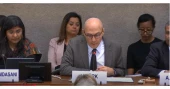
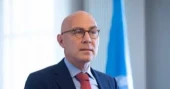
UN High Commissioner for Human Rights Volker Türk on Tuesday said he is aware of the growing misinformation and offered the support of the UN human rights office to address what he described as a growing misinformation challenge.
“There is a lot of misinformation. We will do whatever is needed,” Türk said, adding that the UN rights agency would work closely with Bangladesh to tackle the issue.
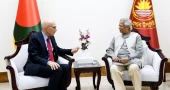
The UN rights chief made the remarks as Chief Adviser Prof Muhammad Yunus sought support from the United Nations human rights office to counter a surge of misinformation targeting the February 12 elections.
“There has been a flood of misinformation surrounding the elections. It is coming from both foreign media and local sources,” Prof Yunus said during a telephone conversation with Volker Türk.
“They have flooded social media with fake news, rumours and speculation. We are concerned about the impact this may have on the elections,” he added.
During the conversation, the two leaders also discussed the upcoming referendum, the importance of institutional reforms, the work of the Enforced Disappearance Commission, the formation of the National Human Rights Commission (NHRC), and the global geopolitical situation.
High Commissioner Türk stressed the importance of establishing “a truly independent” National Human Rights Commission to carry forward the work related to enforced disappearances, according to Chief Adviser's press wing.
In response, Prof Yunus said the NHRC ordinance has already been promulgated and that a new commission would be reconstituted ahead of the February 12 elections. “We will do it before we leave,” he said.
The Chief Adviser said he had shared the final report of the Enforced Disappearance Commission with the UN High Commissioner for Human Rights, describing it as a crucial document that would go a long way toward ensuring accountability and justice for the victims of enforced disappearances during the autocratic regime from 2009 to 2024.
UN High Commissioner for Human Rights Volker Türk praised the Chief Adviser’s efforts over the past year and a half.
Conflicts in the Mideast and Ukraine will loom over Biden's farewell address at the United Nations
He said his office had supported the work of the Enforced Disappearance Commission and would continue to do so.
SDGs Affairs Principal Coordinator and Senior Secretary Lamiya Morshed was present during the conversation.
8 months ago
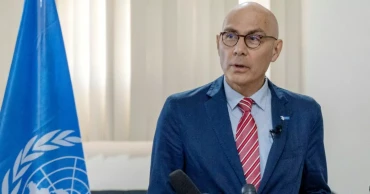
UN sees Bangladesh’s progress on disappearance accountability, urges fair trials
UN Human Rights Chief Volker Türk has said the initiation of proceedings against those accused of carrying out enforced disappearances and torture under the previous government in Bangladesh was an important step towards accountability.
“I urge full respect for the most scrupulous standards of due process and fair trial, as guaranteed in international law. The protection of victims and witnesses in these sensitive and significant cases must be ensured,” the High Commissioner said.
Last week, the country’s International Crimes Tribunal submitted formal charges of crimes against humanity in two cases related to enforced disappearances and torture alleged to have occurred at the Task Force for Interrogation Cell and the Joint Interrogation Cell, respectively.
The Tribunal also issued arrest warrants for mostly former, but also some serving, military officers, including a number of former Directors-General of the Directorate General of Forces Intelligence, as well as former officials of the Rapid Action Battalion.
“This marks the first time that formal charges have been brought for enforced disappearances in the country. It is a significant moment for victims and their families,” High Commissioner Türk said.
Bangladesh reaffirms its commitment to NAM principles
On Saturday, Bangladesh’s army announced that it had detained over a dozen of its officers accused of serious crimes committed under the previous administration.
It is crucial that the army promptly produces these detained officers to a competent civilian court, for fair and transparent criminal proceedings, said the UN rights body chief in a statement issued from Geneva on October 15.
One of the key recommendations of the UN Human Rights Office’s Fact-Finding Report into last year’s deadly student-led protests was that those responsible for serious violations of human rights, some of which may also constitute international crimes, must be held to account in accordance with international standards.
The crime of enforced disappearances is now formally recognised in Bangladesh for the first time following ratification in August 2024 of the Convention on Enforced Disappearances and an amendment to the International Crimes Tribunal Act.
SAARC can unlock immense potential for trade and investment: GED Member
The High Commissioner also urged the authorities to prioritise the handling of the large number of other pending cases – with some dating back to the previous administration and others since then.
It is crucial to ensure due process and fair resolution in each case, and to release promptly anyone who has been arbitrarily detained, said the UN human rights body.
This includes survivors of enforced disappearances and others facing unfounded charges, including journalists and those perceived to be supporters of the former regime.
Many of them continue to face criminal charges, including under the draconian Anti-Terrorism Act.
The High Commissioner has also urged the authorities not to pursue the death penalty in any of the cases before its courts, irrespective of the seriousness of the charges.
“Beyond ensuring individual accountability, the best way forward for Bangladesh is a comprehensive process of truth-telling, reparation, healing and justice," he said.
"Such a process must address the legacy of serious human rights violations and ensure that these abuses can never happen again. I also call on the interim Government to deal with ongoing concerns promptly in line with international law,” Türk said.
11 months ago

Accountability must align with fair trial standards in Bangladesh: Türk
Marking the anniversary of the July 2024 protests in Bangladesh, UN High Commissioner for Human Rights Volker Türk has called for accountability for the violations and crimes committed during the unrest.
"That accountability needs to be in line with fair trial guarantees, rooted in international human rights law. It must not repeat past cycles of retributive justice, including the use of the death penalty," he said in a video message.
The United Nations Human Rights Mission in Dhaka organised an event on Tuesday that brought together senior political leaders, civil society members, youth representatives and international partners.
Chief Adviser Prof Muhammad Yunus spoke as the chief guest. BNP Secretary General Mirza Fakhrul Islam Alamgir, Jamaat Ameer Dr Shafiqur Rahman and Senior Human Rights Adviser Huma Khan, among others, also spoke at the event.
Turk said a comprehensive approach to transitional justice is needed, including truth seeking and reparations for the abuses of the past.
This begins with a national dialogue involving victims, families and ordinary citizens, he said.
The UN human rights chief said Bangladesh needs legal and institutional reforms, including to the security sector, so that this can never happen again.
Volker Türk to present UN fact-finding report on Bangladesh in Geneva on March 5
He said the repressive laws and institutions that enabled these violations must either be dismantled, or completely overhauled.
"As we remember the protestors who paid the ultimate price for their dream of a different future for the country, it is a moment to recommit to fundamental change," Turk said, adding that his office is fully prepared and ready to support the government and people of Bangladesh to achieve that vision.
He recalled the courage and resilience of the people of Bangladesh, who courageously took to the streets one year ago to protest against discrimination, injustice and repression, and to demand their fundamental human rights.
Many of the protestors were students and young people, and Turk had a chance to meet them when he visited Bangladesh last year.
"I honour the memory of those who were killed, and the thousands more who suffered life-changing injuries," Turk said.
These protests were a powerful expression of determination to move away from the spiraling inequalities and human rights violations of the past, towards a more just and inclusive society, he mentioned in his video message.
The request from the Chief Adviser of the Interim Government, Prof Muhammad Yunus, for the UN Human Rights Office to conduct an independent and impartial Fact-Finding Mission into these events, spoke to the same determination to build a better future.
The fact-finding Mission reported on ‘systematic and serious’ human rights abuses. "It found that the former government and its security and intelligence services engaged in a coordinated strategy to hold on to power at all costs," Turk said.
Volker Türk @DU: 'No repetition, no going back. You must draw a clear line in the sand'
And it made a detailed series of recommendations to ensure accountability and justice, which are essential in themselves, and vital to national healing, he said.
"I welcome efforts by the interim government to move those recommendations forward,' Turk said it is an important moment of reflection on how that can be achieved.
1 year ago
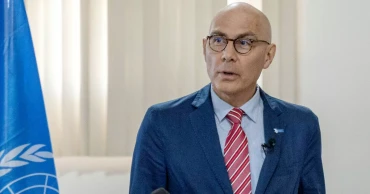
UN rights chief concerned over Bangladesh law allowing political party ban
UN High Commissioner for Human Rights Volker Türk on Monday voiced concerns about recent changes to legislation to allow the banning of political parties and organisations and all related activities.
"I am concerned about recent changes to legislation to allow the banning of political parties and organisations and all related activities," he said, adding that this "unduly restricts" the freedoms of association, expression and assembly.
The UN rights chief made the remarks while delivering global update at the opening of the 59th Human Rights Council.
Yunus welcomes UN's expert support over probe into enforced disappearances
Turk said his office hopes to reach an agreement on their expanded presence soon.
The UN rights chief said he is "encouraged" that the interim government and political parties in Bangladesh are making progress through dialogue.
"I urge meaningful advances on reforms, to create the environment for free and inclusive elections," Turk said.
Earlier, the Office of the United Nations High Commissioner for Human Rights (OHCHR) in its fact-finding report shared recommendations in some specific areas, including accountability and justice, police and security; civic space, political system and economic governance.
The UN human rights office, recently, recommended Bangladesh to refrain from political party bans undermining democracy and disenfranchising part of the electorate.
UN team praises interim govt for steps against enforced disappearances
In the fact-finding report, the UN observed that political party bans would undermine a return to a ‘genuine multiparty democracy’ and effectively disenfranchise a large part of the Bangladeshi electorate.
A journalist drew UN Resident Coordinator in Bangladesh Gwyn Lewis' attention recently regarding the recommendations made by the UN fact-finding mission against banning any political party and the government’s decision to ban activities of Awami League and sought her comments on that.
In reply, she said it is not a question for her, but for the government. “We made our recommendations because participation and inclusion of all political parties is something that prevents a very polarised position, potentially unrest.”
Lewis, who brings more than 20 years of experience in international development, peace-building, and humanitarian affairs to the position also said, "I think the circumstances need to be looked at....the decision of the government needs to be looked at in the context of the country. I do not have anything more to say. It is very much a political decision and again a decision of the government."
1 year ago

Türk calls on world to prevent total humanitarian catastrophe in Gaza
UN Human Rights Chief Volker Türk on Tuesday urged the world to act to prevent the total collapse of critical life-saving support in Gaza, where Israeli strikes continue to kill civilians, including in shelters and health facilities.
“As the complete blockade of assistance essential for survival enters its ninth week, there must be concerted international efforts to stop this humanitarian catastrophe from reaching a new unseen level,” Türk said.
Since 2 March, Israel has prevented the entry of food, fuel and other life-saving assistance to Gaza. Bakeries have now stopped working as flour and fuel have run out, and the remaining stocks of food are being rapidly depleted. “Any use of starvation of the civilian population as a method of war constitutes a war crime, and so do all forms of collective punishment,” the High Commissioner warned.
A reported Israeli plan to declare Rafah governorate as a new “humanitarian zone” would require Palestinians to move there to receive food and humanitarian aid. “Such a plan will almost certainly mean large parts of Gaza and those who cannot easily move, including people with disabilities, those who are sick or injured, and women supporting entire families, will be forced to go without food,” Türk said.
Israel continues to strike locations in Gaza where Palestinian civilians are sheltering. Between 18 March and 27 April, the UN Human Rights Office recorded 259 attacks on residential buildings and 99 on tents of internally displaced people (IDP).
Most of the attacks resulted in fatalities, including of women and children. Among the strikes on IDP tents, 40 reportedly took place in Al-Mawasi area, where the Israeli army repeatedly directed civilians to seek refuge. “These incidents reflect the pattern we have seen during this escalation, of attacks that raise grave concerns of violations of the principles of distinction, proportionality and precautions. Each of these incidents must be fully investigated. Intentionally directing attacks against civilians not taking a direct part in hostilities would constitute a war crime,” Türk stressed.
There are also serious concerns of additional violations as the Israeli army continues to attack health facilities. On 22 and 24 April, the army reportedly struck the Martyr Mohammad Al Durrah Children’s Hospital, putting it completely out of service.
Israel committing ‘Livestreamed Genocide’ in Gaza: Amnesty
Meanwhile, Israeli forces have continued to target civilian objects indispensable to the survival of the population. On 21 and 22 April, they conducted apparently coordinated attacks in three governorates, destroying 36 heavy machines, including excavators, water trucks and sewer suction tanks. These were used for relief operations, such as removing debris, distributing water and repairing sanitation systems.
“Such destruction significantly hinders access to water, degrades public health, and obstructs both the delivery of humanitarian aid and conduct of rescue operations, including retrieving the injured and the dead from under the rubble and clearing debris to allow the ambulances to get to the victims,” the High Commissioner said.
Türk reiterated that the cumulative impact of Israeli forces’ conduct in Gaza raises serious concerns that Israel appears to be inflicting on Palestinians in Gaza conditions of life increasingly incompatible with their continued existence as a group in Gaza.
“Third States have clear obligations under international law to ensure that such conduct stops immediately, and they must act accordingly,” Türk said. “They also must search for and bring to justice all perpetrators of crimes under international law, by whomever committed.”
1 year ago

UN rights chief calls for accountability over Bangladesh’s 2024 protest abuses
Presenting the fact-finding report in Geneva on human rights violations and abuses related to the protests of July and August 2024 in Bangladesh, UN High Commissioner for Human Rights Volker Türk on Wednesday said accountability is absolutely the key.
He laid emphasis on future stability and protection of human rights and said it is a huge chance for the country at this pivotal time to deal with its past and overcome its past to reach a moment of healing and truth telling and that includes each and everyone within the society of Bangladesh.
Whatever differences are there, Turk stressed that it is “one country and one citizenship,” and it is a unique opportunity for each and every citizen of Bangladesh.
The UN High Commissioner for Human Rights engaged in dialogue with member states and civil society on the findings and recommendations, with a view to promoting accountability, justice, and human rights reforms in Bangladesh.
The interim government of Bangladesh and civil society representatives from Bangladesh also participated in the event.
Referring to his first telephone conversation with Chief Adviser Prof Muhammad Yunus, Turk said Dr Yunus told him human rights is at the centre of the reforms and transition. “Of course this is hard work, no doubt about that. This is not easy.”
Pakistan eager to hold foreign secretary level talks with Bangladesh to boost ties
The UN human rights chief said that is the right spirit and they all need to grasp the opportunity and support the opportunity towards transition.
Responding to a question, Law Adviser Dr Asif Nazrul who was present at the event, said there have been some incidents of political violence against the “torturers, hooligans of the Awami League regime” who oppressed and tortured people for many years.
He said there were some incidents where people who were deeply involved with the AL regime were attacked. “We strongly condemned that.”
The Law Adviser, however, said most of them belong to the Muslim community and very few people belong to the minority groups.
In his concluding remarks, Turk said it is fact that the interim government fully cooperated with them when they deployed their team very quickly at the request of the government. “We will continue to find ways to keep the Human Rights Council informed,” he added.
CA Dr Yunus asks labour ministry to reform labour law maintaining global standard
“It will be crucial to ensure due process in criminal cases and investigate revenge violence, including against minorities,” Turk said, while sharing a global update at the 58th session of the Human Rights Council in Geneva recently.
Turk said Bangladesh last year experienced a paroxysm of violence as the government of the time “brutally suppressed” a student movement that carried human rights as its torch.
“The country is now charting a new future,” he said, adding that their recent independent fact-finding report on the grave human rights violations that took place is an “important contribution” to this journey.
1 year ago
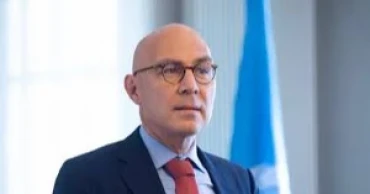
Volker Türk to present UN fact-finding report on Bangladesh in Geneva on March 5
UN High Commissioner for Human Rights Volker Türk will present the United Nations human rights fact-finding report on human rights violations and abuses related to the protests of July and August 2024 in Bangladesh on March 5.
The event will be broadcast live from Geneva on YouTube https://youtube.com/live/szaCueW3WLs at 6pm Dhaka time, said an official at the UN on Tuesday.
The team will discuss with member states and civil society on the findings and recommendations to promote accountability, justice, and human rights reforms in Bangladesh.
Volker Turk expresses his gratitude to DU VC
The interim government of Bangladesh and civil society representatives from Bangladesh will participate in the event.
On Monday, Volker Türk hoped that their recent independent fact-finding report will support truth-telling, accountability, reparations, healing and reform in Bangladesh.
“It will be crucial to ensure due process in criminal cases and investigate revenge violence, including against minorities,” he said, while sharing a global update at the 58th session of the Human Rights Council in Geneva.
Volker Türk @DU: 'No repetition, no going back. You must draw a clear line in the sand'
Turk said Bangladesh last year experienced a paroxysm of violence as the government of the time “brutally suppressed” a student movement that carried human rights as its torch.
“The country is now charting a new future,” he said, adding that their recent independent fact-finding report on the grave human rights violations that took place is an “important contribution” to this journey.
UN Resident Coordinator in Dhaka Gwyn Lewis on Sunday informed Chief Adviser Dr Muhammad Yunus that Türk will brief the member states about its findings on March 5 during the 55th session of the Human Rights Council.
Dr Yunus stressed documenting all "atrocities" committed during the regime of ousted Prime Minister Sheikh Hasina.
1 year ago
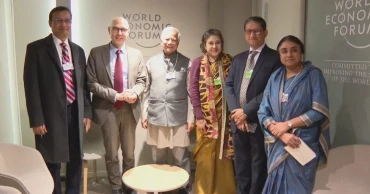
UN fact-finding report on atrocities during July Uprising to be released by mid-February: UN rights chief
UN High Commissioner for Human Rights Volker Türk has said the UN fact-finding mission on the atrocities during the July-August uprising is in a final stage and will be released by mid-February.
He made the comments during a meeting with Bangladesh Chief Adviser Professor Muhammad Yunus on the sidelines of the World Economic Forum annual meeting in the Swiss mountain city on Wednesday, said Chief Adviser's Deputy Press Secretary Abul Kalam Azad Majumder.
Türk said the report would also be shared with the Bangladesh side ahead of its publication from the UN rights office in Geneva.
The fact-finding team is mandated to establish facts, identify responsibilities, analyze root causes, and make concrete recommendations for Bangladesh to address past human rights violations and prevent their recurrence.
Dr Yunus thanked the UN rights office for investigating the crimes committed during the student-led uprising.
He said reports of the six major independent commissions would also come out at around the same time.
These reports might serve to complement each other, they observed.
The chief adviser urged the UN human rights chief for his support in resolving the Rohingya crisis, which has worsened in recent months following the influx of tens of thousands of new refugees from Myanmar.
Read: RAB fully cooperating with UN fact-finding team, says Director General
While assuring of his full support, Türk said that he was in conversation with relevant stakeholders, including UN special envoy on Myanmar, Julie Bishop, in this regard.
The deep human rights crisis in Myanmar needs the world’s attention, Turk said, after his meetings with key leaders including Special Envoy on Myanmar for talks on the urgent need for solutions and a coordinated response that prioritises peace and human rights.
Yunus called for creating a UN-overseen safe zone inside Myanmar's Rakhine side in an effort to stop the fresh influx of Rohingyas.
The chief adviser referred to the upcoming high-level conference on the Rohingya crisis, saying it will bring global focus to one of the worst humanitarian crises.
Türk agreed that such a conference is very important to bring back the lost focus of the international community on the crisis.
Read more: Govt to help UN fact-finding mission if they seek any help : Foreign Adviser
Lamiya Morshed, SDGs Affairs Principal Coordinator (Senior Secretary), Ambassador Tareq Md Ariful Islam, Bangladesh's Permanent Representative in Geneva and M Riaz Hamidullah, Secretary (West) at the Ministry of Foreign Affairs, among others, were present.
1 year ago

Fact-finding mission probing allegations of attacks against minorities: Türk
UN High Commissioner for Human Rights Volker Türk on Wednesday said their fact-finding mission is investigating allegations of attacks against minorities between 5 and 15 August.
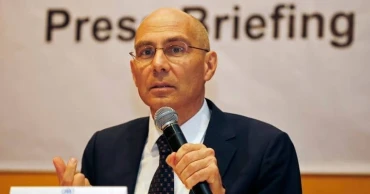
“It is vital that the authorities respond quickly to any incidents reported, by conducting thorough investigations and holding perpetrators accountable,” he said at a press conference.
Türk said this will help build trust with minority communities, especially in light of troubling campaigns of misinformation and disinformation as well as hate campaigns on social media.
He said transitions are always fraught with risk – and this is all the more pronounced for vulnerable groups. “I commend the efforts made by students and others to protect minorities.”
The UN human rights chief said an inclusive approach, where every voice is heard and valued irrespective of class, gender, race, political ideology, identity or religion, will be key – reflecting the aspirations and diversity of the movement that sparked this transition.
“Women are at the heart of social justice movements, including the protests in July. And I pay tribute to them,” he said, adding that they must be at the forefront during the transition and beyond.
“Any killing needs to be investigated”: UN Rights Chief
“Women need to be visible, particularly in leadership and decision-making positions,” Türk said.
The participation of ethnic and religious minorities in the reform structures, as well as of “indigenous peoples”, is also crucial, he said.
Türk said the interim government has inherited massive challenges on all fronts, including economic, development, social, political and the rule of law.
“Transitions are always complex. And expectations are high. Time is of the essence, but longstanding issues take time to resolve,” he said.
In his discussions with the interim authorities, Türk also expressed support and solidarity for Bangladesh in hosting Rohingya refugees.
“The situation in Rakhine State, which I’m sure all of you are following, is only growing worse, and I was told there are new arrivals to Bangladesh.” He said.
It is important to take a flexible and humanitarian approach, and to ensure non-refoulement and the protection of new arrivals, the rights body chief said.
He mentioned that it is critical to ensure security in the camps, as well as access to livelihoods and education.
“I am doing everything I can to galvanise the international community to focus on this issue, to support Bangladesh, and to step up the search for solutions,” Turk said.
UN Human Rights Office spokesperson Ravina Shamdasani and UN Resident Coordinator in Bangladesh Gwyn Lewis were also present.
1 year ago

Hopeful of finalising report by 1st week of Dec: UN rights chief tells CA
UN High Commissioner for Human Rights Volker Türk has conveyed to Chief Adviser Prof Muhammad Yunus that the independent UN fact-finding mission, which is investigating atrocities committed during the July-August mass uprising, would hopefully finalise its report by the first week of December.
He called on the Chief Adviser at his office at Tejgaon in Dhaka on Wednesday and briefed him (Chief Adviser) about the work of the UN fact-finding mission and his meetings in Dhaka with advisers, the Chief of Army Staff, heads of Reform Commissions, students, and officials.
Briefing the reporters at the Foreign Service Academy, Chief Adviser’s Press Secretary Shafiqul Alam said the UN team is doing their work independently and they have no influence over that.
Alam also said that the fact-finding mission will hand over the report to the chief adviser, and later they will also hand the report over to the relevant ministries and advisers.
Deputy Press Secretaries Apurba Jahangir and Mohammad Abul Kalam Azad Majumder also spoke at the media briefing.
The UN rights chief also discussed the work of the International Crimes Tribunal of Bangladesh that is now investigating heinous crimes and crimes against humanity committed during the revolution and Reform Commissions set up by the Interim Government to conduct meaningful reforms of the country's institutions.
Volker Türk @DU: 'No repetition, no going back. You must draw a clear line in the stand'
"There are so many that need to be fixed," he said, adding that he has also spoken to the members of the Inquiry Commission investigating hundreds of cases of enforced disappearances that occurred during the dictatorship.
1 year ago