Bangladesh Agricultural University (BAU)
BAU bags four awards at international CIGR competition
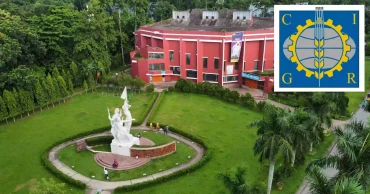
Students of Bangladesh Agricultural University (BAU) have achieved remarkable success on the global stage, securing four awards - including two gold and two bronze medals - at the international competition for engineering students organized by the International Commission of Agricultural and Biosystems Engineering (CIGR) for 2025-26.
The results were confirmed to UNB on Tuesday by award-winning students Shoaib Ahmed Sotej and Sabidur Rahman Sezan. Participants from prestigious universities worldwide, including the USA, Brazil, Indonesia, India, Thailand, Ghana, and Nigeria, competed in this prestigious event.
Mehendi festival for female students held at BAU
In the "Energy in Agriculture" (Technical Section IV) category, a BAU team consisting of Horaira Rezon, Amina Arif Riya, and Shoaib Ahmed Sotez clinched the gold medal for their work on modernizing energy and power usage in agriculture. Another gold medal was secured in the "System Management" (Technical Section V) category, which focused on farm management and work planning optimization. This winning team included Tanvir Hossain, Khoirom Ananta, and Nushrat Jahan Mumu.
The university’s success continued with two bronze medals. In the "Structures and Environment" (Technical Section II) category, which seeks engineering solutions for architectural and environmental balance, Sabidur Rahman Shezan and Nusrat Jeehan Jui earned the third-place spot. Additionally, a second bronze medal in the "System Management" category was won by the team of M. Rahat Mia and Khandaker Junaid Ahmed.
As recognition for their international achievements, each gold-winning team will receive a prize of $500, while each bronze-winning team will receive $200, along with certificates of merit. The awards will be officially presented to the winners at the CIGR World Congress, scheduled to take place in Turin, Italy, in June 2026.
Expressing his pride, gold medalist Shoaib Ahmed told UNB that representing his university and faculty on an international platform is a significant achievement. He credited the tireless efforts of his teammates, Rezon and Amina, for the success and expressed hope that their win would inspire other students to pursue similar global opportunities.
Bronze medalist Sabidur Rahman shared that their project was the result of extensive research aimed at creating technology-driven, practical ideas to benefit farmers. He noted the immense joy of seeing his university's name listed among the winners of such a competitive global event.
6 months ago

BAU, Murdoch University conduct joint research on agricultural conservation
Bangladesh Agricultural University (BAU) and Murdoch University (MU), Australia, have been conducting joint research on the long-term impact of conservation agriculture in Bangladesh.
The study focused on the effects, limitations, and potential risks to soil and water resources.
BAU`s Physics Department transferred under Engineering faculty, after 61 years under Agriculture
Prof. Dr. Mohammad Mofizur Rahman Jahangir of BAU’s Department of Soil Science, the Principal Investigator (PI), told UNB that, “Our goal is to assess the long-term impact of conservation agriculture on soil and water, and to develop effective strategies for its expansion.”
He said conservation agriculture is a sustainable farming approach that enhances soil health, boosts productivity, and protects the environment by following three principles: minimum tillage, maintaining soil cover, and ensuring crop diversity.
The research is led by Prof Richard W Bell and Dr. Davina Boyd of Murdoch University, with Prof Hasneen Jahan of BAU’s Agricultural Economics Department serving as the PI for the economic aspects.
While Bangladesh’s soil is highly fertile, its fertility is on the decline. Since 2012, Murdoch University has been collaborating with Bangladeshi institutions to promote conservation agriculture and monitor soil and water quality, said Bell.
BAU honours 3 VCs, livestock DG
The four-year research project, which began in September 2024, is funded by the Australian Centre for International Agricultural Research (ACIAR) and the Krishi Gobeshona Foundation (KGF).
The project also includes funding for eight PhD and four Master’s fellowships, providing research opportunities for students from both Bangladesh and Australia, Prof. Jahangir said.
This initiative will significantly enhance the skills, education, and research capabilities of scientists in the country, he added.
Researchers hope the initiative will lead to sustainable changes in agriculture, improving farmers' productivity and income.
1 year ago
Bangladeshi researchers unlock vinegar potential of wild dates
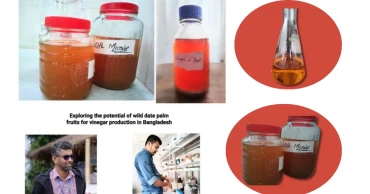
A team of researchers at Bangladesh Agricultural University (BAU) has made a groundbreaking advancement in food processing by developing an eco-friendly method to produce vinegar from wild dates.
Led by Prof Dr Md Anisur Rahman Mazumder of the Food Technology and Rural Industries Department, the innovation is poised to open new opportunities for Bangladesh's food and agricultural industries.
“This innovation could open new horizons for Bangladesh's food processing industry,” said Prof Anisur Rahman.
He said the process involves an environmentally sustainable fermentation technique, which transforms wild date juice into vinegar. This method not only utilises locally abundant agricultural resources but also minimises waste, aligning with Bangladesh’s sustainable development and food security goals.
Nutrient-Packed Product
Discussing its versatility, Prof Anisur highlighted that vinegar is not limited to culinary use. "Vinegar, beyond its use in food and beverages, has applications in packaging, cosmetics, and pharmaceuticals. The growing demand for antioxidant-rich and nutrient-packed vinegar among health-conscious consumers further enhances its market viability," he said.
Prof Anisur also shed light on the untapped potential of wild date fruits. "Wild date fruits are abundantly available in Bangladesh, especially in rural areas and along roadsides. Despite being nutrient-rich, they are largely underutilised. This research offers a valuable opportunity to harness this affordable and locally accessible resource."
The process begins with fermentation, where wild date juice is converted into alcohol by yeast before being transformed into acetic acid by Acetobacter species.
Illegal sand extraction in Feni continues despite political shift
The research team found that higher juice concentrations resulted in increased alcohol and acidity levels, yielding a vinegar rich in essential minerals like potassium, calcium, phosphorus, magnesium, and sodium—making it a desirable choice for health-conscious individuals.
Economic and Global Significance
Prof Anisur underlined the socioeconomic implications of the innovation. "This innovation can create new income opportunities for local farmers and expand the global market for Bangladesh’s agricultural products due to the high quality and nutritional value of vinegar made from wild dates," he said.
The findings, published in the internationally renowned journal Applied Food Research by Elsevier, demonstrate the global significance of the study.
The research was a collaborative effort involving BAU, Sylhet Agricultural University (SAU), and Dhaka University of Engineering and Technology (DUET). Alongside Prof Anisur, contributors included BAU’s Prof Dr Md Abdul Alim, Prof Dr Poly Karmoker, Umme Habiba, and ANM Iftekhar Alam; SAU’s Assistant Prof Md Fahad Jubayer; and DUET’s Assistant Prof Lopa Aunsary.
This innovative breakthrough not only showcases the potential of wild dates but also contributes to employment generation, sustainable resource use, and global market expansion for Bangladesh's agricultural sector.
1 year ago

Prospects of Safe Broiler Chicken Farming
In the ever-evolving food industry, broiler chicken is one of the most popular preferences. This article delves into the subject of safe broiler chicken, a key issue in the future of the poultry industry. Let's find out how this chicken farming system plays an essential role in the food industry.
What is Safe Broiler Chicken?
The misuse of antibiotics in broiler farming has surfaced as a global public health menace, propelling the surge in popularity of antibiotic-free broiler meat production on a global scale. In this paradigm shift, emphasis is placed on alternative methods in broiler production in Bangladesh as well.
The safe broiler system prioritizes animal health, a conducive environment, and high product quality. This approach emphasizes the absence of hazardous ingredients, including antibiotics and growth hormones. It fosters a bio-preservative system and incorporates herbal supplements in animal feed.
The result is poultry reared in an eco-friendly manner, embodying the essence of safety and health consciousness in every aspect of production. Consumers increasingly seek assurance in their food choices. Meanwhile, the emergence of these chickens heralds a positive shift towards sustainable, health-centric practices in the poultry industry.
Read more: 10 Best Winter Teas to Fight Cold and Flu
Recent Advances in Broiler Breeding
Md. Shafiqul Islam, a professor in the pharmacology department at Bangladesh Agricultural University, and his associate Md. Abu Raihan Parvez has recently achieved breakthrough success in alternative broiler production. They were able to produce broilers without any form of antibacterial agents, using different types of herbal plant extracts in their laboratory.
In their research on broilers, they predominantly utilized various types of herbal extracts, noting their superior efficacy compared to antibiotics. The broilers exhibited significant weight gain, and this increase was notably rapid.
Moreover, the rate of morbidity and mortality among them was remarkably low. This research program, spanning five years, holds the potential for a significant leap toward the development of a more advanced poultry industry if implemented on a large scale.
Read more: Microwave Cooking: 7 Healthy Chicken Breast Recipes
2 years ago