HRW
HRW report warns human rights decline harms Asian economies
Widespread erosion of basic human rights is taking a heavy toll on Asian economies, leaving vulnerable populations exposed to labor abuses, scams and inequality, according to a Human Rights Watch report released Thursday.
The report highlights that authoritarian trends across the region have made governments increasingly hostile to efforts that protect fundamental rights. It urges “rights-respecting democracies” to collaborate with civil society groups to counter this trend and address gaps left by the U.S. withdrawal of foreign aid and participation in international organizations such as the World Health Organization under former President Donald Trump.
The report notes that growing inequality has allowed the powerful to prosper while the poor bear the brunt of economic and social hardships. In Afghanistan, forced returns of displaced people combined with steep cuts to foreign aid have left over 22 million people without adequate food, shelter, or medical care. In Indonesia, Indigenous activists and government critics opposing mining and oil projects have faced threats and arrests, leaving them little recourse against vested interests. Predatory microfinance lending in countries like Cambodia has trapped poor communities, particularly Indigenous populations, in debt and forced land sales.
Worker protections across Asia are also weakening. Migrant workers in Nepal and Bangladesh remain highly vulnerable despite decades of labor reforms. Many face exploitative recruitment fees, wage theft, unsafe working conditions, and sexual violence abroad. In Singapore, migrant workers are excluded from key protections under the Employment Act and restricted from union participation, the report said.
Criminal and illicit activities are rising in several countries. In Cambodia, Laos and Myanmar, weak enforcement against human trafficking, labor abuses, and cyber-scam operations has allowed criminal networks to flourish. Journalists exposing these issues in Cambodia have faced detention under charges of threatening national security. In Myanmar, the 2021 military takeover displaced 3.6 million people, while illicit opium and synthetic drug production have surged, reversing years of progress.
The report also highlighted some positive developments. In South Korea, lawmakers successfully resisted former President Yoon Suk Yeol’s martial law declaration, resulting in his impeachment and a five-year prison sentence. Gen-Z protests in Nepal, Indonesia and Bangladesh have drawn attention to corruption, inequality and poor governance, though not always achieving long-term democratic change. Violent demonstrations in Indonesia in August over excessive parliamentary allowances resulted in 10 deaths but showcased public resistance to unaccountable governance.
“People know when they see unjust, unaccountable governments, and they're prepared to take to the streets and do something about it,” said Elaine Pearson, Asia director of Human Rights Watch.
The report underscores the economic and social risks of ongoing human rights backsliding in Asia and calls for international support and stronger local protections to safeguard vulnerable populations.
8 months ago
ASEAN Summits in Malaysia should focus on human rights: HRW
Governments attending upcoming regional summits in Malaysia should reject the Myanmar military junta’s plans to hold “elections” in December 2025, Human Rights Watch said in a letter to all countries sending delegates.
The Association of Southeast Asian Nations (ASEAN) and ASEAN partner Summits will take place in Kuala Lumpur on October 26-28, with the Myanmar crisis on the agenda.
The Myanmar junta has continued its repression of pro-democracy forces, carrying out arbitrary arrests, torture, and abusive conscription, and increased military attacks on civilians, said the New York-based rights body.
The junta has intensified its crackdown ahead of the planned elections, which the authorities scheduled to begin December 28.
ASEAN members and partner countries should strengthen efforts to address Myanmar’s human rights and humanitarian crisis and the plight of millions of its people displaced since the February 2021 military coup.
“Myanmar’s junta has demonstrated neither the intention nor the capacity to organize and hold elections that would even remotely meet international standards,” said John Sifton, Asia advocacy director at Human Rights Watch.
“The junta’s repression and unlawful attacks have created a climate of fear in which no genuine polls can take place, let alone voting that will be free and fair.”
HRW raises concerns over legislative actions by Bangladesh’s interim govt
The military’s widespread atrocities in recent years have included crimes against humanity and war crimes, arbitrary detention of opposition politicians, and the dissolution and criminalization of opposition political parties.
On July 30, the junta issued a draconian law that criminalizes criticism of the election by prohibiting speaking, organizing, or protesting that “disrupt[s] any part of the electoral process.”
Since large parts of Myanmar are not under military control but instead held by opposition armed groups, the junta would not be able to hold polls in most of the country’s townships.
Senior United Nations officials, international election monitoring groups and several foreign governments have issued warnings about the planned elections.
The UN secretary-general’s special envoy for Myanmar, Julie Bishop, said that, “There is a significant risk that the election planned for December, under current circumstances, will increase resistance, protest, and violence and further undermine the fragile state of the country.”
Several former ASEAN foreign ministers issued a joint statement on October 11 calling on ASEAN to “unequivocally reject” the planned “sham election” and initiate a “complete strategic reset on Myanmar.”
HRW raises concerns over legislative actions by Bangladesh’s interim govt
“ASEAN and ASEAN partners should categorically reject the idea that free and fair elections can currently be held in Myanmar, and refuse to support the elections in any way,” Sifton said. “Other governments should also signal that if elections are held, any supposed results will not be considered credible.”
11 months ago
Hundreds of Muslims unlawfully expelled to Bangladesh by India: HRW
The Indian government should stop unlawfully deporting people without due process and ensure everyone’s access to procedural safeguards to protect against arbitrary detention and expulsion, said Human Rights Watch (HRW) on Thursday.
The New York-based rights body said Indian authorities have expelled hundreds of ethnic Bengali Muslims to Bangladesh in recent weeks without due process, claiming they are “illegal immigrants" and many of them are Indian citizens from states bordering Bangladesh.
“India’s ruling BJP is fueling discrimination by arbitrarily expelling Bengali Muslims from the country, including Indian citizens,” said Elaine Pearson, Asia director at Human Rights Watch.
“The authorities’ claims that they are managing irregular immigration are unconvincing given their disregard for due process rights, domestic guarantees and international human rights standards.”
Since May 2025, the Hindu nationalist Bharatiya Janata Party (BJP)-led government has intensified operations to expel ethnic Bengali Muslims to Bangladesh, ostensibly to deter people from entering India without legal authorisation, the HRW claimed.
It interviewed 18 people in June, including affected people and family members in nine cases.
Those interviewed include Indian citizens who returned to India after being expelled to Bangladesh and family members of those who were detained and are still missing.
On July 8, Human Rights Watch wrote to India’s Ministry of Home Affairs with our findings but received no response.
The Indian government has provided no official data on the number of people expelled, but Border Guard Bangladesh has reported that India expelled more than 1,500 Muslim men, women, and children to Bangladesh between May 7 and June 15, including about 100 Rohingya refugees from Myanmar.
The HRW said expulsions have continued.
Authorities in the BJP-run states of Assam, Uttar Pradesh, Maharashtra, Gujarat, Odisha and Rajasthan have rounded up Muslims, mostly impoverished migrant workers, and turned them over to Indian border guards.
Push-ins from India a violation of human rights: BGB DG
In some cases, the border guards allegedly threatened and beat the detainees to force them to cross into Bangladesh without adequately verifying their citizenship claims.
The Indian government has had to readmit dozens of people who eventually proved their Indian citizenship.
The crackdown followed a deadly attack by gunmen against Hindu tourists in Jammu and Kashmir in April.
Police started harassing Muslims, refused to accept their citizenship claims and seized their phones, documents, and personal belongings, leaving them unable to contact family members.
Some of those apprehended said Indian Border Security Force (BSF) officials threatened and assaulted them, and in a few cases, forced them to cross the border at gunpoint.
Khairul Islam, 51, an Indian citizen and former schoolteacher from Assam state, said that on May 26, Indian border officials tied his hands, gagged him, and forced him into Bangladesh, along with 14 others.
“The BSF officer beat me when I refused to cross the border into Bangladesh and fired rubber bullets four times in the air,” he said.
He managed to return two weeks later.
Irregular migration from Muslim-majority Bangladesh to India has gone on for decades, but there is no accurate data and figures are often inflated for political purposes, said HRW.
Senior BJP officials have repeatedly labeled irregular immigrants from Bangladesh as “infiltrators” and used the term more broadly to demonize Indian Muslims to gain Hindu political support.
13 push-ins detained by BGB in Moulvibazar
On May 8, Bangladesh’s Foreign Ministry wrote to the Indian government calling these “push-ins” – an apparent reference to collective expulsions – “unacceptable,” and saying that they would “only accept individuals confirmed as Bangladeshi citizens and repatriated through proper channels.”
In May, Indian authorities also expelled about 100 Rohingya refugees from a detention center in Assam across the Bangladesh border.
The United Nations Office of the High Commissioner for Human Rights (OHCHR) reported that the authorities forced another 40 Rohingya refugees into the sea near Myanmar, giving them life jackets and making them swim to shore in what the UN special rapporteur on Myanmar, Tom Andrews, called “an affront to human decency.”
Andrews said the incident was also “a serious violation” of the principle of nonrefoulement, the international legal prohibition against returning people to a territory where they face threats to their lives or freedom.
The Indian Supreme Court refused in early May to block deportations of Rohingya refugees, saying that if they are found to be foreigners under Indian law, they must be deported.
On May 16, in response to the account of Rohingya forced into the sea, the court said there was no evidence to support these allegations, claiming this was a “beautifully crafted story.”
The Indian government has, however, not denied the allegations.
India is obligated under the International Covenant on Civil and Political Rights and the International Convention on the Elimination of All Forms of Racial Discrimination to ensure the protection of everyone’s rights and to prevent deprivation of citizenship on the basis of race, color, descent, or national or ethnic origin, said the HRW.
India’s detention and expulsion of anyone without due process violates fundamental human rights, Human Rights Watch said.
The Indian government should ensure access to fundamental procedural safeguards for anyone subject to expulsion.
BGB detains 6 push-ins from Lalmonirhat; claims they're Indians
This includes access to full information about the grounds for deportation, competent legal representation, and an opportunity to appeal a decision to expel.
The authorities should ensure that security forces and border guards do not use excessive force and should impartially investigate alleged misuse of force.
Those responsible for abuses should be appropriately disciplined or prosecuted. People detained for expulsion should have access to adequate food, shelter, and medical facilities, and authorities should address the specific needs of marginalised groups, including women, children, older people and people with disabilities.
“The Indian government is putting thousands of vulnerable people at risk in apparent pursuit of unauthorised immigrants, but their actions reflect broader discriminatory policies against Muslims,” Pearson said.
“The government is undercutting India’s long history of providing refuge to the persecuted as it tries to generate political support,” Pearson added.
1 year ago
Migrant workers dying on Saudi worksites ahead of World Cup: HRW
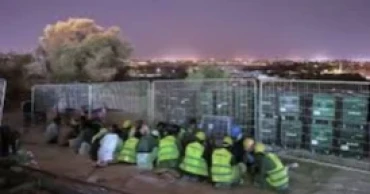
Migrant laborers from various countries including Bangladesh, India, and Nepal have suffered avoidable deaths while working in Saudi Arabia, according to a report released Wednesday by Human Rights Watch.
The advocacy organization, alongside another rights group, FairSquare, published separate investigations highlighting fatal workplace incidents and work-related health issues affecting foreign laborers. The groups say these deaths stem from causes including electrocution, road accidents, and falls, and argue they could have been prevented.
HRW asks ICC to suspend Afghanistan's membership
Both reports allege Saudi authorities routinely misclassify the causes of death and fail to carry out proper investigations. This, they say, deprives bereaved families of the compensation they are due and leaves them without answers about how their loved ones died.
The investigations come as Saudi Arabia advances massive infrastructure projects linked to its Vision 2030 initiative and preparations for hosting the 2034 men’s soccer World Cup, as well as building the high-profile Neom city. Rights advocates warn that more migrant worker deaths could follow unless protective measures are implemented.
Human Rights Watch cited the case of a Bangladeshi worker who was electrocuted while on the job. According to the organization, the employer refused to release the body, telling the family they would only be compensated if they accepted a local burial.
In another case, a family reportedly waited nearly 15 years before receiving compensation from the Saudi government.
“It’s very urgent that the Saudi authorities and FIFA put in place basic labor rights protections,” said Minky Worden, director of global initiatives at Human Rights Watch.
Saudi officials did not respond to a request for comment on the report.
FairSquare’s investigation focused on the deaths of 17 Nepali contractors in Saudi Arabia over the past 18 months. The group warned that in the absence of transparency and accountability, “thousands of unexplained deaths” among low-paid foreign workers are likely.
Saudi Arabia has long faced scrutiny over labor rights violations and wage theft, particularly in connection with Vision 2030 — its wide-ranging economic diversification plan.
FIFA, in a statement shared with the AP, referred to a letter it sent to Human Rights Watch last month defending Saudi Arabia's selection as host of the 2034 World Cup. The letter pointed to the kingdom’s pledges to implement a workers’ welfare system and bolster labor protections in collaboration with the International Labor Organization.
Saudi Arabia is not alone in facing criticism over treatment of migrant workers ahead of major sporting events. Similar accusations were leveled against Qatar prior to the 2022 World Cup, with rights groups citing thousands of unexplained deaths among foreign laborers there as well.
Worden warned that the situation in Saudi Arabia could be even more severe, as the 2034 tournament is expected to involve more teams and therefore require greater construction of stadiums and infrastructure.
1 year ago

Reforms needed to restore democracy in Bangladesh: HRW
Recent cases of ‘arbitrary arrests’ and ‘reprisal violence’ in Bangladesh underscore the need for long-term systemic reforms, Human Rights Watch has said in a report.
The New York-based rights body also urged the interim government to establish legal detention practices and repeal laws used to target critics.
The report, “After the Monsoon Revolution: A Roadmap to Lasting Security Sector Reform in Bangladesh,” published on Monday recommended for systemic reform after Prime Minister Sheikh Hasina’s autocratic administration was ousted in August 2024.
Reforms should be centered on separation of powers and ensuring political neutrality across institutions, including the civil service, police, military, and the judiciary, it said.
The government should seek technical assistance, monitoring, and reporting by the Office of the High Commissioner for Human Rights and other UN rights experts to ensure lasting reforms, it added.
Students of seven colleges withdraw protest proprammes
“Nearly 1,000 Bangladeshis lost their lives fighting for democracy, ushering in a landmark opportunity to build a rights-respecting future in Bangladesh,” said Elaine Pearson, Asia director at Human Rights Watch.
“This hard-won progress could all be lost if the interim government does not create swift and structural reforms that can withstand any repression by future governments.”
The recommendations are based on over 20 years of Human Rights Watch research and documentation in Bangladesh as well as recent interviews with human rights activists, members of the interim government, and current and former law enforcement and military officials.
The interim government should introduce a UN Human Rights Council resolution at the council’s March 2025 session to ensure lasting reforms beyond the interim government’s limited tenure, Human Rights Watch said.
Donor governments should invest in police training and other security sector reform in Bangladesh, but not without these core structural reforms.
Human Rights Watch said it has found that a disturbing pattern of security force abuses has reemerged after Hasina’s ouster, this time targeting former Awami League supporters, including journalists.
The police are again arbitrarily detaining people and filing mass criminal complaints against unnamed people, which allows the police to intimidate and threaten virtually anyone with arrest.
In the first two months since the interim government took office, over 1,000 police cases were filed against tens of thousands of people, mainly Awami League members, accusing them of murder, corruption, or other crimes. Over 400 Awami League ministers and leaders are facing investigations, it said.
Those with command responsibility for abuses under the previous government should be held to account. However, mass complaints without adequate evidence only undermine justice, Human Rights Watch said.
The interim government should urgently prohibit filing cases against unnamed accused and mass arrest warrants, and revise laws that allow for vague and overly broad charges to target critics, Human Rights Watch said.
Financial security key to dignity of journalists: Kamal Ahmed
Courts should act speedily to ensure that anyone detained is safely and swiftly produced before a judge. All detention centers should be made public and open to independent inspection.
Member countries should work with the interim government to put in place Human Rights Council mandated monitoring of Bangladesh’s human rights situation by the UN Office of the High Commissioner for Human Rights, and establish regular reporting back to the council.
“Bangladesh’s interim government has the monumental task of undoing 15 years of increasingly entrenched autocracy,” Pearson said.
“The interim government should enlist UN support to cement structural reforms so that the abuses of the past do not become a blueprint for Bangladesh’s future.”
1 year ago

HRW accuses Myanmar of using fuel-air explosive on a crowd
Myanmar’s military used an "enhanced blast" munition known as a fuel-air explosive in an airstrike that killed more than 160 people, including many children, at a ceremony held last month by opponents of army rule, a human rights monitoring group charged in a report Tuesday.
Human Rights Watch accused the military of dropping the weapon, also known as a thermobaric or vacuum bomb, on a crowd that had gathered for the opening of a local office of the country’s resistance movement outside Pazigyi village in Myanmar’s central Sagaing region on the morning of April 11. The area is about 110 kilometers (70 miles) north of Mandalay, the country’s second-largest city.
The attack caused “indiscriminate and disproportionate civilian casualties in violation of international humanitarian law, and was an apparent war crime,” the New York-based group said.
Thermobaric weapons consist of a fuel container and two separate explosive charges, with the first detonating to disperse the fuel particles and the second igniting the dispersed fuel and oxygen in the air, creating a blast wave of extreme pressure and heat that creates a partial vacuum in an enclosed space. That makes the weapon particularly deadly for people in an enclosed space, such as the office that was being opened.
Also Read: Alarm over Myanmar, sea feud under ASEAN summit spotlight
Myanmar is wracked by violence that began after the army ousted the elected government of Aung San Suu Kyi in February 2021 and brutally suppressed nonviolent protests. That triggered armed resistance and combat in many parts of the country, with the military increasingly using airstrikes to counter the opposition and secure territory.
Human Rights Watch said it based its conclusion that a thermobaric weapon had been used on a review of 59 photos of the victims’ bodies and a video of the site following the attacks.
It said it also analyzed eight photographs and two videos of the remnants of the weapons posted online by the National Unity Government, an underground group that calls itself the country’s legitimate government. It presented them during a news conference three days after the bombing of the building that was supposed to be a local office for the organization.
The attack killed 168 civilians, including 40 children under 18 years old, it said. A 6-month-old girl was the youngest victim and a 76-year-old man was the oldest, the statement said. Its tally could not be independently confirmed by The Associated Press.
A witness told the AP on the day of the attack that a fighter jet dropped bombs directly onto a crowd of people and a helicopter appeared about half an hour later, firing at the site. The witness, who asked not to be identified because he feared punishment by the authorities, said those killed also included leaders of local anti-government armed groups and other opposition organizations.
Myanmar’s army acknowledged the attack but defended its actions, accusing anti-government forces in the area of carrying out a violent campaign of terror. It said the People’s Defense Forces — the armed wing of the National Unity Government -- had terrorized residents into supporting them, killing Buddhist monks, teachers and others.
The military government’s spokesperson, Maj. Gen. Zaw Min Tun, told state television MRTV there was evidence the attack had set off secondary blasts of explosives hidden by the People’s Defense Forces around the site.
Human Rights Watch said that according to a witness, the People’s Defense Forces stored goods, funds, medicines and also some ammunition in the office building, which was intended for civilian uses such as filing taxes, township meetings and judicial processes.
“The presence of opposition combatants and ammunition would make the building a legitimate military objective subject to attack,” said Human Rights Watch.
“Even so, the use of an enhanced-blast weapon for the attack was unlawfully indiscriminate because its use in a crowded civilian area could not minimize the loss of civilian life. In addition, the initial strike and ensuing attacks on hundreds of fleeing civilians was almost certainly an unlawfully disproportionate attack, and possibly a deliberate attack on civilians.”
The use of thermobaric weapons is rarely publicly acknowledged because of the indiscriminate destruction they can cause.
The United States has used varieties of fuel-air explosives in conflicts in Vietnam, Afghanistan and Iraq. In Afghanistan, the U.S. Air Force dropped what it described as its “largest non-nuclear conventional weapon,” the 9,840-kilogram (21,693-pound) Massive Ordnance Air Blast Bomb.
Russia, which acknowledges producing fuel-air munitions, has been accused of using them in several conflicts, including in Ukraine. The weapons have also been reported to have been used by Azerbaijan in fighting against neighboring Armenia, and by government forces in Syria’s civil war.
3 years ago

300 groups call for more scrutiny of China on human rights
More than 300 civil society groups, including Human Rights Watch, Amnesty International and the International Service for Human Rights, are urging the United Nations to set up an international watchdog to address human rights violations by the Chinese government, reports AP.
6 years ago
.jpg)
Virtual premiere of docu-film ‘A Mandolin in Exile’ on Thursday
Marking the third anniversary of the ‘Rohingya Genocide Remembrance Day’, the Liberation War Museum-produced documentary ‘A Mandolin in Exile’ will have its virtual worldwide premiere on Thursday.
6 years ago

Three years in review: No end in sight to Rohingya crisis
Myanmar has not taken a single Rohingya back home till date although the crisis enters the fourth year within a couple of days amid "lack of conducive conditions" in Rakhine required for a safe and sustainable return of Rohingyas, officials said.
6 years ago
.jpg)
Rayhan’s arrest violates free speech rights: HRW
Criticising Bangladeshi migrant worker Mohammad Rayhan Kabir’s arrest by the Malaysian authorities, Human Rights Watch on Wednesday said the authorities should immediately release him and reinstate his work permit.
6 years ago