Ramadan price hike

Gas crisis, soaring prices cast shadow over Ramadan preparations in Dhaka
With Ramadan only a couple of days away, a sudden pipeline gas crisis has left many households in Dhaka anxious, compounding worries over the rising prices of essential commodities ahead of the holy month.
For Rahela Begum, a resident of Old Dhaka, the trouble began in her kitchen.
“I was preparing lunch for my son. After processing fish and vegetables, I found there was no gas in the stove. Gas did not come the whole day and I had to buy food from a hotel. I have no idea when gas will be available. I am worried if this continues during Ramadan,” she said.
As Ramadan approaches, a time when kitchens remain busy from pre-dawn sehri to evening iftar, uncertainty over gas supply has deepened her concern.
Kohinur Begum from Shantinagar faced a similar situation on Sunday.
She said she struggled to cook meals due to extremely low gas pressure and is unsure whether the supply will stabilise before the fasting month begins.
The crisis has coincided with a fresh spike in the prices of several essentials further straining low- and middle-income households.
Ansiur Rahman, a resident of Kalabagan, said the dual pressure of gas shortages and price hikes has made life more difficult for people in some areas. “It is not only the gas crisis, but also the rising prices of essential goods that are causing concern ahead of Ramadan.”
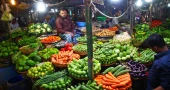
Consumers said the prices of key Ramadan items such as chickpeas, broiler chicken, lemons and other iftar ingredients have surged despite what traders claim is adequate import and local production.
In the past two days alone, chickpeas have risen by Tk 10 per kilogram and broiler chicken by Tk 20 per kilogram, adding to the financial burden on families preparing for the fasting month.
Many consumers allege that Ramadan has become a season of profit for some traders, who raise prices under various pretexts, including claims of supply disruptions or artificial shortages.
They also point out that, amid the recent national election, market monitoring by district administrations and the Directorate of National Consumer Rights Protection has not been as visible as usual.
Taking advantage of the situation, some traders are allegedly hoarding commodities and creating artificial scarcity, further squeezing household budgets.
Ironically, just a week ago, traders had assured that markets were well-stocked with essential food items ahead of Ramadan.
At a stakeholders’ meeting in Motijheel reviewing import, stock, supply and pricing of Ramadan essentials, traders told the Federation of Bangladesh Chambers of Commerce and Industry (FBCCI) that there was little risk of abnormal price hikes during the holy month.
To cushion off the impact on consumers, the government has announced plans to sell milk, eggs, beef and dressed broiler meat at subsidised rates during Ramadan.
Under the scheme, dressed broiler meat will be sold at Tk 245 per kilogram, pasteurised milk at Tk 80 per litre, eggs at Tk 8 each and beef at Tk 650 per kilogram.
Besides, the Trading Corporation of Bangladesh (TCB) has initiated nationwide truck sales of essential items ahead of Ramadan.
Meanwhile, Titas Gas Transmission and Distribution PLC has attributed the acute low gas pressure to a temporary shutdown of one of the floating terminals supplying liquefied natural gas (LNG).
In a statement on Sunday, Titas said supply in areas under its jurisdiction, including Dhaka and adjoining districts, has experienced a severe pressure drop that may continue for more than 24 hours.
Low gas pressure in Titas areas to last over 24 hours
The maintenance work at one LNG terminal has significantly reduced the volume of regasified LNG being fed into the national grid, resulting in a sharp decline in supply pressure.
Residential, commercial and industrial consumers are likely to experience low gas pressure at the end-user level until midnight on February 16, the company said, expressing regret for the inconvenience.
For thousands of families in the capital, however, the uncertainty lingers.
8 months ago
Ramadan nears; escalating food prices spark worries in Bangladesh
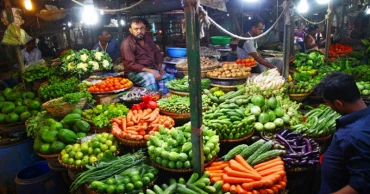
With inflation already near record levels and traders raising the prices of essential commodities ahead of Ramadan, low- and middle-income families fear greater struggles as the fasting month approaches.
The interim government has assured that it has taken measures to ensure a steady supply of essential commodities and prevent syndicate-created market instability during the holy month.
Prices are usually increased during Ramadan almost every year using various excuses and the past experiences raise no hope among general people despite the government's assurance.
Commerce Adviser Sk. Bashir Uddin told UNB that various initiatives have been taken to keep the prices stable and ensure adequate stock of essentials ahead of Ramadan and Eid.
"The government is making every effort to control prices during Ramadan. Strict monitoring will be ensured to keep the market free of syndicates," the adviser said.
No change in duties until Ramadan ends: Finance Adviser
The government is ready to maintain the supply of essential items such as dates, chickpeas, lentils and other staples during Ramadan. “The food market will remain stable and prices are expected to decrease."
Adviser Bashir Uddin said he warned traders against unethical practices and urged them to act responsibly and help keep the market stable during Ramadan.
The government’s main aim is to protect the sanctity of Ramadan and create a market environment that brings relief to consumers, he added.
Meanwhile, Chief Adviser Dr Muhammad Yunus has instructed field-level officials to prioritise the smooth supply of goods and keep the prices of essentials within people’s purchasing capacity during the fasting month, he said.
The government has taken some steps, including market monitoring, syndicate control and ensuring uninterrupted supply of essentials, he said.
Controlling Syndicates
The adviser said monitoring has been intensified to prevent artificial crises and price hikes caused by syndicates of traders.
Keep prices under control during Ramadan: CA to officials
The Directorate of National Consumer Rights Protection (DNCRP) and other law enforcement agencies will work to check unethical practices.
Uninterrupted Supply
Adequate stocks of essential items such as rice, lentils, sugar, cooking oil, onions and garlic have been ensured and measures have been taken to prevent any disruptions in import and supply chains.
Daily Market Monitoring
Daily surveillance will be enhanced to detect and penalise unscrupulous traders and instant action will be taken against those attempting to create artificial crises.
The adviser said consumers have been urged to avoid panic buying and purchase goods at fair prices.
Expansion of TCB Activities
The distribution of essentials through the Trading Corporation of Bangladesh (TCB) at subsidised rates have been scaled up to ensure availability of goods throughout Ramadan.
Govt trying to keep prices of essentials tolerable till Ramadan: Finance Adviser
Special Task Force
A special task force under the Ministry of Commerce has been formed to monitor market trends and prevent artificial crises.
According to Commerce Ministry officials, the imports of essential commodities such as chickpeas, lentils, dates, sugar and soybean oil have been expedited to ensure steady supply until Ramadan.
The government has also planned to establish storages to control potato prices.
Inflation
Bangladesh’s economy in 2024 faced major challenges as rampant inflation not only eroded purchasing power but also overshadowed the country’s progress in other areas.
Commodity prices to stay below normal during Ramadan: Commerce Adviser
The inflation rate in Bangladesh reached an alarming average of 11.38% in November 2024, marking the highest level in over a decade. It hit 11.66 percent in July, the highest at least since the 2010-11 fiscal year, driven mainly by food prices reflecting the worsening of the purchasing capacity of people.
This sharp increase was fuelled primarily by escalating food prices, which constitute a significant portion of household expenditure and the Consumer Price Index (CPI).
Food inflation, in particular, hovered around 12%-14% for most of the year, as prices of essentials like rice, cooking oil, and vegetables surged.
Non-food inflation also rose steadily, driven by increased transportation costs, higher utility bills, and imported goods becoming more expensive due to currency depreciation.
1 year ago

‘Squeezed middle’ in urban areas bearing brunt of Ramadan price hike
The runaway price hike during this year’s Ramadan is proving particularly difficult for the middle to lower-middle class households in urban areas, for whom a Tk10-15,000 spike in the monthly spend is a big ask.
These are the families that despite living in or near areas where supershops are proliferating, still prefer to buy from the local kaachabazars (kitchen markets). And the principal breadwinner, usually the father, often prefers to visit the bazar and make the purchases himself.
One of them, Kazi Shariful Haque, a job holder at a private local company, told UNB that in any case one has to spend more on food during Ramadan, despite it being the month for restraint, on the food that is consumed during Iftar and Sehri. Consumption of some items like fruits, beef, and mutton, does come down, he conceded.
UNB spoke to Shariful at Kawranbazar, the principal kitchen market in the capital, which he visited just prior to the weekend with a shopping list that contained fruits, vegetables, fish, and chicken, among other things.
He shared that in his experience, most items’ prices jumped by Tk10-30 per kg. Fish prices jumped by Tk100 to 150 per kg, chicken jumped by Tk15 to 20 per kg, while chick-pea, lentil, onion, and garlic ginger are among the items that saw prices jump by Tk10 to 30 per kg, since the start of Ramadan.
Ramadan: Holiest cities Makkah, Madinah flooded with Umrah visitors
Dates are not available at price set by the government, he said, while apples, malta, and some other fruits are selling at Tk300 to 350 per kg - an increase in the price by Tk 50 per kg. Medium-quality dates are selling at Tk800-1000 per kg, he pointed out.
However, Shariful has found that the prices of rice and edible oil are stable for now, but of course household expenses are not limited to the spending at the bazaar only. In almost every sphere, including medicines (health), water rates, gas rates, electricity, house rent, people are having to spend more and more.
Bills and prices are squeezing the middle class in cities, especially at the lower end like Shariful, who last received a raise at his company two years ago, and in these two years, inflation has been spiking in the country. Even the company he worked for suffered losses in business in these two years, and it made him perceive a period of gloom for the economy.
Still, it makes him yearn for when the times were good for these very same people, as recently as 2-3 years ago.
“In 2021, I could maintain my four-member family in Farmgate, Dhaka along with spending for parents living in the village and even then save a small amount every month. And now I have to maintain family expenditure by drawing on my previous savings,” Shariful voiced his frustration in an annoyed voice.
Shariful’s is the common refrain among most shoppers at the city’s kitchen markets these days.
They make up Bangladesh’s ‘squeezed middle’, a term coined by the former leader of the opposition in the UK parliament, Ed Miliband of Labour, in the aftermath of the global financial crisis of 2009.
As Ramadan is about to begin, prices of essentials high in Khulna kitchen markets
The Oxford English Dictionary, while choosing it as their ‘Word of the Year’ in 2011, defined it as “the section of society regarded as particularly affected by inflation, wage freezes, and cuts in public spending during a time of economic difficulty, consisting principally of those people on low or middle incomes.”
All these conditions are met by the likes of Shariful, and others in his bracket.
Dr Fahmida Khatun, Executive Director of the Centre for Policy Dialogue (CPD) told UNB that inflation and randomly fluctuating exchange rates (affecting the price of imported products) have increased the cost of living in the urban areas, as the urban people are depending on supply chains..
In the rural areas, 60 to 70 percent of items consumed by a family are produced on their own land - which is emphatically not the case in the cities. Most of the middle class is even living on rented property. As a result, the price hikes tend to affect urban life more severely, she said.
Read more: Industries Minister announces special drive to control standard, prices of goods during Ramadan
Dr Fahmida said it was not only the prices of consumer goods - health-related expenditure and utility prices have also increased, confirming the observation by Shariful, and others, that UNB spoke to in Kawranbazar.
“Household incomes, mainly salaries, did not increase in the post-Covid period, after having gone down during Covid itself (2020-2022),” Dr Fahmida said. “As a result, jobholders are really bearing the brunt of the price hikes.”
Average wage growth remained well below the inflation rate in Bangladesh for the 22nd month straight in November 2023, as per the Bangladesh Bureau of Statistics (BBS), corresponding to the timeline she provided.
Ghulam Rahman, president of the Consumers Association of Bangladesh (CAB), said that the prices of all types of products have increased, whether those items are imported or produced in the country.
Although the incomes of jobholders did not increase, their expenses have increased alongside that of others, but this has proven a particular burden for the fixed income groups, he said.
He said If prices were hiked “logically and systematically”- presumably meaning adhering to market fundamentals - then this burden would remain manageable. But when it happens arbitrarily, indicating how it happens in Bangladesh, it becomes very hard for the people, said the CAB president.
He advised authorities to pay more attention to whether this is happening, as there are several instances of price gouging, hoarding, etc in the country, and there are laws against these.
Wherever irregularities are found, the perpetrators should be brought under the law, to bring stability to the market, the CAB president urged.
Read more: Commerce ministry fixes prices for dates
2 years ago