trump
Trump says US winning Iran war, claims control of Hormuz Strait
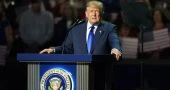
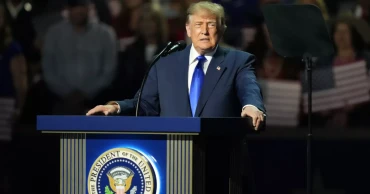
US President Donald Trump on Wednesday said the United States was winning its war with Iran and claimed that US forces controlled the strategically important Strait of Hormuz.
Speaking at the Republican Party’s first-ever midterm convention in Dallas, Trump blamed previous administrations’ green energy policies for rising living costs and claimed his administration had rapidly reduced the prices of food and other goods.
“Oil prices will be going down as soon as we win the war with Iran,” Trump said.
“We’ll win it. We’re winning it. We control the Hormuz Strait,” he added.
Trump also suggested renaming the waterway linking the Persian Gulf with the Gulf of Oman the “Trump Strait,” joking that Iran’s leadership would be pleased with the idea.
He described Iran as the “bully of the Middle East” for 51 years but said, “they’re not the bully anymore.”
Meanwhile, several US military aircraft were reportedly damaged in Iranian strikes on the Muwaffaq Salti Air Base in Jordan early Wednesday, according to CBS News, citing sources familiar with the incident.
About eight F-15 fighter jets suffered minor damage and were returned to service, while an A-10 Thunderbolt, also known as the Warthog, was hit and lost a wing, the report said.
The attack was part of a wave of Iranian retaliation following US statements Tuesday that American forces had targeted five Iranian oil tankers after Tehran attempted to attack a US Navy vessel.
Iran’s Islamic Revolutionary Guard Corps said it had struck eight tankers, two warships and the US base in Jordan.
US forces stationed in Jordan fired more than 30 Patriot missiles in an effort to intercept the incoming Iranian projectiles, according to the report.
Source: Al Jazeera
10 days ago
Looking forward to meeting PM Tarique soon: Trump
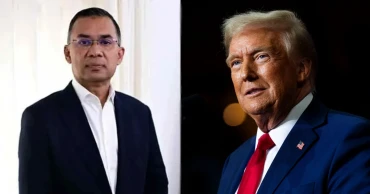
US President Donald Trump has expressed hope of meeting Prime Minister Tarique Rahman soon, saying he believes Bangladesh and its people have a very bright future under his leadership.
In a letter sent to the Prime Minister on Monday, Trump said the people of Bangladesh have been through much but expressed confidence that the country and its people will have a “very bright future” under Tarique Rahman's leadership.
He also conveyed his warmest regards and love to the people of Bangladesh, according to the Prime Minister’s Press Wing.
At the same time, Trump thanked the Prime Minister for his decision to purchase Boeing aircraft, saying Boeing will not let Bangladesh down.
“I just received your letter concerning the purchase of Boeing Aircraft, and very much appreciate your decision of purchase. Boeing will not let you down, and I will not forget,” Trump wrote in the letter.
The US President also thanked Tarique Rahman for his attention to the matter and said, “I look forward to meeting you in the not too distant future.”
18 days ago
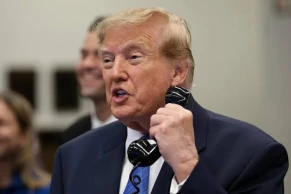
Trump says US reaches deal giving access to Venezuela’s 65 billion barrels of oil reserves
President Donald Trump said Friday that the United States has reached a major agreement with Venezuela that could give an American-backed private company access to the South American nation's vast oil reserves.
Trump described the agreement as the “biggest oil deal in world history”, saying it was negotiated by Secretary of State Marco Rubio, Defense Secretary Pete Hegseth and Venezuela's acting President Delcy Rodríguez.
Rodríguez's government said the agreement covers the development of 17 oil fields with proven potential of 65 billion barrels. It estimated that the deal could attract around $100 billion in investment and generate more than $209 billion in tax revenue for Venezuela.
Under the agreement, the United States would partner with an unnamed private operator to establish a new company to develop the oil fields, according to a U.S. official familiar with the deal.
The official, who spoke on condition of anonymity because he was not authorized to discuss the agreement publicly, said Rodríguez had granted the company rights to develop the fields for 100 years.
The company would give the United States an effective 55% share of its output, including an ownership stake and the right to purchase oil at cost, the official said. If realized, the company would become the world's second-largest corporate holder of proven oil reserves after Saudi Aramco.
Trump under pressure over high fuel prices
The announcement comes as Trump faces pressure to reduce high fuel prices in the United States amid the ongoing war in Iran and disruptions to global energy supplies.
The U.S. government has been drawing from its strategic petroleum reserves, which fell below 300 million barrels in early August, more than 100 million barrels lower than at the beginning of 2026.
The conflict involving the United States, Israel and Iran has sharply reduced the flow of Gulf oil through the Strait of Hormuz, a major global energy route that previously carried about 20% of the world's petroleum.
The average U.S. gasoline price was around $4.09 per gallon on Friday, compared with $3.21 a year earlier, according to AAA.
However, experts said the Venezuelan agreement is unlikely to bring immediate relief at the gas pump. Increasing Venezuela's oil production substantially would require years of investment to repair and expand its badly damaged infrastructure.
Major U.S. oil companies could also be reluctant to return because of Venezuela's political uncertainty and their previous experiences operating in the country.
After Maduro's removal, Trump met oil executives at the White House and urged them to return to Venezuela. Although executives showed interest, some remained cautious. ExxonMobil CEO Darren Woods had previously described Venezuela as an “un-investable” market.
Trump has maintained that his administration has helped bring greater stability to Venezuela. He has also accused the country of taking U.S. oil after former President Hugo Chávez nationalized hundreds of foreign-owned assets, including those belonging to American oil companies.
Venezuela opens oil sector to private investment
Rodríguez moved to open Venezuela's oil industry to greater private investment after taking power, reversing a key policy of the socialist movement that has governed the country for more than two decades.
Rubio said the new agreement would bring billions of dollars in private investment to Venezuela while helping reduce fuel prices in the United States.
The U.S. official said oil purchased from the new company would be used to replenish the American strategic petroleum reserve and for military purposes.
Venezuela possesses the world's largest proven crude oil reserves, estimated at around 303 billion barrels, or approximately 17% of global reserves, according to the U.S. Energy Information Administration.
Most of the country's oil deposits have already been identified, but aging infrastructure has severely limited production. Venezuela currently accounts for only about 1% of global oil output.
Former Venezuelan President Nicolás Maduro remains jailed in the United States. He has pleaded not guilty to federal narcoterrorism and drug trafficking charges.
21 days ago
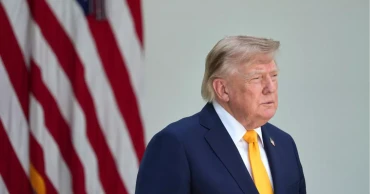
Trump Weighs New 7.5% Tariff on China Over Cheap Exports
US President Donald Trump is considering imposing a new 7.5% tariff on Chinese goods, accusing Beijing of flooding global markets with cheaply priced products, according to people familiar with the matter.
Two of three people who spoke to The Associated Press on condition of anonymity said the proposed tariff is being considered at a level that officials believe would not threaten the current one-year trade truce between the United States and China.
The move is also expected to avoid disrupting a planned meeting between Trump and Chinese President Xi Jinping in late September.
The possible tariff appears to be an effort by the Trump administration to pursue tougher trade measures after the US Supreme Court earlier this year rejected Trump's broader plan for sweeping tariffs.
Following the court decision, the administration announced in March that it would investigate China's industrial overcapacity and its rules on forced labour. Similar investigations were also launched into several other economies over alleged unfair trade practices.
It remains unclear whether Washington is close to making decisions on those other investigations, which include the European Union, Japan, India, South Korea, Vietnam, Taiwan, Bangladesh, Mexico, Thailand and several other countries.
The White House and the US Trade Representative's office did not respond to requests for comment on the possible tariff.
China's embassy in Washington said trade and economic disputes should be handled through negotiations rather than unilateral tariffs. It also rejected accusations that China has a problem with industrial overcapacity.
The investigation into China's excess industrial capacity was launched under Section 301 of the US Trade Act of 1974, which allows the president to impose tariffs on countries accused of unfairly harming US businesses or trade.
New tariff would add to existing duties
The people familiar with the discussions stressed that Trump has not made a final decision and could still abandon or change the proposal.
If imposed, the new tariff would be added to existing duties on Chinese products, including tariffs of 10% to 12.5% announced last month for 60 economies. The administration accused those countries of failing to properly enforce a ban on goods produced through forced labour.
China and several other countries protested those tariffs.
Beijing has also rejected US claims of industrial overcapacity as Washington prepares to release the findings of its investigation.
China's large production capacity in industries such as automobiles, solar panels, cement and steel has become a growing concern among its trading partners.
Chinese leaders have sought to rebalance the economy, but weak domestic demand has encouraged companies to expand into overseas markets. Rising exports helped push China's trade surplus to nearly $1.2 trillion last year, a record level.
China's Commerce Ministry has said the country has never deliberately sought to maintain a large trade surplus.
Iran sanctions add to tensions
The tariff discussions come as the US Treasury Department announced Monday that it is preparing new secondary sanctions against countries that continue doing business with Iran.
China is Iran's biggest trading partner.
The US says the new sanctions are intended to increase pressure on Iran's already weakened economy as the conflict involving the US, Israel and Iran approaches its sixth month.
Treasury Secretary Scott Bessent gave few details about the planned sanctions and did not identify which countries could face penalties.
25 days ago
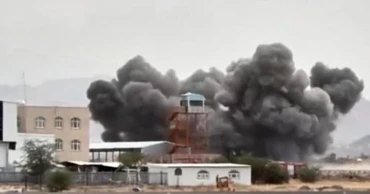
Trump rejects Iran's demand for war compensation amid wider Mideast tensions
US President Donald Trump has rejected Iran's demand for compensation over damage caused by US and Israeli attacks, saying Tehran had not raised the issue in earlier negotiations.
Here are the latest developments in the Iran conflict and the wider Middle East:
Trump demands compensation from Iran
Trump's comments came after Iranian Foreign Ministry spokesperson Esmail Baghaei said Iran would not reopen the Strait of Hormuz unless the United States met several conditions.
Tehran wants Washington to end its blockade of Iranian ports, lift economic sanctions and release frozen Iranian assets. It also wants compensation for damage caused by the war.
"It is up to the U.S. side to stop and make amends for its illegal and destructive actions," Baghaei said.
Trump responded by saying he would instead seek compensation from Iran for Americans killed or seriously wounded in attacks involving Iran-backed groups over several decades.
The US has blamed Iran-backed militants for the deaths and injuries of hundreds of Americans. They include 241 US military personnel killed in a 1983 bombing of a Marine compound in Beirut and at least 603 US troops killed in Iraq between 2003 and 2011.
Trump also said Iran should compensate the families of Iranian protesters who were killed.
He said he had instructed US representatives to include the demand in future negotiations with Tehran.
The Strait of Hormuz, through which about one-fifth of the world's traded oil passed before the war, remains a major concern as its closure has pushed energy prices higher and become an important political issue in the United States ahead of November's midterm elections.
Iran's supreme leader calls for unity
Iranian President Masoud Pezeshkian said Supreme Leader Ayatollah Mojtaba Khamenei has called for "unity and cohesion" as the country faces economic difficulties and sanctions linked to the conflict with the United States.
Pezeshkian said he held a nearly seven-hour meeting with Khamenei, during which they discussed people's livelihoods, market conditions, jobs, housing and problems caused by US sanctions.
He said the most important message from Khamenei was the need to maintain unity.
"All of the enemy's plans are aimed at creating division," Pezeshkian said.
It was only the second time Pezeshkian has publicly said he met Khamenei since the younger Khamenei became supreme leader in March following a US-Israeli strike that killed his father, former Supreme Leader Ayatollah Ali Khamenei. The new leader was also reportedly wounded in the attack and has not appeared in public since then.
Iran appoints former Revolutionary Guard chief
Iran on Sunday appointed Mohsen Rezaei, a military adviser to Khamenei, as head of the Supreme National Security Council.
Rezaei, 71, led Iran's Islamic Revolutionary Guard Corps from 1981 to 1997, including during much of the Iran-Iraq war in the 1980s.
Last week, he warned that US forces would face serious risks and casualties unless Washington ended its blockade of Iranian ports.
The Institute for the Study of War, a US-based think tank, said Rezaei appears open to negotiations with Washington to pursue Iran's goals, including maintaining control over the Strait of Hormuz, but has not indicated that Tehran is prepared to make concessions.
Rezaei replaced Mohammad Bagher Zolghadr, who will serve as a political adviser to Khamenei.
Israel declares Christian town a closed military zone
Israel's military said Monday it had declared Taybeh, a Christian-majority town in the occupied West Bank, a closed military zone in an effort to prevent Israeli settlers and other non-residents from entering.
The move follows months of reported arson, vandalism and incursions by settlers onto private and village property.
The military said Palestinian residents and journalists would be allowed to enter unless soldiers determine that their presence poses a security threat. It also said troops would detain suspects and disperse gatherings to maintain order.
The decision comes as Israeli forces and police face growing difficulties in controlling violence in the occupied territory.
According to the Palestinian Health Ministry in Ramallah, at least 87 Palestinians have been killed by Israeli settlers or soldiers in the West Bank in 2026.
Houthi attack in Yemen kills seven
Iran-backed Houthi rebels attacked the Red Sea port town of Mokha, which is controlled by forces aligned with Yemen's internationally recognised government, on Sunday, killing seven people and injuring 30 others, according to Yemen's Defence Ministry.
Four military personnel and three civilians were among those killed.
Clashes continued Monday near the village of Taiz. The Houthis said a 13-year-old child was killed in artillery shelling and another child was injured.
The attack was among the largest recent waves of Houthi strikes on positions held by Yemen's Saudi-backed government since a truce in 2022.
Renewed threats to shipping in the Strait of Hormuz have also increased attention on the Red Sea and the Bab el-Mandeb Strait, a key shipping route at the southern end of the Red Sea.
1 month ago
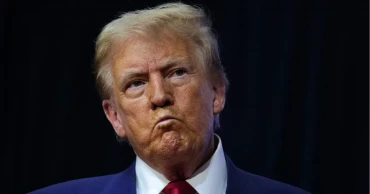
Trump unveils Gaza disarmament deal, but burdles and uncertainty remain
US President Donald Trump said Thursday that a deal has been reached for Hamas to disarm and Israel to withdraw its forces from Gaza, but many hurdles, conditions and long timelines remained to wind down the war in the Palestinian territory. Neither Hamas nor Israel gave immediate indication that they had agreed.
The White House announcement comes nine months after a U.S.-brokered ceasefire was signed. Negotiations between Israel and Hamas had largely deadlocked over the implementation of its second phase, including the disarmament of Hamas and the reconstruction of Gaza.
“The agreement will be carried out in carefully structured phases,” Trump said on social media. “As disarmament is completed, Israeli forces will withdraw, and the International Stabilization Force will work with a new Palestinian police force to take responsibility for Gaza being safe for its residents and its neighbors.”
Trump’s 20-point ceasefire plan calls on the militant group to surrender its weapons and destroy its vast network of tunnels. It also envisions Israeli forces withdrawing from Gaza, the arrival of a new technocratic Palestinian government, deployment of an international security force and the rebuilding of the battered Palestinian enclave.
Trump announced what he said was an agreement to realize one of the most difficult portions of the Gaza ceasefire while negotiations have stalled and military attacks have escalated in the war that the U.S. and Israel in February launched against Iran, a key sponsor of Hamas.
Officials offer long or unspecific timelines for Hamas to disarmU.S. and Board of Peace officials, describing the deal to reporters on condition of anonymity under guidelines set by the White House, gave an extremely optimistic assessment of the agreement that laid out a scenario very similar to the one described by Trump and his top aides when the Board of Peace, an international body established by Trump to oversee the ceasefire in Gaza, was first formed.
The officials were unable to offer specific timelines for the disarmament of Hamas or other groups that operate in Gaza, such as Palestinian Islamic Jihad, but said the Gaza police force would turn over weapons to the technocratic Board of Peace-backed Gaza administration in the next two weeks.
The Gaza police force, however, does not include the vast majority of Hamas militants and heavy weaponry is not included in that part of the agreement, according to the officials.
Instead, the surrender of heavy weapons and the decommissioning of Hamas tunnels and other infrastructure are to come later in a process that could take between 200 and 350 days, a Board of Peace official said.
Israel has not responded but has been deeply skepticalA U.S. official said Israel, which has been deeply skeptical about Hamas’ willingness to give up its guns or relinquish at least behind-the-scenes control of Gaza, had been consulted at every step of the negotiation.
However, the official said Israel was not being asked to do anything more than what it had initially committed to when it agreed to Trump’s 20-point plan, which essentially involves withdrawing its forces from Gaza and committing to ending airstrikes on the territory.
The official said Trump would be “very, very disappointed” if Israel didn't adhere to the agreement. Trump and Israeli Prime Minister Benjamin Netanyahu met at the White House on Tuesday, but neither said much about what was discussed in their first face-to-face meeting since launching the war against Iran.
Israel’s U.N. Mission said it had no immediate comment.
The official added that Iran remains a wildcard in the equation because although it counseled Hamas members not to accept a deal, it is also not in a position to offer the group much support because it is preoccupied with the conflict with the United States.
Hamas previously had insisted on implementing the first phase of the ceasefire before moving to discuss its weapons. The group’s founding charter calls for armed resistance against Israel, and it has been reluctant to give up an arsenal, including rockets, anti-tank missiles and explosives, that lies at the heart of its identity.
Hamas announced earlier this month, however, that it had dissolved its government in Gaza and was preparing to transfer power to a technical committee backed by the United Nations as part of the ceasefire deal.
The war in Gaza began after the Hamas-led attack on southern Israel on Oct. 7, 2023, killed around 1,200 people and saw 251 taken hostage. Israel’s retaliatory offensive in Gaza has killed more than 73,000 Palestinians, including those killed since the ceasefire, Gaza’s Health Ministry said.
Israel’s military now controls more than half of Gaza, leaving Palestinians confined to squalid tent camps and heavily damaged urban neighborhoods.
1 month ago
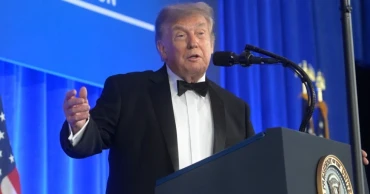
Trump returns to White House correspondents' dinner with jokes, criticism and calls for press respect
US President Donald Trump returned to the rescheduled White House Correspondents' Association (WHCA) dinner on Friday, delivering an hour-long speech filled with jokes, criticism of political opponents and media figures, and references to his presidency.
The event, originally scheduled for April, was postponed after a shooting near the venue raised security concerns.
Opening his remarks, Trump said he had removed the harshest parts of the speech he had originally planned for the April dinner.
"As I said three months ago, the show must go on," he told the audience, recalling the attempted attack that forced the postponement before shifting to lighter remarks.
Trump's appearance marked a notable moment in his relationship with the media. Since returning to office for a second term, he has frequently criticised news organisations, filed lawsuits against media outlets and taken actions affecting press access. Several journalists attending the dinner had previously been publicly criticised or barred from White House events.
During the speech, Trump mixed praise for some journalists with criticism of others. He joked about several public figures, including entertainers, politicians and television hosts, and also poked fun at his own speechwriters.
He also referred to journalism awards presented earlier in the evening, many of which recognised reporting critical of his administration, jokingly asking whether he had any influence over the winners.
Trump briefly mentioned the conflict involving Iran and highlighted construction of a new ballroom at the White House. He also joked about seeking a third presidential term, despite the US Constitution limiting presidents to two terms.
"The second time is always better," he said before adding, "I'm only kidding."
At the end of his speech, Trump put on a red "Trump 2028" cap and jokingly suggested he was running again.
Earlier in the evening, outgoing WHCA President Weijia Jiang of CBS News welcomed attendees and thanked Trump for attending. She said rescheduling the dinner reflected the determination of the White House press corps not to be intimidated by violence.
"Tonight our message is this: We are back," Jiang said.
The ceremony also honoured Secret Service agent Victor Gonzales, who was injured while responding to the April shooting, and staff at the Washington Hilton hotel, where the original dinner had been planned.
Security at the rescheduled event was significantly tighter than usual, with multiple identification checks, armed officers and security dogs. Attendance was also smaller, with about 700 guests.
One journalism award recipient, New York Times reporter Tyler Pager, had recently faced a subpoena from the Justice Department over reporting related to a luxury aircraft gifted to Trump by Qatar. The subpoena was withdrawn a day before the dinner.
The event took place amid continued tensions between the White House and the news media. Critics have long argued that the annual correspondents' dinner creates an appearance of overly close relationships between journalists and the public officials they cover.
Despite his frequent criticism of the press, Trump ended his speech on a conciliatory note, telling journalists he respected their profession before joking that they would struggle without him as a newsmaker.
"I have a lot of respect for your profession," Trump said. "When I'm not around, you're all gonna be broke."
1 month ago
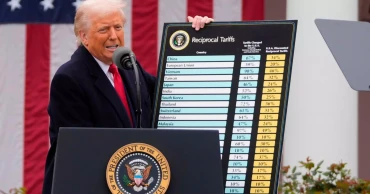
Trump imposes new tariffs on dozens of countries as temporary import taxes expire
President Donald Trump has announced new double-digit tariffs on imports from dozens of US trading partners as temporary worldwide tariffs introduced earlier this year expired on Friday.
The new tariffs, ranging from 10% to 12.5%, will apply to imports from 60 trading partners that account for about 99% of US imports. The Trump administration said the countries had failed to adequately enforce bans on goods produced through forced labour.
"The United States has had a forced labour import ban for nearly a century and enforces it strictly. It is time for our trading partners to do the same," US Trade Representative Jamieson Greer said.
The tariffs replace the temporary 10% global import duties that expired at 12:01 a.m. Friday. Those temporary tariffs had been introduced after the US Supreme Court ruled in February that Trump did not have the authority to impose his earlier broad tariffs under emergency powers.
To introduce the new measures, the administration is using Section 301 of the Trade Act of 1974, which allows the president to impose tariffs on countries found to have unfair or unreasonable trade practices. Trump also relied on the same law during his first term to impose tariffs on Chinese goods.
The administration is also investigating whether 16 countries have overproduced goods in ways that hurt US manufacturers. Those countries account for about 70% of US imports, and additional tariffs could follow once the investigation is completed.
Trump argues that higher tariffs will help revive US manufacturing. Last year, he reversed decades of US policy supporting lower tariffs and freer trade by imposing import duties on goods from nearly every country, citing the country's long-running trade deficit as a national emergency.
However, the Supreme Court later ruled that the emergency law used for those tariffs did not authorize such measures, forcing the government to refund importers that had already paid the duties.
The administration first proposed the new forced labour-related tariffs last month. Since then, some countries have strengthened enforcement measures and qualified for lower tariff rates, according to a senior administration official.
For example, India's tariff rate was initially set at 12.5% but has been reduced to 10% after it improved enforcement against forced labour imports, the official said.
Some products, including oil, natural gas and fertilizer, are exempt from the new tariffs. Goods that qualify for duty-free treatment under the US-Mexico-Canada Agreement (USMCA) are also excluded.
The move drew criticism from some lawmakers and trading partners.
Representative Richard Neal, the top Democrat on the House Ways and Means Committee, accused the administration of using forced labour as an excuse for its tariff policy.
"Forced labour is a serious issue that deserves strong enforcement, not to be used as a justification for questionable tariff policies," he said.
Brazil, which faces a 12.5% tariff, called the decision "arbitrary and unjustified" and said it would invoke its reciprocity law, which could lead to retaliatory tariffs on US goods. The Brazilian government also plans to file a complaint with the World Trade Organization.
Chile, which also faces a 12.5% tariff, said it has strong labour protections and argued that the US decision was not supported by the evidence presented during the investigation.
Under US law, tariffs are paid by American companies importing foreign goods. Those businesses often pass the extra costs on to consumers through higher prices, raising concerns that the new measures could increase living costs ahead of the November midterm elections.
Human rights groups said they remain cautious about the administration's motives but acknowledged that import restrictions could help combat forced labour.
The International Labour Organization estimates that around 27.6 million people worldwide were trapped in forced labour in 2021.
Martina Vandenberg, founder of The Human Trafficking Legal Center, said import bans can be an effective tool against forced labour but warned they should be introduced gradually to give countries time to strengthen enforcement.
"Our concern is that import bans may exist only on paper without proper enforcement," she said.
Canada said the latest US action was expected.
Canada-US Trade Minister Dominic LeBlanc said Canada shares Washington's goal of preventing goods made through forced labour from entering supply chains and would continue discussions with the United States on the issue.
Experts also noted that the threat of new tariffs has already prompted some countries, including India, to strengthen their policies against forced labour, while new European Union rules due next year are expected to increase pressure on global supply chains.
1 month ago
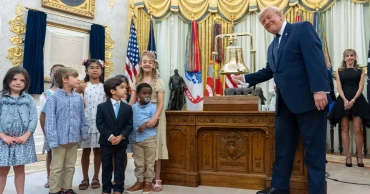
Some families still waiting for $1,000 as Trump promotes child investment accounts
President Donald Trump is set to promote his administration's Trump Accounts program during a visit to a high school in Georgia on Wednesday, even as some parents say they are still waiting for the promised $1,000 government contribution for their newborns.
The Trump Accounts, launched on July 4, provide a $1,000 government-funded investment for every child born during Trump's second term. The tax-advantaged accounts were introduced under Trump's signature One Big Beautiful Bill and can be opened for any child under the age of 18.
According to the US Treasury Department, about 6.5 million accounts have been opened so far. Of those, around 1.5 million belong to children born between 2025 and 2028 who qualify for the $1,000 government deposit.
Supporters say the programme will help more Americans build wealth by encouraging investment in the stock market from an early age. Once the accounts are opened, parents, relatives, friends and employers can add money. The funds are invested in stock market index funds managed by private firms.
The money cannot be withdrawn until the child turns 18 and can then be used only for approved purposes, such as higher education, starting a business or buying a home.
However, some parents say they have not yet received the promised government deposit.
Masaki and Kristina McLellan of New Jersey opened a Trump Account for their daughter Maya, who was born in late March. Although they were initially hesitant because they viewed the programme as politically motivated, the $1,000 incentive convinced them to sign up.
Masaki McLellan said he applied on July 6. His first application was rejected, but the account was activated after he contacted the programme's customer service hotline. He was initially told the government contribution would arrive within 10 days but was later informed it could take up to four weeks.
Kristina McLellan said she was disappointed by the delay, although the family has already opened other investment accounts for their daughter, including a college savings plan and a custodial brokerage account.
"We definitely want to give her options for her future and make sure she can choose what she wants to do," she said.
The Treasury Department described the delay as part of the normal processing period, similar to waiting for a tax refund. It said most families receive the government contribution within one or two days, but officials provide a longer estimate to account for possible processing delays.
The department said the programme allows families of all income levels to invest in their children's future and claimed it has become the most successful government-backed savings programme in US history, with around one million new sign-ups each month before its official launch.
Trump's visit to Georgia comes as he and fellow Republicans face growing scrutiny over the economy ahead of the midterm elections. An Associated Press-NORC poll conducted in June found that only 33% of US adults approved of Trump's handling of the economy, one of his lowest ratings during his second term.
Trump Accounts resemble the "baby bonds" programmes introduced in some Democratic-led states and cities to reduce wealth inequality among children. However, unlike many of those programmes, Trump's initiative is available to families regardless of income.
Critics argue the accounts provide little help during a child's early years, when families are most vulnerable to poverty, homelessness and food insecurity. They also point out that the legislation creating the programme reduced funding for several programmes widely used by children, including Medicaid and the Supplemental Nutrition Assistance Program (SNAP).
1 month ago
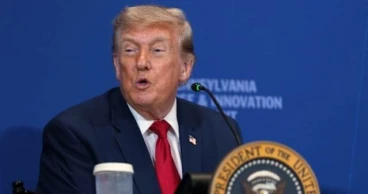
After six years, Trump set to revisit 2020 election claims in White House address
US President Donald Trump is expected to revisit his long-standing claims about the 2020 presidential election during a primetime address from the White House on Thursday, despite years of official findings that the election was secure, legitimate and free of widespread fraud.
Following Trump's 2020 election defeat to Joe Biden, officials appointed by Trump to lead the Justice Department, intelligence agencies and cybersecurity bodies consistently concluded that there was no evidence of major fraud or foreign interference that could have changed the election outcome.
Since returning to office for a second term, Trump has sought to challenge those conclusions. He has appointed senior officials who support his claims that the 2020 election was stolen and has made clear that he expects his administration to align with that position.
The issue has become a key loyalty test for many of Trump's nominees. During his Senate confirmation hearing on Wednesday, Jay Clayton, Trump's nominee for national intelligence director, avoided directly saying Biden won the election.
"He had the most electoral votes," Clayton said. "He was declared the winner."
When Democratic Senator Mark Kelly pressed him on whether the person with the most electoral votes is the winner, Clayton declined to answer directly.
Trump has repeatedly promoted conspiracy theories alleging that an international network manipulated US voting machines in 2020, claims that have been rejected by courts and election officials and have triggered several high-profile defamation lawsuits.
Ahead of Thursday's address, Trump promised to reveal "really big news," saying that "without free and fair elections, you don't have a country."
Election experts, however, fear the speech could revive false claims that have already been extensively investigated.
"There have been more than six years of consistent findings from intelligence agencies and election experts showing there was no foreign interference in the 2020 election and that US voting systems were secure," said Victoria Bassetti of States United, a nonpartisan organisation that supports state election officials. She said any new claims without evidence would contradict years of documented findings.
Years of reviews found no widespread fraud
Numerous court rulings, audits, recounts and investigations — including several conducted by Republican officials — found no evidence of widespread fraud or significant problems with the 2020 election.
Trump and his allies lost dozens of legal challenges seeking to overturn the election results, including cases heard by judges appointed by Trump himself.
Former Attorney General William Barr, who served under Trump, said there was no evidence of significant election fraud, a conclusion that drew Trump's criticism.
Chris Krebs, the former head of the federal cybersecurity agency responsible for protecting election infrastructure, also declared the 2020 election secure and said there was no evidence of vote tampering. Trump dismissed Krebs shortly afterward and later ordered an investigation into him after returning to office in 2025.
An intelligence assessment completed on Jan. 7, 2021, during Trump's final days of his first term, also found no evidence that foreign actors altered vote totals or election equipment.
In addition, Trump signed a federal review document last year stating that there was no evidence any foreign government had altered vote counting or the outcome of any US election.
Fresh federal review underway
After returning to office, Trump ordered a new federal review of the 2020 election.
Federal investigators have seized voting records from Fulton County, Georgia, and Maricopa County, Arizona — two key counties that featured prominently in post-election conspiracy theories.
Trump appointed attorney Kurt Olsen to lead the investigation. Olsen has been associated with election fraud claims and was previously sanctioned by the Arizona Supreme Court for making false statements in a lawsuit challenging the 2022 Arizona governor's race.
David Becker, a former Justice Department lawyer who now heads the Center for Election Integrity & Research, criticised the renewed investigation.
"He has committed untold taxpayer resources," Becker said. "They've found nothing."
According to Becker, search warrant documents filed in the Fulton County investigation repeated conspiracy theories that had already been disproved, while the FBI reassigned hundreds of analysts to review the material.
Conspiracy theories fuel costly lawsuits
Despite repeated official findings, supporters of election conspiracy theories continue to claim that Trump will eventually present conclusive evidence of widespread fraud.
One widely circulated theory alleges that Venezuela and other countries manipulated US voting machines to prevent Trump's victory.
Those allegations have led to major defamation lawsuits against media organisations and individuals.
Fox News agreed to pay $787.5 million to settle a lawsuit over broadcasting false claims about voting machines after the 2020 election. Newsmax and One America News have also reached settlements with voting technology companies over similar allegations.
Separately, a Denver jury found Mike Lindell, a leading promoter of election conspiracy theories whom Trump recently endorsed for governor of Minnesota, liable for defaming an employee of a voting machine company by calling him a traitor.
Becker said the pattern over the past six years has remained consistent: broad public allegations have repeatedly failed when tested in court because they lacked supporting evidence.
"If someone's alleging a crime that occurred six years ago, we shouldn't simply respond to the claims," Becker said. "We should require evidence that proves them."
2 months ago