Greece
Shrinking snowfall in Greece raises concerns over water crisis, tourism decline
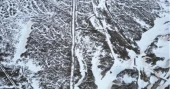
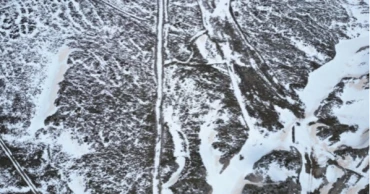
Greece’s mountain communities are facing growing concerns as snowfall continues to decline, threatening water supplies, increasing wildfire risks and hurting winter tourism-dependent businesses.
Residents of Arachova, a mountain village known for its popular ski resort on Mount Parnassos, say winters are no longer what they used to be.
Mayor Giannis Stathas recalled that heavy snowfall during his childhood often kept people indoors for days and schools closed.
“We couldn’t go to school because of the snow,” he said. “Now we don’t see that here anymore.”
According to Stathas, snow that once fell at lower elevations now appears only much higher up the mountain.
New research by the University of Cambridge’s Scott Polar Research Institute supports these observations, showing that snow cover across Greece’s mountains has dropped sharply over the past four decades.
Snow hydrologist Konstantis Alexopoulos, who worked on the study, said more than half of Greece’s snow cover has disappeared since the mid-1980s.
Researchers used 40 years of satellite images from NASA and the European Space Agency, along with machine learning technology, to study long-term snow trends.
Alexopoulos explained that snow acts as a natural water reserve because it stores water during winter and gradually releases it during the dry summer months when water is most needed.
Unlike rainfall, which quickly flows into rivers and the sea, melting snow helps maintain water supplies during Greece’s hot and dry summers.
He said rising global temperatures linked to greenhouse gas emissions are mainly responsible for the declining snowfall and shorter snow seasons.
“The current rate of climate change globally and especially in regions like the Mediterranean is much faster than before,” Alexopoulos said.
He added that although snow decline has also been recorded in regions such as the Himalayas and Andes, the speed of loss in Greece was unexpectedly high.
The impact is already being felt in Arachova, where local businesses and residents depend heavily on water from melting snow
Restaurant owner Aktida Koritou said locals are becoming increasingly worried about water shortages, especially during summer.
According to the mayor, springs are drying up and reservoirs are failing to refill properly.
“The biggest problem starts in late August and continues until early autumn,” Stathas said.
Authorities are now considering building small dams to save water, while the ski resort is taking measures to preserve snow for longer periods.
The lack of snow is also increasing fire risks as forests become drier.
Stathas said wildfires were once rare in northern Greece but are now a serious threat because of prolonged drought.
The changing climate is also affecting tourism in Arachova, where the local economy largely depends on skiing.
Koritou said the ski season now starts later than before, often beginning in January instead of December.
She said many tourists now choose countries with more reliable snowfall during Christmas holidays, causing business losses.
“This Christmas, business dropped by around 30% for me,” she said.
To reduce dependence on winter tourism, local authorities are promoting Arachova as a summer destination.
Despite these efforts, longtime residents say they deeply miss the heavy snowfalls of the past.
“There are some years when despair grips you,” Koritou said. “For those of us who know winter well, it’s disappointing not to see snow. The change is enormous.”
3 months ago
Pink peach blossoms draw crowds in northern Greece
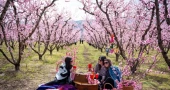
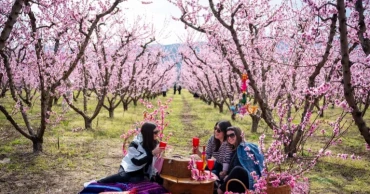
Vast peach orchards in northern Greece have turned bright pink as thousands of visitors gather to witness the region’s annual blossom season, creating a scenic spring attraction.
Every year, blooming peach trees spread like a pink blanket across the plains around Veria, drawing tourists mainly from across Greece and increasingly from other European countries.
“It’s something people should see at least once in their lives because the area is so large,” said Gianna Pilitsidou, president of the Veria Tourism Club. She noted that the plains, covering about 170 square kilometres, become entirely pink during peak bloom.
To celebrate the season, the tourism club has been organising activities such as photography tours, cycling events and exhibitions of local farm products. Over two recent weekends, thousands of visitors walked through the flowering orchards near Veria, located about 72 kilometres west of Thessaloniki.
Visitors from abroad also joined the celebrations. Dutch travel blogger Wesley van Eijk said he wanted more people to discover lesser-known destinations like Veria, while German tourist Andrea Lachnit described the blossoms as “stunning and heavenly.”
Local farmers say the event helps promote their produce and supports the region’s economy. Hotel operators also reported a noticeable rise in visitor numbers.
Peach blossoms in the Veria region typically appear between mid-March and mid-April, marking one of Greece’s most colourful spring attractions.
5 months ago

Greek, Turkish leaders meet in Ankara amid rising tensions
Greek Prime Minister Kyriakos Mitsotakis is visiting Turkey on Wednesday to maintain dialogue amid escalating tensions between the two longtime rivals.
Mitsotakis, accompanied by senior ministers, will meet President Recep Tayyip Erdogan under the High-Level Cooperation Council, an initiative aimed at strengthening ties between the NATO allies.
The two countries remain at odds over maritime boundaries, Cyprus, and drilling rights in the Aegean and eastern Mediterranean seas. Turkey has also raised concerns over growing defense and energy cooperation between Greece, Israel, and Cyprus, which Ankara sees as a move to curb its influence in the region.
Greece and Turkey have narrowly avoided conflict multiple times over the past 50 years. In 2020, a dispute over energy exploration rights brought their warships face-to-face in the Mediterranean. Recently, Greek officials reaffirmed plans to extend their territorial waters in the Aegean from six to 12 nautical miles, a move Turkey’s parliament in 1995 called a “cause of war.” Ankara says the extension would violate its rights and limit its maritime access.
The talks in Ankara are expected to focus on a “positive agenda,” including trade, energy, education, and cultural cooperation, with no breakthrough anticipated on disputed issues.
Both countries also remain divided over Cyprus, split since 1974 between ethnic Greek and Turkish communities. Turkey has opposed a federal solution for reunification and, along with the Turkish Cypriot administration, backs a two-state approach.
7 months ago
Greek rescuers search for missing after migrant boat collision kills 15
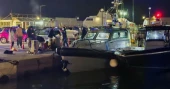
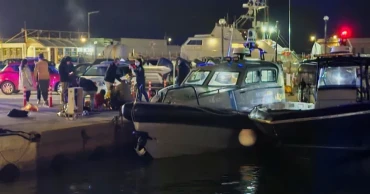
Greek coast guard vessels and a helicopter continued searching for potential missing people off an eastern Aegean island Wednesday following a deadly overnight collision between a patrol boat and a speedboat carrying migrants that left at least 15 dead.
Twenty-four migrants, including 11 children, were injured and hospitalized on the island of Chios, authorities said. Two coast guard officers were also injured, with one remaining hospitalized Wednesday.
The bodies of 11 men and three women were recovered from the sea shortly after the collision, and one woman later died in the hospital, officials added. The total number of people on the speedboat remains unknown.
Four patrol boats, two helicopters, and divers launched the search overnight, which continued Wednesday morning with a helicopter and five patrol vessels.
According to a coast guard statement, a patrol boat encountered the speedboat late Tuesday night near Chios, which was traveling without navigation lights. Despite sound and visual signals to stop, the speedboat reportedly changed course, collided with the patrol boat, and capsized. Photos released by the coast guard showed abrasion marks on the right side of the patrol boat. The account could not be independently verified.
Michalis Giannakos, head of Greece’s public hospital workers’ union, said hospital staff in Chios were put on alert overnight to handle the sudden influx of injured and dead. Several of the injured required surgery, he said.
Greece remains a major entry point into the European Union for people fleeing conflict and poverty in the Middle East, Africa, and Asia. Fatal accidents are common, as migrants often attempt the short but perilous crossing from Turkey to nearby Greek islands in overcrowded dinghies or high-speed boats operated by smugglers. Increased patrols and allegations of pushbacks by Greek authorities have reduced such attempts.
The European Union has tightened migration regulations in recent years, including streamlining deportations and increasing detentions. Migration has been a contentious issue across EU member states, fueling the rise of far-right parties and hardened asylum policies, with the number of asylum-seekers now well below record levels.
7 months ago
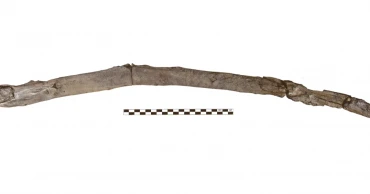
Scientists find earliest wooden tools yet at Greek excavation
Researchers say two artifacts discovered along a lakeshore in Greece are the oldest known wooden tools yet uncovered, dating back about 430,000 years.
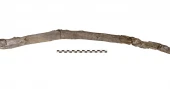
One artifact is a slender stick measuring roughly 2½ feet (80 centimeters) in length that may have been used to dig into muddy ground. The second is a smaller, more enigmatic handheld piece made from willow or poplar wood that researchers believe could have been used in shaping stone tools. The findings were published Monday in the journal Proceedings of the National Academy of Sciences.
Scientists believe early humans relied on a wide range of tools crafted from stone, bone and wood. However, evidence of wooden tools is rare because the material decomposes rapidly over time. Preservation typically occurs only in specific conditions, such as icy environments, caves or underwater settings.
The newly discovered wooden tools were found in Greece’s Megalopolis basin, where researchers believe they were rapidly buried by sediment and preserved over time by wet conditions. Scientists have previously uncovered other remains at the site, including stone tools and elephant bones bearing cut marks. Although the wooden tools were not directly dated, the site itself is estimated to be about 430,000 years old, offering clues to their age.
Read More: Science and local sleuthing uncover 250-year-old Shipwreck on Scottish Island
“I’ve always just been thrilled to be able to touch these objects,” said study author Annemieke Milks of the University of Reading.
No human remains have yet been identified at the location, leaving uncertainty over who used the tools. Possible users include Neanderthals, early human ancestors or other hominins.
Archaeologist Jarod Hutson of the Smithsonian National Museum of Natural History said the site may contain additional discoveries, though the plain appearance of the tools makes interpretation difficult.
The find adds to rare examples of ancient wooden tools and sheds light on a lesser-known aspect of early human technology.
7 months ago

Greece deploys record firefighters and drones for wildfire season
Greece is deploying a record number of firefighters and nearly doubling its drone fleet this summer to address growing wildfire risks driven by climate change, officials said Thursday.
Civil Protection Minister Ioannis Kefalogiannis said 18,000 permanent and seasonal personnel, supported by thousands of volunteers, would be mobilized as wildfire damage has increased steadily over the past two decades.
Gaza's main hospital overwhelmed with children in pain from malnutrition
“It is clear that the conditions this year will be particularly difficult,” Kefalogiannis told reporters after attending a firefighting exercise south of Athens.
Rising average temperatures and low rainfall have significantly worsened conditions in recent years.
Greek Fire Chief Lt. Gen. Theodoros Vagias said that additional elite firefighting units would be deployed to high-risk areas during the May–October fire season.
“The climate crisis is here to stay, and we must be more effective in surveillance, preparedness, and how we mobilize our resources,” Vagias said.
Wildfire damage surged to more than 1,300 square kilometers (500 square miles) in 2021 and 1,745 square kilometers (675 square miles) in 2023 — roughly three times the 2011–2020 average — according to data from the European Union’s Forest Fire Information System.
Firefighters held an exercise Thursday to test Greece’s evolving wildfire response, which increasingly relies on advanced technologies such as drone surveillance and mobile command centers.
Israeli strikes kill 51 in Gaza as limited aid begins to arrive
Fire planes skimmed treetops, releasing plumes of water in coordinated low-altitude drops, as commanders on the ground huddled over tablets streaming real-time drone footage. The coast guard and armed forces took part in a drill simulating the evacuation of a children’s summer camp threatened by fires on multiple fronts.
Officials said the number of firefighting personnel has increased by roughly 20% over the past two years, while the fleet of fire-surveillance drones has grown to 82, up from 45.
Around 300 firefighters from the Czech Republic, France, Romania, Moldova, and Bulgaria are being sent to Greece under a European Union prepositioning program, officials said.
1 year ago

A 2,000-year-old statue found abandoned in garbage bag in Greece
A marble statue of a woman believed to be more than 2,000 years old was found abandoned in a garbage bag near the Greek city of Thessaloniki, police said Wednesday.
A resident discovered the 80-centimeter (31-inch) headless statue beside a trash bin in Neoi Epivates, outside Greece’s second-largest city. The man turned it over to local authorities, who contacted archaeologists to assess its significance.
A $6.2 million banana and the Bangladeshi vendor who sold it for 25 cents in New York
Police said experts, following an initial evaluation, determined the piece dates to the Hellenistic era, a period roughly between 320 and 30 B.C. that was marked by a flourishing of art and culture following the conquests of Alexander the Great.
The statue was sent for further examination by archaeologists. It will ultimately be handed over to the local antiquities authority for preservation and study.
Police opened an investigation to determine who discarded the statue and briefly detained a man for questioning who was later released without charge.
Accidental archaeological discoveries are relatively common in Greece, a country renowned for its ancient heritage, and often made during building construction or public works. In December, workers installing natural gas pipelines near Athens uncovered a Roman-era statue of Hermes buried upright in a brick-lined pit near the Acropolis.
Thessaloniki weeks ago unveiled a trove of antiquities found during the decades-long construction of its metro system, which officially opened in November.
Key finds, including a marble-paved Roman thoroughfare and tens of thousands of artifacts spanning the Greek, Byzantine, and Ottoman periods, are now showcased at subway stations.
1 year ago

Greece hit by general strike as thousands of workers protest over the high cost of living
Thousands of workers marched through the Greek capital Athens on Wednesday as part of a 24-hour general strike called by labor unions to protest the rising cost of living and timed to coincide with the government submitting the 2025 budget to Parliament.
Public and private sector workers walked off the job as part of the labor action that disrupted public transport and left ferries connecting the Greek islands with the mainland tied up in port.
Medical staff at state-run hospitals and teachers were among those who joined the strike, which was called by labor unions to protest the high cost of living and demand collective wage agreements that were scaled back during Greece’s nearly decade-long financial crisis that began in 2010.
Around 12,000 protesters marched through central Athens, while another 5,000 demonstrated in the northern city of Thessaloniki, Greece’s second largest city.
“We want to showcase the rage and resentment of salaried employees for what is happening to their income,” said Yannis Panagopoulos, head of the General Confederation of Workers of Greece, the umbrella union representing private sector workers.
“We have no other way to be able to cope with the high cost of living other than with an increase to our income. But our incomes remain frozen in the bailout era,” he said.
Greece’s financial crisis saw a quarter of the country’s economy wiped out after decades of profligate spending left it locked out of international bond markets. Successive international bailouts came on condition the country implement deeply unpopular reforms that included pension and wage cuts and saw poverty and unemployment rates spiral.
Greece has since returned to healthy growth and recently achieved investment-grade status again, but it still retains the highest debt-to-GDP ratio in the European Union.
“Greece needs a pay rise,” Esther Lynch, General Secretary of the European Trade Union Confederation, said Tuesday ahead of the strike. She said she was in Athens “to bring the solidarity greetings from 45 million workers and their trade unions from around Europe.”
The European confederation supports “all workers in Greece who are going to come out to demand that pay rise and to demand the genuinely binding collecting agreement to guarantee a fair day's pay for a fair day's work,” she said.
Unions have criticized the center-right government of Prime Minister Kyriakos Mitsotakis for failing to tackle inflation and housing policies, which have eroded workers’ living standards.
Journalists at Greek media outlets held their own 24-hour strike in support on Tuesday, pulling all news broadcasts off the air for the day so they could cover Wednesday’s general strike.
1 year ago

Hasan Mahmud attends "9th Our Ocean Conference" in Greece
Foreign Minister Hasan Mahmud has attended the "9th Our Ocean Conference Greece 2024" held in Athens on April 16-17.
He led a delegation at the Conference which is a regular platform for governments, international organisations, academia, private sectors and NGOs to come together with the aim of sharing a common vision for the protection of oceans and taking actions to support this vision.
The conference was inaugurated by the Greek President through a video message, according to the Ministry of Foreign Affairs.
On the first day, apart from various plenary sessions on greening of the shipping sector, confronting plastic pollution, effective management of marine protected areas, ocean-climate nexus, the foreign minister participated in a high-level segment with the participation of Heads of State/Government, preceded by an event where the Geek Prime Minister delivered the keynote speech.
The foreign minister also took part in a working lunch hosted by the Greek foreign minister in honor of the participating toreign ministers.
9 BNP men land in Naogaon jail
In the morning of 16th April, on the sidelines of the conference, the foreign minister had a bilateral meeting with the Greek Foreign Minister George Gerapetritis.
The ocean plays a key role in human existence; it is essential for people's survival, well-being and prosperity.
It provides food, regulates our climate, and generates most of the oxygen we breathe.
It also serves much of the world’s economy, supporting sectors from tourism to fisheries and to international shipping while it is connected to our culture and is a major source of inspiration.
Number of Benazir-like wealthy people increased: Rizvi
However, the health of seas and the ocean, and of marine ecosystems in particular, is threatened by unsustainable practices such as discharges of wastewater and marine litter, unregulated and unreported fishing, unsustainable shipping and tourism activities, said the speakers.
To mitigate the negative impacts from human interventions and improve the current state of our oceans, it is essential to join efforts on a global scale, they said.
Collaboration among nations, NGOs, private entities, academia, professional groups, civil society organisations and more, is of paramount importance for implementing effective solutions, fostering sustainable practices, and safeguarding the delicate equilibrium of oceans.
Read more: SeaKeepers Society: Making waves in ocean conservation
2 years ago

Blue Zones: Secrets behind Longer, Healthier Lives
Thriving for healthy living and aspiring for an extended life is a common pursuit. People often wonder if there are places where this aspiration transforms into reality. The Blue Zones concept seems to make that imagination come true. This article is going to decode the mysteries of living longer, healthier lives. Let’s try to hold the key to unlock an exceptional sense of well-being.
What is the Blue Zone?
The origins of the Blue Zone concept can be traced back to the inquisitive demographic research of Gianni Pes and Michel Poulain in 2004. Their discovery led them to Sardinia's Nuoro Province, a place so abundantly endowed with male centenarians that it earned the name.
This initial revelation stirred the curiosity of explorer Dan Buettner, prompting him to unveil four additional zones of wonder. These regions each offer a distinct blend of factors contributing to the prolonged, vibrant lives of their inhabitants.
Read more: 13 Tips to Avoid Mosquito Bites
Blue Zone Locations around the World
Nuoro Province, Sardinia, Italy
Sardinia, a rugged island off the Italian mainland, where the concept of Blue Zones first took root. This remarkable enclave boasts a population where men live almost as long as women, an unusual occurrence when compared to most other regions worldwide.
The diet here consists mainly of whole grains, vegetables, beans, dairy products, and limited meat consumption.
Their lifestyle encourages daily chores and walking, as Sardinia is a mountainous island. Many traditional shepherds still can be found walking over five miles.
Read more: Superfood Moringa Powder: Know Its Health Benefits, Side Effects
Sardinians also enjoy local wine, as part of their social tradition, called Cannonau or grenache.
Strong family and community ties are central to their way of life, with multiple generations often residing in the same household. In Sardinia, it's about living better and cherishing family above all else.
3 years ago