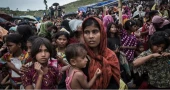
Arakan Army
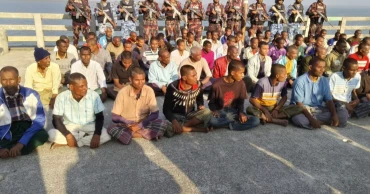
BGB brings back 73 fishermen held by Arakan Army
Members of Border Guard Bangladesh (BGB) has brought back 73 Bangladeshi fishermen who were detained by the Arakan Army at different times while fishing in the Naf River and the Bay of Bengal in Teknaf upazila of Cox’s Bazar district.
The fishermen were returned through the Jaliapara transit ghat in Teknaf around 4:30pm on Monday following a series of negotiations with the Arakan Army, said Colonel Mohiuddin Ahmed, commander of BGB’s Ramu Sector.
The Arakan Army formally handed over the fishermen to the BGB at zero line of the Naf River.
After completing necessary procedures, they were brought back to Bangladesh and handed over to their families through local administration, he said.
Efforts are going on to secure the release of other detained fishermen, he added.
At least 200 fishermen had reportedly been detained by the Arakan Army at different times from the Naf River and the Bay of Bengal areas.
7 months ago
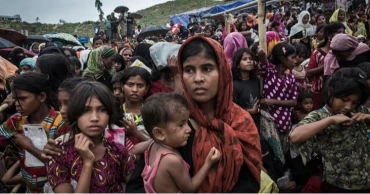
ICC should probe Arakan Army’s war crimes against Rohingya: Fortify Rights
Fortify Rights on Wednesday said the International Criminal Court (ICC) should investigate war crimes, including abductions, torture, killings and beheadings of Rohingya civilians committed by the Arakan Army (AA), a powerful ethnic resistance force fighting the Myanmar military junta in Rakhine State, Myanmar.
A new investigation by Fortify Rights documents how the AA, which currently controls much of Rakhine State, has committed serious violations of the laws of war in ad-hoc detention centres and villages under its control.
“The Arakan Army is responsible for widespread abductions, brutal torture and the murder of Rohingya, some of whom were found beheaded, in blatant violation of the laws of war,” said Ejaz Min Khant, Human Rights Specialist at Fortify Rights.
It said, “The International Criminal Court has jurisdiction and should investigate and prosecute perpetrators of serious crimes in Rakhine State, including from the Arakan Army.”
Funding cuts heighten monsoon risks for Rohingyas in Bangladesh: UNHCR
From April to July 2025, Fortify Rights interviewed 39 Rohingya individuals—including eight women—who survived and witnessed AA abuses in 2024 and 2025.
Fortify Rights also viewed and analysed photographic and video evidence of AA crimes.
“The Arakan Army must end its campaign of torture and killings of Rohingya in detention facilities and villages,” said Ejaz Min Khant, adding, “If the Arakan Army wants to be seen as a legitimate revolutionary armed force, it must respect international law, protect civilians, and be held accountable for the atrocities it has committed.”
1 year ago
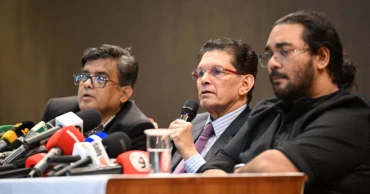
World is watching, contacts with Arakan Army depend on their actions: Govt
The government on Wednesday said Bangladesh is coordinating with the relevant actors to prevent another wave of refugees into the country.
In particular, the government has signaled the Arakan Army (AA) that they must ensure that there is no further violence, discrimination and displacement of Rohingyas inside Rakhine, according to the Chief Adviser's press wing.
They (AA) have the responsibility to observe international law including international humanitarian law, said the interim government.
"And the world is watching. Bangladesh's continued contacts with them will depend on their action in this area, as well as on Rohingya representation," said the press wing sharing a set of questions and answers.
1. What is the current status of Bangladesh’s involvement in humanitarian assistance in Rakhine state?
Ans: The question of humanitarian support to the Rakhine state arose when Bangladesh authorities learned about the acute humanitarian crisis it was facing. UNDP predicted impending famine like conditions. Bangladesh was concerned that this situation would drive more people from Rakhine into Bangladesh.
Already, Bangladesh is shouldering the burden of sheltering over 1.2 million forcibly displaced Rohingyas from Myanmar and cannot simply afford another wave of refugees. It’s already a big burden on Bangladesh.
Given the deteriorating humanitarian conditions in Rakhine state, the UN and Bangladesh began consideration of the provision of humanitarian support. Since all other aid delivery avenues are unviable due to conflict, Bangladesh turned out to be the only feasible option. It was thought that the UN would organize distribution of aid through its channels within Rakhine and Bangladesh would provide logistical support to transfer aid across Bangladesh-Myanmar border.
Additionally, Bangladesh considered that aid to Rakhine would help stabilize the state and pave the way for creating enabling conditions for the return of the Rohingyas to Myanmar.
There has been no agreement on the provision of aid to Rakhine yet as it would require consent of all relevant parties and satisfaction of a number of prerequisites for aid provision which are common in other cases of humanitarian support around the world. These include, among others, unimpeded access of aid providers and recipients, non-discrimination in the provision of aid, non-weaponization of assistance and suspension of armed activities.
2. What is the status of discussions with the Arakan Army? How is Bangladesh balancing between the Arakan Army and the Myanmar ruling junta?
Ans: Bangladesh government realized the need for keeping contact with the Arakan Army when they took control over the Myanmar side of our border. It is Bangladesh's duty to protect its border and keep it peaceful. For this reason, Bangladesh decided to make informal contacts with the Arakan Army.
Bangladesh government has continued to engage them in the context of consideration of provision of humanitarian support, repatriation of the Rohingyas and the inclusion of the Rohingyas at all levels of the emerging governance and security structure in Rakhine.
Bangladesh's contact with the Arakan Army is due to practical necessity. At the same time, Bangladesh is maintaining contacts with the Myanmar government. It is necessary to keep in touch with all relevant actors with a view to sustainably resolving the Rohingya issue.
No talks on ‘corridor’: Dr Khalilur Rahman
3. Bangladeshi officials have recently said that certain conditions will need to be met for Bangladesh’s agreement to the UN's proposal for humanitarian assistance. What are those conditions and has there been any progress in such discussions?
Ans: To begin with, all the relevant parties need to agree on the provision of aid. Moreover, the Arakan Army needs to ensure that access of aid providers and recipients is not impeded, aid is not weaponized and there are no armed activities. Also, the Arakan Army needs to sincerely demonstrate its commitment to an inclusive society in Rakhine by including Rohingyas at all levels of Rakhine’s governance and security structure. Otherwise, it will appear to the world as a picture of ethnic cleansing, which we will not accept. We are awaiting Arakan Army's response.
4. What are the security risks in the provision of humanitarian aid?
Ans: Giving aid in a conflict situation poses safety and security risks to the aid providers and recipients. Prevalence of landmines and IEDs is another threat to safety and security. These issues need to be addressed ahead of the provision of aid.
Balat Brothers, Ashta Feed sign animal protein export deal
5. What would the position of regional countries regarding the UN humanitarian assistance to Rakhine?
Ans: Saving lives from an impending humanitarian disaster is a collective responsibility of the global community. All of parties need to join efforts to tackle this problem. Stability in Rakhine is Bangladesh's priority. Hardly any progress can be made towards repatriation without achieving it.
6. We are already seeing more Rohingya coming into Bangladesh. If this continues, how does Bangladesh plan on addressing another influx?
Ans: Bangladesh doesn’t want another influx of refugees. It simply can’t afford this. There has been sizeable influx of Rohingyas from Rakhine during intensified conflict between the Arakan Army and Myanmar forces from 2023 until autumn of 2024. Rohingyas have continued to enter Bangladesh thereafter, albeit in smaller number.
1 year ago
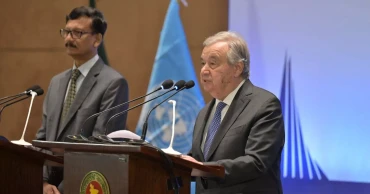
Necessary dialogue must take place with Arakan Army: Guterres
UN Secretary-General Antonio Guterres on Saturday said the Arakan Army is an entity with which he believes a “necessary dialogue must take place” but stressed that it would be “extremely difficult” to have an immediate “dignified return” of the Rohingya refugees amid heavy fighting between the Myanmar Army and Arakan Army.
“I think it is important to engage with the Arakan Army in order for full respect of the rights of the Rohingya population in Rakhine,” he said while responding to a question at a joint media briefing with Foreign Affairs Adviser Md Touhid Hossain.
UN chief acknowledges people’s hopes for democracy, justice, prosperity
Guterres said it is essential to increase the pressure of the international community and all the neighbours of Myanmar in order to guarantee that fighting ends and democracy is finally reestablished there.
The UN chief said it is absolutely essential to mobilise the whole of the international community, all the neighbours of Myanmar, not just Bangladesh, to make things move to find a solution, starting by seizing the violence and at the same time creating the mechanisms leading to a true democratic solution in Myanmar that would naturally facilitate the return of the Rohingya refugees.
“At the same time, we need to intensify the humanitarian aid inside Myanmar to create a condition for that return to be successful,” Guterres said.
He also referred to the possibility of having a humanitarian aid channel from Bangladesh, if circumstances allow. “But that is obviously a matter that would require authorization and cooperation…..”
The government of Bangladesh and the Arakan Army (AA) should immediately facilitate humanitarian aid and cross-border trade to reach war-affected civilians in Myanmar’s Rakhine State, Fortify Rights said on March 12.
“Rights-respecting countries should explore all possibilities to facilitate the delivery of life-saving aid to communities in need in Myanmar,” said Ejaz Min Khant, Human Rights Associate at Fortify Rights. “A humanitarian corridor between Bangladesh and Myanmar would enable vital aid and trade for all communities. Failure to act will cost lives.”
Asked whether the issue of establishing a humanitarian corridor was discussed during the UN chief's visit, Foreign Adviser Hossain said these are the things that actually have been going on in their interactions with the international community and particularly in the UN.
UN chief voices “concern” over disinformation targeted against Bangladesh: Foreign Adviser
In particular, he said, this issue was not discussed with the UN Secretary General. “This is much more of an operational matter which we will of course deal with the local offices of the UN.”
The Adviser said the government of Bangladesh wants to see the Rohingyas return to their homeland with dignity and safety and the solution lies with Myanmar.
“It is time that we unify our efforts to put pressure on Myanmar authorities – I am not saying only authority because of the new realities on the border – we have to convince all of them – put appropriate pressure – so that they (Rohingyas) can go back to their rightful place,” Hossain said.
Responding to a question on sanctions, Guterres said he believes that sanctions are one possible instrument and it is difficult to obtain UN Security Council’s approval for imposing sanctions and those sanctions not being possible.
The UN Secretary-General, during his visit to the Rohingya refugee camps on Friday, vowed to do everything in his power to prevent further hardship as drastic aid cuts threaten food supplies and other critical relief efforts.
UN aid efforts are in jeopardy following funding reductions announced by major donors, including the United States and several European nations.
Guterres described Cox’s Bazar as “ground zero” for the impact of these cuts, warning of a looming humanitarian disaster if immediate action is not taken. “We are at risk of cutting the food rations in this camp,” he said.
“That would be an unmitigated disaster that we cannot accept because people will suffer and even people will die.”
Guterres emphasised that his visit, which took place during the holy month of Ramadan, was a mission of solidarity with the Rohingya refugees and the Bangladeshi people who generously host them.
“I am here to shine a global spotlight on the plight – but also the potential – of Rohingya refugees,” he said.
“The more than one million Rohingya refugees here are proud. They are resilient. And they need the world’s support.”
He praised the support offered by Bangladesh and local communities who have shared their land, forests, water and resources with the refugees, calling it nothing short of “enormous.”
Reforms: Guterres holds talks with political leaders, Consensus Building Commission
Bangladesh is hosting over one million Rohingya refugees who fled violence in neighbouring Myanmar. The largest exodus followed brutal attacks by Myanmar security forces in 2017, a series of events that the then UN High Commissioner for Human Rights, Zeid Ra’ad al-Hussein described as “textbook example of ethnic cleansing.”
The Secretary-General emphasised that the international community cannot turn its back on the Rohingya crisis.
“We cannot accept that the international community forgets about the Rohingyas,” he said, adding that he will “speak loudly” to world leaders that more support is urgently needed.
1 year ago
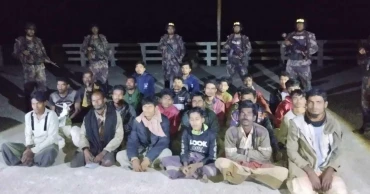
Arakan Army returns 29 Bangladeshi fishermen taken from Naf River
Twenty-nine Bangladeshi fishermen who were taken by Myanmar’s Arakan Army, were returned by the group after a week.
The fishermen were brought back to Bangladesh on Thursday through the jetty at Shah Porir Dwip in Teknaf.
Experts suggest strategic engagement with Arakan Army to safeguard Bangladesh's interests
“The 29 fishermen, who were taken by the Arakan Army while fishing in the Naf River, have been brought back. Their health is being checked, and after the necessary procedures, they will be handed over to their families,” said Teknaf Upazila Nirbahi Officer Sheikh Ehsan Uddin.
The return was facilitated by the Border Guard Bangladesh (BGB), who assisted in ensuring their safe passage back to the country.
Ten of the returning fishermen were identified as Md. Kala Mia (37), Md. Nurul Alam (39), Abdul Rahman (19), Md. Abul Kalam Ahmed (29), Md. Lalu (11), Md. Kabir Ahmed (43), Mohammad Yunus (23), Nurul Islam (34), Md. Lutfor Rahman (23), and Rahim Ullah (21). All are residents of Shah Porir Dwip, Majherpara. The names of the remaining fishermen were yet to be known.
Bangladesh in touch with both Myanmar govt and Arakan Army: Home Adviser
According to local authorities, the group of 29 fishermen, who had accidentally crossed the border while fishing on February 11 and 20, were held by the Arakan Army. The fishermen had been aboard six motorised boats when they were captured by the group.
1 year ago
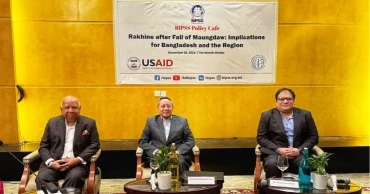
Experts suggest strategic engagement with Arakan Army to safeguard Bangladesh's interests
Noting the increasing control of the Arakan Army (AA) over Rakhine State in Myanmar, experts at a dialogue have stressed the importance of formulating a clear national strategy to address this multifaceted challenge, taking implications for Bangladesh and the region into consideration.
They cautioned that delays in establishing contact with the Arakan Army could lead to “missed opportunities” as external actors increasingly engage with Rakhine through maritime routes.
Bangladesh Institute of Peace and Security Studies (BIPSS) hosted the policy cafe on “Rakhine after the Fall of Maungdaw: Implications for Bangladesh and the Region” which brought together security experts, former diplomats, and academics to discuss the evolving dynamics in Rakhine State and their implications for Bangladesh and its neighboring regions.
Dhaka discusses with UN modalities for int'l conference on Rohingya crisis
The discussion was moderated by President of BIPSS Major General (Retd) ANM Muniruzzaman while the panelists included Major General (Retd) Md Shahidul Haque, former Defense Attaché to Myanmar and former Ambassador to Libya; and Parvez Karim Abbasi, Assistant Professor at East-West University.
The dialogue focused on the increasing control of the Arakan Army (AA) over Rakhine State, which now dominates more than 80 percent of the region, including its 271-km border with Bangladesh.
While delivering his opening remarks, Shafqat Munir, Senior Research Fellow, BIPSS, elevated the discourse by sharing his valuable insights on the topic under discussion, and emphasized the importance of navigating through the leverage to acquire from the situation.
The panelists emphasised the strategic necessity, as well, for Bangladesh to engage with the Arakan Army while maintaining a balanced approach that includes both diplomatic and military options.
Muniruzzaman, drawing parallels with India's recalibration of its Myanmar strategy, noted that Bangladesh must act decisively to safeguard its interests.
He emphasised Rakhine's strategic importance, highlighting its maritime access to the Bay of Bengal and its resource-rich, multi-ethnic composition.
Bangladesh in touch with both Myanmar govt and Arakan Army: Home Adviser
The expert noted the region’s significance in the context of US-China strategic competition, particularly referencing China’s Belt and Road Initiative (BRI) and the BCIM Economic Corridor.
Besides, he pointed out that projects like the Sino-Myanmar Oil and Gas Pipeline underscore Rakhine’s role as a critical connectivity hub.
Muniruzzaman also drew attention to India’s favorable ties with Myanmar’s military (Tatmadaw), urging Bangladesh to act decisively to protect its interests amidst increasing external engagement in Rakhine.
Assistant Professor Abbasi said that engaging with the Arakan Army (AA) is a pragmatic approach often employed in complex geopolitical scenarios, suggesting the use of informal communication channels if direct contact proves unfeasible.
He warned that the AA’s growing dominance could escalate insurgency risks in India’s northeastern states, highlighting broader regional implications.
Abbasi began his remarks by noting the absence of Indian and Pakistani representation in discussions on Rakhine’s future, describing Myanmar as a “proxy-war haven” and cautioning about potential armed assaults in Sittwe.
He highlighted shifts in diplomatic rhetoric toward the AA as a reflection of changing geopolitical alignments and used terms like “Balkanization of Myanmar” and “Stockholm Syndrome” to frame his analysis.
On the Rohingya issue, he warned that the AA’s vision for an “Arakan Dream,” rooted in Burmese nationalist discourse as a Bengali-free Arakan, excludes any place for Rohingyas.
Abbasi also expressed concerns about uncertainties stemming from rising global tensions, including the possible return of hawkish US leadership under Donald Trump.
He noted that while the AA appears open to confederation rather than full independence, its growing influence poses significant risks to regional stability.
CSCSS Int’l Conference: Impacts of Rohingya crisis, security challenges discussed
Major General (retd) Shahidul Haque described potential engagement with the Arakan Army (AA) as a “win-win situation” for Bangladesh, stressing that such an approach could simultaneously advance the country’s security and economic interests.
He noted that the evolving political landscape in Rakhine presents Bangladesh with a rare strategic advantage to negotiate its regional interests, particularly with India.
Offering a nuanced analysis, Haque identified the AA as the first non-state actor with which Bangladesh shares a border, highlighting its lack of accountability for human rights and international recognition while cautioning about potential cross-border movements of insurgent groups.
He revealed that some Bangladeshi tribal groups are actively fighting alongside the AA against Myanmar, warning that fostering ties with the AA could risk long-term trade relations with Myanmar.
However, he suggested that economic engagement, such as supplying agricultural surplus to Arakan, could create mutually beneficial outcomes.
Haque also pointed out tensions between the AA and Chin groups, which pose challenges for India but could provide strategic negotiation opportunities for Bangladesh.
The policy café concluded with an interactive session where participants delved into various dimensions of the issue, including security risks, economic opportunities, and regional geopolitics, offering valuable insights into how Bangladesh can navigate this complex situation while safeguarding its national interests.
Bangladesh reaffirms to stop further infiltration as conflicts in Myanmar escalate
The discussion sparked robust debate on regional geopolitics, with some participants criticizing an overemphasis on India’s “Chicken’s Neck” corridor and others examining China’s two-ocean strategy, which could involve deploying forces under security pretexts despite Myanmar’s opposition to foreign troops.
Participants also explored how Bangladesh could leverage its strategic position between China and India, both of which engage indirectly with Myanmar despite lacking shared borders.
There was also advocacy for empowering Rohingya refugees in Bangladesh to develop leadership skills, assert their rights, and facilitate repatriation efforts.
They underscored the need for a balanced approach to regional dynamics and the importance of fostering sustainable solutions to complex geopolitical challenges.
1 year ago
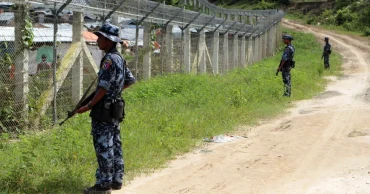
Myanmar's Arakan Army claims control of border with Bangladesh
One of the most powerful ethnic minority armed groups battling Myanmar’s army has claimed the capture of the last army outpost in the strategic western town of Maungdaw, gaining full control of the 271-kilometer (168-mile) -long border with Bangladesh.
The capture by the Arakan Army makes the group’s control of the northern part of Rakhine state complete, and marks another advance in its bid for self-rule there.
ICC prosecutor requests arrest warrant for the head of Myanmar's military regime
Rakhine has become a focal point for Myanmar’s nationwide civil war, in which pro-democracy guerrillas and ethnic minority armed forces seeking autonomy battle the country’s military rulers, who took power in 2021 after the army ousted the elected government of Aung San Suu Kyi.
Khaing Thukha, a spokesperson for the Arakan Army, told The Associated Press by text message from an undisclosed location late Monday that his group had seized the last remaining military outpost in Maungdaw on Sunday.
Outpost commander Brig. Gen. Thurein Tun, was captured while attempting to flee the battle, Khaing Thukha said.
Myanmar's conflict-torn Rakhine state could face an imminent acute famine, UN report warns
The situation in Maungdaw could not be independently confirmed, with access to the internet and mobile phone services in the area mostly cut off.
Myanmar’s military government did not immediately comment.
Maungdaw, about 400 kilometers (250 miles) southwest of Mandalay, Myanmar’s second-largest city, has been the target of an Arakan Army offensive since June. The group captured Paletwa and Buthidaung, two other towns on the border with Bangladesh, earlier this year.
Since November 2023, the Arakan Army has gained control of 11 of Rakhine’s 17 townships, along with one in neighboring Chin state.
Ann, a town in Rakhine that hosts the strategically important military headquarters overseeing the western part of the country, appears to be on the verge of falling entirely to the Arakan Army.
The group posted on the Telegram messaging app late Friday that it had taken more than 30 military outposts, except the army’s western command, which controls Rakhine and the southern part of neighboring Chin state, as well as the country’s territorial waters in the Bay of Bengal.
Recent fighting in Rakhine has raised fears of a revival of organized violence against members of the Muslim Rohingya minority, similar to that which drove at least 740,000 members of their community in 2017 to flee to neighboring Bangladesh for safety.
The Arakan Army, which is the military wing of the Buddhist Rakhine ethnic group in Rakhine state, where they are the majority and seek autonomy from Myanmar’s central government, denies the allegations, though witnesses have described the group’s actions to the AP and other media.
Rohingya have lived in Myanmar for generations, but they are widely regarded by many in the country’s Buddhist majority, including members of the Rakhine minority, as having illegally migrated from Bangladesh. The Rohingya face a great amount of prejudice and are generally denied citizenship and other basic rights.
The border between Myanmar and Bangladesh extends from land to the Naf River and offshore in the Bay of Bengal.
The Arakan Army said Sunday it had ordered the suspension of transport across the Naf River because police and local Muslims affiliated with the army were attempting to escape by boat to Bangladesh.
The rebel group has been accused of major human rights violations, particularly involving its capture of the town of Buthidaung in mid-May, when it was accused of forcing an estimated 200,000 residents, largely Rohingyas, to leave, and then setting fire to most of the buildings. It was accused of attacking Rohingya civilians fleeing fighting in Maungdaw in August.
New sanctions target Myanmar's military suppliers
The Arakan Army is also part of an armed ethnic alliance that launched an offensive in northeastern Myanmar last year and gained strategic territory along the border with China.
1 year ago
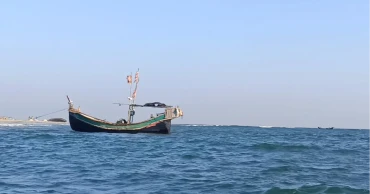
Arakan Army capture 20 Bangladeshi fishermen from Naf River
Myanmar’s insurgent Arakan Army allegedly took 20 Bangladeshi fishermen hostage from the Naf River while they were fishing on Tuesday evening, said authorities.
Moreover, 15 small wooden boats from the estuary of the river near Naikhongdia of Teknaf upazila were captured.
Local Union Parishad (UP) member Abdus Salam confirmed the matter saying that the fishermen from Shahparir Island, who were fishing near Naikhongdia with about 15 boats, were taken hostage at gunpoint by the Arakan Army.
All the fishermen are residents of Teknaf, he said, adding that they have already informed the Border Guard Bangladesh (BGB) about the matter.
Lt. Col Mohiuddin Ahmed, commander of Teknaf-2 BGB, said they are in contact with Myanmar authorities to negotiate their release and are making efforts to bring them back.
Earlier on October 9, Myanmar's Navy took away 58 fishermen from the Bangladesh side of the Bay of Bengal, near Saint Martin's Island.
One fisherman was killed and two others were injured when Myanmar Navy opened fire on them.
On the next day, Myanmar authorities returned the fishermen in two separate groups, along with the body of one of the deceased.
1 year ago

ISPR release addresses situation around St Martin's, seeks to reassure citizens
An ISPR release has sought to quell speculation and calm nerves around the situation prevailing at the Bangladesh-Myanmar maritime boundary adjacent to St Martin's island.
The ISPR, or Inter Services Public Relations, is the public communications wing of the Bangladesh Armed Forces.
It said in the context of ongoing internal conflicts in Myanmar, the Myanmar military is conducting joint operations against the Arakan Army in Rakhine State. Due to this conflict between the Myanmar military and the Arakan Army, there have been incidents of unwanted firing on Bangladeshi boats in the Naf River and the adjacent estuary area.
BGB Chief orders heightened vigilance along Bangladesh-Myanmar border
The Ministry of Foreign Affairs of Bangladesh expressed deep concern and protested the danger posed to Bangladeshi subjects on June 12, 2024. The ISPR release sent today said the Myanmar Navy is positioning near the maritime boundary of Myanmar and the Naf River, near St. Martin's Island, and firing artillery towards the positions of the Arakan Army. At the same time, the Arakan Army is also firing back at the Myanmar Navy.
Currently, multiple warships of the Myanmar Navy are conducting these operations on the Myanmar border. The Myanmar Navy is also keeping the Bangladesh Navy informed about its presence in Myanmar’s maritime boundary near St. Martin’s Island. It is noteworthy that the internal conflict in Myanmar continues on the mainland and the adjacent coastal areas.
Furthermore, near St. Martin's Island, multiple ships of the Bangladesh Navy and Coast Guard are regularly patrolling from within Bangladesh’s maritime boundary, monitoring the movements of Myanmar’s ships.
"As the ongoing internal conflict in Myanmar approaches near St. Martin's, there have been various rumors spread by interested parties on social media regarding the security of St. Martin's. Everyone is requested not to be misled by such rumors," the ISPR said.
Read more: Need to find new partners to raise more int’l fund for Rohingyas: PM Hasina to IOM
2 years ago

No more Rohingyas to be allowed in: New BGB Chief
So far, 264 Myanmar forces, including BGP and army personnel, have fled and taken shelter in Bangladesh amid clashes between the Myanmar military and the armed rebel group, Arakan Army, said Major General Mohammad Ashrafuzzaman Siddiqui, director general of Border Guard Bangladesh (BGB).
“The border situation is now under control and we are trying to deal with the situation as humanely as possible while maintaining international relations,” the newly appointed BGB chief said while talking to reporters after paying tribute at the mausoleum of Father of the Nation Bangabandhu Sheikh Mujibur Rahman on Tuesday.
Police working with BGB to ensure security at Bangladesh-Myanmar border: IGP
Until Monday night, 115 Myanmar forces had taken shelter in Bangladesh and 114 security personnel arrived till Tuesday morning while 35 more entered in the afternoon, he said.
So far, a total of 264 Myanmar security personnel have surrendered, he added.
“We have given shelter and food to them. Among them 15 were injured. Eight of them were undergoing treatment at Cox’s Bazar Sadar Hospital and Chattogram Medical College and Hospital,” said the BGB DG.
Tension at the border: What Dhaka told the Myanmar Ambassador
Two people including a Bangladeshi woman were killed following an explosion of a mortar shell on Monday, he said, adding, “Such deaths can’t be acceptable.”
Besides, 65 Rohingyas, who tried to enter the country by boats, were sent back, he said.
“No more Rohingya will be allowed,” said the BGB chief.
2 years ago