loan scams
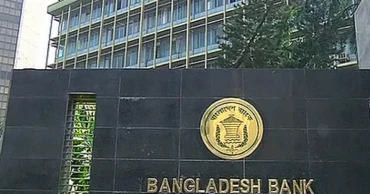
Banks' CSR spending declines by 33 %, blame goes to loan scams
Banks’ spending on corporate social responsibility (CSR) initiatives dropped by 33 percent in 2024 compared to the previous year, following a loan disbursement scam that shook the sector.
According to Bangladesh Bank's latest data, banks spent Tk 615.96 crore on CSR in 2024, which is 33 percent or Tk 308 crore less than the previous year.
In 2023, they spent Tk 924.32 crore in this sector. Prior to that, in 2022, the expenditure was Tk 1,129 crore. Compared to 2022, expenditure in 2024 decreased by Tk 513 crore or more than 45 percent.
According to regulations, the country's banks spend a portion of their profits on CSR activities. There is also a policy in place to ensure that CSR funds are used in the country's sustainable sectors.
But, the banks are not following the central bank's directives in this regard. Priority sectors like education and health are being neglected in the allocation of funds.
Simultaneously, expenditure in these sectors has been consistently decreasing, falling by half, as revealed in the central bank report.
These findings emerged from an analysis of the Bangladesh Bank's published report on CSR on Tuesday (April 15).
As per the existing rules, only banks that generate a net profit can undertake CSR expenditure. The percentage of profit to be spent or whether to spend at all is the bank's own decision. If they do spend, they are required to do so by the policy.
Bangladesh Bank's guidelines state that 30 percent of the total CSR expenditure of banks and financial institutions should be spent on the education sector, 30 percent on the health sector, and 20 percent on mitigation and adaptation to environmental and climate change.
The remaining 20 percent can be spent on income-generating initiatives, disaster management, infrastructure development, sports, entertainment and other sectors.
According to the report's data, the 61 scheduled banks, during the discussed period (2024), disregarded the directives and spent the highest amount, 54 percent or Tk 330.52 crore, in the 'other' sector.
Only 17.5 percent or Tk 108 crore was spent on education, 25.16 percent or Tk 155 crore on health and a mere 3.62 percent or Tk 22.36 crore on environmental and climate change mitigation.
In 2024, six banks did not spend any money on CSR. These banks are BASIC Bank, Bangladesh Krishi Bank, Rajshahi Krishi Unnayan Bank, Bangladesh Commerce Bank, National Bank and Padma Bank.
According to the rules, 14 banks ensured 30 percent expenditure in the education sector, 21 banks in the health sector, and 9 banks in the environmental and climate change mitigation-adaptation sector. Besides, 44 banks violated the policy by spending more than 20 percent in other sectors.
The report's data indicates that 8 banks did not achieve a net profit in 2023. These banks are BASIC Bank, Bangladesh Krishi Bank, Rajshahi Krishi Unnayan Bank, Bangladesh Commerce Bank, ICB Islamic Bank, Citizens Bank, National Bank, and Padma Bank. Despite not achieving a net profit, Citizens Bank and ICB Islamic Bank undertook CSR expenditure.
Thirteen banks licensed after 2013 have a condition to spend at least 10 percent of the previous year's net profit on CSR in the following year. If a bank does not have a net profit, it does not have to spend on CSR.
Bad loans must be cut to ensure good governance in banks: Speakers
Among these banks, NRB and Community Bank spent more than 10 percent last year. Padma and the new Citizen Bank, which were weakened due to various irregularities, did not do CSR in 2023 because they did not earn a net profit.
Besides, nine banks made a net profit but did not comply with the central bank's conditions. SBAC, Midland, Modhumoti, Simanto, NRB Commercial, Union, Meghna, Bengal Commercial Bank and Global Islami Bank are the banks.
1 year ago
IMF advises Bangladesh Bank to disclose full report on banks’ financial health
The visiting International Monetary Fund (IMF) delegation has advised Bangladesh Bank to disclose detailed and complete information regarding bad and risky loans fin the public interest.
Meeting sources said that the visiting IMF delegation gave this suggestion in the meeting held with the BB officials on Sunday (April 28).
In the meeting, the IMF asked to make the financial health of the banks and the inspection report open to the customers. At the same time, it urged to increase the number of inspections to prevent irregularities-corruption and loan scams.
Officials concerned in the meeting said that bad loans or risky assets are increasing in banks due to various irregularities including big loan scams. Several banks have weakened which also acknowledged by the BB Governor.
Therefore, the IMF believes that the deposits of those banks which are in trouble are also at risk. In such a situation, the global lender suggested that the banks should disclose the full report of risky assets to the customers.
Read more: DUJ, DRU, TIB condemn ban on journalists entering Bangladesh Bank
According to the IMF Officials, “If these reports are published, the customers will be able to make informed decisions about keeping their deposits.”
In the meeting, the IMF sought to know whether the central bank's inspection of banks' financial health is continuing or not. Clarification has also been sought as to whether inspection reports are disclosed to customers or not.
In addition, the IMF delegation suggested increasing the quality and number of inspections to prevent irregularities, corruption and loan scams, sources said.
When asked about the meeting with the BB, the executive director and spokesperson of the BB Mesbaul Haque said that the meetings with the IMF are ongoing. This meeting will be held step by step till May 8. He did not agree to make any comment other than that and said the details will be given in future.
Read more: Islamic Banking in Bangladesh: Commendable contribution to the country’s economic growth
2 years ago