microplastics
BSTI says will verify toothpaste microplastics findings before taking action
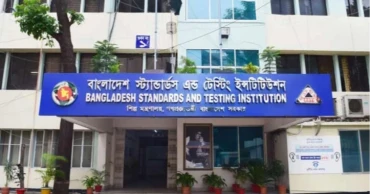
The Bangladesh Standards and Testing Institution (BSTI) has said it will take action only after scientifically verifying the findings of a recent study that detected microplastics in most types of toothpaste available in the market.
In a statement on Tuesday, it said a study by the Environment and Social Development Organization (ESDO), a private research organisation, found microplastics in 26 out of 34 toothpaste types it tested, raising public concern.
As the issue involves public health and the environment, BSTI said it is treating the matter with the utmost importance.
Microplastics are plastic particles measuring 5 millimetres or less and are usually invisible to the naked eye. According to the World Health Organization (WHO), they are an emerging environmental and public health concern. However, research into their health effects is still ongoing, and the WHO has said more studies are needed to better understand the risks.
BSTI said the United States was the first country to ban the intentional use of plastic microbeads in toothpaste and rinse-off cosmetic products under the Microbead-Free Waters Act of 2015. Under European Union Regulation (EU) 2023/2055, manufacturers have until 17 October 2027 to stop using intentionally added microplastics in toothpaste and rinse-off cosmetics.
Many countries have already banned the intentional use of plastic microbeads in toothpaste. However, BSTI noted that the standards of countries such as India, Pakistan and Sri Lanka, as well as those of international organisations, including ISO and ASTM, do not specify limits or bans on unintentional microplastics in toothpaste.
There is also no internationally accepted limit or standard testing method for such contamination.
Bangladesh has its own toothpaste standard, BDS 1216:2012 Specification for Toothpaste. Under SRO Nos. 50 and 51 of 2019, toothpaste manufacturers must obtain a BSTI licence after their products are tested for chemical, microbiological and safety requirements under the standard before they can be sold.
Although the Bangladesh standard does not specifically ban microplastics, it includes a list of 81 approved ingredients for toothpaste, and microplastics are not among them.
BSTI said manufacturers' quality control systems are also checked before licences are issued, leaving no scope for the intentional use of microplastics in toothpaste production.
The national standards body said it will not be scientifically correct to conclude that a manufacturer deliberately used microplastics simply because plastic particles were found in a test, or to assume the product poses a health risk without further evidence.
It said detailed testing is needed to identify the type, source and quantity of the particles and to assess any possible health risks.
To verify the findings, BSTI has requested the full research report, testing methods, raw data and other relevant information from the research organisation. It is also collecting information on raw materials, product ingredients and synthetic polymers from manufacturers and importers.
The agency has also begun collecting toothpaste samples from the market and factories for independent confirmatory testing at accredited laboratories in Bangladesh or abroad.
If the tests confirm that any product fails to meet Bangladesh standards or contains unapproved ingredients, BSTI said it will take legal action against those responsible under existing laws.
At the same time, the agency said it will not be appropriate to declare any toothpaste brand unsafe or of poor quality before completing proper scientific and legal verification.
BSTI also said it has started reviewing the national toothpaste standard in consultation with experts, research institutions, the Department of Environment, the Directorate General of Drug Administration, dentists, manufacturers and consumer representatives.
Once sufficient scientific evidence is available, the standard will be updated to include restrictions on the intentional use of plastic microbeads in toothpaste, mandatory disclosure of ingredients and appropriate testing methods.
BSTI urged the public not to be influenced by rumours or panic. It advised people to maintain good oral hygiene, avoid swallowing toothpaste and rely on verified information.
The agency reaffirmed its commitment to protecting public health, maintaining scientific integrity and safeguarding consumer interests.
1 month ago

Kitchen sponges release microplastics, but water use has bigger impact: study
A new study has found that commonly used kitchen sponges release tiny plastic particles every time they are used for washing dishes, adding to growing concerns about microplastic pollution.
Researchers from the University of Bonn examined how much plastic is shed from sponges during normal household use and assessed their overall environmental impact.
The study shows that kitchen sponges do release measurable amounts of microplastics as they wear down over time. However, scientists found that the biggest environmental burden from handwashing dishes is not plastic pollution, but water consumption.
Microplastics released during everyday use
The research team studied how much material is lost from sponges during regular dishwashing. They combined laboratory experiments with real-life testing involving households in Germany and North America, where volunteers used different types of sponges in their daily routines.
Each sponge was weighed before and after use to measure material loss. Researchers also used a laboratory device called “SpongeBot” to simulate the pressure and friction sponges face during washing.
The study found that all tested sponges released microplastics, with annual emissions estimated between 0.68 grams and 4.21 grams per person, depending on the type of sponge used. Sponges with higher plastic content released more particles, while those with lower plastic content shed less.
Real-life usage improves accuracy
The inclusion of household participants helped researchers better understand real washing habits, making the results more reliable than lab tests alone.
Water use is the bigger environmental concern
Although the amount of plastic released by a single sponge is small, the study warns that the impact grows when scaled up. In Germany alone, widespread use of certain sponge types could lead to up to 355 tonnes of microplastics released annually.
Wastewater treatment plants can capture much of this waste, but some particles may still reach rivers, lakes, oceans and soil.
However, the study found that microplastics are not the main environmental concern. Around 85 to 97 percent of the environmental impact from manual dishwashing comes from water use, making it the dominant factor in overall damage.
How to reduce environmental impact
Researchers suggested a few simple steps to reduce the footprint of dishwashing:
Use less water while washing dishes
Choose sponges with lower plastic content
Use sponges for longer periods before replacing them
The research was conducted by scientists from the Fraunhofer Institute for Environmental, Safety and Energy Technology UMSICHT and Leiden University, along with the University of Bonn team.
Source: Science Daily
3 months ago

Microplastics, cadmium found in Hilsa; Adviser flags health risks
Hilsa, Bangladesh’s national fish, has been found contaminated with microplastics and cadmium, raising serious concerns for human health, Fisheries and Livestock Adviser Farida Akhter said on Saturday.
"Industrial effluents from Narayanganj and other districts are flowing into the Shitalakshya and eventually the Meghna River, posing a severe threat to hilsa and other aquatic life," Farida Akhter said at the third convocation of ASA University Bangladesh (ASAUB) held at the Bangladesh-China Friendship Conference Centre in Agargaon.
The adviser warned that hilsa contains harmful substances such as microplastics, lead, and cadmium, which is extremely alarming.
"Industrial waste threatens the very existence of hilsa and other aquatic creatures. Keeping our rivers pollution-free is a vital national duty—not just the government’s responsibility, but one that requires active public participation and awareness," she said.
Farida added that the Ministry of Fisheries and Livestock is responsible not only for cattle, goats and poultry but also for the protection of all animals, including dogs and cats. Without proper vaccination, dogs are at higher risk of rabies and other diseases, the adviser urged people to fulfill their responsibilities towards animals.
Addressing students, she encouraged youth to take an active stance against corruption, environmental pollution, and unhealthy practices, emphasizing that protecting the nation for future generations is everyone’s duty.
Highlighting the importance of natural resources, the adviser said, "Bangladesh is not a poor country. Our people’s skills, natural resources, potable water, crop seeds, and genetic resources are our greatest strength. Future global conflicts may revolve around water, seeds, or natural resources. Protecting these resources and ensuring the nation’s security is a critical responsibility for the younger generation."
She also urged students to remain health-conscious, warning that smoking and tobacco use cause severe health problems. "Boys and girls often believe smoking or using drugs makes them ‘smart’ or fashionable, but in reality, it leads to heart disease, cancer, and other illnesses. A new law to control tobacco use has recently been enacted and is mandatory for everyone."
Farida advised students to maintain the dignity of their degrees through good conduct, professionalism and character.
Hilsa prices soar further putting this beloved fish beyond reach
Around 4,000 students received degrees at the convocation, including 2,096 undergraduates and 1,900 postgraduates.
The adviser also presented six students with the Chancellor’s Award and nine students with the Vice-Chancellor’s Award for outstanding performance.
7 months ago
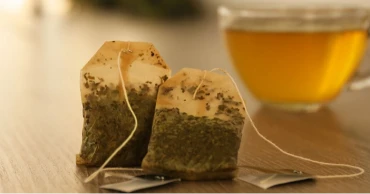
Tea bags release billions of harmful microplastics: Study
A study by the Autonomous University of Barcelona reveals that commercial tea bags made from polymer-based materials release harmful microplastics.
Tea bags are popular for offering a convenient and comfortable tea-drinking experience, allowing users to easily dip and enjoy their brew. However, the material used for the outer layer of tea bags can actually have a negative impact on health.
Commercial tea bags, which are made of polymer-based material, release millions of nanoplastics and microplastics when infused and release millions of microplastics when in use.
According to a study by the Autonomous University of Barcelona, food packaging is a major source of micro- and nanoplastic (MNPL) contamination and inhalation and ingestion are the main routes of human exposure.
The capacity of these nanoplastic and microplastic particles to be absorbed by human intestinal cells, and are thus able to reach the bloodstream and spread throughout the body.
A twice-yearly shot could help end AIDS
Researcher have successfully obtained and characterised micro and nanoplastics derived from several types of commercially available tea bags.
The UAB researchers observed that when these tea bags are used to prepare an infusion, huge amounts of nano-sized particles and nanofilamentous structures are released, which is an important source of exposure to MNPLs.
The tea bags used for the research were made from the polymers nylon-6, polypropylene and cellulose. The study shows that, when brewing tea, polypropylene releases approximately 1.2 billion particles per milliliter, with an average size of 136.7 nanometres; cellulose releases about 135 million particles per milliliter, with an average size of 244 nanometres; while nylon-6 releases 8.18 million particles per milliliter, with an average size of 138.4 nanometres.
"We have managed to innovatively characterize these pollutants with a set of cutting-edge techniques, which is a very important tool to advance research on their possible impacts on human health," says microbiologist Alba Garcia-Rodriguez, from UAB.
Source: With inputs from NDTV
1 year ago
.jpg)
Bangladesh's burden of plastic waste
Plastic is choking Bangladesh's drains, canals, and rivers.
Around 1,700 tonnes of plastic waste is produced in the country every day and only half of it is recycled, according to the Department of Environment.
In Dhaka city alone, plastic waste has gone up more than 3.5 times from 178 tonnes per day in 2005 to 646 tonnes per day in 2020. Of that 646 tonnes, only 37 per cent is recycled, and mostly by the informal sector, according to the World Bank.
It is almost impossible to imagine a day without any use of plastic. Clogged drains, bags fluttering in the wind, masses of plastic piled in dumps, and road corners have become an everyday reality in Bangladesh.
4 years ago
Microplastics ‘ubiquitous’ in European rivers
Microplastics have been found to be omnipresent in rivers across Europe.
6 years ago
UN: Don't worry about drinking microplastics in water
Geneva, Aug 22 (AP/UNB) — The World Health Organization says the levels of microplastics in drinking water don't appear to be risky, but that research has been spotty and more is needed into their effects on the environment and health.
7 years ago