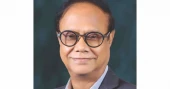
Dr. Ahsan H. Mansur

Economists applaud move to merge 5 Islami banks, but warn of challenges
Bangladesh Bank's initiative to merge 5 crisis-prone Shariah-based banks has got momentum, and within a week, this is likely to be implemented, governor Dr. Ahsan H. Mansur told a group of journalists on Monday after a meeting with the officials of different banks.
Economists termed this an important event in the financial sector of Bangladesh. They believe that the government's decision to merge five weak banks could be a crucial step toward reforming the country's beleaguered banking sector.
However, experts are also raising concerns about potential political challenges and the need for a comprehensive strategy beyond just consolidation.
The banks set for the merger are First Security, Global, Union, Social Islami, and Exim Bank. Their default loan rates reportedly range from 48 percent to a staggering 96 percent. The government plans to manage these banks under a unified, state-run structure.
Speaking to journalists, Bangladesh Bank Governor Ahsan H. Mansur announced that the merger process would begin within a week and that the government has been asked to provide the necessary funds.
Dr. Toufic Ahmad Choudhury, former Director General of the Bangladesh Institute of Bank Management (BIBM), welcomed the move, stating, "We all want the banks to return to a healthy state. The fact that the Bangladesh Bank is now active in this regard is good news."
He added, "We wish Bangladesh Bank’s many efforts to succeed."
Bank mergers could be counterproductive without international best practices: World Bank
However, Dr. Toufic also cautioned that the mergers alone would not solve the sector's deep-rooted problems.
He highlighted the potential for significant political backlash, citing the example of former Finance Minister Saifur Rahman, who was forced to abandon a plan to close 500 bank branches due to political opposition, even from within his own party.
"Simply merging them won't be enough," he warned. "There will be a lot of political crises."
Dr. Toufic stressed the importance of addressing the root causes of the problem, particularly the issue of defaulting loans. He questioned the basis for the mergers, noting that the plan does not seem to be based on capital adequacy.
"The problem is defaulting loans, and that needs to be solved," he said.
He also raised concerns about accountability, asking who is responsible for the fact that some banks are unable to repay their depositors.
Dr. Mashrur Reaz, Chairman, Policy Exchange, Bangladesh told UNB that banking is a business built on trust, and if that trust is lost, the sector cannot survive.
Merger of 5 Islamic banks at final stage: Bangladesh Bank Governor
He called for strengthening banks and taking strict action against willful defaulters.
He also questioned the plan to retain qualified employees while removing the "incompetent."
He pointed out that the incompetent are often the ones who create problems, and if they start protesting, the government could face new challenges. But the government has to do the job to bring the financial sector back on the right track.
1 year ago

Bangladesh Bank Governor Dr. Ahsan H. Mansur takes charge of SAARCFINANCE Network
Bangladesh Bank Governor Dr. Ahsan H. Mansur has officially taken charge as Chairperson of the SAARCFINANCE Network, marking a significant leadership role for Bangladesh within the regional economic collaboration.
Dr. Mansur assumed this position at the 46th SAARCFINANCE Governors’ Group Meeting held on October 24 in Washington, D.C., where he formally accepted the role from the previous Chair, the Central Bank of Sri Lanka. Bangladesh will now serve as the SAARCFINANCE Chair Country for the next year, from November 2024 to October 2025.
Weak banks’ deposits returning to positive trend, none should panic: Governor Ahsan Mansur
This chairmanship follows a decision from the 45th SAARCFINANCE Governors' Group Meeting in Sri Lanka in June 2024, where Bangladesh agreed to lead in response to a request by the SAARC central banks’ governors.
According to SAARCFINANCE terms, two Governors' Group meetings are held annually, involving central bank governors and finance secretaries from SAARC member nations. Traditionally, the first meeting is hosted by the Chair Country, with the second coinciding with the annual IMF-World Bank meetings in October or November.
Central bank won't provide 'illegal liquidity support' to banks: Governor Ahsan Mansur
SAARCFINANCE, which originated from the 10th SAARC Summit in Colombo on July 29, 1998, was created to strengthen regional cooperation in economic and financial matters. The network aims to facilitate collaborative macroeconomic policies and provide a platform for sharing insights and strategies tailored to regional needs, as outlined in a press release.
1 year ago
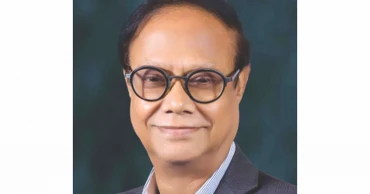
Curbing inflation, financial sector stability to get top attention: Dr. Mansur on becoming BB governor
Dr. Ahsan H. Mansur, newly appointed governor of Bangladesh Bank, has said his priority will be to check the high inflation and restore stability in the financial sector.
Expressing satisfaction over his new responsibility Dr. Mansur told UNB on Tuesday night that he will work with all stakeholders in the financial sector to bring back stability and put it on a solid foundation.
On Tuesday night the interim government's law ministry hurriedly waved the age limit of 67 years for anyone to be appointed as governor of the central bank. Economist Mansur is now 72 years old.
The last time the age limit provision got amended from 65 years to 67 years was in July 2020 to accommodate the reappointment of then-governor Fazle Rabbi.
Read more: Money launderers won’t be allowed to sleep in peace: New Bangladesh Bank Governor
He believed that despite high inflation - it hit 11.66 in July in a 13-year high- the central bank under the previous administration did not give full attention to curb it. Controlling inflation remains a top priority for any central bank.
However, money supply, exchange rate stability, and inflation control all depend on the decision of the governor.
Besides, the standard of living, international trade, investment, and employment depend a lot on the decisions of the central bank of any country, he said.
Dr. Mansur started his career as a lecturer, at the Department of Economics, Dhaka University in 1976. He left for Canada for higher studies in economics the same year. As a graduate student and research assistant, he was also offering regular economics courses at the undergraduate level at the University of Western Ontario, Canada (1978-81).
Dr. Mansur joined the International Monetary Fund under its Economist Program in 1981 and thereafter completed his PhD in Economics (on general equilibrium analysis) from the University of Western Ontario in 1982.
During his long career at the IMF, he worked in Middle Eastern, Asian, African, and Central American countries. He worked in important functional departments (Fiscal Affairs and Policy Review and Development departments) and area departments (Middle East and Central Asia and Asian departments) of the IMF.
Read more: Inflation hits 13-year high of 11.7% in July: BBS
He also served as the IMF Senior Resident Representative to Pakistan from 1998-01 and as the Fiscal Advisor to the Minister of Finance, Government of Bangladesh (1989-91).
2 years ago