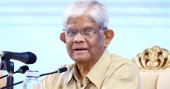
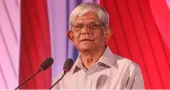
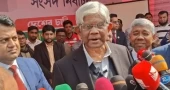
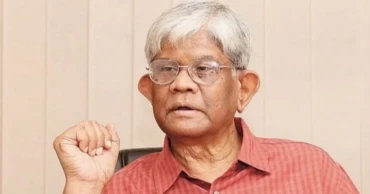
Dr Salehuddin Ahmed
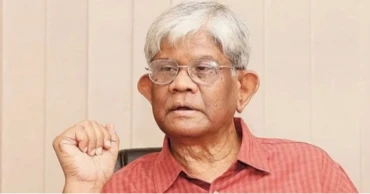
Unaware of ministerial offer, may return to academia: Salehuddin
Finance Adviser Dr Salehuddin Ahmed on Tuesday said he is unaware of any proposal for him to join a future political government as a minister.
“I do not know anything about this,” he said responding to questions from reporters after a meeting of the Cabinet Committee on Government Purchase.
When asked whether he would consider accepting such an offer if it were made, the Finance Adviser suggested that the matter is unlikely to arise.
“I do not think so. A political government will make its own decisions,” he said.
Dr Salehuddin said he had stepped away from academic engagements to serve in government and has already received invitations to return.
“I took leave from my professional engagements to serve in the government. Now two universities have approached me and asked me to return,” he said.
7 months ago
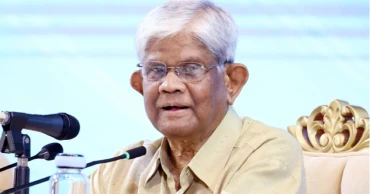
Money laundering trails identified, recovery still challenging: Dr Salehuddin
Finance Adviser Dr Salehuddin Ahmed on Tuesday said the government has made substantial progress in identifying individuals and destinations involved in money laundering, though recovering the funds remains a complex and lengthy process.
“Identifying money laundering is difficult, but you are aware that we have streamlined the processes,” he said while speaking to reporters after a meeting of the Advisers Committee on Government Purchase.
The adviser acknowledged that detecting illicit financial flows is inherently difficult but stressed that institutional mechanisms had been strengthened during his tenure.
Upon assuming office, Dr Salehuddin said, he convened a meeting on money laundering that had not been held for five years. “The first meeting on money laundering after five years was held after I took charge. Previously, such a meeting had not taken place.”
A sub-committee was subsequently formed to collect primary information and initiate action, he said, adding, “We have to take action from our side first. When we make requests abroad, they ask what steps we have taken domestically. Without demonstrating our own actions, it becomes difficult to seek cooperation.”
The finance adviser highlighted that mutual legal assistance procedures with foreign jurisdictions are highly complicated. “Mutual legal assistance is not simple. It involves numerous formalities and documentation. In some countries, such as Japan, documents must be translated into their language. You cannot simply send papers in English and expect results.”
He said those who launder money often employ highly skilled professionals and complex methods. “Those who have laundered funds have done so using very competent people. There is layering, multiple documentation and intricate financial arrangements. To detect this, we also need equally skilled professionals.”
Despite the challenges, Dr Salehuddin claimed that a significant amount of information has already been gathered. “Identification has been made. We know who has done it and in which countries. Many individuals hold passports in multiple countries. We are aware of where they are.”
He, however, declined to disclose the exact amount of money identified as laundered. “I am not stating the exact figure at this moment.”
The adviser clarified that not all overseas funds held by Bangladeshis are illicit. “Not everyone has transferred money illegally. Some funds abroad may be legal, with proper permission from Bangladesh Bank. For instance, export proceeds or retained earnings may lawfully remain outside the country.”
According to him, authorities have identified around 11 or 12 major cases, while information on others is also available. The National Board of Revenue (NBR), Bangladesh Bank and the Ministry of Finance possess relevant data, he added.
“The base has been created. The information is there with the NBR, Bangladesh Bank and the Ministry of Finance. If the next government is serious, they can take this forward,” said Dr Ahmed, urging the incoming administration to consolidate the progress made so far rather than restarting investigations from scratch.
“My strongest suggestion to the next government is: please try to consolidate what has been done. Many discoveries have already been made. There is no need to rediscover the same things,” he said.
Revitalising trade, job creation top challenges for next govt: Dr Salehuddin
He emphasised the need for stronger coordination among government agencies, pointing to existing gaps in inter-agency cooperation. “There is a lack of coordination among government departments and agencies. This needs to improve.”
Referring to asset declarations, the finance adviser said he had submitted his own statement of assets two years ago and that the matter had been forwarded to the Cabinet Division for necessary action in accordance with procedure. “Our accountability is to the Cabinet Division. We have submitted what was required. The relevant divisions will take action as per their mandate.”
Dr Salehuddin said that although recovering laundered funds is difficult and takes time, the necessary institutional foundation is now in place for future action.
7 months ago
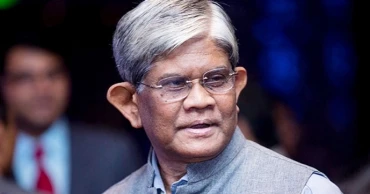
Adviser Salehuddin rates own performance at around 70 out of 100
Finance Adviser Dr Salehuddin Ahmed on Tuesday rated his own performance at ‘around 70 out of 100’, acknowledging that while significant initiatives were undertaken during his tenure, several key reforms remained unfinished due to structural and policy limitations.
“I would give myself close to 70 – perhaps 70 or 80. If it is 80, I would say we at least started the work. We initiated programmes in the interest of the people and had no hidden agenda,” he said while talking to reporters after holding the Purchase Committee meeting at the Bangladesh Secretariat.
The adviser said he would not award himself full marks as many intended initiatives could not be fully implemented.
Dr Salehuddin said although the government managed to launch a number of reforms, many could not be completed to the desired extent.
“There were expectations. Some of the plans we had could not be carried out, and even those we started could not be fully finalised,” he said, adding that this reality prevented him from claiming a perfect score.
The adviser emphasised that the continuous annual development programme (ADP) process had become more functional and streamlined.
Dr Salehuddin, however, admitted that the “real work” lay in initiating deeper policy reforms, particularly in the policy divisions.
On taxation, he said a comprehensive report had been prepared which would serve as a guideline for future reforms. “We are leaving behind a tax policy report. It will function as a guideline going forward.”
Responding to questions about the autonomy of Bangladesh Bank, the finance adviser said the issue had been considered carefully.
He acknowledged calls from various quarters to grant the central bank greater independence but noted that the matter was complex.
“We thought about it extensively. It is a loaded issue,” he said, referring to the legal and operational dimensions involved.
He explained that the Bangladesh Bank Order already outlines the structure and authority of the institution, and the question is not merely whether the governor or the ministry holds greater power. “It is not simply about whether a particular governor or minister will exercise control. The key issue is how much operational independence exists within the framework.”
The adviser suggested that any decision regarding central bank autonomy must be weighed against broader economic stability considerations.
Revitalising trade, job creation top challenges for next govt: Dr Salehuddin
Throughout his remarks, Dr Salehuddin maintained that the government’s economic measures were driven by public interest rather than political motives. “In political affairs, one may try to avoid certain issues, but in economic management these matters cannot be sidestepped.”
The Finance Adviser reiterated that while he was satisfied with initiating key reforms, unfinished tasks and unmet expectations justified a score below 100.
7 months ago
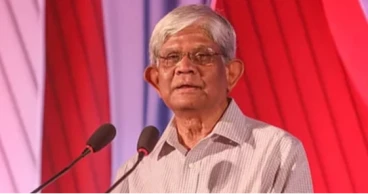
Revitalising trade, job creation top challenges for next govt: Dr Salehuddin
Finance Adviser Dr Salehuddin Ahmed on Tuesday outlined the key economic challenges the next government will face, stressing the need for revitalising trade and industry, generating employment and strengthening financial sector institutions.
“If business does not expand, employment will not come. Without employment, people’s purchasing power will remain weak. This is one of the biggest challenges,” he said.
Talking to reporters after the purchase committee meeting, he said one of the main challenges would be to revitalise business and industrial activities, as job creation depends on a vibrant private sector.
He said Bangladesh still has a relatively small industrial base and remains heavily dependent on exports. “Bangladesh cannot become another Hong Kong or Singapore. We need to build our own industrial strength, especially small and medium industries.”
Dr Salehuddin said inflation continues to be a concern and cannot be tackled by monetary policy alone. “Inflation is a multidimensional issue. We have tried to address it, but it needs broader measures.”
On the banking sector, he said steps have been taken to reorganise it, but more difficult decisions lie ahead, and praised the central bank governor’s recent initiatives, though he acknowledged these were not enough. “Credit supply is still limited and confidence has not fully returned, although deposits have started to increase recently.”
Dr Salehuddin also highlighted the need to develop the capital market to reduce excessive dependence on banks for business financing.
“If we fail to develop the capital market, business and trade will not grow relying only on banks. Equity participation through the stock market and a strong bond market, especially for the private sector, are essential,” he said, noting that regulatory reforms face legal hurdles and court challenges.
The adviser described the insurance sector as another sensitive area that needs improvement, saying efforts have been made but progress remains limited.
Bangladesh economy stable despite challenges: Finance Adviser
Dr Salehuddin further identified energy as a major long-term challenge, stressing the importance of increasing domestic exploration.
“We need more drilling, including offshore. At the same time, we have not been able to develop solar energy to the extent needed,” he said.
7 months ago
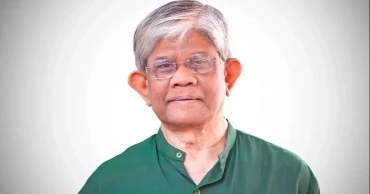
TIB failed to recognise work on reforms: Finance Adviser
Finance Adviser Dr Salehuddin Ahmed on Tuesday said Transparency International Bangladesh (TIB) has failed in many cases to properly recognise the government’s ongoing reform initiatives, arguing that not all reforms are immediately visible.
He made the remarks while speaking to reporters at the Secretariat after a meeting of the Advisers’ Council Committee on Government Procurement.
Responding to a question about a recent TIB observation that the interim government’s reform and development efforts were less substantive than they appeared, Dr Salehuddin said the organisation’s assessment overlooked several fundamental changes.
Read More: Banking sector reform can’t be done overnight: Salehuddin
“TIB cannot see everything. They do not have divine vision or perfect sight. Even if they want to see, they cannot always see many things,” he said.
He stressed that reforms should not be judged only by legislation, pointing to procedural and administrative simplifications carried out by the government.
“Do not just look for reform laws. We have simplified many processes. For example, earlier one had to seek permission under the outward wage scheme. We are not saying it is automatic now, but the process has been eased. Why do people not see what we have done?” he asked.
When journalists noted that Dr Salehuddin had previously praised TIB and that organisations often face criticism once governments come to power, he rejected the suggestion that he was attacking the watchdog.
“No, no — I am not criticising or defaming TIB. I still acknowledge their role. But I am saying: look at the fundamental issues. If someone does not want to see, then many things can be ignored,” he said.
He added that he had never engaged in baseless criticism while outside government and had always focused on core policy issues.
Referring to the fact that TIB Executive Director Iftekharuzzaman had been a member of the government’s reform commission, the finance adviser said public expectations regarding reforms were understandably high.
“People definitely have expectations. We also thought we would carry reforms forward smoothly. But reform requires cooperation and a proper process,” he said.
Drawing on his experience within the administration, Dr Salehuddin said systemic weaknesses and procedural flaws made reform implementation extremely difficult.
Read More: Pay Commission recommendations need review before implementation: Dr Salehuddin
“I have seen from inside how flawed the processes are — more than you can imagine. Still, we have pushed many things through the Ministry of Finance. The finance secretary and others worked quickly. I provided immediate solutions where possible,” he said, adding that several advisers were frustrated due to institutional constraints.
He said his background in the civil service had helped him navigate the system more effectively than many others.
“I was trained in the civil service. I know how things work. Not everyone has that experience. Without cooperation, reform becomes very difficult,” he said.
Frankly acknowledging the challenges, Dr Salehuddin said working within Bangladesh’s administrative framework was particularly demanding.
“This is a very difficult place to work. The processes are extremely complicated, with too many interventions. Untangling them is like solving a knot,” he said.
When asked whether bureaucracy was the main obstacle, he said it was certainly a major factor, but not the only one.
“There is definitely a bureaucratic element. But the system itself and the laws that were drafted earlier were not done properly,” he said.
Citing the banking sector as an example, he said governance standards had weakened over time.
“During my time, two or three directors from the same family were allowed in a bank. Later, that number suddenly increased to six or more. This is moving backwards instead of forwards,” he added.
Read More: Long-term energy strategy prepared to ensure fuel security: Salehuddin
7 months ago
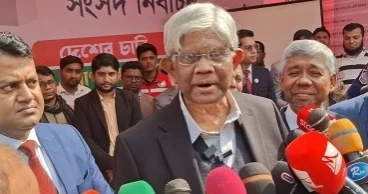
Interim government leaving economy in 'satisfactory and stable' state: Finance Adviser
Finance Adviser Dr Salehuddin Ahmed on Sunday said the current interim government would leave Bangladesh’s economy in a “satisfactory and stable” position for the next elected government, though he acknowledged that significant challenges remain ahead.
“I believe we are leaving the economy in a satisfactory place. The next government will not face major difficulties in continuing from here. The situation is stable now — not shaky like before,” he said.
Speaking to reporters after the Government Purchase meeting at the Secretariat, Dr Salehuddin said the economy is no longer in a fragile or unstable condition, unlike earlier periods, and that the foundations have been stabilised to allow future governments to move forward.
Responding to questions on whether the government had taken on record levels of debt, the finance adviser said while borrowing had increased, a substantial amount of external debt had also been repaid.
“Yes, borrowing increased, but we also repaid around six billion dollars in external debt. Debt repayment is equally important,” he said, adding that many large, expensive infrastructure projects were deliberately avoided.
“We did not go for costly mega projects like tunnels or projects worth thousands of crores through loans. That is why public debt pressure did not worsen further,” he said.
He admitted that employment generation remained one of the government’s biggest challenges, largely because job creation requires sustained support for small and medium industries.
“Our major challenge was employment. For that, small and medium enterprises are essential. But we did not have enough fiscal space. Large factories are not labour-intensive, and they come with many complexities,” he explained.
Addressing concerns over contradictory statements about future economic risks, Dr Salehuddin clarified that while the economy is stable, reforms need to be consolidated and carried forward carefully.
“What we have done is not a one-off solution. To take it forward, it needs to be strengthened further. That itself is a big challenge,” he said, noting that access to concessional foreign aid has declined, making future financing more difficult.
He stressed that reforms require time, cooperation and procedural discipline, which are often difficult in Bangladesh’s complex administrative system.
“Reform is not just about speeches. It requires process, cooperation and patience. Inside the system, procedures are extremely complicated. Without cooperation, it becomes very difficult,” he said.
Highlighting governance reforms, the finance adviser said the government has made significant progress in digitising land records and khatian maps, making services cheaper and more accessible to citizens.
“Porcha and land records are being digitised. Now people can get services for Tk20, which earlier cost Tk500. We are expanding digital access nationwide,” he said.
He described the initiative as one of the most fundamental service delivery reforms, reducing harassment and improving transparency.
Dr Salehuddin also confirmed that the government is preparing to face international arbitration over alleged financial disputes and money laundering allegations involving business interests linked to S Alam Group.
He said a case has been filed at the International Centre for Settlement of Investment Disputes (ICSID), a World Bank-affiliated arbitration body, following complaints lodged by the concerned party.
“They have gone for arbitration at the World Bank forum. We have received notice and must respond. This is a very serious matter involving a large amount of money,” he said.
The government has decided to engage international legal counsel to contest the case, he added.
“We will engage a legal firm. This is not a simple issue. Legal preparation is essential,” he said, though he declined to disclose the name of the firm at this stage.
A government team is expected to visit Washington, DC, to deal with the arbitration process, he said.
On power sector reforms, the finance adviser said electricity tariffs are being rationalised rather than increased arbitrarily.
“This is tariff restructuring, not a price hike. Money is being adjusted from one segment to another. It will not affect electricity supply,” he said, adding that efficiency issues at power plants such as Ashuganj are also under review.
Dr Salehuddin said despite criticism, many fundamental reforms had been undertaken, even if they were not always visible.
“People say nothing has been done because they only look for visible projects. But many fundamental procedural reforms have taken place. If someone does not want to see, they will not see,” he remarked.
The government has appointed a British law firm to contest an international arbitration case filed by S Alam Group founder Saiful Alam and his family before the International Centre for Settlement of Investment Disputes (ICSID).
Sources familiar with the decision said the Advisory Committee on Government Procurement has approved the appointment of White & Case LLP, a UK-based international law firm, to represent Bangladesh in ICSID arbitration case No. ARB/25/52. The firm will be paid a fee of US$1,250 per hour for its legal services.
The proposal to hire an international law firm was placed before the committee by the Ministry of Law, Justice and Parliamentary Affairs, citing the complexity and high financial stakes of the case.
Speaking to journalists after the meeting, Finance Adviser Dr Salehuddin Ahmed said the arbitration was linked to allegations of money laundering.
“S Alam has apparently filed a case in London and challenged Bangladesh at the World Bank’s ICSID. We need to engage an international legal firm to fight this case, as it involves a huge amount of money and has been brought before an organisation like the World Bank,” he said.
When asked about the identity of the firm, the adviser said it was a British firm but did not name it at the time.
Dr Salehuddin also said legal action was underway against S Alam over alleged money laundering.“When a government or a company is accused of obstructing business, ICSID arbitration is invoked. We have received the arbitration notice and must respond. This is a highly complicated legal process,” he added.
In October last year, lawyers representing S Alam and his family formally filed the arbitration request at ICSID in Washington, alleging that asset freezes, confiscations and punitive measures taken by the Bangladesh government over money laundering allegations caused them losses worth hundreds of billions of dollars.
In their filing, the S Alam family claimed that the interim government has deliberately targeted them through bank account freezes, asset seizures, “baseless investigations” into their businesses and a “provocative media campaign,” arguing that such actions violate international investment protection obligations.
The arbitration has been filed under the 2004 Bangladesh–Singapore Bilateral Investment Treaty (BIT). Documents show that members of the S Alam family renounced Bangladeshi citizenship in 2020 and obtained Singaporean citizenship between 2021 and 2023. They are currently residing in Singapore.
As Singapore nationals, they claim entitlement to international investment protection under the BIT, as well as protection under Bangladesh’s Foreign Private Investment (Promotion and Protection) Act, 1980.
Following the August 5, 2024 mass uprising that led to the fall of the Sheikh Hasina government, an interim administration headed by Prof Muhammad Yunus initiated investigations and asset recovery efforts against major business groups and influential individuals accused of large-scale money laundering.
An economic white paper published by the interim government in December 2024 estimated total illicit capital flight at around US$234 billion. Bangladesh Bank Governor Ahsan H. Mansur, who heads the asset recovery task force, has alleged that the S Alam family alone siphoned off nearly US$12 billion abroad.
He accused S Alam and his associates of taking control of multiple banks with the help of military intelligence and transferring funds overseas through loan and import fraud, forcing the government to bail out six banks.
S Alam Group has denied all allegations, saying the government has failed to present any credible evidence to support the claims.
7 months ago
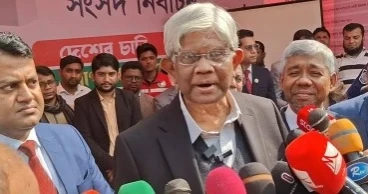
Finance Adviser surrenders his diplomatic passport
Finance Adviser Dr Salehuddin Ahmed on Tuesday said that he has already surrendered his diplomatic passport, emphasising that the move is part of a standard procedure and not linked to any immediate travel plans.
“I have already submitted it. I am not going anywhere. My health condition is not very good, as you know. I do not attend meetings unless they are extremely urgent,” he said.
Speaking to reporters after the Advisers’ Council on Government Procurement meeting, Dr Salehuddin said he has no intention of travelling abroad unless it is absolutely necessary, citing health concerns.
Read More: Economic situation stable, recovering steadily: Finance Adviser
Responding to a question on whether other advisers had also surrendered their passports, he said several individuals had done so, noting that it was a requirement.
“Many have submitted theirs. It has to be surrendered—it is a rule,” he added.
He further said that advisers would now use ordinary passports like general citizens. “We will get new passports and move around with ordinary passports like you,” he remarked.
Earlier, the Foreign Affairs Adviser had said that some advisers surrendered their diplomatic passports to facilitate visa applications using ordinary passports.
Asked whether applying for visas using ordinary passports posed any difficulty, Dr Salehuddin dismissed such concerns, saying visa processing had never been an issue for him.
“If you want a visa, you must apply independently. You cannot travel extensively first and then expect visas automatically. I have never faced any problem with visas,” he said, adding that he had previously travelled using an official (green) passport.
The surrender of diplomatic passports by advisers is seen as part of an effort to standardise travel privileges and align them with existing regulations governing public office holders.
Read More: Finance adviser urges patience on new pay scale, backs referendum
Foreign Affairs Adviser Md Touhid Hossain on Sunday said reports claiming that he had surrendered his diplomatic passport are untrue, although he acknowledged that some of his colleagues have opted for ordinary passports to facilitate quicker visa processing due to travel-related issues.
“Here is where misinformation comes in. Neither my wife nor I have surrendered our diplomatic passports. My passport is with me. It is highly unusual that the Foreign Adviser or any Minister would surrender his or her diplomatic passport while the tenure is still in effect,” he told reporters when asked about surrendering diplomatic passports by Advisers.
Hossain, however, confirmed that some have taken new passports, noting that it can make obtaining visas easier in certain cases.
But the Foreign Adviser did not mention who obtained the new passports.
7 months ago

Govt reaffirms commitment to distribute school books by January
The government on Sunday reaffirmed its commitment to ensure the distribution of all school textbooks by the first month of the next year, despite concerns over irregularities in previous allocations and questions over the quality of books.
After a meeting of the Advisers Council Committee on Government Purchase and the Advisers Council Committee on Economic Affairs, Finance Adviser Dr Salehuddin Ahmed said orders for printing textbooks for certain classes have already been placed.
He said authorities are now reviewing the list of recipient institutions to ensure that no school has received multiple allocations or been involved in irregular practices in the past. “We want to make sure that those who previously got books properly get them again, but we are also reviewing allegations that some institutions took more than their share,” he said.
The meeting was held at the Secretariat with the Finance Adviser in the chair.
He mentioned that the government is determined to finalise the list within the next two weeks so that the books can be distributed on schedule. “Our target is clear—students must receive textbooks on time, by January 1,” the adviser said.
Govt moves to fast track printing of school textbooks for 2026 session
Last year, new textbooks were delivered as late as March, but this year the ministry has brought the process forward to September to prevent delays.
Authorities are also reviewing paper quality and other production features, aiming to avoid past complaints over substandard books.
Dr Salehuddin also said the government has decided to procure vaccines for the Expanded Programme on Immunization (EPI) in two phases, while also trying to negotiate a reduced commission with Unicef.
Speaking to reporters at the meetings, the adviser said Unicef had initially proposed a six-month supply arrangement, but the government opted for a phased approach.
“We have asked Unicef to supply vaccines for three months first. For the next three months, we want to explore competitive bidding and see if international sources can also participate,” he said.
The adviser noted that half of the requirement would be met immediately through Unicef, while the remaining will be finalised later. “We have also requested Unicef to reconsider their commission rate and bring it down,” he added.
Responding to a question, the adviser, however, said details about the source countries for the vaccines have not yet been sought.
Meanwhile, the proposal for printing, binding and supplying free textbooks for the 2026 academic year was withdrawn from the meeting agenda on Sunday.
Procurement delay threatens timely distribution of class 6-8 textbooks in 2026
The withdrawn item covered free textbooks for students of Class IX in the secondary (Bangla and English versions), Dakhil, SSC and Dakhil Vocational Class IX, as well as Technical Trade Classes IX and X.
The proposal had been placed by the Secondary and Higher Education Division and the agenda was dropped following a request from the Division itself.
11 months ago
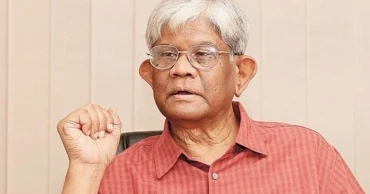
Investing in education means investing in Bangladesh future: Salehuddin
Finance Adviser Dr Salehuddin Ahmed on Saturday said spending on education is always an investment in the nation’s future.
“By investing in education, we are not merely helping individual students—we are shaping the future of the country,” he said while addressing a scholarship distribution ceremony of the Brahmanbaria District Association, Dhaka.
He praised Brahmanbaria as the ‘Land of Heritage and Harmony’, and lauded the community’s unity and vision for building a district recognised for knowledge, culture and innovation.
The Association hosted its Executive Committee Installation and Scholarship Award Ceremony at International Convention City Bashundhara (ICCB), highlighting both the district’s heritage and its ongoing commitment to education and social advancement.
A total of 312 scholarships were distributed among meritorious students—25 at Honours level, 182 at HSC level, and 105 at SSC level, aimed at nurturing academic excellence and creating opportunities for Brahmanbaria’s youth.
Quality services needed to boost revenue collection: Finance adviser
Brahmanbaria District Association President MA Khalek said the district has a proud tradition of producing leaders, scholars and artists. “Today we renew our commitment to building a Brahmanbaria recognised for its talent and contribution, not for negative stereotypes,” he said.
General Secretary Engineer Md Khaled Hossain Mahbub (Shyamal) said the gathering was ‘a call to action’ to create and uphold a positive image of Brahmanbaria across Bangladesh and beyond.
The event ended with cultural performances showcasing the rich traditions of the district, reinforcing the message of unity and pride in its heritage.
11 months ago
Bangladesh expects positive outcome from tariff talks with USTR: Finance Adviser
Finance Adviser Dr Salehuddin Ahmed on Tuesday expressed optimism about securing a better outcome in the one-to-one negotiation with the United States Trade Representative (USTR) following US President Donald Trump’s announcement of new tariffs on imports from 14 countries including Bangladesh.
“The final tariff will be fixed in the one-to-one negotiation with the USTR. That’s why we will have our meeting with them (USTR), the rate is not final yet,” he told reporters emerging from Cabinet Committee on Government Purchase (CCGP) meeting held at the cabinet division of Bangladesh Secretariat.
The meeting with the USTR is scheduled for July 9 (US time).
The Finance Adviser dismissed concerns over weak negotiation skills on Bangladesh’s part, saying, “Vietnam received greater tariff relief because their trade deficit with the US is $125 billion while ours is only $5 billion. So, Vietnam got the better discount in the tariff rates.”
He said the Commerce Adviser is already in Washington and has been working on this issue since he went three days ago.
“We will understand the matter after holding the July 8 meeting which will be held early morning on July 9 (Bangladesh time),” he said.
He also said whatever be the result, the government will take its measures considering the final outcome of the meeting.
Govt didn’t interfere in ACC probe into NBR officials: Finance Adviser
“So far, the meetings we have all are positive,” the Finance Adviser said.
US President Donald Trump on Monday slapped a 35% tariff on Bangladeshi goods, 2% lower than his initial rate announced three months ago, but significantly higher than close rival Vietnam (in the field of RMG), which recently secured a trade deal with the US under which its goods will be charged a tariff of 20%.
Trump made the much-anticipated announcement on his Truth Social account, by publishing his letter dated July 7 to Chief Adviser Muhammad Yunus at 2.36am (Tuesday) Bangladesh time. He posted identical letters to other world leaders revealing the tariff rates for their respective countries, which said the new rates would be effective from August 1.
Apart from Bangladesh, it was learned on Monday that imports from Myanmar and Laos would be taxed at 40%, Cambodia and Thailand at 36%, Serbia at 35%, Indonesia at 32%, South Africa and Bosnia and Herzegovina at 30% and Japan, South Korea, Kazakhstan, Malaysia and Tunisia at 25%. More letters may be forthcoming.
The letters warned Trump’s counterparts to not retaliate by increasing their own import taxes, or else the Trump administration would further increase tariffs.
1 year ago