Environment Adviser
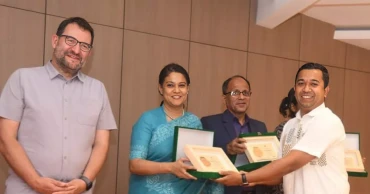
Adviser Rizwana orders tougher action against polluters, slams faulty clearances
Environment Adviser Syeda Rizwana Hasan on Saturday ordered stronger enforcement, institutional capacity, transparency and accountability in environmental regulation, warning against ‘faulty clearances’ that jeopardise Bangladesh’s natural resources.
Speaking at a World Bank seminar titled ‘Strengthening Environmental Regulatory and Enforcement Capacity for a Sustainable Bangladesh’ in Sreepur, Gazipur, Rizwana pressed officials of the Department of Environment (DoE) to act ‘creatively and fearlessly’.
“Enforcement is not just about fines. It must include transparency, alternatives and community empowerment,” she said.
The adviser urged the DoE to prioritise pollution hotspots such as dyeing units, cement plants and brick kilns. “We must focus on the worst polluters with proper budgeting and planning. Publish the names of polluters online. With information accessible, citizens will support enforcement against political pressure,” she said.
Rizwana condemned the approval of site clearances in ecologically sensitive areas, citing the example of waste-dumping projects in flood flow zones.
“Such clearances are irresponsible and legally flawed. Even under political pressure, officials must send objection letters. If you cannot perform your duties, then be transferred — but do not compromise the environment,” she warned.
The adviser pressed for full transparency in the clearance process, calling on the DoE to publish Environmental Impact Assessment (EIA) reports for all red-category industries and include public objections in decision-making.
Warning against ‘rewarding polluters’, Rizwana highlighted a ceramic factory that had won a national award despite repeated fines and a lack of clearance. “Polluters must be exposed, not celebrated.”
Adviser Rizwana stresses stronger enforcement, end to faulty environmental clearances
The adviser proposed digitising complaint handling, creating a mobile app to track enforcement, and strengthening collaboration with local administrations to tackle forest encroachment and illegal industrial operations.
Among those addressed the event were Jean Pesme, Division Director for Bangladesh and Bhutan at the World Bank; Muhammad Munir Chowdhury, former Director General of the Anti-Corruption Commission and the National Museum of Science and Technology; Nafisa Arefin, Deputy Commissioner of Gazipur; AKM Rafiqul Islam, Project Director of the BEST project; and Bushra Nishat, Environment Specialist at World Bank Bangladesh.
11 months ago
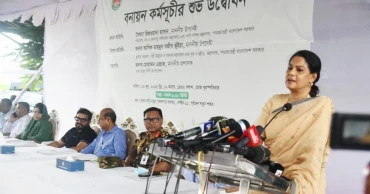
'Zero Soil’ drive to curb Dhaka’s air pollution: Environment Adviser
Environment Adviser Syeda Rizwana Hasan on Thursday said a ‘Zero Soil’ initiative is being implemented to reduce air pollution caused by dust in the capital and emphasised that the city corporation, the forest department and citizens must work together to implement this initiative.
“Open soil around houses should be covered with grass or ivy and trees should be planted on rooftops…plant as many trees as you can and ensure Zero Soil wherever there is open space,” she said.
The adviser made the remarks while speaking at the inauguration ceremony of a tree plantation programme jointly organised by the Forest Department and Dhaka North City Corporation (DNCC) at Harar Bari premises in Purbachal New Town.
Under this programme, saplings are being planted along road medians, footpaths, canal and water-body banks and other areas suitable for greening.
“We aim to set an example in the DNCC area by September. Everyone must understand the importance of greening and practice it in real life. We must not destroy natural ecosystems. A forest ecosystem cannot be artificially created—it must be nurtured and grown,” the adviser added.
Govt aims high in generating power from renewables
She also stressed the need for integrating housing with forest-based environments and called on all concerned agencies to begin coordinated implementation of planned activities.
According to DNCC sources, the city corporation is currently working to green 120 km of medians and 108 km of canal banks. Besides, joint afforestation programmes have been undertaken in Rajuk’s Uttara Residential Sector and Purbachal area.
Local communities and volunteer organisations have also been engaged in this effort.
Chaired by DNCC Administrator Mohammad Azaz, the event was attended, among others, by Dr Farhina Ahmed, secretary of the Ministry of Environment, Forest and Climate Change; Eng Md Riazul Islam, chairman of RAJUK; and Md Amir Hossain Chowdhury, chief conservator of forests.
1 year ago
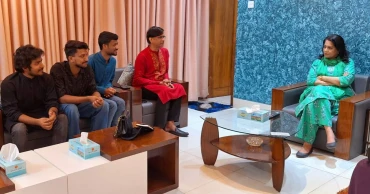
Rizwana for developing habit of using cloth, jute bags instead of polythene
Environment Adviser Syeda Rizwana Hasan on Monday underscored the need for developing the habit of using cloth and jute bags as alternatives to polythene to reduce plastic use in daily life.
“Plastic use must be reduced at every level of life, and single-use polythene bags must be completely eliminated,” she said while exchanging views with students and representatives of environmental organisations at the circuit house in Rajshahi.
Highlighting the environmental damage caused by plastic and polythene, she said the government has already taken various initiatives to encourage people to shift towards sustainable alternatives, said an official release.
She said public engagement is key to achieving success in this regard.
Expressing concern over the ongoing trend of filling ponds, canals, and other water bodies amid urban expansion she stressed the importance of preserving natural reservoirs for water conservation and maintaining the groundwater level.
Calling on the youth to embrace an eco-conscious lifestyle, the Environment Adviser said, “Every small step we take can lead to big changes.”
Rajshahi Deputy Commissioner Afia Akhtar, BAPA General Secretary Alamgir Kabir, and representatives from various environmental organisations, along with students, journalists and government officials, attended the event.
Social movement crucial to tackle noise pollution: Adviser Rizwana
The participants stressed the need for enhanced awareness-building activities at the local level to promote environmental protection.
Rizwana also instructed the Deputy Commissioner to take necessary steps to restore ponds and water bodies in the district and assured the government support in the process.
1 year ago
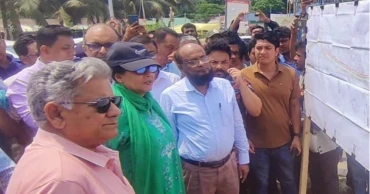
Forest Department to get back its 12,000 acres of Cox’s Bazar land: Adviser
Environment Adviser Syeda Rizwana Hasan on Thursday said nearly 12,000 acres of forest land in Cox’s Bazar, which had been allocated to various agencies, are being returned to the Forest Department.
“Already 700 acres of forest land have been recovered, and a private individual has been stopped from constructing buildings on 150 acres of forest land,” Rizwana said while briefing journalists after visiting a municipal garbage dumping site on the Bakkhali River banks in Cox’s Bazar town.
Besides, 20 acres allocated for a football academy are being reclaimed, she said.
“Encroachments and pollution in rivers, forests and sea beaches of Cox’s Bazar will be removed,” the adviser said, adding, “No construction will be permitted in the Ecologically Critical Area (ECA) without prior approval. No government or private development will be considered without clearance from the Department of Environment, Forest Department, and the District Administration.”
She also mentioned that since assuming office, she has requested the Deputy Commissioner to recover 51 acres of land, while land allocated to BEZA (Bangladesh Economic Zones Authority) on Sonadia Island is in the process of being brought back under the Forest Department’s jurisdiction.
Refrain from disrupting traffic by blocking roads in capital:DMP
The adviser stressed that legal action will be taken if any regulations are violated.
“If we fail to curb the illegal occupation and pollution of the sea beach now, it will soon turn into private and institutional property. This will not be allowed. Considering the limited time of the current government, we are prioritising several key initiatives,” Rizwana said.
Shipping and Labour ministry’s Adviser Brig Gen (retd) M Sakhawat Hossainwas also present during the visit.
1 year ago
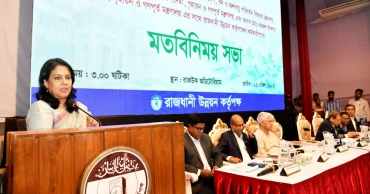
Rajuk's law, board structure need to change to make it people-centric: Environment Adviser
Environment Adviser Syeda Rizwana Hasan on Wednesday called for a change of the laws governing the Rajdhani Unnayan Kartripakkha (Rajuk) and its board structure to make the capital development authority more people-friendly and relevant to the times.
“To make Rajuk citizen-centric and modern, the Town Improvement Act and the Building Construction Act must be redrafted. Minor amendments won’t suffice. These laws must be re-enacted, preserving what is necessary while accommodating current realities,” she said during an exchange of views with Rajuk officials.
Rizwana emphasised that the Rajuk board must not consist solely of bureaucrats. “The board should include skilled urban planning experts and work through designated working groups,” she added.
She also questioned the authority of the Rajuk chairman to convert residential buildings into commercial ones. “This power should be revoked. The board can decide on such matters without violating the masterplan,” she said.
Highlighting the need for a fresh vision for Dhaka, she said it should reflect the voices of civil society, Rajuk, and the general public.
Social movement crucial to tackle noise pollution: Adviser Rizwana
She added that services must be decentralised to reduce the pressure on Dhaka.
The adviser further said that Rajuk must clearly define its role—whether it is a developer or a regulator. “Rajuk should no longer be allowed to engage in housing development.”
The adviser noted that housing can be provided for the homeless, not for the rich.
She called for comprehensive area-based masterplans and stronger regulation of private housing projects, noting that there was no such initiative in the past.
She also mentioned that Rajuk must be kept free from political influence.
Criticising the destruction of land in Purbachal, Rizwana said, “There is no justification for providing housing for ministers and lawmakers.”
Rajuk must also work to preserve the nation's built and cultural heritage, she mentioned.
Improving the quality of urban life should be Rajuk’s top responsibility, she noted, adding that Rajuk's own office building should be modern and environmentally sustainable.
“Every project must have an exit plan. Rajuk and the Estate Department need to become citizen-focused. Services should be digitalised, complaint resolution mechanisms must be effective, supervision should be outsourced, and external experts must be employed for audits,” she added.
1 year ago
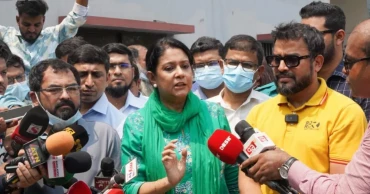
Burning of waste strictly prohibited: Environment Adviser
Environment Adviser Syeda Rizwana Hasan on Saturday said burning of waste is strictly prohibited under any circumstances including at landfills such as the Matuail Sanitary Landfill in the capital.
“Whether at Matuail or elsewhere, waste must not be burned. This practice poses a serious risk to public health and the environment,” she told reporters after visiting the landfill site in Dhaka.
The adviser also said two nearby steel mills will be ordered to shut down adding that the burning of batteries or the extraction of lead from batteries is not permitted.
“The Department of Environment has already taken action against battery factories and more action will be taken if new complaints come,” she said.
Rizwana said various initiatives will be taken to safeguard the health and wellbeing of people living near landfill areas.
Dhaka advocates for corporate accountability, environmental justice
She said air pollution in Dhaka has reached alarming levels and poses a major health hazard. “Alongside government efforts, we will strengthen public awareness campaigns and impose fines on those violating environmental rules,” she added.
The adviser visited several air pollution-prone areas under Dhaka South and North City Corporations, including Matuail Sanitary Landfill, Samadnagar in Jatrabari, Narsingdi Road, Chittagong Road, Kachpur, and Sharifpara.
During her visits, she reviewed pollution control measures and spoke with local residents many of whom complained of respiratory and other health issues linked to the poor air quality.
1 year ago
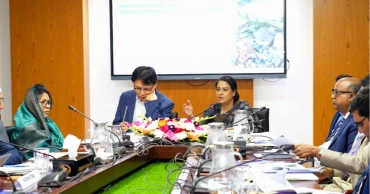
Rizwana seeks ADB’s support for river restoration
Environment Adviser Syeda Rizwana Hasan has urged the Asian Development Bank (ADB) and other development partners to assist Bangladesh in making a successful example of river restoration .
Speaking as the chief guest at a seminar titled "River Restoration: Lessons for Bangladesh", held at Pani Bhaban in Dhaka on Sunday, she highlighted that even polluted rivers can be transformed into sources of drinking water, as seen in different countries.
She stressed the need for restoring entire river connection systems instead of focusing on isolated rivers, saying, “Chromium pollution from tanneries is a major challenge for the Buriganga River.”
She called for immediate, practical actions instead of drafting policies and plans and proposed a clear action plan, backed by ADB, utilising institutions like the National River Protection Commission, the River Research Institute, and the Institute of Water Modelling.
Shipbreaking must not continue at the expense of human lives: Rizwana
Announcing the formation of a task force, she pledged to reclaim and decontaminate at least one river with ADB's support.
She said, “The ongoing revision of the 1999 Water Policy and the Delta Plan will serve as a framework for future river restoration. The Water Resources Planning Organization (WRPO) has already prepared an action plan for restoring rivers in the valley.”
“The Department of Environment’s director general has been instructed to issue notices to polluters, and the government has expressed readiness to assist industries in implementing pollution control measures,” she added.
Youth rally at CU: Crisis won't be resolved if investment in renewable energy not increased quickly
Additionally, Rizwana Hasan mentioned that the government has compiled a complete list of river encroachers and called for effective steps to prevent plastic pollution in rivers.
She pointed out that traditional dredgers cannot remove plastic waste from riverbeds, necessitating specialised equipment and urged the formation of a working committee, led by the Ministry of Water Resources and including relevant ministries and experts, to address these issues.
The seminar was chaired by Dr Farhina Ahmed, secretary of the Ministry of Environment, Forest, and Climate Change.
Govt launches cleaning drive to protect St. Martin’s ecosystem
Key attendees included Mohammad Ejaz, newly appointed administrator of Dhaka North City Corporation; Hoe Yun Jeong, ADB’s resident representative in Bangladesh; and Nazmul Ahsan, Secretary of the Ministry of Water Resources.
1 year ago
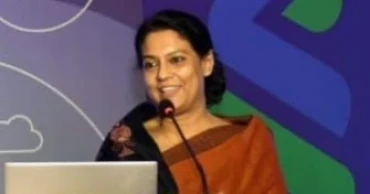
Rizwana calls for urgent climate adaptation actions
Environment Adviser Syeda Rizwana Hasan has called for urgent, scalable climate adaptation actions.
“As a nation, we bear the responsibility of protecting our people—whether foreign funds and investments are available or not. This is why Bangladesh created the Climate Change Trust Fund, allocating a portion of our national budget to tackle climate challenges,” she said while speaking as the chief guest at a workshop on Thursday.
Standard Chartered Bank organised the workshop on “Catalyzing Climate Adaptation Actions at Scale and Mobilizing Investments” at The Westin, Dhaka on Thursday.
“Adaptation is essential, but it does not give us a license to continue with flawed economic models that contribute to climate change,” added the adviser.
Reducing air pollution time-consuming process: Rizwana
“At COP29, we saw financial commitments, but if funds arrive too late or come in the form of loans, they may worsen our financial burden instead of offering solutions,” Rizwana also said.
She commended the workshop’s unique approach, bringing together lenders and bilateral partners to discuss effective climate financing.
“Many climate-affected people are unaware of the discussions taking place in rooms like this. Connecting investors with ground realities is crucial to ensure meaningful, sustainable interventions,” the environment adviser said.
“From Dhaka to Los Angeles, the world must learn that humans cannot dominate nature—we must live in harmony with it,” she said.
Survival depends on clean air and water, not on material possessions: Rizwana
“Despite facing severe hardships, Bangladesh’s farmers have never gone on strike. They continue to feed the nation. It is our responsibility to support them by connecting local solutions with expert knowledge and new technologies,” she added.
British High Commissioner Sarah Cooke, British High Commissioner; United Nations Resident Coordinator Gwyn Lewis and Asian Development Bank Country Director Hoe Yun Jeong spoke at the event, among others.
1 year ago
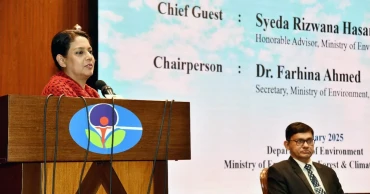
Reducing air pollution time-consuming process: Rizwana
Environment Adviser Syeda Rizwana Hasan has said reducing air pollution is a time-consuming process dependent on economic capacity, development patterns, communication infrastructure, and the transport system.
Thirty to 35% of Bangladesh’s air pollution originates from foreign sources, while 28% comes from power plants, underscoring the need for a well-defined action plan to control pollution, she said while speaking as the chief guest at a Stakeholder Consultation Workshop on the Bangladesh Clean Air Project on Wednesday.
The workshop was held at the Department of Environment in Dhaka’s Agargaon.
Rizwana, US Charge d’Affaires discuss critical environmental challenges
Reducing air pollution is impossible without improving fuel quality and increasing refinery capacity. Even neighbouring countries that have enhanced their refineries still struggle with air pollution, often ranking among the most polluted cities. Therefore, Bangladesh must adopt a long-term strategy to combat pollution effectively, the adviser said.
For the Clean project to be meaningful, tangible progress in pollution reduction must be visible. Merely monitoring and reporting the deterioration of air quality is not enough; concrete actions must be taken. The Department of Environment will launch a hotline where citizens can report air pollution issues during the winter months, added Rizwana.
Adviser Rizwana urges unified global action to tackle climate change
"This project must be designed in a way that ensures visible improvements in air quality. If we can reduce dust pollution by 13% and control industrial emissions, we will make significant progress,” she said.
The World Bank has already joined the project, and more development partners should be engaged to ensure that it meets the country's real needs and provides practical solutions for the people, Rizwana also said.
Environment Secretary Dr Farhina Ahmed, DoE Director General Dr Md Kamruzzaman, and World Bank Manager-Environment Christian Albert Peter spoke at the event, among others.
1 year ago
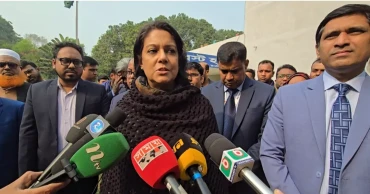
China, India to be urged to consider Bangladesh’s interests during dam construction: Rizwana
China and India will be requested to ensure that planned dams on the Siang River in Arunachal Pradesh and near the Tibet border are constructed without compromising Bangladesh’s interests, said Environment Adviser Syeda Rizwana Hasan.
“We have formally sought information from China regarding their hydropower project near Tibet. They assured us that lower riparian countries will not be adversely affected. However, we have sought further data through the Ministry of Foreign Affairs,”she said responding to a journalist’s question after attending a board meeting at the River Research Institute’s circuit house.
Rizwana, US Charge d’Affaires discuss critical environmental challenges
Padma and Teesta rivers are already experiencing reduced water flow and if the Brahmaputra’s flow is reduced, the riverine nature of Bangladesh will face severe challenges, she said.
Syeda Rizwana shared directives given to the River Research Institute to expand its scope and visibility.
Among these are identifying pollution levels in industrial zones and pinpoint GPS locations of contamination in major rivers around Dhaka.
“This approach will reduce reliance on external funding for tackling river pollution. The institute has also been instructed to assess the ecological impacts of sand extraction from rivers,” she added.
Following the briefing, the adviser inspected the institute’s operations.
Among those present were River Research Institute Director General SM Abu Huraira, Water Development Board Director General Tahmidul Islam, Shipping Ministry Secretary Mohammad Yusuf, and Faridpur Deputy Commissioner Kamrul Hasan Molla.
Adviser Rizwana urges unified global action to tackle climate change
China recently approved the construction of the world’s largest dam on the Yarlung Zangbo River in Tibet’s Medog County, near the border with India.
The project, described as China's most ambitious, was officially announced in 2020.
In response, Indian officials began exploring the possibility of building a counter-dam to address potential disruptions caused by China's project.
1 year ago