Reform Commission
Commission to turn 2024 uprising hopes into national charter: Ali Riaz
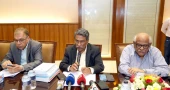
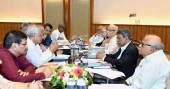
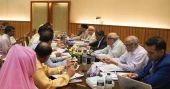
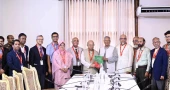
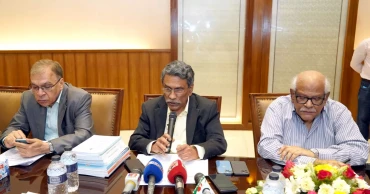
The National Consensus Commission wants to translate the aspirations of the 2024 mass uprising into a concrete form through a national charter, said commission’s Vice-Chairman Prof Ali Riaz on Thursday.
“We want to reflect the spirit of national consensus in a national charter so that every political party can play a role in realising its goals and objectives in the future,” he said at a dialogue with Bangladesher Samajtantrik Dal (BSD) in the city.
An 11-member BSD delegation, led by its General Secretary Bazlur Rashid Firoz, joined the talks at the LD Hall of the Jatiya Sangsad Bhaban.
Chairing the session, Prof Riaz said the initiative (reform initiative) of the National Consensus Commission is rooted in the long expectations of the people of Bangladesh.
“The commission wants to give concrete form to the aspirations that were exposed through the 2024 July-August mass uprising,” he said.
Structural reforms must to make Bangladesh democratic: Ali Riaz
The Consensus Commission Vice Chairman said the current political situation in Bangladesh is the result of prolonged struggles by both the people and political forces. “The people of this country do not want a return of fascism again and again. We want to build a state where equality prevails, citizens' rights are ensured, and differing views are respected,” he added.
Prof Riaz said the commission is working to build consensus through discussions with political parties, based on the recommendations of various reform commissions. “This responsibility does not lie with the National Consensus Commission alone. Political parties must move forward by reflecting the aspirations of the people,” he said.
Flee of 'fascist ruler' a primary democratic victory: Ali Riaz
Commission members Justice Md Emdadul Haque, Dr Badiul Alam Majumdar, Safar Raj Hossain, Dr Iftekharuzzaman,and Dr Md Ayub Miah were present in the discussion moderated by Chief Adviser's Special Assistant Monir Haider.
1 year ago
Discussion between CPB and Consensus Commission held
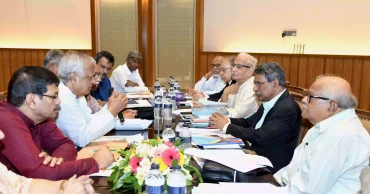
CPB-Consensus CommissionThe Communist Party of Bangladesh (CPB) on Tuesday held a meeting with the National Consensus Commission to discuss the reform proposals.
The discussion was held with Vice Chairman of the Consensus Commission Prof Ali Riaz in the chair at the LD Hall of the Jatiya Sangsad Complex.
An 11-member CPB delegation, led by its president Mohammad Shah Alam and General Secretary Rubin Hossain Prince, joined the talks.
Addressing the discussion, Prof Ali Riaz said this dialogue is part of the long-standing political struggle to restructure or reform the state.
He said the July-August 2024 mass uprising has brought the aspiration of state reform to the forefront.
NCP submits outlines to Consensus Commission for basic reforms
“We all are at a critical juncture in history where the roadmap is being formulated to build a democratic and accountable state by ensuring equal rights and protection for all citizens. The goal of the National Consensus Commission is to draft a national charter that will guide the future of Bangladesh,” said Prof Ali Riaz.
Commission members Dr Badiul Alam Majumdar, Justice Emdadul Haque, Dr Iftekharuzzaman, Safar Raj Hossain, Md Aiyub Miah were present at the event moderated by Chief Adviser's Special Assistant Monir Haider.
Earlier, on March 23, CPB submitted its reform opinions to the Consensus Commission.
On March 20 last, the Consensus Commission opened a series of talks with political parties to forge a national consensus on state reform initiatives undertaken by the interim government.
With CPB, the commission held talks with 32 political parties, including BNP and Jamaat-e Islami and National Citizen Party (NCP).
Health Reform Commission proposes free primary care, 15% budget allocation
The Consensus Commission has planned to conclude the first phase of dialogues with political parties by May 15 and then start the second phase of talks aimed at preparing the National Charter in July.
The commission, formed under the leadership of Chief Adviser Professor Muhammad Yunus, has been working since February 15, 2025, to finalize its recommendations for crucial state reforms.
1 year ago
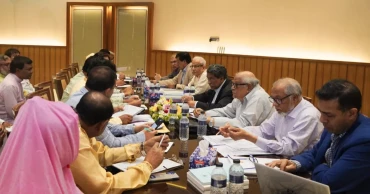
Ali Riaz calls for structural reforms to build accountable state
Vice Chairman of the National Consensus Commission Prof Ali Riaz said on Thursday the importance of implementing structural reforms to establish a transparent and accountable state, which he believes, will pave the way for a prosperous future for the coming generations in Bangladesh.
“If we can build an accountable state through structural transformation, future generations will consider Bangladesh an ideal place,” he said while presiding over a dialogue with Bhashani Onushari Parishad at the LD Hall of the Jatiya Sangsad.
A 15-member delegation of Bhashani Onushari Parishad, led by its chairman Sheikh Rafiqul Islam Babul, joined the talks arranged by the National Consensus Commission.
Prof Riaz said the country’s transformation can begin by forging unity similar to the past resistance against fascism. “We fought together against fascism. By forging the similar unity, we can initiate the process of change in Bangladesh.”
He said people have aspired for an accountable state for the last 53 years.
Former President Abdul Hamid leaves Dhaka for Thailand
Recalling the mass uprising in July, he said, “Millions of people took to the streets and many sacrificed their lives. That was a clear message to us—that in the future, no citizen or youth of Bangladesh should have to give their life on the streets just to establish their rights.”
He expressed the hope that the political parties and forces would reach a consensus. The National Consensus Commission is playing the role of a catalyst. “Political parties and people must unite in this cause. If so, it will be for us to achieve it.”
The National Consensus Commission Vice Chairman said every political party and force fighting against fascism over the last 16 years has had one goal—to establish a democratic Bangladesh.
The goal is to ensure no one falls victim to enforced disappearance or extrajudicial killings, an independent judiciary to protect citizens' rights, an accountable state where no prime minister or a person remains above the law or centralizes power.
“We are moving forward with that objective in mind,” he added.
Feni BNP leader arrested for public humiliation of two mothers
Commission members Safar Raj Hossain, Justice Emdadul Haque, Dr Badiul Alam Majumdar and Dr Iftekharuzzaman were also present in the discussion moderated by Chief Adviser’s Special Assistant Monir Haider.
1 year ago
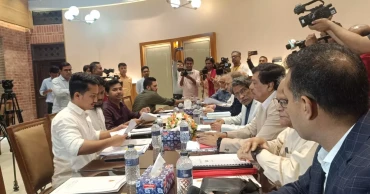
NCP submits outlines to Consensus Commission for basic reforms
The National Citizen Party-NCP on Tuesday submitted its outlines to the National Consensus Commission for fundamental reforms.
NCP Member Secretary Akhtar Hossain handed the outlines to National Consensus Commission Vice Chairman Prof Ali Riaz at the outset of a dialogue at the LD Hall of the Jatiya Sangsad Complex.
A four-member NCP delegation, led by Akhtar Hossain, joined its talks with the National Consensus Commission for the second day.
The discussion started at 10:40am with Prof Ali Riaz in the chair.
Speaking at the function, Akhtar Hossain said the fundamental reforms must be made reflecting three basic issues– balance of power, accountability and decentralisation.
“Fundamental reforms do not mean reforming the electoral system or constitutional reform based on a two-thirds majority based on seats. Rather, achieving these three things - balance of power, accountability and decentralisation - these are the main foundations of fundamental reforms,” he said.
About the fundamental reforms, Akhtar Hossain said, "To achieve that, we need to find out how we can free ourselves from the authoritarian and fascist elements in the constitutional and state structures, how we can reflect the national interest by going beyond politician in the appointment of constitutional posts, how we can free the judiciary from politics and present it as a symbol of justice in the true sense, we consider each of these issues to be included in fundamental reforms.”
He said the people of Bangladesh have been oppressed and persecuted due to the governance structure through which Bangladesh has been governed in the last 53 years and the authoritarian and fascist elements that have remained in the state structure.
Khaleda returning to Gulshan home, Zubaida ends 17-year exile by her side
The NCP member secretary said the students and people of Bangladesh sacrificed their lives in the July Mass Uprising in an effort to find out how to free the constitution and state structure from the authoritarian and fascist elements in a bid to lead Bangladesh towards a democratic state.
Akhtar Hossain said NCP placed the proposals for fundamental reforms so that Bangladesh can integrate itself into the path of democratic elevation instead of being in the fascist and authoritarian structure like in the past.
The NCP delegation members included its chief organiser (northern region) Sarjis Alam, joint conveners Sarwar Tushar and Jabed Rasin.
Consensus Commission members Safar Raj Hossain, Justice Emdadul Haque, Dr Badiul Alam Majumdar, Dr Iftekharuzzaman and Dr Mohammad Ayub Miah were present at the discussion, moderated by Chief Adviser’s Special Assistant Monir Haider.
The discussion is part of the series of dialogues with political parties to reach a national consensus over the state reform initiatives taken by the interim government.
Earlier on April 18, the NCP participated in the talks with the Consensus Commission.
The NCP submitted its written opinions over the reform recommendations to the National Consensus Commission on March 24 last.
On March 20 last, the National Consensus Commission opened its dialogues with political parties aiming to build a national consensus on the reform initiatives undertaken by the interim government.
The commission has already held talks with 25 political parties.
The National Consensus Commission, formed under the leadership of Chief Adviser Prof Muhammad Yunus, aims to establish a unified stance on critical reforms.
Since its inception on February 15, 2025, the commission has been working to finalise recommendations for the state reform proposals.
1 year ago
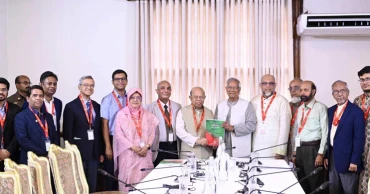
Health Reform Commission proposes free primary care, 15% budget allocation
The Health Sector Reform Commission on Monday unveiled its report recommending the inclusion of primary healthcare as a basic right in the constitution, providing free primary healthcare, allocation of 15 percent of the national budget for the health sector and formation of a permanent health commission.
The commission also recommended formation of the Bangladesh Health Service, recruitment of primary care physicians by establishing primary healthcare centres in rural and urban areas, free supply of essential drugs at the primary level and at subsidised prices in other cases, and shutting down substandard medical education institutes.
The report was unveiled at a press conference at Foreign Service Academy in the capital.
Chief of the 12-member Health Sector Reform Commission national professor Dr AK Azad Khan delivered the introductory speech, while commission member Prof Dr Syed Md Akram Hossain unveiled the report.
The reform report proposed an independent and permanent ‘Bangladesh Health Commission’ should be formed to ensure a transparent, accountable and effective health system in the country.
The report said Bangladesh Health Service should be formed to transform the health cadre into a separate autonomous cadre like the judicial cadre, merging the BCS family planning and medical (technological) officers under the proposed Bangladesh Health Service, and formation of a separate public service commission (health).
About the primary healthcare centres, the Commission in its report proposed that the primary centres should be established, merging Union healthcare sub-centre and family planning cetre at union level in rural areas. And such healthcare centres should be established at ward-level in urban areas as well.
The commission recommended that a structural referral system be made mandatory in necessary cases so that the patients would be able to receive the right services at the right time and the flow of patients to higher institutes would decline.
It said an international standard regional referral hospital will have to be developed in every division which would act as a specialized service center. In this case, the referral hospital can be developed with PPP or foreign investment, it added.
The reform commission proposed that the secondary health and specialised (tertiary) healthcare services should be introduced in district-level and upazila-level in phases to ease public access to the medical treatments and thus reduce the flow of patients to medical colleges and national institutes.
It suggested development of a digital complaint disposal platform to settle complaints from the service recipients.
The legal authority of BMDC, BNMC, Bangladesh Pharmacy Council and Allied Health Professional Council should be made effective and none should be arrested on charge of professional negligence without permission from the concerned council.
53 more dengue cases reported in 24 hours
The councils will have to complete an investigation and make a decision regarding complaints within 90 days, said the report.
The report also said a trained special unit named ‘medical police’ will have to be formed to resist violence in the hospitals and clinics.
According the report of a survey conducted by Bangladesh Bureau of Statistics on 8,256 adult people in eight divisions, 97 percent people opined for providing free primary healthcare and even 92 percent opined for establishment of ward-level primary healthcare centres in the urban areas like the rural areas, said Dr Syed Md Akram Hossain.
Some 97 percent people opined for fixation of drug prices, 96 percent for fixation of disease diagnostic test prices and prescription fees of the physicians, and 95 percent for fixation of surgery fees, as per the survey findings.
The survey report showed that 68 percent of people opined that antibiotic drugs should not be sold without the prescription of an MBBS doctor.
The Health Sector Reform Commission in its report, recommended fixation of the prices for all services of the private hospitals and diagnosis centres.
It also proposed that physicians should prescribe 25 percent drugs writing their generic names right now and 100 percent within the five years.
The commission recommended that influencing the physicians by providing them with samples of medicines and gifts should completely be prohibited. Rather pharmaceutical companies can send information about their products to the doctors through email or postal services.
Representatives of the pharmaceutical companies cannot carry out daily product promotion through direct meetings with doctors, it said.
Prof Yunus orders quick action on implementable health sector reform proposals
About medical education, the reform commission proposed that the existing medical colleges and universities and the seats of these institutions should be restructured and rearranged in line with the standards set by the World Federation for Medical Education (WFME).
Besides, the quality-less medical institutes should be shut down by transferring their students to the recognised institutes, said the commission.
The report proposed allocation of at least 1 percent of the national budget for health research now and gradual increment of this allocation in future.
The Commission suggested reviewing the existing health sector-related laws and making these time befitting ones as well as enactment of a number of laws by promulgating ordinances during this interim government in a bid to ensure protection of patients, financial allocation, accountability and emergency preparedness.
The new laws that were suggested are primary healthcare law, Bangladesh Health Commission law, Bangladesh Health Service Law, Health Protection Law, Fixation of Drug Prices and Rights to Access Law, Allowed Health Professional Council Law and Bangladesh Medical Research Law.
Reform Commission Chief Dr AK Azad Khan said the capacity of the country’s health sector will have to be enhanced and confidence in local treatment will be created to discourage the patients who go abroad to receive treatment.
“It will have to increase capacity and create confidence,” he said, replying to a question.
Other members of the commission Dr Abu Mohammad Zakir Hossain, Prof Dr Liaquat Ali, Prof Dr Syed Md Akram Hossain, Prof Dr Syed Atiqul Haque, Prof Dr Sayera Akther, MM Reza, Dr Azharul Islam, Dr Ahmed Ahsanur Rahman and Omair Afif were present.
Earlier, at 11:00am, the Reform Commission submitted its report to Chief Adviser Professor Dr Muhammad Yunus.
On 17 November 2024, the Health Reform Commission was formed with National Professor and President of the Diabetic Association of Bangladesh Professor Dr AK Azad Khan as its head.
1 year ago
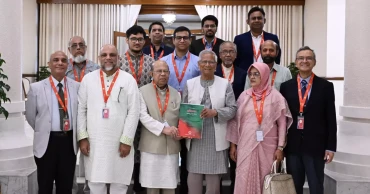
Health Reform Commission submits report to CA Dr Yunus
The Health Reform Commission on Monday submitted its report to Chief Adviser Professor Dr Muhammad Yunus.
CA’s Senior Assistant Press Secretary Foyez Ahammad said the Health Reform Commission formally handed over its report to Professor Muhammad Yunus at 11:00 am.
The 11-member Health Reform Commission was formed on 17 November 2024, with National Professor and President of the Diabetic Association of Bangladesh Professor Dr AK Azad Khan as its head.
Bangladesh Weather: Daytime heat to intensify nationwide
The commission includes renowned physicians, public health experts, former civil servants and a student representative.
1 year ago
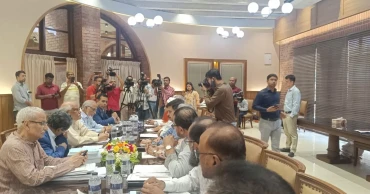
12-Party alliance not willing to delay reforms: Mustafa Jamal Haider
Chief Coordinator of the 12-Party alliance and Jatiya Party (Kazi Zafar) Chairman Mustafa Jamal Haider on Sunday urged the National Consensus Commission to reach a consensus over minimum reform proposals without unnecessary delay.
“We are not willing to waste time day after day. We should quickly reach a minimum level of consensus. If some issues remain incomplete or disputed, we can reform them in the course of time,” he said.
He made the remarks while taking part in a dialogue with the National Consensus Commission at the LD Hall of the Jatiya Sangsad Complex.
An 11-member delegation from the alliance, led by him, took part in the dialogue presided over by Consensus Commission Vice Chairman Prof Ali Riaz.
BNP gears up to welcome Khaleda as she’s returning from London
Mustafa Jamal Haider said having differences and disagreements among political parties are quite natural. “This is the beauty and strength of democracy. Still, we must reach a consensus on minimum reforms so that no scope is left for authoritarian rule to reemerge.”
He said the actual goal should be to ensure that no new powerful person or Chief Justice in the future can manipulate the constitution to impose autocracy by exploiting loopholes in the existing state structure.
He stressed the urgency of entrusting state power to elected public representatives to fulfill the democratic aspirations of the nation.
Mustafa Jamal Haider, however, said the Commission is making efforts to address long-standing structural inconsistencies and problems accumulated over the decades.
Consensus Commission members Safar Raj Hossain, Dr Badiul Alam Majumdar and Dr Mohammad Ayub Miah were present at the discussion, moderated by Chief Adviser’s Special Assistant Monir Haider.
The 12-party alliance has expressed agreement with 111 out of the 166 reform proposals placed by the National Consensus Commission, disagreed with 48 and refrained from giving opinions on seven proposals.
On March 20 last, the Consensus Commission opened a series of talks with political parties to forge a national consensus on state reform initiatives undertaken by the interim government.
The commission has already held talks with 23 political parties, including BNP, Jamaat-e-Islami, and the National Citizen Party (NCP).
1 year ago
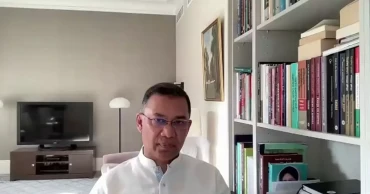
Tarique slams interim govt for delaying reforms
Voicing concerns over visible efforts to make election demand an offence, BNP Acting Chairman Tarique Rahman on Friday said public doubts are mounting over why the interim government is buying so much time on reforms.
“Reform efforts are underway to repair the state and politics. But, if the political parties' demand for elections has to be ignored for the sake of ongoing reforms, then what is the significance of reforms? This is now the question on the minds of many people,” he said while virtually addressing a discussion marking the fifth founding anniversary of “Amar Bangladesh (AB) Party.”
He said every political party in the country is in favour of reforms. “Yet, questions are slowly growing in public mind about why the interim government is wasting so much time on reforms.”
The BNP leader warned that if depoliticisation is encouraged by ignoring political parties and the verdict of the people, it will ultimately put democracy at risk.
Khaleda along with 2 daughters-in-law to return home Monday
“Through this event, I would like to once again call upon the interim government to specifically announce the roadmap for the national election. The current interim government must take the initiative to make political parties face the people's court,” he said.
Tarique said if a parliament and government accountable to people are formed through the people's vote, the country's independence and sovereignty will be consolidated.
“As a political activist, I firmly believe that once the people and political parties become accustomed to forming and changing governments through political practice, no one will be able to turn Bangladesh into a subservient state,” he observed.
As a political party aiming at qualitative reform of the state and politics and the political empowerment of the country’s citizens, Tarique said BNP has always been demanding the establishment of a government and parliament elected by the people through direct vote.
“Political parties will demand elections. This is a normal democratic practice, but we’ve noticed a subtle but deliberate effort in recent days to create an atmosphere where demanding the holding of elections seems like a crime,” he said.
Govt to seek UN cooperation to assess media, journalists' role over past 16 years: Press Secretary
The BNP leader said derogatory statements or comments about the holding of the national election only please the fugitive dictator. “But on the other hand, it is insulting to the democracy-loving people.”
He underscored the need for unity among the democratic political parties in the interests of the country.
Tarique said at least 25 new political parties have emerged following the ouster of Sheikh Hasina’s autocratic regime. “We welcome them in the political arena.”
“There may be differences in political ideology among the pro-democratic political parties. But I believe that the position of every pro-Bangladesh force is the same and identical when it comes to the interests of the country,” he said.
The BNP leader said the people of this country will never accept the political party that lost its democratic character, established a fascist regime, and turned Bangladesh into a subservient state.
“The deposed and fugitive dictator who violated the Constitution is trying to rise again. Article 65(2) of our Constitution states that members of parliament shall be elected by direct vote of the people, but in violation of the Constitution, this fugitive dictator formed illegal parliaments and governments three times without the people’s vote,” he said.
The BNP leader said the democracy-loving people of Bangladesh want to know what steps the interim government has taken or will take to make those accused of violating the Constitution politically irrelevant in the future.
“There is no scope to avoid responsibility by shifting blame. If the interim government fails to take action, I firmly believe the next government—elected by the people’s vote—will definitely take legal measures against those who violated the Constitution,” he said.
Tarique criticised those advocating for local government elections before the national polls, saying it could provide a golden opportunity for the “fugitive dictator” and their cohorts—who are waiting with huge sums of embezzled public money—to return to power.
“Those who spoke in favour of holding local government elections may not have considered the issue in this way. I would request them to reconsider the matter from this perspective,” the BNP leader said.
He said Bangladesh’s two most significant milestones are its independence in 1971 and the fight to protect that independence in 2024.
Tarique asserted that Bangladesh did not leave Pakistan in 1971 only to become subservient to Delhi. “The uprising of soldiers and people on 7 November 1975 also carried the same message.”
He criticised the fugitive dictator Sheikh Hasina for turning Bangladesh into a subservient state for over a decade and a half, ignoring the people’s democratic aspirations.
Tarique called for ensuring that no force is ever allowed to reduce Bangladesh to a subservient state again, and that defeated forces and their allies are never able to rise once more.
The AB Party arranged the discussion at the Jatiya Press Club, where senior leaders of different political parties addressed.
1 year ago
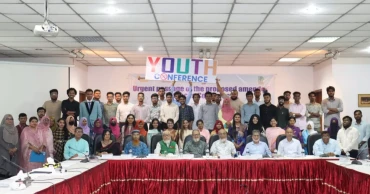
Health sector reform commission to submit report after reviewing proposed tobacco law amendments
Member of the Health Sector Reform Commission and Chairman of the Community Clinic Health Support Trust Dr. Mohammad Zakir Hossain on Sunday assured that the commission will thoroughly review the proposed amendments to the Tobacco Control Law and submit its report accordingly.
He made this assurance at a youth conference held at the CIRDAP auditorium in Dhaka. He emphasized that fighting against tobacco is a challenging task, but it is a challenge that must be taken on.
At the conference, DORP Youth Forum presented six major proposals in line with the WHO Framework Convention on Tobacco Control (FCTC) and the draft amendments formulated by the Health Services Division. These proposals include: eliminating designated smoking areas in all public places and public transport to protect non-smokers, banning the display of tobacco products at points of sale to prevent indirect promotion, prohibiting corporate social responsibility (CSR) activities by tobacco companies, implementing measures to protect children and youth from the harmful effects of e-cigarettes, banning the sale of loose and single-stick tobacco products, and increasing the size of graphic health warnings on tobacco packaging from 50% to 90%. Additionally, the youth forum highlighted various strategies, achievements, challenges, and demands related to achieving a tobacco-free Bangladesh.
Speaking as a special guest, Director General (Joint Secretary) of the National Tobacco Control Cell (NTCC) Md. Akhtaruzzaman stated that banning designated smoking areas and the retail sale of single tobacco sticks are already under consideration. He affirmed that all six demands will be implemented gradually.
Former additional Secretary of the Health Services Division Hossain Ali Khondker mentioned that Myanmar has amended its tobacco control law 12 times. So Bangladesh should learn from Myanmar’s example and expedite the passage of the proposed amendments.
The conference was chaired by A.H.M. Noman, Founder and Chief Executive Officer of DORP. The keynote presentation was delivered by Mohammad Zobair Hasan, Deputy Executive Director of DORP.
DORP has been engaged in various development initiatives since 1987 and is widely recognized for pioneering the introduction of the Maternity Allowance program in Bangladesh.
1 year ago

Labour Reform Commission submits report to CA
The Labour Reform Commission on Monday submitted its report to Chief Adviser Prof Muhammad Yunus.
The Commission, headed by Syed Sultan Uddin Ahmed, prepared a set of recommendations and submitted those to the Chief Adviser, aiming to establish social justice and ensure fundamental rights for the country’s labour force.
The Commission members had a meeting with the Chief Adviser after submitting the report at State guesthouse Jamuna.
Quick national consensus possible through dialogue: Ali Riaz
The government formed the Commission in November last year to propose necessary reforms for ensuring labour rights and improving workers' welfare.
Other members of the Commission are Dr Mahfuzul Haque, former secretary of the Ministry of Labour and Employment and the Ministry of Environment, Forest and Climate Change; Dr Zakir Hossain, professor at Rajshahi University; Tapan Dutta, president of the Chittagong divisional committee of the Trade Union Centre; Advocate AKM Nasim, former president of the Bangladesh Labour Court Bar Association; M Kamran T Rahman, former president of the Bangladesh Employers Federation; Chowdhury Ashikul Alam, president of the Bangladesh Trade Union Sangha; Shakil Akhter Chowdhury, general secretary of the Bangladesh Labour Federation; Taslima Akhter, a photographer and labour movement activist; and a student representative.
1 year ago