Finance Adviser
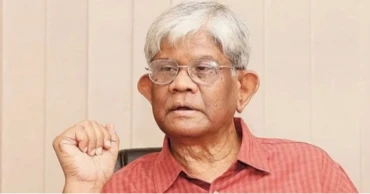
Unaware of ministerial offer, may return to academia: Salehuddin
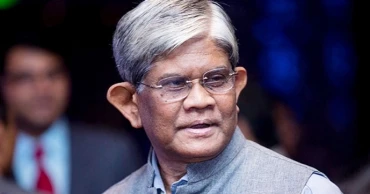
Finance Adviser Dr Salehuddin Ahmed on Tuesday said he is unaware of any proposal for him to join a future political government as a minister.
“I do not know anything about this,” he said responding to questions from reporters after a meeting of the Cabinet Committee on Government Purchase.
When asked whether he would consider accepting such an offer if it were made, the Finance Adviser suggested that the matter is unlikely to arise.
“I do not think so. A political government will make its own decisions,” he said.
Dr Salehuddin said he had stepped away from academic engagements to serve in government and has already received invitations to return.
“I took leave from my professional engagements to serve in the government. Now two universities have approached me and asked me to return,” he said.
7 months ago
Adviser Salehuddin rates own performance at around 70 out of 100
Finance Adviser Dr Salehuddin Ahmed on Tuesday rated his own performance at ‘around 70 out of 100’, acknowledging that while significant initiatives were undertaken during his tenure, several key reforms remained unfinished due to structural and policy limitations.
“I would give myself close to 70 – perhaps 70 or 80. If it is 80, I would say we at least started the work. We initiated programmes in the interest of the people and had no hidden agenda,” he said while talking to reporters after holding the Purchase Committee meeting at the Bangladesh Secretariat.
The adviser said he would not award himself full marks as many intended initiatives could not be fully implemented.
Dr Salehuddin said although the government managed to launch a number of reforms, many could not be completed to the desired extent.
“There were expectations. Some of the plans we had could not be carried out, and even those we started could not be fully finalised,” he said, adding that this reality prevented him from claiming a perfect score.
The adviser emphasised that the continuous annual development programme (ADP) process had become more functional and streamlined.
Dr Salehuddin, however, admitted that the “real work” lay in initiating deeper policy reforms, particularly in the policy divisions.
On taxation, he said a comprehensive report had been prepared which would serve as a guideline for future reforms. “We are leaving behind a tax policy report. It will function as a guideline going forward.”
Responding to questions about the autonomy of Bangladesh Bank, the finance adviser said the issue had been considered carefully.
He acknowledged calls from various quarters to grant the central bank greater independence but noted that the matter was complex.
“We thought about it extensively. It is a loaded issue,” he said, referring to the legal and operational dimensions involved.
He explained that the Bangladesh Bank Order already outlines the structure and authority of the institution, and the question is not merely whether the governor or the ministry holds greater power. “It is not simply about whether a particular governor or minister will exercise control. The key issue is how much operational independence exists within the framework.”
The adviser suggested that any decision regarding central bank autonomy must be weighed against broader economic stability considerations.
Revitalising trade, job creation top challenges for next govt: Dr Salehuddin
Throughout his remarks, Dr Salehuddin maintained that the government’s economic measures were driven by public interest rather than political motives. “In political affairs, one may try to avoid certain issues, but in economic management these matters cannot be sidestepped.”
The Finance Adviser reiterated that while he was satisfied with initiating key reforms, unfinished tasks and unmet expectations justified a score below 100.
7 months ago
Bangladesh economy stable despite challenges: Finance Adviser
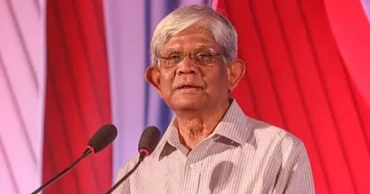
Finance Adviser Dr Salehuddin Ahmed on Monday said that Bangladesh’s economy remains largely stable despite significant challenges, emphasising that sustained reforms, stronger institutions and political commitment from the next government are key for long-term growth.
“The economy was at the verge of collapsing. We are managing the situation, but the challenges are real and require careful and consistent policy support,” he said.
Speaking at a discussion meeting in the capital titled ‘Macroeconomic Insights: An Economic Reform Agenda for the Elected Government’ held at a hotel in the capital this afternoon, he said the country has managed to maintain overall macroeconomic stability amid multiple domestic and global pressures.
He, however, warned that the challenges remain serious and should not be underestimated.
The Policy Research Institute of Bangladesh (PRI) and Department of Foreign Affairs and Trade (DFAT) of the Australian Government jointly organised the event.
Presided over by Chairman of the PRI Dr. Zaidi Sattar, Dr KAS Murshid, Former Director General of Bangladesh Institute of Development Studies (BIDS), Clinton Pobke, Deputy High Commissioner, High Commission of Australia to Bangladesh, spoke as special guests.
Dr Ashikur Rahman, Principal Economist, PRI, made the keynote presentation.Dr Fahmida Khatun, Executive Director, Centre for Policy Dialogue (CPD), Dr M Masrur Reaz, Chairman and CEO, Policy Exchange Bangladesh (PEB), spoke as distinguished panelists.
Dr Salehuddin noted that Bangladesh has shown resilience in the face of post-pandemic disruptions, geopolitical tensions, energy price volatility and tighter global financial conditions. He said prudent macroeconomic management has helped the country navigate a difficult period without slipping into a deeper crisis.
Referring to inflationary pressure, balance of payments constraints and fiscal stress, the adviser said such issues are not unique to Bangladesh. “Many countries are going through similar problems. What matters most is how we respond through reforms and institutional strengthening,” he added.
He said the interim government has prioritised stabilising the macroeconomy, maintaining fiscal discipline, managing foreign exchange pressures and ensuring that essential economic activities continue without major disruption.
“We have tried to take balanced decisions so that the economy continues to function while also protecting vulnerable groups,” he said.
Highlighting revenue mobilisation as a major concern, Dr Salehuddin pointed out that Bangladesh’s tax-to-GDP ratio remains very low compared to peer economies. He said this limits the government’s ability to finance development and public services.
“It is extremely difficult to run a modern state with such a low level of revenue collection,” he said, stressing the need for comprehensive tax reforms, expansion of the tax base and improved compliance.
The adviser also underscored institutional weaknesses and poor coordination among agencies as key barriers to reform implementation.
“We write reports and make recommendations, but implementation remains the hardest part,” he observed, adding that strengthening institutions is far more challenging than drafting policies.
He said without strong and accountable institutions, even well-designed policies fail to deliver the expected outcomes, emphasising the need for political consensus to carry forward meaningful reforms.
Dr Salehuddin described the banking sector as one of the weakest areas of the economy, citing governance problems, high levels of non-performing loans and lack of accountability as factors that have eroded public confidence over the years.
“These problems have accumulated over a long time. Fixing them will require time, strong oversight and political courage,” he said.
On public expenditure, he stressed the importance of prioritisation, noting that limited resources require careful selection of projects and spending areas.
“Everything cannot be done at once. We must decide what matters most for the country and move forward accordingly,” he said.
The adviser said the government has tried to avoid populist measures and instead focus on maintaining stability and ensuring long-term sustainability.
“Policy-making is never easy. Every decision involves trade-offs,” he added.
He acknowledged that public expectations from the government remain high but warned that unrealistic expectations can create additional pressure.
“Economic recovery and reform require patience, consistency and continuity,” he said.
Dr Salehuddin also highlighted the importance of private sector development, saying entrepreneurs, like farmers, are hardworking and capable but need proper incentives, access to finance and a predictable policy environment to invest and expand. “The government must support productive investment and create conditions where businesses can grow.”
He noted that Bangladesh has made significant progress over the years in poverty reduction, infrastructure development, export growth and improvements in social indicators, adding that these achievements provide a strong foundation for future advancement.
Looking ahead, he said the next elected government will have to focus on deep structural reforms, strengthening governance, improving revenue collection, restoring discipline in the financial sector and enhancing policy coordination.
“The next government must take tough decisions. There is no alternative to reform if we want sustainable growth and stability,” he said.
Expressing optimism, the finance adviser said Bangladesh has the capacity to overcome its current challenges. “We have resilient people, a hardworking workforce and strong potential. With the right policies and political commitment, we can move forward.”
He urged all stakeholders to act in the broader national interest and support necessary reforms, saying the country’s future depends on collective efforts rather than any single government or group.
7 months ago
TIB failed to recognise work on reforms: Finance Adviser
Finance Adviser Dr Salehuddin Ahmed on Tuesday said Transparency International Bangladesh (TIB) has failed in many cases to properly recognise the government’s ongoing reform initiatives, arguing that not all reforms are immediately visible.
He made the remarks while speaking to reporters at the Secretariat after a meeting of the Advisers’ Council Committee on Government Procurement.
Responding to a question about a recent TIB observation that the interim government’s reform and development efforts were less substantive than they appeared, Dr Salehuddin said the organisation’s assessment overlooked several fundamental changes.
Read More: Banking sector reform can’t be done overnight: Salehuddin
“TIB cannot see everything. They do not have divine vision or perfect sight. Even if they want to see, they cannot always see many things,” he said.
He stressed that reforms should not be judged only by legislation, pointing to procedural and administrative simplifications carried out by the government.
“Do not just look for reform laws. We have simplified many processes. For example, earlier one had to seek permission under the outward wage scheme. We are not saying it is automatic now, but the process has been eased. Why do people not see what we have done?” he asked.
When journalists noted that Dr Salehuddin had previously praised TIB and that organisations often face criticism once governments come to power, he rejected the suggestion that he was attacking the watchdog.
“No, no — I am not criticising or defaming TIB. I still acknowledge their role. But I am saying: look at the fundamental issues. If someone does not want to see, then many things can be ignored,” he said.
He added that he had never engaged in baseless criticism while outside government and had always focused on core policy issues.
Referring to the fact that TIB Executive Director Iftekharuzzaman had been a member of the government’s reform commission, the finance adviser said public expectations regarding reforms were understandably high.
“People definitely have expectations. We also thought we would carry reforms forward smoothly. But reform requires cooperation and a proper process,” he said.
Drawing on his experience within the administration, Dr Salehuddin said systemic weaknesses and procedural flaws made reform implementation extremely difficult.
Read More: Pay Commission recommendations need review before implementation: Dr Salehuddin
“I have seen from inside how flawed the processes are — more than you can imagine. Still, we have pushed many things through the Ministry of Finance. The finance secretary and others worked quickly. I provided immediate solutions where possible,” he said, adding that several advisers were frustrated due to institutional constraints.
He said his background in the civil service had helped him navigate the system more effectively than many others.
“I was trained in the civil service. I know how things work. Not everyone has that experience. Without cooperation, reform becomes very difficult,” he said.
Frankly acknowledging the challenges, Dr Salehuddin said working within Bangladesh’s administrative framework was particularly demanding.
“This is a very difficult place to work. The processes are extremely complicated, with too many interventions. Untangling them is like solving a knot,” he said.
When asked whether bureaucracy was the main obstacle, he said it was certainly a major factor, but not the only one.
“There is definitely a bureaucratic element. But the system itself and the laws that were drafted earlier were not done properly,” he said.
Citing the banking sector as an example, he said governance standards had weakened over time.
“During my time, two or three directors from the same family were allowed in a bank. Later, that number suddenly increased to six or more. This is moving backwards instead of forwards,” he added.
Read More: Long-term energy strategy prepared to ensure fuel security: Salehuddin
7 months ago
Interim government leaving economy in 'satisfactory and stable' state: Finance Adviser
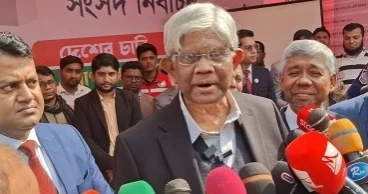
Finance Adviser Dr Salehuddin Ahmed on Sunday said the current interim government would leave Bangladesh’s economy in a “satisfactory and stable” position for the next elected government, though he acknowledged that significant challenges remain ahead.
“I believe we are leaving the economy in a satisfactory place. The next government will not face major difficulties in continuing from here. The situation is stable now — not shaky like before,” he said.
Speaking to reporters after the Government Purchase meeting at the Secretariat, Dr Salehuddin said the economy is no longer in a fragile or unstable condition, unlike earlier periods, and that the foundations have been stabilised to allow future governments to move forward.
Responding to questions on whether the government had taken on record levels of debt, the finance adviser said while borrowing had increased, a substantial amount of external debt had also been repaid.
“Yes, borrowing increased, but we also repaid around six billion dollars in external debt. Debt repayment is equally important,” he said, adding that many large, expensive infrastructure projects were deliberately avoided.
“We did not go for costly mega projects like tunnels or projects worth thousands of crores through loans. That is why public debt pressure did not worsen further,” he said.
He admitted that employment generation remained one of the government’s biggest challenges, largely because job creation requires sustained support for small and medium industries.
“Our major challenge was employment. For that, small and medium enterprises are essential. But we did not have enough fiscal space. Large factories are not labour-intensive, and they come with many complexities,” he explained.
Addressing concerns over contradictory statements about future economic risks, Dr Salehuddin clarified that while the economy is stable, reforms need to be consolidated and carried forward carefully.
“What we have done is not a one-off solution. To take it forward, it needs to be strengthened further. That itself is a big challenge,” he said, noting that access to concessional foreign aid has declined, making future financing more difficult.
He stressed that reforms require time, cooperation and procedural discipline, which are often difficult in Bangladesh’s complex administrative system.
“Reform is not just about speeches. It requires process, cooperation and patience. Inside the system, procedures are extremely complicated. Without cooperation, it becomes very difficult,” he said.
Highlighting governance reforms, the finance adviser said the government has made significant progress in digitising land records and khatian maps, making services cheaper and more accessible to citizens.
“Porcha and land records are being digitised. Now people can get services for Tk20, which earlier cost Tk500. We are expanding digital access nationwide,” he said.
He described the initiative as one of the most fundamental service delivery reforms, reducing harassment and improving transparency.
Dr Salehuddin also confirmed that the government is preparing to face international arbitration over alleged financial disputes and money laundering allegations involving business interests linked to S Alam Group.
He said a case has been filed at the International Centre for Settlement of Investment Disputes (ICSID), a World Bank-affiliated arbitration body, following complaints lodged by the concerned party.
“They have gone for arbitration at the World Bank forum. We have received notice and must respond. This is a very serious matter involving a large amount of money,” he said.
The government has decided to engage international legal counsel to contest the case, he added.
“We will engage a legal firm. This is not a simple issue. Legal preparation is essential,” he said, though he declined to disclose the name of the firm at this stage.
A government team is expected to visit Washington, DC, to deal with the arbitration process, he said.
On power sector reforms, the finance adviser said electricity tariffs are being rationalised rather than increased arbitrarily.
“This is tariff restructuring, not a price hike. Money is being adjusted from one segment to another. It will not affect electricity supply,” he said, adding that efficiency issues at power plants such as Ashuganj are also under review.
Dr Salehuddin said despite criticism, many fundamental reforms had been undertaken, even if they were not always visible.
“People say nothing has been done because they only look for visible projects. But many fundamental procedural reforms have taken place. If someone does not want to see, they will not see,” he remarked.
The government has appointed a British law firm to contest an international arbitration case filed by S Alam Group founder Saiful Alam and his family before the International Centre for Settlement of Investment Disputes (ICSID).
Sources familiar with the decision said the Advisory Committee on Government Procurement has approved the appointment of White & Case LLP, a UK-based international law firm, to represent Bangladesh in ICSID arbitration case No. ARB/25/52. The firm will be paid a fee of US$1,250 per hour for its legal services.
The proposal to hire an international law firm was placed before the committee by the Ministry of Law, Justice and Parliamentary Affairs, citing the complexity and high financial stakes of the case.
Speaking to journalists after the meeting, Finance Adviser Dr Salehuddin Ahmed said the arbitration was linked to allegations of money laundering.
“S Alam has apparently filed a case in London and challenged Bangladesh at the World Bank’s ICSID. We need to engage an international legal firm to fight this case, as it involves a huge amount of money and has been brought before an organisation like the World Bank,” he said.
When asked about the identity of the firm, the adviser said it was a British firm but did not name it at the time.
Dr Salehuddin also said legal action was underway against S Alam over alleged money laundering.“When a government or a company is accused of obstructing business, ICSID arbitration is invoked. We have received the arbitration notice and must respond. This is a highly complicated legal process,” he added.
In October last year, lawyers representing S Alam and his family formally filed the arbitration request at ICSID in Washington, alleging that asset freezes, confiscations and punitive measures taken by the Bangladesh government over money laundering allegations caused them losses worth hundreds of billions of dollars.
In their filing, the S Alam family claimed that the interim government has deliberately targeted them through bank account freezes, asset seizures, “baseless investigations” into their businesses and a “provocative media campaign,” arguing that such actions violate international investment protection obligations.
The arbitration has been filed under the 2004 Bangladesh–Singapore Bilateral Investment Treaty (BIT). Documents show that members of the S Alam family renounced Bangladeshi citizenship in 2020 and obtained Singaporean citizenship between 2021 and 2023. They are currently residing in Singapore.
As Singapore nationals, they claim entitlement to international investment protection under the BIT, as well as protection under Bangladesh’s Foreign Private Investment (Promotion and Protection) Act, 1980.
Following the August 5, 2024 mass uprising that led to the fall of the Sheikh Hasina government, an interim administration headed by Prof Muhammad Yunus initiated investigations and asset recovery efforts against major business groups and influential individuals accused of large-scale money laundering.
An economic white paper published by the interim government in December 2024 estimated total illicit capital flight at around US$234 billion. Bangladesh Bank Governor Ahsan H. Mansur, who heads the asset recovery task force, has alleged that the S Alam family alone siphoned off nearly US$12 billion abroad.
He accused S Alam and his associates of taking control of multiple banks with the help of military intelligence and transferring funds overseas through loan and import fraud, forcing the government to bail out six banks.
S Alam Group has denied all allegations, saying the government has failed to present any credible evidence to support the claims.
7 months ago
Finance Adviser surrenders his diplomatic passport
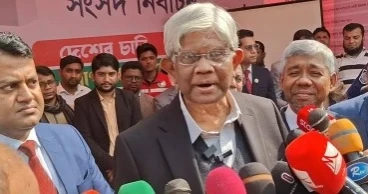
Finance Adviser Dr Salehuddin Ahmed on Tuesday said that he has already surrendered his diplomatic passport, emphasising that the move is part of a standard procedure and not linked to any immediate travel plans.
“I have already submitted it. I am not going anywhere. My health condition is not very good, as you know. I do not attend meetings unless they are extremely urgent,” he said.
Speaking to reporters after the Advisers’ Council on Government Procurement meeting, Dr Salehuddin said he has no intention of travelling abroad unless it is absolutely necessary, citing health concerns.
Read More: Economic situation stable, recovering steadily: Finance Adviser
Responding to a question on whether other advisers had also surrendered their passports, he said several individuals had done so, noting that it was a requirement.
“Many have submitted theirs. It has to be surrendered—it is a rule,” he added.
He further said that advisers would now use ordinary passports like general citizens. “We will get new passports and move around with ordinary passports like you,” he remarked.
Earlier, the Foreign Affairs Adviser had said that some advisers surrendered their diplomatic passports to facilitate visa applications using ordinary passports.
Asked whether applying for visas using ordinary passports posed any difficulty, Dr Salehuddin dismissed such concerns, saying visa processing had never been an issue for him.
“If you want a visa, you must apply independently. You cannot travel extensively first and then expect visas automatically. I have never faced any problem with visas,” he said, adding that he had previously travelled using an official (green) passport.
The surrender of diplomatic passports by advisers is seen as part of an effort to standardise travel privileges and align them with existing regulations governing public office holders.
Read More: Finance adviser urges patience on new pay scale, backs referendum
Foreign Affairs Adviser Md Touhid Hossain on Sunday said reports claiming that he had surrendered his diplomatic passport are untrue, although he acknowledged that some of his colleagues have opted for ordinary passports to facilitate quicker visa processing due to travel-related issues.
“Here is where misinformation comes in. Neither my wife nor I have surrendered our diplomatic passports. My passport is with me. It is highly unusual that the Foreign Adviser or any Minister would surrender his or her diplomatic passport while the tenure is still in effect,” he told reporters when asked about surrendering diplomatic passports by Advisers.
Hossain, however, confirmed that some have taken new passports, noting that it can make obtaining visas easier in certain cases.
But the Foreign Adviser did not mention who obtained the new passports.
7 months ago
Finance adviser urges patience on new pay scale, backs referendum
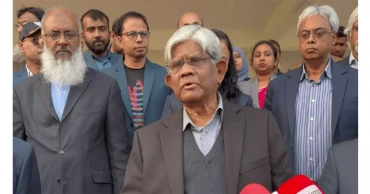
Finance Ministry Adviser Dr. Salehuddin Ahmed on Friday asked government officials to be patient regarding the new pay scale.
He said the pay scale has been prepared after 10 years.
“There are many calculations. A committee has been formed. They are working. After the committee submits its report, the scale will be implemented,” he said.
He added that funding is the main issue and assured that there is no reason to be discouraged.
Dr. Saleh Uddin Ahmed made the remarks while inspecting the Gurudaspur Upazila Mini Stadium in Natore.
He was accompanied by Cabinet Secretary Dr. Sheikh Abdur Rashid, Finance Secretary Dr. Sheikh Khairuzzaman Majumdar, Secretary of the Economic Relations Division Md. Shahriar Kader Siddiqui, and other senior officials.
The finance adviser also said that everyone should vote in favor of referendum.
He noted that there has never been a reform in Bangladesh for the people; changes have always been party-based.
Pay Commission to reveal report date soon, work continues: Dr Salehuddin
He further added, “Through referendum, the political government will gain strength in the future. That is why the government is speaking in favor of public voting.”
Dr. Saleh Uddin Ahmed praised the mini stadium during his visit.
Natore Deputy Commissioner Asma Shahin briefed him about the facilities.
8 months ago

Govt to decide on body camera purchase for police within days: Finance Adviser
The government is set to make a decision on purchasing body cameras for law enforcement agencies within the next few days, Finance Adviser Dr Salehuddin Ahmed said on Wednesday.
“We will take a decision on the purchase of body cameras after completing a few pending tasks. Hopefully, the matter will be finalised within the next couple of days—maybe tomorrow or the day after,” he said.
He said this while speaking to reporters after attending the meetings of the Advisers Council Committee on Government Purchase and the Advisers Council Committee on Economic Affairs at the Bangladesh Secretariat.
Govt okays procurement of 40,000 body cameras for police use during polls
Dr Salehuddin said some preparatory work regarding the procurement process is still ongoing.
Responding to a question about possible delays, Dr Salehuddin noted that the government is aiming to expedite the process by shortening procedural timelines within the Public Procurement Rules (PPR).
“Normally, tender procedures take some time, but we are trying to fast-track the process under the provisions of the PPR. Once the proposal is ready, we’ll move forward quickly,” he added.
The Adviser did not disclose details about the number of body cameras to be purchased or the specific agencies that would receive them but hinted that the procurement would be prioritised considering operational needs and accountability requirements.
The government on September 23 approved procurement of around 40,000 body cameras for police personnel to be used during the upcoming national election, scheduled for February.
The procurement would be carried out through the United Nations Development Programme (UNDP) to ensure quality, transparency, and neutrality in the process.
He said buying through UNDP will help avoid controversies over quality and pricing, as international tenders will be floated and responsibility will lie with the agency.
10 months ago

IMF to decide Bangladesh’s next loan installment after formation of political govt: Adviser
Finance Adviser Dr Salehuddin Ahmed on Sunday said the International Monetary Fund (IMF) is continuing its review of Bangladesh’s progress under the ongoing loan programme and a final decision regarding the next installment is expected only after the formation of the next political government.
“The IMF has acknowledged that the government has been working to address macroeconomic challenges and implement reforms. They have some recommendations, particularly on revenue generation. We agree that tax revenue remains low, and there are structural reasons for this,” Dr Ahmed said.
Talking to reporters at Bangladesh Secretariat after holding a series of meetings, the adviser said the government has already undertaken necessary reforms and is consolidating the progress before the upcoming general election, scheduled for February 2026.
He said tax compliance among citizens remains weak, while the temporary suspension of the new National Board of Revenue (NBR) for two months also had an impact on revenue collection. “We are working to resolve these issues.”
According to the adviser, the IMF has also emphasised increasing expenditure in the social sectors, especially health, education and social protection. “On food security, we are performing reasonably well.”
BGMEA briefs IMF on RMG risks, urges govt to prioritize FTAs to counter LDC graduation challenge
Responding to a question on whether the government expects to receive the next IMF tranche during the tenure of the interim administration, Dr Ahmed said the focus now is to maintain stability and hand over a well-structured economic reform framework to the elected government.
“We will consolidate the work done so far. Of course, we cannot complete everything. Major reforms such as tax restructuring, public sector pay commission review, and strengthening the banking sector will continue. These will be carried forward by the next government,” he said.
The adviser said Bangladesh has already submitted relevant reports to the IMF, and a review mission will visit the country again early next year. “The IMF will review again around the election period and then decide on disbursement. We have no objection to this. A stable political government is needed for sustained reform.”
Asked about recent remarks by the Bangladesh Bank Governor on certain policy proposals, Dr Ahmed declined to comment but said any major decision would be taken collectively by the government. “This is an internal matter of the Bangladesh government. It will go to the advisory council for consideration,” he said.
In response to a question, the adviser said he is scheduled to hold final discussions with the IMF on November 15. “I have already had a virtual meeting with them. They said they are very happy with the overall economic direction. They acknowledged the efforts we have made and are making.”
IMF to probe ‘NPL data concealment’ in Bangladesh’s banking sector
The adviser also informed that an independent committee comprising economists has been formed to recommend reforms in the tax system.
He identified the banking sector as the most critical challenge in the economy. “Some reforms have already begun, and the rest will proceed gradually. These issues will also be handed over to the next government.”
Responding to whether the sixth installment of the IMF loan will be released during the interim government’s tenure, Dr Salehuddin said the IMF will review progress again after the national election expected in February.
“They want to see how much the political government continues the reforms. That is important for them. So, after their review early next year, they will make a decision,” he said.
The $4.7 billion IMF loan programme, approved in January 2023, aims to support Bangladesh’s economic stability, strengthen fiscal reforms, and enhance resilience amid global economic pressures. Several tranches have already been disbursed, while further installments remain tied to policy performance benchmarks and structural reforms.
The IMF will delay disbursing the sixth tranche until the next national election and the new elected government assumes office.
The interim government that assumed power on August 8, 2024 three days after the Awami League regime was ousted amid a mass uprising has announced that the next general election would be held in February.
Finance ministry officials said that they were expecting the releases of the sixth and the seventh tranches in June 2026.
IMF-WB proposes unified debt management office in Dhaka to strengthen public debt governance
On June 23, the IMF approved the release of the fourth and fifth tranches amounting to $1.3 billion, taking the overall amount of disbursement to $3.6 billion.
In June 2025, the IMF also increased the overall loan amount to $5.5 billion from $4.7 billion under the loan programme that began in 2023 under the AL regime in 2023 to meet the balance of payment shortage.
The progarmme period has also been extended by six months to January 27, 2027 from July 2026, following requests from Dhaka.
The interim government has already reduced the balance of payment pressure.
Driven by higher remittance and export earnings, the country’s gross foreign exchange reserves increased to $32 billion on October 16, the highest in 31 months.
The latest IMF mission is also linked to the Article IV report, an annual consultation with its member countries on overall economy, on Bangladesh.
10 months ago
Investing in education means investing in Bangladesh future: Salehuddin
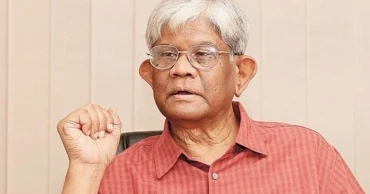
Finance Adviser Dr Salehuddin Ahmed on Saturday said spending on education is always an investment in the nation’s future.
“By investing in education, we are not merely helping individual students—we are shaping the future of the country,” he said while addressing a scholarship distribution ceremony of the Brahmanbaria District Association, Dhaka.
He praised Brahmanbaria as the ‘Land of Heritage and Harmony’, and lauded the community’s unity and vision for building a district recognised for knowledge, culture and innovation.
The Association hosted its Executive Committee Installation and Scholarship Award Ceremony at International Convention City Bashundhara (ICCB), highlighting both the district’s heritage and its ongoing commitment to education and social advancement.
A total of 312 scholarships were distributed among meritorious students—25 at Honours level, 182 at HSC level, and 105 at SSC level, aimed at nurturing academic excellence and creating opportunities for Brahmanbaria’s youth.
Quality services needed to boost revenue collection: Finance adviser
Brahmanbaria District Association President MA Khalek said the district has a proud tradition of producing leaders, scholars and artists. “Today we renew our commitment to building a Brahmanbaria recognised for its talent and contribution, not for negative stereotypes,” he said.
General Secretary Engineer Md Khaled Hossain Mahbub (Shyamal) said the gathering was ‘a call to action’ to create and uphold a positive image of Brahmanbaria across Bangladesh and beyond.
The event ended with cultural performances showcasing the rich traditions of the district, reinforcing the message of unity and pride in its heritage.
1 year ago