Police Reform
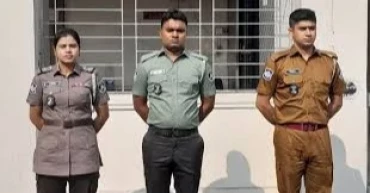
New iron-grey Bangladesh police uniform stirs mixed public reactions
Bangladesh police have stepped out in their newly introduced iron-grey uniform, drawing swift public attention and triggering a wave of mixed reactions in social media.
Officers in fresh metallic-toned attire were seen from Saturday early morning (November 15) at several key points in the capital, marking a visible shift from the force’s long-used traditional colours.
Photos and videos of the new look circulated widely online within hours as many citizens praised the change as a move toward a more modern and professional’ appearance.
A section of social media users are raising questions about the uniform practicality of the colour, associated costs and whether such surface changes would translate into better policing on the ground.
Police officials said the uniform change is part of a wider modernisation effort aimed at strengthening the force’s image.
Many citizens said meaningful reform must go beyond attire, emphasising performance and institutional integrity as the real markers of progress.
Stay alert against fraud using names of govt officials: Police HQ
In a bid to modernise the appearance of the country’s law enforcement agencies, the government on January 20 unveiled redesigned uniforms for the police, Rapid Action Battalion (RAB) and Ansar.
Home Affairs Adviser Lieutenant General (retd) Jahangir Alam Chowdhury said the new uniforms would come in distinct colours for each force, marking a shift aimed at improving visibility and professionalism.
“We have finalised three new uniform designs for the police, RAB and Ansar. These uniforms will be introduced in phases, gradually replacing the existing attire,” he told reporters.
Responding to queries on cost, the adviser said the transition would not put any significant pressure on the national budget. “There will be no major financial strain in implementing these changes,” he added.
Officials said the decision is part of broader efforts to enhance both the image and operational effectiveness of Bangladesh’s law enforcement agencies.
The initiative for this reform gained momentum following deliberations on police reforms, which began after August 5 last year.
After the interim government assumed office, members of the security forces began calling for a change in uniform colours as part of a wider push to reshape institutional mindsets and boost morale.
After independence, the most significant change to the police uniform came in 2004 when the four-party alliance government led by BNP removed the boat emblem from the uniform, along with the oar design from the cap, badge and belt.
Metropolitan police were given light olive uniforms, while district police wore dark blue. The Rapid Action Battalion (RAB) adopted black uniforms from its inception in 2004.
In 2009, Awami League-led grand alliance government restored reintroduced the boat symbol instead of Shapla emblem in the logo.
Historically, uniform changes have often been politically motivated, sometimes to prevent the attire from being linked to particular events.
A similar approach was seen with the Bangladesh Rifles (BDR). Following the 2009 mutiny, the BDR was renamed Border Guard Bangladesh (BGB) in 2011, accompanied by changes to its logo and uniforms.
Read more: Govt to decide on body camera purchase for police within days: Finance Adviser
4 months ago
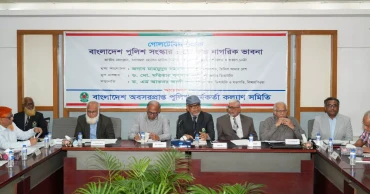
Speakers at roundtable emphasize urgent need for Police Reform in Bangladesh
Speakers at a roundtable discussion on Saturday opined that reform is essential to transform the Bangladesh Police into a truly people-friendly and humane force.
Organized by the Bangladesh Retired Police Officers Welfare Association, the event titled “Bangladesh Police Reform: Citizens' Perspective” was held at the Tofazzal Hossain Manik Miah Hall of the National Press Club, with the association’s president, retired DIG M Akbar Ali, in the chair.
Retired DIG Md Motiar Rahman presented the keynote paper, while Mahmudur Rahman, editor and publisher of the daily ‘Amar Desh’, attended as the main speaker.
The event was moderated by the association’s vice president Md Abdur Rahman Khan, and former IGP Ashraful Huda delivered the welcome speech.
Participants included former justices, civil servants, academics, journalists, political leaders, and other members of civil society.
Press Secretary for critical assessment of journalism during AL regime
In his keynote, Retired DIG Motiar Rahman highlighted key challenges facing the police force, including a colonial legal structure, shortages in human resources and technology, lack of accountability, corruption, excessive workload, and mental health concerns.
To address these, he proposed comprehensive reforms such as enacting modern and people-oriented laws, ensuring transparency and accountability, enhancing training and attitudinal change, free the police from political interference, implementing community policing, increasing use of technology, and building a disciplined, service-oriented force.
He also emphasized the urgent need for an independent Police Commission to monitor the force impartially and recommended that such a commission should include former and current justices, government officials, human rights activists, journalists, women, and civil society representatives.
"A safe, peaceful, and developed Bangladesh depends on a police force that upholds the values of independence, democracy, and human rights," he added.
Amar Desh Editor Mahmudur Rahman stressed the importance of depoliticizing the police and ensuring that officers are provided with adequate welfare and training opportunities.
He called for the withdrawal of military officers from RAB, and for modern and context-specific training for police personnel.
He urged the interim government to implement these reforms and also proposed the creation of a separate internal accountability committee within the police.
"The decline in police integrity is a result of political interference," he said. "If we are to hold free and fair elections, we must restore the morale of the police," he added.
Mahmudur Rahman also claimed that during Prime Minister Sheikh Hasina’s tenure, there was a breakdown of the chain of command within the police.
He criticized past police actions prior to what he described as the "July Revolution" and said that restoring public trust in the police is a major challenge for any interim government.
Recalling his own experience in police remand, he questioned whether the current crisis of police image was solely the force’s fault, suggesting that political affiliations of officers in detective branches contributed to the issue.
"Our goal is now to ensure that fascism does not return," he stated.
Prof. Dr. Borhan Uddin from the University of Dhaka’s Law Department emphasized the need for a separate legal framework governing police promotions and postings.
He noted that no government is likely to voluntarily establish a Police Commission and called for demilitarization of police equipment.
Ahmed Abdul Kader, Secretary General of, Khelafat-e-Majlish said that police must not be used to serve ruling party interests and essential reforms are necessary.
Zarif Rahman, a member of the Police Reform Commission, said that removing police reform from the national consensus agenda would be a betrayal of the July Movement.
Former Justice Farid Ahmed stressed that police reform has become unavoidable due to the controversial role of the force played during past governments.
Among others, Prof. Dr. Mohammad Kamrul Ahsan, Vice Chancellor of Jahangirnagar University; Barrister Asaduzzaman Fuaad, General Secretary of AB Party; BNP’s Information and Research Secretary Azizul Bari Helal; Prof. Md Shariful Islam from the Department of Political Science at Dhaka University; and Dr. Mohammad Tarikul Islam, Professor of Government and Politics at Jahangirnagar University also spoke in the programme.
8 months ago

Speakers call for urgent police reform to create public-friendly policing
Speakers at a discussion stressed the urgent need for structural and cultural changes within the police force, aiming to create a more public-friendly and efficient force.
A discussion titled "Why Has the Police Force Not Become Public-Friendly Even After 53 Years? Police Reform: Why? Which Path?" was organised by human rights organization 'Humanity Foundation' at the SIRDAP Auditorium on Saturday.
Zakia Shishir, a relative of Mir Mughdho, a martyr of July-August movement, said,"We constantly hear about the bad behavior of police. But why is it bad? We've been hearing this for 53 years. Has there been any research on it within the police? We need to focus on these areas. We want public-friendly police."
Syed Abdullah, a former law student at Dhaka University and an online activist, said, "The amount of bribery one has to pay to join the police force is huge. Once they get the job, they want to recover that money. If the practice of bribery is not stopped at the time of recruitment, there will always be a tendency to extort money later."
Changed scenario: Dhaka optimistic to establish good ties with Delhi
Abdul Mannan, a former sub-inspector of Dhaka Metropolitan Police (DMP), said "I worked as a sub-inspector in the DMP, and the amount of hardship we go through makes us want a separate quota for ourselves. Some of us receive rations, while others don’t. This is also a form of discrimination."
Former DIG (Deputy Inspector General) Mezbaun Nabi said, "We feel that this is our last chance. Whether it's state reform or police reform, we must take action now. There is a branch within the police called RAB, but giving them weapons and duties without proper training for just six days is not enough. It's not just 53 years; I would say that a bad culture has been ingrained in the police force for 163 years. Particularly over the last 15 years, the mentality has been instilled in the police that they must protect their ruler. Therefore, reform is not enough; there needs to be a change in the police's mindset."
1 year ago