July uprising
Acting speaker pays tribute to martyrs of July Uprising
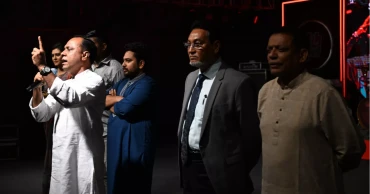
Acting Speaker Barrister Kaysar Kamal on Wednesday called for building a discrimination-free Bangladesh founded on resistance to imperialism and domination, while paying tribute to those who were killed and injured in the movement against fascism.
“I pay my deepest respects to those who embraced martyrdom and those who were injured while fighting against fascism,” the acting Speaker said.
He was Speaking as the chief guest at a cultural programme titled “Songs of the Monsoon Revolution” organised on Manik Mia Avenue in the capital to mark the Victory Day of the July Mass Uprising.
He said the nation must remain steadfast in its commitment to establishing an equitable Bangladesh.
1 month ago
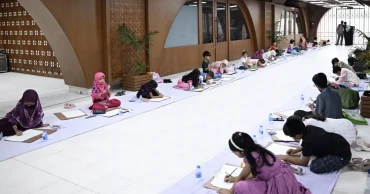
Children paint spirit of July at Parliament Secretariat competition
The Parliament Secretariat on Wednesday organised a painting competition for children at the conference room of the North Plaza of the Jatiya Sangsad Bhaban, commemorating July Mass Uprising Day.
The theme of the competition was “July 24 Through the Brush”, with children from reputed schools in the capital taking part in two age groups: five to eight years and above eight to 12 years.
Shacot Ara Akter, MP, and Parliament Secretariat Secretary Barrister Md Golam Sorwar Bhuiyan visited the venue during the competition and interacted with the participants.
1 month ago
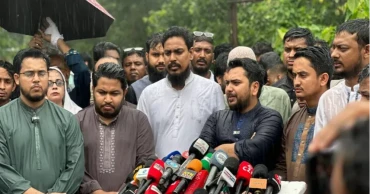
Govt must implement referendum verdict to prove its commitment to July uprising: Nahid Islam
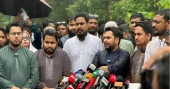
National Citizen Party (NCP) Convener Nahid Islam on Wednesday urged the government to implement the verdict of the referendum and implement promises of state reform, saying this would demonstrate its commitment to the aspirations of the July mass uprising.
After paying tribute at the mass grave of martyrs of 2024 uprising at Rayerbazar, Nahid said merely observing the anniversary would not be enough unless the promises of justice and reform are fulfilled.
"The government has to prove that it stands with the July Uprising by implementing the reforms demanded by people and executing the referendum verdict," he said.
He said July 1 marked the beginning of the historic uprising and that the party has started its observance by visiting the martyrs' mass grave at Rayerbazar.
Nahid said that although the uprising took place two years ago, the country has yet to achieve the discrimination-free and democratic Bangladesh envisioned by its participants.
Referring to a recent verdict of the International Crimes Tribunal, he said the judgment has failed to satisfy the people or the families of the martyrs and injured.
He criticised the sentence given to Jatiya Samajtantrik Dal (Jasad) President Hasanul Haq Inu, alleging that he had actively supported the July killings as an ally of the Awami League-led alliance.
"We do not think the sentence of 10 years in each of the three cases is enough," Nahid said, urging the state to appeal against the verdict and seek the maximum punishment.
He also expressed concern over what he described as the slow pace of investigations and trials related to the July killings, saying only two verdicts have been delivered since the current government assumed office.
Nahid called for the speedy completion of all pending trials and demanded that those accused of involvement in the July killings, including Sheikh Hasina and the killers of Osman Hadi be brought back to Bangladesh to face justice.
He also demanded the implementation of the death sentence against Sheikh Hasina once all legal procedures are completed.
Nahid urged the government to fulfil its commitments to the families of the martyrs and injured by ensuring financial assistance and rehabilitation for the July fighters.
2 months ago
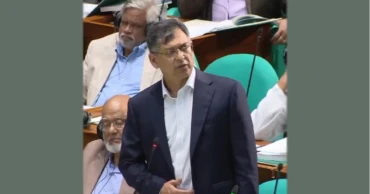
Indemnity Ordinance for July uprising to be adopted as bill: Home Minister
A parliamentary special committee on Tuesday agreed to recommend that the indemnity ordinance issued under the interim government to provide legal protection to individuals including students who participated in the July Uprising of 2024, be adopted in full as a bill in Parliament.
Home Minister Salahuddin Ahmed disclosed this while talking to reporters after the committee’s first meeting at the Cabinet Room of the Jatiya Sangsad Bhaban.
He said the committee unanimously supported the ordinance, which grants indemnity to those involved in the uprising, describing them as ‘brave fighters’ whose legal protection is both a moral and state responsibility.
Following the meeting, Law Minister Asaduzzaman said the committee has also started reviewing 133 ordinances promulgated during the tenure of the interim government.
“We are carefully examining each ordinance in detail. A comprehensive report will be finalised and submitted by April 2,” he said.
He added that the primary objective of the review is to ensure a balance between constitutional provisions and public expectations.
“Our goal is to move forward by ensuring harmony between the Constitution and the aspirations of people. However, the supremacy of the Constitution will be upheld in all cases,” he added.
The Law Minister also clarified that the committee’s recommendations will not automatically become law.
Instead, the panel will submit its observations and proposals to Parliament which will take the final decision on whether those recommendations should be transformed into law, he said.
Meanwhile, according to a press release from Parliament Secretariat, the first meeting of a special committee formed by the Parliament was held at the Cabinet Room of the Jatiya Sangsad Bhaban, chaired by Committee chairman Zainul Abedin, a Bangladesh Nationalist Party (BNP) Vice Chairman and Member of Parliament for Barishal-3.
Committee members present included Home Minister Salauddin Ahmed, Chief Whip Md Nurul Islam, Law Minister Md Asaduzzaman, Dr Muhammad Osman Faruk, A M Mahbub Uddin, State Minister for Public Administration Md Abdul Bari, Muhammad Nowshad Zamir, State Minister for Social Welfare Farzana Sharmeen, Md Mujibur Rahman, Md Rafiqul Islam Khan, and G M Nazrul Islam.
At the outset, the committee observed a one-minute silence and offered prayers seeking eternal peace for those killed during the July 2024 mass uprising.
The meeting held detailed discussions on a wide range of ordinances issued by the interim government.
These included amendments related to the Anti-Corruption Commission, Special Security Force, Bangladesh Investment Development Authority, government service laws, counter-terrorism measures, prevention of enforced disappearance, police reforms, human trafficking and migrant smuggling prevention, land use regulation and agricultural land protection, environmental conservation, civil aviation, and various development authorities, among others.
Key ordinances such as the “July Uprising (Protection and Accountability) Ordinance, 2026”, “Prevention of Enforced Disappearance Ordinance, 2025" and its 2026 amendment, and “Police Commission Ordinance, 2025” were also reviewed during the session.
The committee decided to continue examining the remaining ordinances at subsequent meetings. It further resolved to assess the necessity and validity of all ordinances and submit a comprehensive report to Parliament at the earliest opportunity.
After the meeting, committee chairman Zainul Abedin told reporters that a couple of members "have some opinions" on some of the issues in these ordinances.
"We have asked them to discuss them in the next meeting. If they cannot complete it in the next meeting, I have asked them to give it in writing," he disclosed.
The committee chairman said that their deliberations will resume tomorrow at 2 pm. If all the checks and selections are not completed, there will be more meetings. They hope to be able to submit a report by April 2.
5 months ago
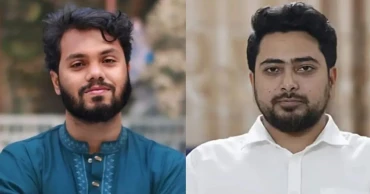
Nahid Islam pledges justice for Hadi, trial of July uprising killers
National Citizen Party Convener Nahid Islam on Monday vowed to ensure justice for Sharif Osman Bin Hadi and the perpetrators of the July uprising killings.
In a Facebook post on Monday afternoon, he said that implementing the July Charter and taking a firm stance against looting, corruption, and extortion remain key commitments of his party.
Nahid Islam, who contested the national election from Dhaka-11 constituency, won by a margin of more than 2,000 votes. Running with the Shapla Kali (water lily bud) symbol, he secured 93,872 votes.
After meeting Jamaat Ameer, Tarique meets NCP chief Nahid
Meanwhile, BNP Chairman Tarique Rahman paid a courtesy call on Nahid at his residence on Bailey Road in the capital around 8:30 pm on Sunday.
7 months ago
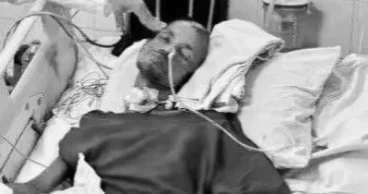
July Uprising fighter dies in hospital
Another fighter injured during the July–August uprising in 2024 died at a hospital in the capital on Sunday.
Thirty-two-year-old Ashraful succumbed to his injuries around 8:00 am while undergoing treatment at the Intensive Care Unit (ICU) of the National Institute of Neurosciences and Hospital in Dhaka.
Md Abu Shadik (Kayem), Vice-President of Dhaka University Central Students’ Union (DUCSU), shared the information in a Facebook post in the afternoon.
According to the post, Ashraful was shot in Mirpur-10 on August 5, 2024, during the uprising.
He had been receiving medical treatment in Thailand for 14 months before being brought back to Bangladesh on February 4, 2026.
He was then admitted to the ICU of the National Institute of Neurosciences, where he later died.
Visit July Uprising Museum at Gonobhaban to witness brutal history: CA
7 months ago

Hasina named in 663 cases over July Uprising, 453 on murder charges: TIB
Transparency International Bangladesh (TIB) on Monday said a total of 663 cases, including 453 of murder, have been filed against ousted former prime minister Sheikh Hasina over alleged crimes against humanity committed during the July 2024 mass uprising.
The findings were revealed in a research report unveiled at TIB’s Dhanmondi office, outlining the progress, challenges and limitations of cases filed in connection with the uprising.
As of November 19, 2025, a total of 1,785 cases have been filed nationwide over crimes against humanity linked to the July uprising, according to the report.
Sheikh Hasina has been named as an accused in 663 of those cases. Of the total cases, 736 are of murders, with Hasina listed as an accused in 453.
ICT issues arrest warrants against Hasina, 5 others
TIB said charge sheets have been submitted in only 106 cases, including 31 murder cases, reflecting slow progress in investigations.
So far, 128 former ministers and members of parliament from the Awami League government have been arrested in connection with the cases.
The report revealed that 761 cases have been filed against the police over the same incidents, naming 1,168 serving and former police personnel as accused. Among them, 61 have been arrested.
At the International Crimes Tribunal (ICT), 450 complaints have been lodged so far, of which 45 have been taken into cognisance. These cases involve 209 accused, with 84 arrests made.
Currently, 12 cases are under trial at the ICT, involving 105 accused persons. TIB said many of the accused have fled the country, with allegations that members of the military, law enforcement agencies and local political leaders directly or indirectly facilitated their escape.
TIB expressed serious concern over what it described as indiscriminate filing of cases following the uprising.
The report estimated that around 150,000 people across the country have been made accused in these cases.
The watchdog cited widespread allegations of case trading, retaliatory filings, political harassment and extortion through threats of inclusion or exclusion from cases.
In many instances, law enforcement agencies reportedly accepted cases without proper investigation due to pressure, the report said.
TIB also raised concerns over the competence and political affiliations of judges and prosecutors appointed to the ICT.
While acknowledging that trials have begun and some progress has been made, the organisation warned that weak case foundations, lack of incident-specific charges, investigative complexity and the absence of a clear factual narrative are undermining the judicial process.
The report further pointed to the absence of effective accountability for police actions beyond limited departmental measures, along with continued practices of unlawful arrests, excessive remand, denial of bail, prolonged pre-trial detention, and political influence in legal proceedings.
TIB also noted cases where journalists and professionals were named as accused in murder cases, raising serious questions about misuse of the justice system.
Although the live broadcast of verdicts was cited as a positive step, TIB cautioned that failure to fully adhere to due process and legal standards could jeopardise fair justice and risk allowing actual perpetrators to escape accountability.
7 months ago

Hadi murder: Accused Rubel makes confessional statement
Md Rubel Ahmed, a close associate of Faisal Karim Masud alias Rahul—the prime accused in the murder of Inqilab Moncho spokesman Sharif Osman Hadi—has given a confessional statement in court.
Metropolitan Magistrate Mahbubur Rahman recorded the statement after Rubel was produced before the court on Saturday by the investigation officer, CID Police Assistant Superintendent Abdul Qadir Bhuiyan, following two rounds of remand totaling nine days, Prosecution Sub-Inspector Rokonuzzaman said on Sunday.
“He was sent to jail after recording the statement,” the official added.
Read More: Hadi murder: Court orders freezing of 53 bank accounts of Faisal
Rubel was arrested from the Ati Nayabazar area of South Keraniganj late on January 21. The following day, the court granted a six-day remand, and last Wednesday, an additional three days were approved.
Sharif Osman Bin Hadi had been serving as the spokesperson of Inqilab Moncho, a political and cultural platform formed in the aftermath of the uprising.
On December 12, around 2:20pm, assailants riding a motorcycle shot Hadi on Box Culvert Road under Paltan Model Police Station before fleeing the scene. He sustained critical gunshot wounds to his head and below his right ear.
Read More: Hadi Murder: Court sets Jan 15 for hearing charges
Hadi was first taken to Dhaka Medical College Hospital and later shifted to Evercare Hospital. As his condition worsened, he was airlifted to Singapore for advanced treatment on December 15. He succumbed to his injuries on December 18 while undergoing treatment there.
Following the incident, Inqilab Moncho Member Secretary Abdullah Al Jaber filed an attempted murder case with Paltan Police Station on December 14.
The case was later converted into a murder case after Hadi’s death.
7 months ago
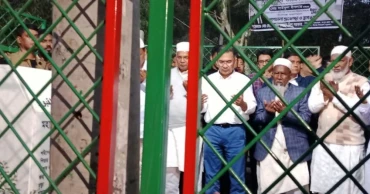
Tarique Rahman pays tribute at martyr Abu Sayed’s grave in Rangpur
BNP Chairman Tarique Rahman on Friday evening visited the grave of Abu Sayed, a Begum Rokeya University student who was killed by police firing during the July Uprising in 2024.
Tarique reached Jafarpara Babonpur village in Pirganj around 6pm and offered fateha at Abu Sayed’s grave.
Later, he spoke to the members of the martyr’s family and expressed his condolences.
BNP Standing Committee member Professor AZM Zahid Hossain and senior leaders of the party’s Rangpur district unit were present at the time.
Speaking to reporters later, Professor Zahid said Tarique offered fateha at Sayed’s grave and prayed for the eternal peace of Abu Sayed, who was martyred during the July student–led mass uprising.
“Paying respect to Abu Sayed is not only a duty of BNP, it is the responsibility of people across the country,” he said.
Zahid said Abu Sayed’s sacrifice inspired millions of people to stand up against autocracy. “On July 16, 2024, Abu Sayeed stood fearlessly against repression at Begum Rokeya University.
His courage showed the nation how to resist oppression, even in the face of bullets,” he said.
7 months ago
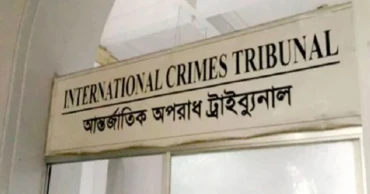
Verdict in Chankharpul killings case today
The International Crimes Tribunal-1 will deliver its verdict in the case over the killing of six people during the July Uprising of 2024 at Chankharpul in the capital on Monday.
On January 20, the three-member bench of the tribunal led by its Chairman Justice Golam Mortuza Mozumder, deferred the verdict although it had set January 20 for delivering the judgment.
Eight people are facing trial in the case.
Of them, four are currently in jail: former Shahbagh Police Station inspector (operations) Md Arshad Hossain, constable Md Sujan Mia, Md Imaz Hossain Iman and Md Nasirul Islam.
The four other accused are absconding.
They are former Dhaka Metropolitan Police (DMP) commissioner Habibur Rahman, former additional commissioner Sudip Kumar Chakraborty, former additional deputy commissioner of Ramna Division Shah Alam Md Akhtarul Islam, and former assistant commissioner Mohammad Imrul.
According to the prosecution, on August 5, 2024, police opened fire on a peaceful student movement at Chankharpul, leaving six people dead.
Read More: Ex-BGB official, 3 others indicted over killing 28 people during July uprising
The victims were Shahriar Khan Anas, Sheikh Junayed, Md Yakub, Md Rakib Hawladar, Md Ismamul Haque and Manik Mia Shahrik.
After finding evidence against the accused, the tribunal on July 14 framed charges against all eight and ordered the commencement of the trial.
ICT grants first bail in July Uprising crimes against humanity case
7 months ago