Lutfey Siddiqi
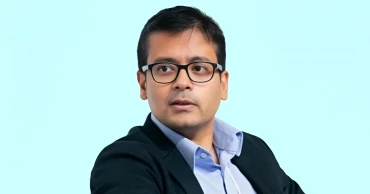
US tariff: Bangladesh must keep focus on domestic economic reforms, says Lutfey
Chief Adviser’s Special Envoy on International Affairs Lutfey Siddiqi has credited exemplary teamwork and hard work for the achievement on trade front, noting that Bangladesh is now no worse off than any of its competitors as far as the US tariffs are concerned.
"Exemplary teamwork and sheer hard work by so many over several months, working ‘round the clock across time zones. What started as 37% is now down to 19% with additional benefits for selected items," he said, soon after the agreement on reciprocal tariff signed between Bangladesh and the United States.
However, the Special Envoy said they must keep focus and follow through on domestic economic reforms - crucially around ports and logistics, digitalisation of government services, banking sector governance, skills and education.
"As the rest of the world accelerate their reforms, failure to improve our performance on these factors will have a much more adverse impact on our competitiveness than tariffs," Siddiqi said.The agreement on reciprocal tariff between Bangladesh and the United States was signed on Monday.
CPD executive director calls for 'comprehensive economic reforms' at PRI seminar
On the Bangladesh side, the signatories were Commerce Adviser Sheikh Bashir Uddin and National Security Adviser Khalilur Rahman, and on US side Ambassador Jamieson Greer, US Trade Representative.
Negotiations on the agreement spanned over nine months since April last year, said the Chief Adviser’s press wing.
Ambassador Greer lauded Chief Adviser Prof Muhammad Yunus for his overarching leadership of the negotiations process and praised the Bangladesh negotiating team for its "incredible efforts." "This agreement will fit Bangladesh on US trade policy", he said.
After the signing, Commerce Adviser Sheikh Bashir Uddin, who led the Bangladesh side in negotiations, said that the agreement marked a historically new level in our bilateral economic and trade relations.
"It will provide substantially enhanced access of Bangladesh and the US to each other's respective markets", he said.
The US will further reduce reciprocal tariff to 19%, which was originally set at 37% and later reduced to 20% in August last year.
Implement bold economic reforms to stay globally competitive: Dr Zaidi
In addition, the US committed to establishing a mechanism for certain textile and apparel goods from Bangladesh using US produced cotton and man-made fiber to receive zero reciprocal tariff in US market.
"The reduction of reciprocal tariff will grant further advantage to our exporters, while zero reciprocal tariff on specific textile and apparel exports from Bangladesh using US inputs will give substantial added impetus to our garments sector," said NSA Rahman who was Bangladesh's chief negotiator.
The agreement was approved by the Council of Advisers on Monday and will be operational once notifications are issued by the two sides.
Commerce Secretary of Bangladesh Mahbubur Rahman and Assistant US trade Representative Brendan Lynch were present at the signing ceremony.
7 months ago

Effigies of adviser Sakhawat, BIDA’s Ashik, amongothers burnt at DU
Effigies of several individuals were burned at Dhaka University on Thursday in protest against the government’s move to lease the New Mooring Container Terminal (NCT) of Chittagong Port to foreign entities, branding them as “economic hitmen.”
The demonstration was held in the afternoon at the Raju Sculpture under the banner of “Aggrieved Student Community (Sangkhubdo Shikkarti Samaj).”
Effigies of Shipping Ministry Adviser M Sakhawat Hossain, the Chief Adviser’s Special Envoy for International Affairs Lutfey Siddiqi, Bangladesh Investment Development Authority (BIDA) Executive Chairman Ashik Chowdhury, and Chattogram Port Authority Chairman S M Moniruzzaman were set ablaze during the programme.
The protesters said the government must withdraw from any initiative to hand over control of Chattogram Port, described as a key pillar of Bangladesh’s national security, to foreign hands.
Mohiuddin Rahat, a 2019–20 session student of the Department of Criminology at Dhaka University, said the government is making excessive efforts just ahead of the election to lease the New Mooring Container Terminal to DP World.
“It appears as if the government believes its entire mission and vision will fail if it cannot hand over this port,” he said.
NCP officially launches election campaign from Dhaka University
He further alleged that four individuals within the Bangladesh government are attempting to lease the New Mooring Terminal to DP World in exchange for commissions from foreign companies, and that they have been lobbying extensively to hand over Chattogram Port to DP World.
7 months ago
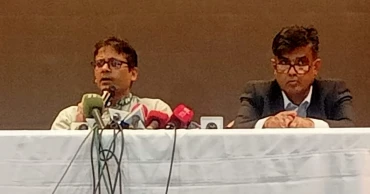
US may announce cut in reciprocal tariffs on Bangladesh next week: Lutfey Siddiqi
The United States may announce a reduction in the reciprocal tariffs imposed on Bangladesh by the end of this week or early next week, Chief Adviser’s Special Envoy on International Affairs Lutfey Siddiqi said on Tuesday.
Speaking at a press conference at the Foreign Service Academy, briefing the media on Bangladesh’s engagements and outcomes at the World Economic Forum (WEF) in Davos, Lutfey said Washington is sincere about lowering tariffs on Bangladesh and an announcement is expected soon.
He, however, said it is still unclear to what extent the current 20 percent tariff will be reduced.
Lutfey Siddiqi said he discussed the issue with US Treasury Secretary and member of President Donald Trump’s Cabinet, Scott Bessent, on the sidelines of the Davos conference.
“Many elements of the US non-tariff policies align with the reform agenda of Bangladesh’s interim government. Besides, the trade deficit of around USD 6 billion with the US has come down significantly. Considering these factors, the United States is showing sincerity in reducing trade barriers on Bangladesh. A better decision will come soon,” he said.
On Bangladesh-EU trade relations, Lutfey said discussions were held with EU Commissioners Roxana Mînzatu and Jozef Síkela on a possible Free Trade Agreement (FTA). “We have clearly conveyed that Bangladesh wants an FTA with the EU, and they have shown interest. But their process is slow.”
Trump hikes US tariffs on South Korean goods to 25 percent
He said the EU is currently pursuing FTAs with India and may move towards Vietnam next, which could pose challenges for Bangladesh. “Still, there is no reason to panic. We must continue discussions. I will leave detailed notes on this for the next government.”
Lutfey also pointed out that securing GSP Plus facilities in the EU market after Bangladesh’s graduation from LDC status will be challenging, and warned that excessive export concentration on a single product could risk losing GSP Plus benefits, noting that Bangladesh’s garment exports heavily dominate the EU market, which could create future vulnerabilities.
Referring to talks with World Trade Organization (WTO) Director-General Ngozi Okonjo-Iweala, Lutfey said future trade policy issues were discussed, where the WTO chief advised Bangladesh to gradually move beyond multilateral trade reliance and focus more on bilateral trade agreements.
In this context, Lutfey said productive discussions were held with Japan on an Economic Partnership Agreement (EPA).
Japanese Minister of Economy, Trade and Industry Akazawa Ryosei informed that a formal agreement with Bangladesh could be signed within the next one or two weeks. Also Bangladesh will enjoy duty-free transit facilities in Japan for three years after LDC graduation, he said.
“Talks on FTAs are ongoing with South Korea, while negotiations with Singapore are almost at the final stage. In the future global trade environment, surviving without FTAs or EPAs will be difficult,” Lutfey said.
Lutfey Siddiqi said discussions with Thai Foreign Minister Sihasak Phuangketkewo covered potential Thai investment in Bangladesh’s food processing sector and the use of Thai ports to boost bilateral trade.
Trump threatens 100% tariff on Canada over China deal
On the Rohingya repatriation issue, Lutfey said the matter was discussed with UN Special Envoy on Myanmar Julie Bishop in Davos. “As days pass, global geopolitics surrounding Myanmar is becoming more complicated. Bangladesh must remain focused on its rightful demands.”
Highlighting talks with IOM Director General Amy Pope, Lutfey said discussions focused on legal migration from Bangladesh. “There is a perception internationally that Bangladesh is not serious about illegal migration and is content as long as people go abroad. We are trying to change that perception.”
He mentioned that 600 holders of fake passports were sent back from Singapore last month. “Previously, no action was taken against them. This time, with support from the CID, each individual will be brought under the law.”
Stressing the need for changing Bangladesh’s diplomatic approach, Lutfey said symbolic gestures such as signing MoUs, handshakes and photo opportunities are no longer sufficient; Bangladesh must make itself more relevant globally.
Corridor diplomacy and issue-based negotiations must be prioritised to clearly present our positions to the world, he said.
7 months ago
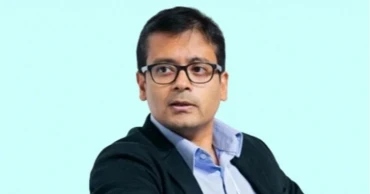
Bangladesh needs to tackle 5 priorities to navigate LDC graduation: Lutfey Siddiqi
Chief Adviser’s Special Envoy on International Affairs Lutfey Siddiqi has highlighted five key areas that Bangladesh needs to focus on to effectively address the challenge of LDC graduation, acknowledging that the fact of graduation is unavoidable.
"So, what do we need to do? Acknowledge that the fact of graduation is unavoidable. Even if it is delayed by a couple of years, it does not change our book of work," he said while delivering the keynote speech at the ILO Asia-Pacific Conference on Labour and LDC Issues in Bangkok on Tuesday.
In fact, he said, the changing world-order of aid and tariffs in just the last few months should make it clear that there are fewer unilateral, non-reciprocal, unconditional favours out there.
The Envoy said no-one will say: please enjoy these privileges, continue to access their markets, protect their own markets, and do whatever they like with labour, environmental or intellectual property standards.
"The best we can do is to try to ensure a smooth transition as opposed to a sudden, “cliff switch” in our terms of trade," Siddiqi said.
He not only acknowledged but also emphasised the importance of embracing the opportunities that come with graduation.
Structural reforms too slow to meet needs: Lutfey Siddiqi
"Remember, we have sound fundamentals in terms of people and location and we should be attracting considerable investments if we get this right. We are starting with a positive vision, a recipe for reforms, which should quickly move onto a time-bound roadmap of who needs to do what by when," Siddiqi said.
He said they need to diversify exports and this will require more deliberate sales and marketing of existing products and building the capacity to make new products.
The Envoy said creation of new products and industries will require new investment, especially foreign investment.
"That in turn will require practical reforms in logistics, customs, ports, inland waterways, airports ... And that will require reforms in public administration - in the way the government operates - including nationwide digital processes that will formulate large parts of the informal sector," he mentioned.
Siddiqi said they have to negotiate free trade agreements or economic partnership agreements with key countries so that they obtain friction-free access to their markets.
Increasingly, he said, these agreements entail multiple chapters, comprehensively covering a wide range of topics beyond tariffs to include labour standards and movement of people.
Siddiqi said skills and training needs urgent focus: targeted training to help workers and entrepreneurs to face competition and meet new demand in specialist areas.
"I was actually in Japan last week partly to help conclude our first ever major FTA/EPA with them, but also to help establish a structured process through which we can send 100,000 skilled workers in targeted vocations over there," the Envoy said.
He said their most important export markets - the European Union for example - will only extend preferential access to their markets (what’s known as GSP Plus) if they explicitly and verifiably upgrade the standards, especially labour standards.
"Conversely, if we can demonstrate credible progress in the advancement of those standards, we are likely to receive a sympathetic ear when we ask for transitional privileges," Siddiqi said.
In a post-uprising Bangladesh, the labour reforms agenda is a moral imperative, he said, adding that Nobel Peace Laureate Professor Muhammad Yunus’ government is committed to promoting dignity and decency in the workplace because that is the right thing to do, consistent with our values and our mandate.
Govt working with ILO for decent condition of labours in EPZs: Lutfey Siddiqi
"For the first time in history, we stood up a national-level Labour Reform Commission alongside the fundamental commissions looking at constitutional, parliamentary or judiciary reforms," Siddiqi said.
And these are being taken through a consensus-building process with all political parties ahead of the elections, he said.
The business community supports the government's labour reforms agenda for their own enlightened self-interest: the fact that it has a direct bearing on their access to export markets.
"Sure, we’re nervous about possible risks in execution and implementation. But let’s be clear: negotiating an extension to LDC graduation or negotiating favourable post-LDC terms will not be easy for a song as we have an Article 26 complaint hanging over us at the ILO governing board," Siddiqi said.
"The good news is that we expect to have completed the bulk of our obligations under the roadmap agreed with the ILO: both in terms of legislation and in the conduct of labour relations," he said.
Siddiqi said the three Rs that guide his approach every day. "We have to put rights, relations and resilience at the centre of everything that we do. Please wish us luck!."
1 year ago
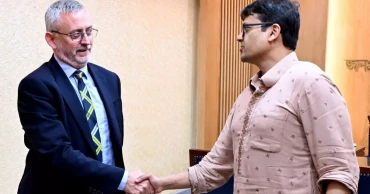
Post-uprising Bangladesh must fast-track labour reforms: Lutfey Siddiqi
Chief Adviser’s Special Envoy on International Affairs Lutfey Siddiqi has said post-uprising Bangladesh must approach meaningful labour reforms with greater confidence, speed and accountability than ever before, with unprecedented levels of social dialogue.
"This is not only a moral obligation from the perspective of governance and human rights, it is imperative for the enlightened self-interest of our business community for favourable terms of access to key markets," he said.
The issues were discussed when European Union Ambassador to Bangladesh Michael Miller met him on Wednesday.
Made ‘dramatic progress’ on labour reforms: Lutfey Siddiqi tells foreign diplomats
"It was a pleasure to catch up on this and other issues with EU Ambassador Michael Miller when he called on me yesterday (Wednesday). We’re grateful for his support," Siddiqi said.
"I’m looking forward to meeting a delegation of EU parliamentarians next month," said the Special Envoy in a post from his verified Facebook account on Thursday.
1 year ago
Structural reforms too slow to meet needs: Lutfey Siddiqi
Chief Adviser’s Special Envoy for International Affairs Lutfey Siddiqi on Saturday stressed the urgency of structural reforms within government agencies, stating that the current pace of reform is too slow to meet the nation’s needs.
“There is no long-term roadmap for key sectors, including industry, which is frustrating. Alongside institutional reforms, better coordination among government agencies is essential,” he said while addressing a seminar titled ‘Bangladesh’s Import-Export Policy: Requirements and Challenges in the Post-LDC Era’ organised by the Dhaka Chamber of Commerce and Industry (DCCI).
Highlighting the importance of seamless port operations, Siddiqi added that all ports are the lifelines of the economy and “the private sector is the main driver of our economy, so their [businesspeople] demands must be logically and effectively presented to the government.”
DCCI President Taskin Ahmed said prolonged inflation, US tariff policies, export restrictions from India, the ongoing energy crisis, declining reserves, mismanagement in the financial sector and law and order issues have severely disrupted industrial operations and slowed export activities.
NBR Reform Unity Council rejects compromise claims, announces strike
“There is no alternative to reassessing our import-export policy to tackle the post-LDC graduation challenges expected in 2026,” Taskin said.
He pointed out that export targets for sectors like leather, pharmaceuticals, jute, and agro-processed products have not been met.
“Over 84% of our exports rely on ready-made garments and a few specific markets. To address import-side challenges, we need both stability in the financial sector and efficient tariff and customs management,” he added.
Presenting the keynote paper at the event, Prof Selim Raihan of the University of Dhaka and Executive Director of SANEM, emphasised the gradual reduction of tariffs, modernisation of import policy, simplification of the customs system, improvement of trade facilitation, and automation.
1 year ago
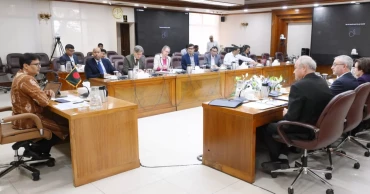
Made ‘dramatic progress’ on labour reforms: Lutfey Siddiqi tells foreign diplomats
Reviewing the past eight months of progress on labour reforms and outlining the government's roadmap ahead, Special Envoy to the Chief Adviser for International Affairs Lutfey Siddiqi on Monday conveyed to the top Western nations ambassadors and high commissioners that they have made a ‘dramatic progress’.
He held a high-level meeting with the envoys, including from the US, the UK, Canada, European Union and ILO at the Chief Adviser’s Office in Tejgaon to review the past eight months of progress on labour reforms and outline the government's roadmap ahead.
He was joined by technical experts and labour rights specialists.
Lutfey delivered the first full summary of the government’s reform efforts since July 2024.
“Over the past eight months, we’ve made dramatic progress,” Lutfey said. “The ILO roadmap is not just a guide — it’s a commitment. We’re investing time, energy and goodwill to get this right both in terms of process and outcome”.
He commended the personal engagement and moral authority of Labour Adviser Dr Sakhawat Hossain who spent hours with tripartite stakeholders to bring them along.
Labour Secretary AHM Shafiquzzaman said, “We are targeting July 2025 for conclusion of Labour law amendments and other substantial milestones. The process is moving fast.”
Govt committed to inclusive labour reforms, seeks global support: Adviser Sakhawat
European Union Ambassador Michael Miller called the process “unprecedented,” adding, “We note that there’s been a lot of social dialogue and we appreciate the sense of urgency. We look forward to seeing the draft legislation soon and track tangible improvements on the ground. Resolution of this has implications for continued access to EU markets.”
US Chargé d’Affaires Tracey Ann Jacobson said, “We welcome the momentum under the current government and would also like to see accountability for past violations.”
Canadian High Commissioner Ajit Singh added, “We appreciate the work done so far and support the ILO roadmap. This is particularly important for Bangladesh in the context of LDC graduation.”
British High Commissioner Sarah Cooke said, “Bangladesh’s LDC graduation must be backed by strong labour standards. I echo others in expressing my appreciation for the seriousness with which the interim government of Bangladesh has approached this issue.”
Labour Reform Commission submits report to CA
ILO Country Director Tuomo Poutiainen remarked, “We’re very close to shaping the updated Bangladesh Labour Act. What matters now is doing this in a way that stands the test of time and protects workers in the long run.”
Legislative Secretary Dr Hafiz Ahmed Chowdhury said, “We’ve made substantial legal progress, and our team is working closely with stakeholders”.
Lutfey also briefed the diplomats on earlier inter-ministerial meetings with the Home, Labour, and Public Administration Ministries to address politically motivated cases from the previous regime, better dispute resolution mechanisms to avert logjam in courts, and the issue of insufficient capacity in inspector roles.
“This is not just a domestic issue. Labour rights are now tied to market access, global trade decisions, including the tariff agenda of President Trump. We must act accordingly,” Lutfey said.
The diplomats agreed that labour reforms and accountability must remain a priority across all political contexts. Several reaffirmed their countries’ commitment to supporting Bangladesh’s transition.
Washington lauds labour reforms, expects more; stands by RMG
“The July uprising provides a unique opportunity for the Bangladesh government to do the right thing. We are grateful for the support from everyone as we approach the final stretch towards closing the case at the ILO governing board,” Lutfey said.
1 year ago
Dr Yunus gifted tremendous ‘soft power’ to Bangladesh: Lutfey Siddiqi
Chief Adviser’s Special Envoy on International Affairs Lutfey Siddiqi has said Chief Adviser Prof Muhammad Yunus has gifted tremendous "sift power" to the country and they should never let that gift go to waste.
"Let’s be absolutely clear: This gentleman has gifted tremendous “soft power” to the country, which has a direct and unparalleled impact on what we are able to deliver for our citizens. We should never let that gift go to waste," he said, sharing his thoughts referring to the TIME magazine's recognition.
Dr Yunus was named among Time magazine's list of the 100 Most Influential People in the World for 2025.
Given the extraordinary number of international awards to his name, Lutfey Siddiqi said, it is easy to think of these recognitions as “yet another one”.
Dr Yunus named among Time magazine’s 100 most influential people
"If this was a political leader, any one of these awards would have triggered celebratory roadblocks around the country, endless hyperbolic speeches, huge posters and large newspaper ads taken out by those seeking to curry favour," said the Special Envoy in a post shared from his verified Facebook account.
Former US Secretary of State Hillary Rodham Clinton in a Time tribute praised Yunus for his leadership during this crucial time.
"Now, Yunus has answered his country’s call once more. As he shepherds Bangladesh out of the shadows of oppression, he is restoring human rights, demanding accountability, and laying the foundations for a just and free society," she said.
After a student-led uprising toppled Bangladesh’s authoritarian Prime Minister last year, a known leader stepped up to guide the nation toward democracy: Nobel Peace Prize laureate Muhammad Yunus, said Clinton, a Democrat and a former US Senator.
Decades earlier, Yunus established the Grameen Bank in Bangladesh to empower the most marginalised communities through small loans, helping millions—97% of them women—build businesses, sustain their families and reclaim their dignity.
Pakistan's Engro CEO meets Dr Yunus; eyes business opportunities in Bangladesh
"I first met Yunus when he traveled to Arkansas to help then governor Bill Clinton and me set up similar programs in the U.S. Since then, wherever I’ve traveled in the world, I have witnessed the extraordinary impact of his work—lives transformed, communities lifted, and hope reborn," she said.
1 year ago
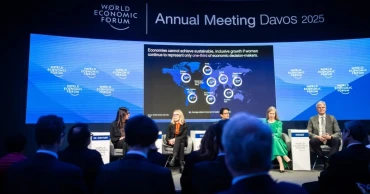
Lutfey Siddiqi shares what’s behind growing backlash
While the economic case for gender parity seems clear-cut, there has been a growing backlash against the push for women’s equal rights.
This backlash could be explained by elements of tokenism, which have also failed to lead to sustainable change.
Making real, lasting change will mean tackling things like deeply ingrained socio-cultural attitudes and gender roles.
Time and time again, research shows that if men and women were to have the same opportunities — educational, professional, health, to name a few — it would pay off, quite literally.
Dr Yunus engages with global leaders, seeks support to bring back stolen money
Alessandra Galloni, Editor-in-Chief, Reuters, Canada; Anna Bjerde, Managing Director, Operations, World Bank, Washington DC; Katherine Garrett-Cox, Chief Executive Officer, Gulf International Bank Asset Management, United Kingdom; Lutfey Siddiqi, Special Envoy of Chief Adviser Prof Muhammad Yunus; Michael Ensser, Chairman, Egon Zehnder, Switzerland; spoke in "Adding Trillions with Gender Parity" session at the World Economic Forum Annual Meeting 2025.
“If you had women participating as actively as men in the economy, the GDP of the world would be 20% higher,” pointed out Anna Bjerde, Managing Director of Operations at the World Bank, in a session at Davos.
Case closed. Or, as another panellist in the session, Michael Ensser, Chairman of executive search firm Egon Zehnder, put it: the business argument for gender equality is “an absolute no-brainer.”
And yet, what once seemed like a consensus view — that gender equality was something worth fighting for — has increasingly been called into question. For example, around the world, women’s access to sexual and reproductive healthcare has come under attack.
Lutfey Siddiqi, a special envoy of the head of Bangladesh’s interim government, has a theory.
“One of the problems that we need to confront is that there have been elements of tokenism and virtue-signalling in the way we’ve approached this,” he argued, citing examples where companies have “tried to parachute people in from the top as opposed to building an inclusive culture from the bottom.”
UN chief Guterres meets Dr Yunus in Davos
Not only was this approach ineffective, it possibly accounts for the push-back we’ve been seeing in some countries when it comes to gender equality, Siddiqi said.
“Some of the ESG scores are very reductionist, they look for a single score. And then in organizations it becomes adopted by HR and compliance, and all of a sudden you’ve defenestrated the manager who could have taken some ownership of this thing.”
But Siddiqi emphasised that even if this might offer an explanation for the backlash, it doesn’t justify that backlash. “We can’t throw out the baby with the bathwater,” he argued. “To say, well, because it was done in a tokenistic way in that instance, I’m going to give up on that altogether, that would be a silly way to go.”
"It’s quite embarrassing that we are having this conversation in 2025,” Katherine Garrett-Cox, Chief Executive Officer at GIB Asset Management, said during the session. “I wonder if it’s that some people think it’s too hard?”
UAE invites Dr Yunus to attend World Governments Summit in Dubai
While specific solutions might not be obvious, one thing the session made clear: we should all agree that achieving gender parity is a priority. “We have a lot to learn from each other,” conceded Bjerde. “But let’s not abandon this topic.”
1 year ago

British High Commissioner meets Special Envoy Lutfey Siddiqi to discuss bilateral cooperation
British High Commissioner to Bangladesh Sarah Cooke called on the Chief Adviser’s Special Envoy for International Affairs, Lutfey Siddiqi, at his office on Sunday and discussed areas of cooperation between the two countries.
Bangladesh reaffirms support for Syrian people
Special Envoy Siddiqi thanked the High Commissioner for the wide range of timely and relevant areas of assistance that the UK is currently providing to the Interim Government of Bangladesh.
The areas of cooperation include technical assistance in the financial sector and convening relevant research in the implementation of governance reforms.
1 year ago