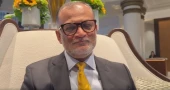
Commerce Adviser
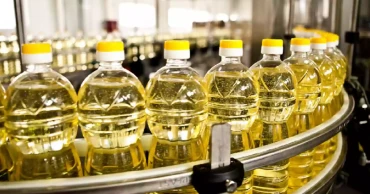
Businesses raise edible oil prices without government approval: Commerce Adviser
Commerce Adviser Sk Bashir Uddin on Tuesday said businesses have increased edible oil prices without the government’s approval, which is beyond their authority.
Bottled edible oil price goes up by Tk 6 per litre
“The government has not raised edible oil prices, nor has it given any permission to businesses to do so. Businesses do not have the authority to increase prices without the ministry’s approval. If there are price discrepancies, the government will take necessary measures,” he said while speaking at an event in Purbachal on the recent hikes in soybean and palm oil prices.
Bashir Uddin said edible oil is a regulated product under the Ministry of Commerce and only the ministry has the authority to fix its prices. “The Tariff Commission determines edible oil prices based on a 14-year-old formula. Personally, I do not find this formula reasonable,” the adviser said.
He said the ministry has tasked two financial bodies — the Institute of Cost and Management Accountants of Bangladesh (ICMAB) and the Institute of Chartered Accountants of Bangladesh (ICAB) — with reviewing edible oil prices in line with global market trends.
“On Monday, ICMAB submitted a draft report to the ministry. ICAB has not yet submitted any report. In this interim period, traders suddenly announced a price hike, which is completely illegal,” Bashir Uddin said.
Edible oil prices to go up in Bangladesh
He stated that the ministry will soon adjust edible oil prices after analyzing the reports from both institutes.
On Monday, the Bangladesh Vegetable Oil Refiners and Vanaspati Manufacturers Association claimed that the new prices were set in consultation with the Ministry of Commerce and aligned with international market rates.
Bashir Uddin, however, clarified that no such approval was granted by the ministry.
According to the new rates set by businesses, bottled soybean oil has increased by Tk 6 per litre to Tk 195, while loose soybean oil went up by Tk 8 per litre to Tk 177.
Besides, a 5-litre bottle of soybean oil now costs Tk 945 after a Tk 23 hike, and loose palm oil has been raised from Tk 13 per litre to Tk 163.
11 months ago
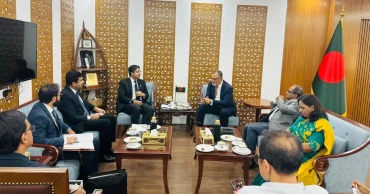
Commerce adviser, Pakistan PM’s trade coordinator discuss boosting bilateral ties
Commerce Adviser Sk. Bashir Uddin and Pakistan Prime Minister’s Trade Coordinator Ihsaan Afzal Khan on Thursday discussed ways to enhance bilateral trade and investment, strengthen economic cooperation, and take commercial relations to a new level.
The meeting was held at the adviser’s office in the Secretariat in the morning.
Adviser Bashir Uddin said Bangladesh’s cement industry heavily relies on imported raw materials particularly limestone and construction-grade stone.
Bangladesh needs around 50 million tons of stone annually and for this greater engagement between businesses of both countries is necessary, he said.
He said improving labour productivity, utility proportion, logistics excellence, cost of finance and market access can help expand the limited trade basket between the two countries.
This will reduce the trade deficit and strengthen people-to-people ties, he added.
Pakistan seeks stronger economic ties as PM invites Prof Yunus
He stressed the need for creating greater opportunities for Bangladeshi exporters in the Pakistani market.
Pakistan PM’s Trade Coordinator Ihsaan Afzal emphasised the importance of removing existing barriers to trade and expanding facilities.
“We want to significantly increase trade volume by strengthening direct contacts between business communities, exchanging trade missions and reducing tariff and non-tariff barriers,” he said.
Mahbubur Rahman, secretary of the Ministry of Commerce and Ayesha Akter, additional secretary (FTA) were, among others present at the meeting.
11 months ago
Bangladesh must build capacity in industrial inputs to stay competitive: Adviser
Describing China as Bangladesh’s largest trading partner, Commerce Adviser Sk Bashir Uddin on Friday said they must identify which intermediate industrial products can be manufactured in Bangladesh today, as this will strengthen the competitiveness of their industrial sector.
"Bangladesh imports goods worth over $22 billion from China. Unfortunately, our exports come nowhere close to matching our imports from China. China is one of the most competitive sources for our imports," he said at the event in the capital.
The adviser said Chinese Ambassador to Bangladesh Yao Wen has taken many initiatives to diversify the export potential, including promoting exports like mangoes, but they still have much more to do.
The adviser also emphasised fostering trade and investment between the two countries, and sought collective efforts.
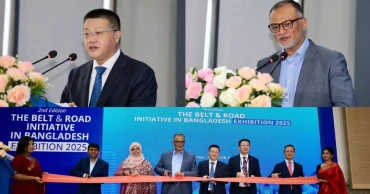
In order to comprehensively showcase the achievements of the Belt and Road Initiative (BRI) cooperation between Bangladesh and China, the second edition of the exhibition was inaugurated at the International Convention City Bashundhara (ICCB).
The Commerce Adviser inaugurated the two-day exhibition while Chinese Ambassador to Bangladesh Yao Wen, Power, Energy and Mineral Additional Secretary Md Sobur Hossain, Additional Secretary & Wing Chief Economic Relation Division of Finance Ministry Mirana Mahrukh, and president of Chinese Enterprises Association in Bangladesh (CEAB) Han Kun, among others, were also present.
Bashir Uddin said the road safety situation in Bangladesh is extremely alarming and the number of people who die on roads every year is staggering and they all feel very unsafe because of the highly unsafe commercial vehicles in the country.
“We really need to improve this situation, and China can help us a lot in this regard. I was suggesting—why don’t some good Chinese companies come to Bangladesh and manufacture quality trucks? We have a large market. So, we need to utilize all the components of our nearly half-a-trillion-dollar economy and turn it into a one-trillion-dollar economy as soon as possible,” he said.
Chinese Ambassador Yao said Bangladesh is the first country among the south Asian countries who responded to the BRI and it makes a new dimension.
China rolls out 2-year plan to boost power equipment sector
“China has taken economic and socio-economic development initiatives over the past 50 years. During the interim government, China has become a largest source of investment in Bangladesh. In the first half of this year, China's investment in Bangladesh increased by 254.3% since August last year,” he said.
China is ready to cooperate with Bangladesh in trade and investment, he added.
Md Sobur Hossain urged Chinese investors to invest in the renewable energy sector in Bangladesh and take its opportunity.
Mirana Mahrukh said Bangladesh wants to strengthen the existing relationship with China. “We are committed to building a discrimination free Bangladesh. So, we need cooperation” she added.
A total of 80 booths from 40 companies took part in the exhibition. Of this, 32 Chinese companies attended there.
This international exhibition aims to boost Bangladesh–China cooperation in key sectors such as infrastructure, technology, energy, healthcare, logistics, and manufacturing. It features high-level B2B and G2B networking, and insightful seminars on trade, investment, and innovation.
1 year ago
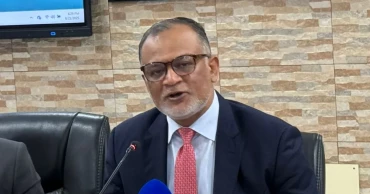
Bangladesh to sign several trade agreements with Pakistan: Commerce Adviser
Commerce Adviser Sk Bashir Uddin on Thursday said Bangladesh is set to sign several trade agreements with Pakistan to enhance bilateral cooperation.
The adviser made the announcement during a press conference held at the Secretariat.
The announcement followed a meeting between the adviser and visiting Pakistani Federal Minister for Commerce Jam Kamal Khan, during which both parties engaged in open discussions to boost trade.
“We want to work together in food and agricultural development,” said the adviser. “Discussions included importing and exporting fruits, particularly pineapples, and seeking Pakistan’s support in boosting local sugar production. They have responded positively to all proposals.”
The adviser also mentioned Bangladesh’s request for the removal of the anti-dumping tax imposed by Pakistan on hydrogen peroxide imports, expressing optimism about a favourable outcome.
In addition, Bangladesh has announced a duty-free export of 10 million kg of tea to the Pakistani market.
Bangladesh launches YVM to raise young people’s voices in decision making
The Pakistan Commerce Minister will remain in Dhaka for three more days to continue talks, with several agreements expected to be signed during the visit.
Bashir Uddin said they are also looking to establish a Trade and Investment Commission between the two countries.
He emphasised the untapped business potential between Bangladesh and Pakistan.
When asked whether closer trade ties with Pakistan might strain relations with India, the adviser declined to comment, stating, “Please ask the Foreign Affairs Adviser. We are focused on national interest and boosting our trade capabilities.”
Pakistan's Commerce Minister in Dhaka on 4-day visit
Regarding 1971 issues, Bashir Uddin said the topic did not come up in discussions.
Commerce Secretary Tapan Kanti Ghosh said that trade between the two countries had been minimal for nearly 15 years.
Pakistan has shown a renewed interest, and we see no barriers to expanding trade, he said.
“Currently, we import more than we export to Pakistan. Our goal is to reverse that trend and create a more balanced and beneficial trade relationship,” he added.
Pakistan High Commissioner to Bangladesh Imran Haider, Political Counsellor Kamran Dhangal, Trade and Investment Representative Zain Aziz, and Trade Assistant Waqas Yasin, were also present.
1 year ago
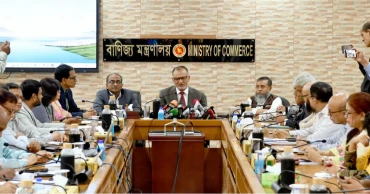
Bangladesh targets record $63.5 billion exports for FY26: Commerce Adviser
The government has set an ambitious export target of US$63.5 billion for the 2025–26 fiscal year, Commerce Adviser Sk Bashir Uddin said on Tuesday.
Speaking at a press conference at the Ministry of Commerce, Sk Bashir said the plan aims to earn $55 billion from goods and $8.5 billion from services, a significant push to accelerate the nation’s economic growth.
Senior ministry officials, along with leaders from various trade bodies and business sectors, were present at the briefing.
“This new target follows a period of notable growth,” the adviser said.
In FY2024–25, Bangladesh’s goods exports brought in $48.28 billion, achieving nearly 97 percent of the year’s goal and marking an 8.58 percent increase over the previous year.
The services sector also showed positive momentum, earning $5.77 billion from July to April of FY25, up 5.13 percent from the same period the year before.
According to Sk Bashir, the new targets were finalised after reviewing recent export performance, global trade trends, and the impact of geopolitical factors, including the conflicts in the Middle East and the ongoing war in Ukraine.
The FY26 export plan remains heavily dependent on the ready-made garments (RMG) industry — Bangladesh’s economic powerhouse.
Govt to allow onion import to curb price hike: Commerce Adviser
The woven garment segment has been set a $20.79 billion target, reflecting an expected 14.31 percent growth, while knitwear aims for $23.70 billion, up 12.01 percent from the previous year.
Other sectors are also expected to post strong performances:
· Leather and Leather Goods: Targeted at $1.85 billion, the second-largest export sector is expected to surpass this figure if market conditions remain favourable.
· Agricultural Products: With a $1.21 billion target, this sector aims for a 22.43 percent increase, supported by calls for better infrastructure, such as dedicated cargo planes and enhanced cooling systems at airports.
· Jute and Jute Products: A $900 million target has been set, with a projected 9.73 percent growth. Stakeholders are urging greater investment in the Bangladesh Jute Research Institute (BJRI) and stricter quality control through laboratory testing to boost Bangladesh’s reputation as a sustainable exporter.
· Home Textiles: Expected to grow by 17.03 percent, with a $1.02 billion target.
· Frozen and Live Fish: Aiming for $539 million, this sector anticipates 22.06 percent growth, with industry leaders hopeful that new shrimp hatchery licences and better quarantine facilities will help them exceed expectations.
The government and industry leaders share an optimistic outlook, viewing the $63.5 billion goal as both a challenge and an opportunity to build on the current growth trajectory while navigating the complexities of the global market.
1 year ago

No secret deal over US tariff cut: Commerce Adviser
Commerce Adviser Sk Bashir Uddin has dismissed the speculations of any secret deal with the United States in exchange for the reciprocal tariff reduction on Bangladeshi exports from 35 percent to 20 percent, saying all discussions prioritised the national interests.
“There is no room to ignore our own interests,” he said during an informal interview with journalists in Washington on Friday.
“Whatever we did, we did by prioritising our country—just as the US prioritises its national security," the adviser said.
When asked about the full disclosure of the agreement, the adviser said a joint statement may be issued soon and the details will be shared with the consent of the United States.
“Any components that might affect our interests had been resolved through discussions,” he added.
He also noted that a Bangladeshi business delegation is currently in the USA, and "they will not do anything that goes against their own interests."
Regarding speculations about Bangladesh agreeing to purchase 25 Boeing aircraft as part of the deal, the adviser clarified, “The US never mentioned anything about Boeings. Instead, they have shown interest in food, agricultural products and fuel.”
Regarding achievements in the aviation sector, the adviser expressed optimism, stating, “We are working to ensure transparency and carrying out necessary reforms in the sector. Hopefully, during our tenure, we will implement structural reforms within the ministry that will benefit those who come after us.”
1 year ago

Bangladesh awaits US response to letter on tariff; virtual meeting scheduled for Friday: Commerce Adviser
Bangladesh is awaiting a response from the United States regarding a letter it sent requesting a reduction in the recently imposed tariff on Bangladeshi products, Commerce Adviser Sk Bashir Uddin said on Thursday.
“We sent a letter to the US Commerce Secretary the day before yesterday outlining our position. We are now waiting for a reply—and an invitation. Once we receive both, InshaAllah, we will proceed with our negotiation team,” he told reporters responding to a question over the issue at the Secretariat.
An online meeting between the Bangladesh government and the United States Department of Commerce is scheduled for Friday (July 25), he said.
Bangladesh may get reduced tariffs on exports to USA: Finance Adviser
Regarding the looming August 1 deadline for the new tariff to take effect, he said, “This issue is important not only for us but also for the United States. Our efforts are going on with due dynamism. We have clearly presented our position and are awaiting a formal response. As soon as we receive the invitation, we’ll go there.”
Asked about the government’s expectations, Bashir Uddin said they are hopeful and doing what is needed to be done for a positive outcome.
About the demand from business leaders to appoint a lobbyist in the USA, the adviser said the government has not appointed any lobbyist.
He added that many of the necessary policy adjustments involve complex inter-ministerial legal processes.
“Only we understand what needs to change in our systems. A lobbyist may not be equipped to grasp or handle that. We've been working day and night for the last 15 days. Almost every relevant ministry is involved. We’ve conveyed our position and hope to proceed upon receiving the invitation," he said.
Trump announces trade deal with Japan, reduces tariff to 15%
“Once the online meeting is held, things will move forward. The fact that we’ve been offered an online meeting based on our letter shows that the process is active,” he said, responding to another question.
Despite two rounds of discussions on the issue there has been no breakthrough yet.
On July 8, US President Donald Trump informed Chief Adviser Professor Muhammad Yunus in a letter that the new 35% tariff on Bangladeshi products would take effect from August 1.
1 year ago
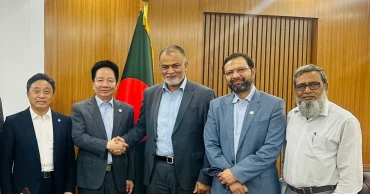
FAO keen to help Bangladesh boost jute market, says official
Director of the South-South and Triangular Cooperation Division at the UN Food and Agriculture Organization (FAO) headquarters, Anping Ye, on Wednesday held a meeting with Commerce Adviser Sheikh Bashiruddin at his office in the Secretariat.
During the meeting, they discussed FAO’s ongoing operations in Bangladesh, along with strategies for enhancing seed production, diversifying markets for jute products, and building capacity in the sector.
The commerce adviser said Bangladesh has a deep cultural, historical, and economic connection with jute and jute goods.
Jute, the golden fibre, was once the backbone of our economy, and even today it holds significant importance, Bangladesh aims to reclaim the golden past of jute and position itself as a global hub for eco-friendly products, he added.
Consumer rights severely eroded in previous 15 years: Commerce Adviser
The adviser also said to achieve this, coordinated efforts in research, investment, and marketing from both public and private sectors are essential. FAO’s support can play a vital role in accelerating this process.
In response, FAO Director Anping Ye said Bangladesh is a key country for jute products, and FAO is interested in helping expand the global market for Bangladeshi jute.
He noted that FAO has already set up an office in the country to support agricultural development, employing over 200 personnel — most of them local. He assured FAO’s cooperation in enhancing capacity for jute production and market expansion.
Textiles and Jute Secretary Md Abdur Rouf and FAO Representative in Bangladesh Xiaojun Shi were also present at the meeting.
1 year ago
Rawhides being sold at govt-set prices: Commerce Adviser
Commerce Adviser Sk Bashir Uddin has said sacrificial animal rawhides are being sold at the prices fixed by the government.
A special team from the Ministry of Commerce is working to ensure the enforcement of the set prices, he said while speaking to reporters on Sunday after inspecting the activities related to proper management of sacrificial animal hides in Posta, Lalbagh.
Responding to queries from journalists, the adviser said “The prices we fixed were inclusive of salt. The ones being sold for Tk 700 to Tk 800 are without salt. Compared to the prices of many previous years, this year’s prices are higher.”
When asked about allegations that seasonal traders are not getting fair prices, Sk Bashir said, “That is true in some cases, but mostly untrue. It’s untrue because some seasonal traders with no experience in hide preservation are ending up with half-rotten hides. If half-rotten hides are selling for Tk 700 or 800, that is actually a high price. Good quality hides are selling for Tk 1,200 to Tk 1,300.”
The adviser added, “Under the direction of the Chief Adviser, we took steps to promote local storage and salting to make the hides suitable for preservation and storage. This has helped stabilise the market and balance supply and demand.”
He mentioned that district and upazila administrations are working on the ground to manage the hides.
“At the national level, we have established a control room. Rawhide management is being monitored 24 hours a day. In most cases, salted hides are fetching appropriate prices as fixed by the government,” he said.
About misinformation, the adviser said some social media platforms and even parts of the mainstream media are spreading incorrect information.
“I saw a report from Rangunia in Chattogram claiming hides had rotted. A seasonal trader brought in around 620 hides but did not preserve them properly. They became half-rotten. This is now being used to run a smear campaign. Unscrupulous traders are trying to destabilise the market again,” he said.
“The government has generously supplied salt only to make hides suitable for preservation. It is not acceptable to shift all responsibility onto the government if individuals fail to perform their own duties,” Sk Bashir added.
He said the government has initiated efforts to build capacity and everyone must come forward to support this work. “Apply salt and preserve the hides properly. If you demand fair prices, you must ensure quality. I hope you will get fair prices, even more than expected,” he said.
To stimulate demand, the government has lifted the export ban on raw and wet blue leather. It has also disbursed Tk 220 crore in incentives.
“Salt has been delivered to every district, upazila, and village mosque across the country. Now everyone needs to get involved. It is unacceptable and reprehensible to solely blame the government and circulate false or misleading information that harms the leather market,” he added.
Sk Bashir said rawhide prices have increased compared to the previous day and expressed hope that salted hides would fetch even higher prices tomorrow.
“We have built the capacity to preserve hides for two to three months. I urge you not to sell until fair prices are available,” said the adviser.
“We have done as much as possible to make the process viable for fair prices and to secure the rights of orphans. I believe the political government will do even more next year based on what we’ve learned this year,” he mentioned.
Commerce Secretary Mahbubur Rahman, Additional Secretary (Export) Md Abdur Rahim Khan, and President of the Bangladesh Tanners Association (BTA) Md Shahin Ahmed were also present.
1 year ago

Bangladesh-India trade to continue in consumers’ interest: Commerce Adviser
Commerce Adviser Sk Bashir Uddin on Sunday said the trade between Bangladesh and India will continue in the interest of consumers and businesses of both the countries.
“We have not yet received any official communication from the Indian side. Once we do, we will take appropriate steps. If any issues arise, both sides will work to resolve them through discussions,” he told reporters at the Secretariat.
Referring to media reports, the adviser said, “We’ve learned from social media and media outlets that India has taken certain decisions affecting specific land ports, including Akhaura and Dawki, as well as some border areas.”
Asked if these developments might negatively impact Bangladesh’s exports, Bashir Uddin said, “Not everything we export is affected. A large portion of our exports comes from the garment sector. Our focus remains on achieving competitiveness. The trade is beneficial to both countries. India also has a strong textile industry, yet they import our products based on our capabilities.”
He expressed optimism that the trade would continue, saying, “This is in the interest of consumers and production sectors on both sides.”
Bangladesh now a unique example of growth and development: Commerce Adviser
On the matter of India’s reported restrictions on transshipment and exports, the adviser remarked, “Transshipment hasn’t had any significant impact on us. We’ve managed the situation using our own capacity.”
Regarding the potential impact on Indian businesses, Bashir Uddin said, “Certainly, there will be effects. Trade is a matter of competitiveness, including transport costs. Sometimes we impose bans on agricultural imports, and so does India. This is part of the regular trade management process. Any arising issues will be addressed through dialogue.”
When asked whether Dhaka plans to hold discussions with New Delhi, he responded, “We will take all necessary measures, but as of now, we have not received any official notification.”
Addressing whether bilateral ties have influenced these decisions, the adviser said, “My responsibility is trade, and I intend to remain focused on that… I strongly support open trade. For me, trade liberalisation and inclusion are essential to building the capacity of our businesses and consumers.”
Canadian investors can benefit from investing in Mirsarai: Commerce Adviser
On how Bangladesh plans to reduce its growing trade deficit with India, he said, “This is a long-term challenge. Trade deficits cannot be eliminated overnight. What we import from India is based on proximity and necessity, and they do the same. It’s largely shaped by natural factors. Our goal is to diversify and improve competitiveness to expand trade.”
1 year ago