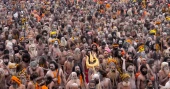
Maha Kumbh
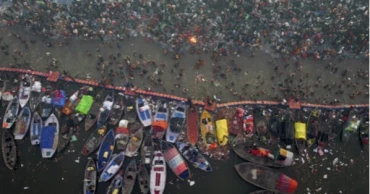
30 dead in India's Kumbh festival stampede
A tragic stampede at the Maha Kumbh festival in northern India claimed the lives of at least 30 people and left many others injured early Wednesday, according to police. The incident occurred as millions of Hindu pilgrims gathered for a ritual bath at the confluence of three rivers in Prayagraj.
Police official Vaibhav Krishna reported that 60 people sustained injuries and were taken to hospitals for treatment. The stampede took place on a particularly auspicious day in the six-week-long festival, with authorities estimating a turnout of 100 million devotees seeking spiritual purification through the holy dip.
According to Uttar Pradesh Chief Minister Yogi Adityanath, the chaos began when pilgrims attempted to bypass barricades set up for a procession of revered Hindu ascetics. These processions, a major attraction of the event, feature ash-covered sadhus making their way to the sacred waters.
Passenger plane catches fire at South Korean airport, all 176 people on board are evacuated
Despite the scale of the tragedy, Indian officials took over 16 hours to release casualty figures. Prime Minister Narendra Modi expressed his grief, calling the incident "deeply saddening" and offering condolences to the victims' families.
A witness named Sarojini told the Press Trust of India that the crowd suddenly became uncontrollable. "We were trapped with people pushing from all sides. Many fell, and there was no way to escape," she recounted.
Distraught relatives gathered outside a temporary hospital, anxiously searching for missing loved ones. The aftermath of the chaos was evident at the site, where personal belongings such as clothes, blankets, and bags lay scattered.
Despite police urging people to avoid the main confluence, millions of devotees continued arriving at the 4,000-hectare festival grounds. Adityanath assured that the situation was under control but acknowledged the overwhelming number of attendees. By 8 a.m. Wednesday, around 30 million people had already completed their ritual bath.
The Maha Kumbh festival, which occurs every 12 years, began on January 13, with an estimated 400 million expected to participate throughout its duration. So far, nearly 150 million people, including top officials like Defense Minister Rajnath Singh, Home Minister Amit Shah, and international celebrities like Coldplay’s Chris Martin, have visited the site.
12 rail passengers killed in India after jumping onto tracks in fire panic
A massive tent city has been set up to accommodate pilgrims, featuring roads, electricity, water facilities, 3,000 kitchens, and 11 hospitals. Authorities have deployed 50,000 security personnel and installed 2,500 surveillance cameras to monitor crowd movements and prevent disasters.
However, critics from opposition parties blamed the tragedy on mismanagement and alleged that VIP treatment for politicians and celebrities worsened crowd control issues. Opposition leader Rahul Gandhi urged the government to improve arrangements for ordinary devotees.
The Maha Kumbh festival is one of the most significant religious events for Hindus, who make up nearly 80% of India’s 1.4 billion population. The event is also politically important for Modi’s government, which emphasizes Hindu cultural heritage.
Stampedes have occurred at previous Maha Kumbh gatherings. In 2013, a similar tragedy at a Prayagraj train station left 40 pilgrims dead. More recently, in July, at least 116 people—mostly women and children—lost their lives in a stampede at a religious event in Uttar Pradesh’s Hathras district.
1 year ago
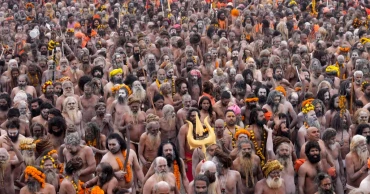
Millions of pilgrims, ascetics take holy dips at India’s Maha Kumbh festival
Millions of Hindu pilgrims and ascetics gathered in northern India on Tuesday for the first major bathing ritual of the Maha Kumbh festival, the world’s largest religious gathering.
Pilgrims took dips in the freezing waters at the confluence of the Ganges, Yamuna, and mythical Saraswati rivers in Prayagraj, marking the beginning of the grand event, AP reports.
At sunrise, large groups of ash-smeared Hindu holy men, known as Naga Sadhus, marched and rode in chariots toward the river.
Holding tridents, swords, and drums, they chanted hymns in praise of Lord Shiva as they made their way to the bathing site in a festive procession. Their followers, millions of devotees, joined them in the river, seeking spiritual cleansing.
India's Modi marks the opening of a strategic tunnel in disputed Kashmir
The Maha Kumbh festival, held once every 12 years, began on Monday, attracting over 15 million pilgrims for the first major bath. Over the next six weeks, officials expect more than 400 million people to visit Prayagraj, participating in religious rituals and bathing in the holy rivers.
Hindus believe that immersing in the confluence purifies the soul, washing away sins and freeing individuals from the cycle of rebirth. Venkatesh Ramaling, a tech specialist from Pune, spoke of the inspiring faith of the pilgrims.
“People have such strong belief here. It’s amazing how they dive into such cold water,” he said, sharing his own feeling of positivity after the ritual.
The Kumbh festival is rooted in a Hindu myth involving the god Vishnu, who is said to have wrested a golden pitcher containing the nectar of immortality from demons. A few drops of this nectar are believed to have fallen at four sacred sites — Prayagraj, Nasik, Ujjain, and Haridwar — where the Kumbh festival is held.
1 year ago