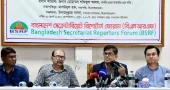
CA’s Press Secretary
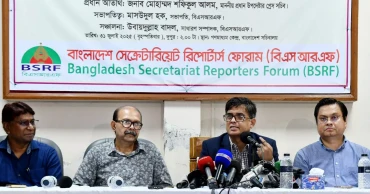
Election as per schedule, not a day’s of delay: CA’s press secretary
The national election will be held on time without any delay, said Chief Adviser’s Press Secretary Shafiqul Alam on Thursday.
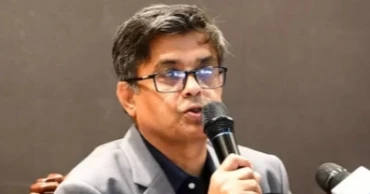
“The next five or six days are important for the interim government. There won’t be even a day’s delay. We hope this election will be held in a very festive and smooth environment,” he said while addressing the BSRF Dialogue at the Secretariat’s media centre, organised by the Bangladesh Secretariat Reporters Forum (BSRF).
“Professor Yunus initially mentioned early April. Later, during discussions in London, we said that if several reforms are implemented and progress is made, then the election could be held in February. We are still aligned with that position. There will not be a single day's delay,” he added.
“We hope this election will be held in a highly festive atmosphere. While some level of violence occurs in every election, we will make our utmost effort to bring it down to zero,” said Shafiqul.
No matter how the July Charter is finalised and it will have no impact on the election, he said.
About the government’s performance over the past year, the press secretary said, “You will judge how successful or unsuccessful we have been. But I believe we inherited a country that was as shattered as one hit by an earthquake. The interim government has tried to steer the country back to a path of growth—and I believe it has been largely successful.”
These are significant steps toward establishing good governance in Bangladesh and the reforms would yield further benefits in the future, he said.
About the repeal of the controversial Quick Enhancement of Electricity and Energy Supply act he said, “No such worse law has existed in Bangladesh’s history. It institutionalised large-scale corruption.”
“There was no tender process, no accountability. We repealed that law within 10 days of assuming office and have been making major policy decisions every day since.
Govt expects positive outcome from tariff talks with US: Shafiqul Alam
He also pointed to reforms in the police force and judiciary.
“The police gave us a 21-page document outlining what they’ve done in the past year. Previously, they operated under a colonial-style crowd-control law. Now, they’re aligning with UN standards,” he said.
In the judiciary, revolutionary changes were made in the appointment of judges.
Whether it is finance, NBR, or Bangladesh Bank, there isn’t a single institution where this government hasn’t worked in the past year, said the Press Secretary.
“A few isolated gruesome murders have caused panic. But I urge you to look at the statistics. Law and order is improving and the police are gaining confidence,” he added.
Shafiqul Alam said Prof Yunus’ interim government has brought the country to a stable state. “Inflation has come down close to 8%. People don’t realise how difficult it is to bring inflation down. This government has achieved that.”
He also mentioned a stable dollar-taka exchange rate and growing reserves, attributing credit to remittances from expatriates and effective policy decisions by Bangladesh Bank.
Reforms were made at NBR and BIDA, and their impact is beginning to show, he said. “We expect strong foreign investment in the next government’s term,” he added.
Chief Information Officer Mohammad Nizamul Kabir also addressed the event, presided over by BSRF President Masudul Hoque. BSRF General Secretary Ubaydullah Badol moderated the session.
1 year ago

Govt stabilised country, put it back onto growth path: CA’s Press Secretary
Chief Adviser’s Press Secretary Shafiqul Alam on Saturday said after seven and a half months, the interim government has stabilised the country and put it back onto the path of growth.
“But as (Chief Adviser) Prof Yunus Muhammad Yunus said we are still in a war-like situation. It is a war against disinformation and to put Bangladesh back into the global map,” he said.
The Press Secretary, in a Facebook post also said, UN Secretary-General António Guterres’ unprecedented four-day visit was a reflection that they are on the right path. “But it is a long journey.”
Alam said the law and order situation remains their “biggest challenge” and the crime figures clearly show that the situation “has not worsened” as much as projected in the local media.
“But it is understandable that people don't want us to compare figures with the Dictatorship era. The expectations are high. But confidence among police officers is still low. Many urban middle class women are worried about their safety,” he said.
The Press Secretary said attacks on Sufi shrines have declined sharply but some sporadic attacks continued to happen. “More than 50 Hizb-ut Tahrir men have been arrested. But people want more success in our fight against extremism,” he said.
The Commerce Adviser set strategies to boost supply of every essential food item for Ramadan and the goals were achieved in a stunning fashion, Alam said.
Bangladesh dismisses Tulsi Gabbard's remarks as misleading and damaging
“Inflation has been declining for three months in a row. And in February it was the lowest in 22 months. The airlines and concerned authorities were told to bring down air ticket prices, especially for travels to Saudi Arabia, our biggest manpower market,” he said.
Alam said the prices came down by 75 percent and digitalisation has been progressing at a record pace. “Chittagong Port operations are monitored every minute. Highest diplomatic efforts were mobilised to open up the UAE market.”
And attracting Foreign Direct Investment (FDI) no longer appears to be a tough job, said the Press Secretary.
“The last few months the tide has appeared to turn. By September, we are poised to see major foreign investment in Chittagong Port. Raising the efficiency of the Chittagong Port was thought to be a difficult proposition,” Alam said.
“Now we can see the silver lining. Once the Chittagong Port becomes more efficient, it will have a multiplier effect on the economy,” he said, adding that more FDI will come in manufacturing. “When that happens, prices of essentials would decline. Customs revenue would grow steeply.”
In the first few months, much of the energy of the interim government went to fixing a broken bureaucracy, an outdated and “very inefficient diplomacy” and a discredited police department, Alam said.
As a result, he said, the work and the reforms that the Chief Adviser and the Council of Advisers wanted to accomplish early were slow.
Alam said intensified street protests too occupied much of the interim government’s work and every day they were busy firefighting. “A day was like a month with so many things happening.”
This will be most important visit by any Bangladesh leader, says Ambassador Yao ahead of Dr Yunus' visit
He said six floods in some of the unlikeliest regions of the country complicated things. “Prices escalated as floods wiped out standing crops and vegetables. Low police morals further deepened woes. Although murders and rapes largely tied the trends of the previous years, robberies increased. Many people vented their anger online.”
Alam said things began to change as the interim government fixed the bureaucracy and implemented deadline-based work culture. Laws were drafted in record time.
He said the ministries and departments were given deadlines to achieve their goals. “The doables -- the low hanging fruits -- were targeted.”
The press secretary said the two-decade long KEPZ land problem was resolved in record time. “The ministries were told to deliver the land mutation by February 6. It was delivered right on deadline,” he said, adding that the Starlink deal was given 90 working days to deliver. “It looks like we will get it much before the deadline.”
1 year ago
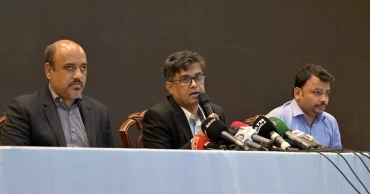
Reform initiative completely a homegrown process: CA’s Press Secretary
Chief Adviser’s Press Secretary Shafiqul Alam on Sunday said the entire reform initiative is completely a “homegrown” process and it will remain the same, noting that Bangladesh’s friendly partners and well-wishers back the reform agenda.
“The reform process is fully a homegrown one. We are maintaining the highest transparency,” he told reporters at the Foreign Service Academy while responding to a question.
Earlier, the electoral reform commission, police reform commission, judiciary reform commission, anti-corruption commission reform commission, public administration reform commission and constitutional reform commission submitted their reports and a national consensus building commission was formed.
EU to support Bangladesh in holding elections meeting international standards
Press Secretary Alam said the consensus building commission held its first meeting and there will be more in the coming days.
He said there will be intensive consultations between the political parties and consensus building commission.
“You see the whole process is homegrown,” Alam said, adding that in some areas technical support may be required. “We have not said yet whether we will accept technical support or not. But it is fully homegrown reforms involving our people and experts.”
The Press Secretary said the interim government remains transparent with adequate openness and this whole process will remain homegrown.
As the country undergoes important reforms and transitions, UN Secretary-General Antonio Guterres assured that the UN stands ready to assist in fostering peace, national dialogue, trust and healing.
Reforms to make Bangladesh one of the perfect democracies in world, says Guterres before departing Dhaka
"You can count on the UN to be your steadfast partner, working alongside the people of Bangladesh to help build a sustainable and equitable future for all," he said during his just-concluded visit.
CA’s Deputy Press Secretary Abul Kalam Azad Majumder and Senior Assistant Press Secretary Ahammad Foyez were also present.
1 year ago
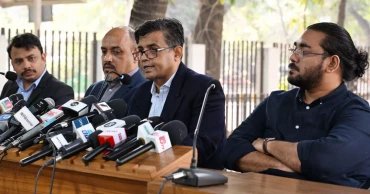
Election schedule depends on July Charter: CA’s Press Secretary
Chief Adviser’s Press Secretary Shafiqul Alam has said it depends on the July charter whether the next national election will be held at the year-end or by June next year.
He shared the key recommendations from the Judicial and Public Administration Reform Commissions at a press briefing on Wednesday at the state guest house Jamuna after their reports were submitted to Chief Adviser Prof Muhammad Yunus.
Responding to a question on whether the government will take steps to implement these recommendations while political parties continue to call for elections, Shafiqul Alam said the Chief Adviser said the six major reform commissions’ recommendations would be reviewed by a consensus commission.
The Chief Adviser himself will head this commission, Prof Dr Ali Riaz will be Vice Chairman and the heads of the six commissions and its members, he said.
Election only way to promptly implement state-overhauling proposals: Tarique
“After reviewing all reports, the consensus commission will hold discussions with political parties and civil society. A decision will then be made on which reforms need immediate action and which require constitutional amendments,” he said.
“Political parties will sign on the mutually agreed recommendations, forming the July Charter. Some recommendations will be implemented by the current government while others by the next. The election date—whether in December this year or by June next year—will depend on its implementation,” the press secretary added.
Judiciary to be Fully Independent
The reform commission has recommended full independence for the judiciary, he said.
“Previous governments claimed the judiciary was independent, but in reality, it never was. The new report suggested comprehensive measures to ensure its full and effective independence,” he said.
The 351-page report also suggested constitutional amendments to ensure transparency in appointments in the judiciary, he added.
Commission working to restore trust in election system: EC Sanaullah
The recommendations include a new framework for appointing judges.
Permanent Attorney Service Proposed
The Judiciary Reform Commission has also proposed establishing a permanent attorney service.
“This is a crucial reform. Many countries have permanent attorney services whereas in Bangladesh, nearly 4,000 public prosecutors are politically appointed. The new system would eliminate this practice,” he said.
Independent Investigation Agency
Another key recommendation is the formation of an independent investigation agency, said the press secretary.
EU assures support, emphasises reform ahead of Bangladesh election: CEC
“In Bangladesh, police investigate most crimes, but political interference often affects the outcomes. Many high-profile cases have been manipulated due to this. The new agency would ensure impartial investigations,” he added.
Supreme Court Bench Expansion
He said the report also recommended setting up permanent Supreme Court benches in divisional cities to address the growing case backlog.
The report suggested extending magistrate courts to all upazilas and increasing legal aid for underprivileged people, said Shafiqul Alam.
1 year ago
CA’s Press Secretary describes Hasina as “butcher of Bangladesh”
Chief Adviser’s Press Secretary Shafiqul Alam has described former Prime Minister Sheikh Hasina as the “butcher of Bangladesh” and said the interim government’s job is to bring her back to Dhaka and try her for “crimes against humanity”.
“One of the main responsibilities of the interim government is to hold trials of the people who killed protesters during the mass uprising in July,” said Alam on Sunday, mentioning that there has been much hue and cry about his Facebook post from the Ekushey Boi Mela.
While sharing 12 points, the Press Secretary said the interim government is neutral only to its stakeholders - the students and the parties that played their part not only during the uprising but over the years to restore “stolen democracy”.
Naturally, Alam said, the interim government has a firm and unyielding position against the party that imposed “brutal dictatorship, committed grave crimes against humanity and plundered state resources” for 15 long years.
In a long post from his verified Facebook account, he said the interim government is also determined to hold the Bangladesh Awami League, its “enablers, apologists and its lackeys” to account for the massacres, the “thousands of extrajudicial killings, enforced disappearances and the looting” of hundreds of billions of dollars. “Our mandate is to prosecute these crimes,” Alam stressed.
“When we talk — as the spokespeople of the chief adviser -- we generally give updates on the IG's progress and accomplishments. We also talk at length about the crimes of Sheikh Hasina,” said the Press Secretary.
Alam said the people who think he is talking too much about politics or the Awami League and its killings and grand larceny are the AL apologists – “We know what you did all these years. Sorry, I won't stop — until the very last day of my work.”
Alam said Sheikh Hasina is one of the world's most “brutal and corrupt dictators” and he will not hesitate to remind people about the “kind of killer she was”.
“It is a moral position. Besides, if we believe in democracy, we must be able to speak against Hasina for all we want — this is the individual liberty that we speak of in democracy, this is freedom of speech,” he mentioned.
Six months into the mass uprising, Alam said, the AL is still in “denial” and its apologists, leaders, pro-AL journalists, its foreign backers and its supporters are in denial. “They aim to create an alternative history - one in which they are the victims, police are not the aggressors.”
1 year ago