Meta Platforms
New Mexico Seeks Major Changes to Meta Platforms to Protect Children in Trial’s Second Phase
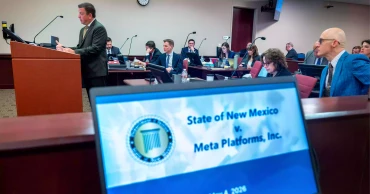
Prosecutors in New Mexico have called for sweeping changes to social media platforms owned by Meta as a landmark trial enters its second phase, focusing on child safety concerns linked to apps like Instagram, Facebook and WhatsApp.
Opening statements began Monday in a three-week bench trial to determine whether Meta’s platforms constitute a public nuisance. In the first phase, a jury imposed $375 million in civil penalties, finding the company knowingly harmed children’s mental health and failed to address child sexual exploitation risks.
State prosecutors are now urging the court to mandate fundamental reforms, including curbing addictive features, strengthening age verification systems and enhancing privacy settings to better protect minors.
New Mexico Attorney General Raúl Torrez said the earlier verdict challenged long-standing legal protections for tech firms under Section 230 of the US Communications Decency Act.
The state has proposed a $3.7 billion plan aimed at addressing the impact of social media on children’s mental health. Measures include redesigning content recommendation algorithms to reduce engagement-driven exposure, limiting features such as infinite scrolling and push notifications, and introducing safeguards against exploitation.
Prosecutors are also seeking requirements for parental oversight of child accounts and the appointment of a court-monitored safety supervisor to track compliance.
Meta has opposed the proposals, arguing they are impractical and infringe on free speech and parental rights. The company has warned it could withdraw services from New Mexico if compelled to implement what it describes as excessive regulations.
During the hearing, District Court Judge Bryan Biedscheid expressed caution about overstepping judicial authority, while legal experts noted that applying public nuisance laws to internet platforms remains largely untested.
Meta’s legal team also questioned the feasibility of implementing state-specific changes to its apps, calling such demands technologically unworkable.
The case is the first to go to trial among dozens filed by US states accusing Meta of contributing to a youth mental health crisis. Its outcome could have far-reaching implications for how social media platforms operate and are regulated across the country.
4 months ago
Meta's nuclear deal signals AI's growing energy needs
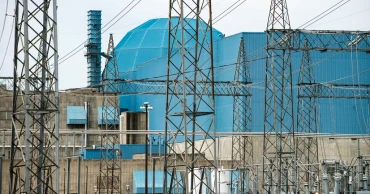
Meta's deal to help revive an Illinois nuclear power plant was one way of signaling that the parent company of Facebook and Instagram is preparing for a future built with artificial intelligence.
Meta's 20-year deal with Constellation Energy follows similar maneuvers from Amazon, Google and Microsoft, but it will take years before nuclear energy can meet the tech industry's insatiable demand for new sources of electricity.
AI uses vast amounts of energy, much of which comes from burning fossil fuels, which causes climate change. The unexpected popularity of generative AI products over the past few years has disrupted many tech companies' carefully laid plans to supply their technology with energy sources that don't contribute to climate change.
Even as Meta anticipates more nuclear in the future, its more immediate plans rely on natural gas. Entergy, one of the nation’s largest utility providers, has been fast-tracking plans to build gas-fired power plants in Louisiana to prepare for a massive Meta data centre complex.
France has touted its ample nuclear power — which produces about 75% of the nation's electricity, the highest level in the world — as a key element in its pitch to be an AI leader. Hosting an AI summit in Paris earlier this year, French President Emmanuel Macron cited President Donald Trump’s “drill baby drill” slogan and offered another: “Here there’s no need to drill, it’s just plug baby plug.”
In the US, however, most of the electricity consumed by data centres relies on fossil fuels — burning natural gas and sometimes coal — according to an April report from the International Energy Agency.
New York Times signs first AI content licensing deal with Amazon
As AI demand rises, the main source of new supply over the coming years is expected to be from gas-fired plants, a cheap and reliable source of power but one that produces planet-warming emissions.
Renewable energy sources such as solar and wind account for about 24% of data centre power in the US, while nuclear comprises about 15%, according to the IEA. It will take years before enough climate-friendlier power sources, including nuclear, could start slowing the expansion of fossil fuel power generation.
A report released by the US Department of Energy late last year estimated that the electricity needed for data centres in the US tripled over the past decade and is projected to double or triple again by 2028 when it could consume up to 12% of the nation’s electricity.
It takes a lot of computing power to make an AI chatbot and the systems they're built on, such as Meta's Llama. It starts with a process called training or pretraining — the “P” in ChatGPT — that involves AI systems “learning” from the patterns of huge troves of data.
To do that, they need specialized computer chips — usually graphics processors, or GPUs — that can run many calculations at a time on a network of devices in communication with each other.
Once trained, a generative AI tool still needs electricity to do the work, such as when you ask a chatbot to compose a document or generate an image. That process is called inferencing. A trained AI model must take in new information and make inferences from what it already knows to produce a response.
All of that computing takes a lot of electricity and generates a lot of heat. To keep it cool enough to work properly, data centres need air conditioning. That can require even more electricity, so most data centre operators look for other cooling techniques that usually involve pumping in water.
1 year ago

Microsoft and Meta Platforms lead Wall Street higher
Microsoft and Meta Platforms are driving Wall Street higher on Thursday after profits for the Big Tech companies at the start of the year turned out to be even bigger than analysts expected.
The S&P 500 was up 1% and heading for an eighth straight gain, which would be its longest winning streak since August, AP reports.
The Dow Jones Industrial Average was up 248 points, or 0.6%, as of 10:20 a.m. Eastern time, and the Nasdaq composite was 1.8% higher.
Microsoft jumped 9% after the software giant said strength in its cloud computing and artificial intelligence businesses drove its overall revenue up 13% from a year earlier.
Meta, the parent company of Facebook and Instagram, also topped analysts’ targets for revenue and profit in the latest quarter. It said artificial intelligence tools helped boost its advertising revenue, and its stock climbed 5.3%.
CVS Health, Carrier Global and a bevy of other companies also joined the stream of better-than-expected profit reports that have helped steady Wall Street over the last week. The S&P 500 is back to within 8.5% of its record set earlier this year, after briefly dropping nearly 20% below the mark.
Court sides with Fortnite maker Epic as Apple sanctioned for defying order in App Store case
Still, plenty of uncertainty remains about whether President Donald Trump’s trade war will force the economy into a recession. A couple mixed reports on the U.S. economy Thursday followed up on several recent updates that have suggested it's weaker than expected.
One of Thursday's reports said more US workers filed for unemployment benefits last week than economists had forecast, setting the stage for a more comprehensive report on the job market arriving Friday.
A separate update said US manufacturing activity was better last month than economists expected, though it still contracted again.
And even though companies have been reporting better profits for the first three months of the year than analysts expected, many CEOs are remaining cautious about the rest of the year.
1 year ago

Meta initiates layoffs to reduce workforce by 5%
Meta Platforms, the parent company of Facebook, has started a series of performance-based layoffs today, targeting approximately 5% of its global workforce.
This move is part of CEO Mark Zuckerberg's strategy to "raise the bar" on performance and streamline operations.
Layoff Details
Affected employees are being notified via their work and personal emails, detailing severance packages. Access to company systems is revoked within an hour of notification. In the United States, notifications began at 5 a.m. Pacific Time.
Due to local labour regulations, employees in Germany, France, Italy, and the Netherlands are exempt from these immediate cuts and will follow local performance management processes instead.
Meta to invest up to $65 billion in AI projects in 2025
Global Impact
While the initial notifications are concentrated in the U.S., employees in other regions, including parts of Europe, Asia, and Africa, are scheduled to receive their notifications between 11 and 18 February. The layoffs are expected to affect nearly 4,000 employees worldwide.
Strategic Shift Towards AI
Concurrently, Meta is expediting the hiring of machine learning engineers and other critical engineering roles. This accelerated hiring process is set to take place between 11 February and 13 March, aligning with the company's strategic priorities for 2025.
Employee Sentiment
The layoffs have generated anxiety among Meta's workforce. Some employees have expressed concerns about a culture of fear and the potential negative impact on morale. There is apprehension that the performance-based cuts could unfairly label departing employees, affecting their future job prospects.
Meta abandons diversity programmes amid shifting US policy
Industry-Wide Trend
Meta's decision mirrors a broader trend in the tech industry, where companies are reassessing their workforce in response to economic pressures and the rapid advancement of artificial intelligence.
Other tech giants, including Google and Microsoft, have also implemented layoffs and restructured their operations to focus on AI-driven initiatives.
As Meta navigates this transition, the company emphasizes its commitment to maintaining a high-performance culture while investing in future technologies that will shape the next era of digital interaction.
Source: Agencies
1 year ago