Ukraine-Russia
Ukraine uses midrange drones to hit Russian supply lines and slow advances
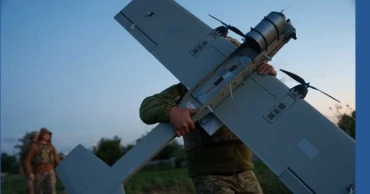
Ukraine is increasingly using midrange drones to strike Russian supply routes far behind the front lines, a strategy military commanders say is disrupting logistics, slowing Russian advances and helping Ukrainian forces regain ground.
From an underground command centre in Ukraine's Kharkiv region, drone operators monitor live thermal images of roads in Russian-held territory. Once they spot a military vehicle, they guide the drone toward its target, aiming to destroy fuel, ammunition and troop supplies before they reach the battlefield.
"Our mission is to cut logistics," said Kat, commander of Ukraine's K-2 Brigade. "If we stop their supply lines, frontline troops are left without food, ammunition, batteries and night-vision equipment. That's how we weaken them."
The soldiers interviewed by The Associated Press used only their military call signs, following Ukrainian military rules.
By repeatedly targeting roads used to transport fuel, ammunition and reinforcements, Ukrainian commanders say they have made Russia's supply operations slower, more expensive and less reliable. They believe this has helped slow Russian offensives while allowing Ukraine to launch counterattacks and carry out strikes in Russian-occupied Crimea.
Until recently, this area was difficult for Ukraine to reach. Frontline drones lacked the necessary range, while long-range drones were reserved for strategic targets hundreds of kilometres away. That left a large area where Russian forces could move supplies with little threat.
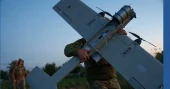
Now, fixed-wing midrange drones equipped with Starlink satellite communications have filled that gap, turning Russian supply routes into active targets.
"They are putting constant pressure on Russian logistics and making it harder for Russia to keep some parts of the front supplied," said Samuel Bendett, a researcher at the Center for Naval Analyses.
Bendett said Ukraine will need to maintain this pressure while Russia develops ways to counter the drones. Although he expects Moscow to adapt over time, he said Russia's larger military can absorb greater losses for now.
"The key question is whether Ukraine can keep up this pressure in the coming weeks and months," he said.
The K-2 Brigade operates from what looks like an ordinary office, while drones are assembled in workshops and launched from hidden locations near the front.
Inside the command room, drone pilots dressed in civilian clothes work at desks covered with coffee cups, energy drink cans and electronic devices. Their computer screens display satellite maps and target locations rather than office documents.
In May alone, the brigade launched 800 midrange drones, successfully hitting their intended targets with 650 of them.
The drones are launched more than 200 kilometres away, after which pilots in Kharkiv take control. They can guide the aircraft for up to four hours and more than 100 kilometres behind Russian lines.
Some operators are flying drones over towns they once called home before Russia's invasion forced them to leave. They now search those same streets for Russian troops, military vehicles and ammunition depots.
The brigade even keeps a scoreboard tracking the performance of its 10 drone teams. The current record stands at 17 successful strikes in a row.
One of the unit's top drone operators, 20-year-old Pharaon, said his gaming experience helped prepare him for the job.
"When I was younger, I spent a lot of time playing Counter-Strike," he said. "It's similar in some ways because you're competing to destroy enemy targets."
Military experts say Ukraine's campaign gained momentum earlier this year after SpaceX blocked Russian forces from using Starlink satellite services without authorisation. The move disrupted Russian drone operations while giving Ukraine a technological advantage.
Rob Lee, a senior fellow at the Foreign Policy Research Institute's Eurasia Program, described the Starlink restriction as one of the year's most significant developments on the battlefield.
Pharaon said the improvement has been dramatic.
"Now, eight out of every 10 missions are successful," he said. "A few months ago, it was the opposite."
The K-2 Brigade mainly uses the Dart drone, an inexpensive aircraft made from lightweight materials including wood, polystyrene and 3D-printed parts. It is mainly used to attack Russian supply convoys. Larger drones, such as the Hornet, carry heavier explosives and are used against bridges and other infrastructure.
Before every mission, crews inspect batteries, cameras, flight controls and the Starlink communication system to ensure the drone remains connected throughout the flight.
The drones are then taken to concealed launch sites near the front line, where soldiers prepare them for takeoff using catapult launchers.
Russia was initially caught off guard when Ukraine expanded the campaign about three months ago. It has since increased mobile air defence teams, machine-gun positions and drone interception units, but Ukrainian commanders say the speed and scale of the attacks have allowed them to stay ahead.
Bendett said Russia also faces coordination problems between military units, making it harder to respond quickly when drones are detected.
Ukraine has focused many of its attacks on key highways linking the occupied cities of Mariupol, Berdyansk, Melitopol and Crimea, which are major supply routes for Russian forces in southern and eastern Ukraine.
According to Ukraine's military intelligence, repeated drone attacks have made parts of the land corridor connecting Russia to Crimea increasingly dangerous, disrupting the movement of fuel, ammunition and reinforcements.
Pharaon said Russia is now expanding its anti-aircraft defences and deploying more interception teams near major cities.
In response, Ukrainian drone operators plan routes that avoid known Russian air defence positions. During flights, they sometimes see anti-aircraft fire below as the drones continue toward their targets.
Lee said Russia has also been testing electronic warfare systems designed to interfere with Starlink since 2024, but so far those efforts have had only limited success.
"I think they have achieved some success, but we'll have to wait and see how effective it becomes," he said.
3 months ago
Ukraine says drone strike sets major oil refinery ablaze in southern Russia
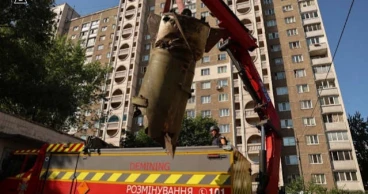
Ukraine continued its large-scale drone attacks on Russia overnight, triggering a fire at a major oil refinery in the country's south and leaving at least two people dead, Russian officials said on Sunday.
The latest strikes are part of Kyiv's strategy to target Russia's fuel and military supply network, aiming to weaken Moscow's war effort and increase pressure on the Kremlin to negotiate.
Russian authorities said debris from intercepted Ukrainian drones caused a fire at the oil refinery in Slavyansk-na-Kubani, located in the Krasnodar region, east of Russian-occupied Crimea. Regional Governor Veniamin Kondratyev said one person was killed in Slavyansk, while another was injured in a nearby village after falling drone debris.
Images and videos shared on Russian social media appeared to show thick black smoke rising from the refinery, although The Associated Press could not immediately verify the footage.
Ukrainian President Volodymyr Zelenskyy confirmed that Ukrainian forces carried out the attack on the Slavyansk refinery. He also claimed that another refinery in Russia's Yaroslavl region, about 700 kilometers from the Ukrainian border, was struck during the overnight operation.
"Tonight, our 'long-range sanctions' reached two oil refineries in Russia," Zelenskyy wrote on Telegram. "Each strike reduces the resources that fuel the Russian war machine and brings us one step closer to peace."
Ukraine has significantly expanded its long-range drone campaign in recent months, focusing on Russian energy facilities and military industries. Kyiv says the attacks are intended to reduce Russia's income from oil exports and disrupt supplies supporting its invasion, now in its fifth year.
The Slavyansk refinery is one of southern Russia's largest, processing nearly 4 million tons of crude oil annually, according to the operator's website. It also produces petroleum products for export through Black Sea ports, including fuel oil, naphtha and marine fuel.
Russian authorities did not immediately confirm Zelenskyy's claim about the strike in the Yaroslavl region. However, regional Governor Mikhail Evraev said several roads linking Moscow and Yaroslavl were temporarily closed because of what he described as a Ukrainian drone attack.
Russia's civil aviation agency also temporarily suspended operations at Yaroslavl Airport and several airports in southern and western Russia overnight.
In Russia's Belgorod border region, Ukrainian drone strikes killed one person and injured another, acting Governor Alexander Shuvayev said.
Russia's Defense Ministry said its air defenses destroyed 213 Ukrainian drones overnight over Russian territory, occupied Crimea, and the Black and Azov seas.
Meanwhile, Ukraine's air force said Russia launched 142 long-range drones and eight missiles overnight. It said Ukrainian air defenses intercepted 125 drones and seven missiles.
3 months ago
Ukraine carries out long-range strikes on Russian military and energy targets
Ukraine launched a series of long-distance attacks on military and energy facilities deep inside Russia on Wednesday, aiming to increase pressure on Moscow by targeting key industrial and energy infrastructure.
President Volodymyr Zelenskyy said Ukrainian forces struck several sites, including a military factory that he claimed produces components for Russian drones and missiles.
In a social media post, Zelenskyy said Ukrainian FP-5 Flamingo long-range missiles hit a facility in Cheboksary in Russia’s Chuvashiya region, more than 900 kilometres from the front line.
Russia’s Defence Ministry said its air defences intercepted 326 Ukrainian drones overnight.
Oleg Nikolayev, head of Chuvashiya, confirmed the attack but did not share details. However, the Astra news outlet reported that the strike hit the VNIIR-Progress plant, which manufactures drone antennas.
Zelenskyy also said Ukrainian forces targeted a refinery in Russia’s Samara region. Regional governor Vyacheslav Fedorishchev said several industrial sites were damaged in drone strikes and three people were injured, though he did not specify which facilities were hit. Astra published images showing a large fire at the refinery.
He added that Ukraine’s security service (SBU) also struck two oil infrastructure sites in Russia’s Vladimir region, around 700 kilometres from the front line.
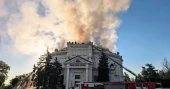
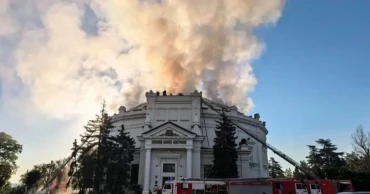
In Russian-occupied Crimea, a Ukrainian drone hit a building housing a large historical panorama painting depicting the 19th-century Crimean War defence of Sevastopol. Kremlin-appointed official Mikhail Razvozhayev said the artwork by Franz Roubaud was effectively destroyed.
With the front line largely static after more than four years of war, both sides have increasingly relied on long-range drone and missile strikes.
Ukrainian officials say these deeper strikes are intended to disrupt Russia’s military supply chain and energy sector, while also challenging President Vladimir Putin’s claims of progress in the war.
Russia, meanwhile, said it downed 181 of 207 Ukrainian drones in separate attacks. Ukrainian officials reported renewed Russian strikes across several regions, including Kharkiv, Zaporizhzhia and Odesa, leaving multiple civilians injured and several dead or wounded.
4 months ago

Ukraine negotiator describes tense talks with Russia
A senior Ukrainian negotiator has offered a rare insight into what it is like to sit face to face with Russian representatives amid ongoing efforts to halt the war, saying military-level talks are largely pragmatic but stopping the conflict ultimately depends on political will in Moscow.
Sergiy Kyslytsya, a member of President Volodymyr Zelenskyy’s delegation, told the BBC that recent military-to-military discussions with Russia were generally business-like and free from the ideological rhetoric often heard from the Kremlin in public forums.
“The military has a better understanding of what is happening on the battlefield,” Kyslytsya said during an interview at the presidential palace. He added, however, that it remains uncertain whether Russian officers accurately convey realities on the ground to their political leadership.
His comments come ahead of a possible new round of US-mediated talks in Geneva later this week, following several previous discussions that have failed to produce a breakthrough nearly four years after Russia’s full-scale invasion of Ukraine.
Kyslytsya said the complexity of disengagement is heightened by conditions on the battlefield in eastern Ukraine, where thousands of drones operate across a vast so-called grey zone and about 200,000 civilians still live in heavily fortified Donbas cities. Any ceasefire, he stressed, would require detailed rules, clear protocols and reliable verification mechanisms.
Much of the technical groundwork for such arrangements has already been completed, he said, with significant input from US officials. Kyslytsya praised Washington’s role, noting that American representatives actively participate in discussions rather than merely observing.
He also spoke positively about the involvement of US figures including Jared Kushner and Steve Witkoff, describing them as experienced and constructive participants in the process.
According to Kyslytsya, the United States is expected to play a central role in monitoring any future ceasefire, using satellite imagery and other advanced technologies. He said a credible and authoritative third party would be essential to adjudicate violations.
Previously, this role was held by the Organization for Security and Co-operation in Europe, but Kyslytsya said its limited resources and lack of enforcement power left it unable to prevent escalation before the 2022 invasion.
A former Ukrainian ambassador to the United Nations, Kyslytsya said he has long experience dealing with Russian diplomats. He recalled being at an emergency UN Security Council meeting on February 23, 2022, when he learned Ukraine was under attack. He said Russian ambassador Vassily Nebenzia declined to contact Foreign Minister Sergei Lavrov for assurances as the invasion loomed.
Kyslytsya said that moment marked a turning point, after which he remained at the UN for three more years before returning to Kyiv.
Looking ahead to possible talks in Geneva, he said negotiations continue to focus on the mechanics of a ceasefire but argued the war could end swiftly if Russia’s leadership chose to act.
“The war could be stopped by just one call,” he said, adding that Russian President Vladimir Putin has so far shown no readiness to take that step.
With inputs from BBC
7 months ago
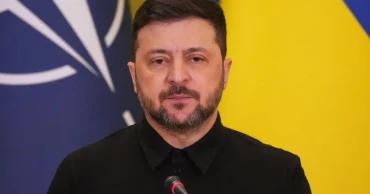
US sets June deadline for Ukraine-Russia war deal: Zelenskyy
The United States has given Ukraine and Russia a deadline until June to reach an agreement to end the nearly four-year war, Ukrainian President Volodymyr Zelenskyy said, as fresh Russian attacks severely damaged the country’s energy infrastructure.
Speaking to reporters, Zelenskyy said the Trump administration wants the war to end by early summer and is likely to pressure both sides if no deal is reached by then.
“The Americans want to do everything by June. They want a clear schedule and will push both sides according to this timeline,” Zelenskyy said. His comments were made on Friday but released on Saturday.
He said the US has proposed holding the next round of trilateral talks involving Ukraine, Russia and the United States next week, possibly in Miami. Ukraine has confirmed its participation, he added.
Zelenskyy also said Russia has submitted a massive $12 trillion economic proposal to the US, referred to as the “Dmitriev package,” named after Russian envoy Kirill Dmitriev. Economic cooperation with the US is part of the broader negotiation process, he noted.
Meanwhile, Russian forces launched more than 400 drones and around 40 missiles overnight, targeting Ukraine’s energy grid, power generation facilities and distribution networks, Zelenskyy said in a post on X.
Ukraine’s state energy operator Ukrenergo said the strikes forced nuclear power plants to reduce output after key high-voltage substations were hit. Eight energy facilities in eight regions were damaged in what it called the second major attack on energy infrastructure this year.
As a result, Ukraine’s power shortage has worsened significantly, leading to extended scheduled power outages across the country, the operator said.
The June deadline follows US-brokered trilateral talks in Abu Dhabi that failed to produce progress, as both sides maintained firm and opposing positions. Russia continues to demand Ukraine’s withdrawal from the Donbas region, a condition Kyiv has repeatedly rejected.
“Ukraine has once again confirmed its position on Donbas. We stand where we stand,” Zelenskyy said, adding that the most difficult issues should be discussed directly at the leaders’ level.
He said no agreement was reached on the management of the Russian-held Zaporizhzhia nuclear power plant and voiced doubts about a US proposal to turn the Donbas into a free economic zone as a compromise.
Zelenskyy said the talks also covered how a potential ceasefire would be monitored, with the US reaffirming its role in that process.
He added that Washington again proposed a ceasefire banning attacks on energy infrastructure. Ukraine is ready to accept such a deal if Russia complies. However, he noted that a previous US-backed pause was broken by Russia after just four days.
8 months ago

US selling weapons to NATO allies for Ukraine support
President Donald Trump has confirmed that the United States is selling weapons to NATO allies, who are then supplying them to Ukraine as it faces intensifying Russian missile and drone attacks.
“We’re sending weapons to NATO, and NATO is paying for those weapons, 100%,” Trump told NBC on Thursday. “The weapons that are going out are going to NATO, and then NATO is going to be giving those weapons (to Ukraine), and NATO is paying for those weapons."
Secretary of State Marco Rubio, speaking from Kuala Lumpur on Friday, explained that deploying existing U.S.-made weapons from NATO allies in Europe is faster than sending them directly from U.S. factories. “It’s a lot faster to move something, for example, from Germany to Ukraine,” he said.
Ukraine urgently needs more U.S.-made Patriot air defense systems. President Volodymyr Zelenskyy said Thursday that Ukraine is seeking 10 additional Patriot systems. Germany has pledged two, and Norway one.
Russia launches record drone attack on Ukraine
Meanwhile, Russia launched a drone attack on Kharkiv early Friday, injuring nine and damaging a maternity hospital. Another drone strike in Odesa also injured nine. “There is no silence in Ukraine,” Zelenskyy said.
In response, Kyiv is launching the “Clear Sky” project—an interceptor drone system with a $6.2 million investment to counter Russian Shahed drones.
Zelenskyy said his recent talks with Trump have been “very constructive,” as Ukraine pushes its allies to speed up promised military support.
1 year ago

Ukraine strikes Russian airbase as drone attacks intensify
Ukraine on Saturday said it struck a Russian airbase as Russia launched hundreds of drones overnight in its latest wave of long-range attacks, further diminishing hopes of progress toward ending the war that has now dragged on for over three years.
Ukraine’s military General Staff confirmed that its forces targeted the Borisoglebsk airbase in Russia’s Voronezh region, which it described as the “home base” for Russia’s Su-34, Su-35S, and Su-30SM fighter jets.
In a statement on Facebook, the General Staff said the strike hit a depot containing glide bombs, a training aircraft, and “possibly other aircraft.”
Russian officials have not yet commented on the reported attack.
Strikes on Russian airbases are part of Ukraine’s efforts to weaken Russia’s military capability and demonstrate its reach into high-value targets deep inside Russian territory. Last month, Ukraine claimed to have destroyed over 40 Russian aircraft stationed at various airfields inside Russia during a surprise drone operation.
Meanwhile, Ukraine’s air force reported that Russia launched 322 drones and decoys into Ukrainian territory overnight into Saturday. Of these, 157 were intercepted and destroyed, while 135 were lost, likely due to electronic jamming, according to Ukrainian officials.
The western Khmelnytskyi region was the main target of the latest attacks. However, regional Governor Serhii Tyurin said no damage, injuries, or fatalities were reported.
Ukraine pursues joint weapons production with allies as US pauses some arms shipments
Russia has recently escalated its long-range aerial bombardments on Ukraine. On Friday, waves of drones and missiles targeted Kyiv in what officials described as the largest aerial assault since the invasion began. The attack killed one person and injured at least 26 others.
The renewed Russian offensive follows Ukrainian President Volodymyr Zelenskyy’s phone conversation with US President Donald Trump on Friday. Zelenskyy described the discussion as “very important and productive,” saying the leaders talked about strengthening Ukraine’s air defenses, the potential for joint US-Ukraine weapons production, and broader U.S.-led initiatives to end the war.
Speaking to reporters Friday night, Trump confirmed the call, saying, “We had a very good call, I think.”
When asked about the prospects of ending the war, Trump responded, “I don’t know. I can’t tell you whether or not that’s going to happen.”
The US has recently paused shipments of certain military aid to Ukraine, including vital air defense missiles. European allies are now considering how they can fill the gap. Zelenskyy has said plans are underway to expand Ukraine’s domestic arms production, though scaling up such efforts will take time.
Russia’s Defense Ministry claimed it shot down 94 Ukrainian drones overnight, along with an additional 12 drones on Saturday morning. No casualties have been reported in connection with those incidents.
1 year ago

Russia launches largest air attack on Kyiv since war began
Russia launched the largest missile and drone barrage on Kyiv since the start of the war in Ukraine, officials said Friday, as Moscow steps up its efforts to capture more Ukrainian territory.
The overnight aerial assault lasted seven hours, killing one person and injuring at least 26 others, including a child, Ukrainian officials confirmed.
Ukrainian President Volodymyr Zelenskyy described it as “a harsh, sleepless night” for the capital.
Shortly after the attack, Zelenskyy held what he called a “very important and productive” phone conversation with US President Donald Trump to discuss ways to strengthen Ukraine's air defenses, joint weapons production, and broader US-led efforts to end the war with Russia, as reported by AP.
Zelenskyy’s office said they discussed the possibility of future meetings between their teams to explore ways of enhancing Ukraine’s protection, particularly through direct projects in drone technology and defense industry cooperation. They also exchanged views on military procurement, investment, and diplomatic efforts with international partners.
The White House did not immediately comment on the call.
The Ukrainian air force reported that Russia launched 550 drones and missiles across Ukraine during the night, including 11 missiles. Most of the aerial assault involved Shahed drones.
The attack caused severe damage across multiple districts of Kyiv. Emergency services removed more than 300 tons of rubble, while five ambulances responding to the aftermath were also damaged.
Blasts lit up the night sky and echoed across the city as air raid sirens wailed. “Absolutely horrible and sleepless night in Kyiv,” Ukrainian Foreign Minister Andrii Sybiha posted on X. He called it “one of the worst so far.”
Kyiv’s Economy Minister Yuliia Svyrydenko described “families running into metro stations, basements, underground parking garages, mass destruction in the heart of our capital.”
“What Kyiv endured last night cannot be called anything but a deliberate act of terror,” Svyrydenko wrote on X.
At least 14 people were hospitalized in Kyiv, according to Mayor Vitali Klitschko.
Ukraine pursues joint weapons production with allies as US pauses some arms shipments
Russia’s Defense Ministry claimed its forces targeted military production sites in Kyiv, including drone factories.
Meanwhile, another prisoner swap took place Friday. Zelenskyy said most of the Ukrainian soldiers freed had been in Russian captivity since 2022 and were classified as “wounded and seriously ill.” The total number of soldiers exchanged was not disclosed by either side.
The assault on Kyiv came hours after a phone call between President Trump and Russian President Vladimir Putin.
When asked if any progress was made toward ending the war, Trump said, “No, I didn’t make any progress with him today at all.” He added, “I’m very disappointed with the conversation I had today with President Putin because I don’t think he’s there. I don’t think he’s looking to stop (the fighting), and that’s too bad.”
Putin’s foreign affairs adviser Yuri Ushakov said the Russian leader told Trump that Moscow will continue its efforts to achieve its objectives in Ukraine and eliminate the “root causes” of the conflict.
“Russia will not back down from these goals,” Ushakov told reporters after the call.
Russia invaded Ukraine on February 24, 2022, with Putin falsely claiming it was necessary to protect Russian-speaking civilians in eastern Ukraine and to prevent Ukraine from joining NATO.
Ukraine's military is under pressure as Russia intensifies attacks along the 1,000-kilometer front line and escalates aerial strikes. Official data compiled by The Associated Press shows that Russia launched 5,438 drones and more than 330 missiles across Ukraine in June alone, a new monthly record.
Throughout Thursday night, AP journalists in Kyiv reported the constant buzzing of drones, explosions, and intense machine-gun fire as Ukrainian forces tried to intercept incoming threats.
Ukraine’s air defenses reportedly shot down 270 targets, including two cruise missiles, though another 208 targets were lost from radar and presumed jammed.
Russia struck eight locations with nine missiles and 63 drones, while debris from intercepted drones fell across 33 sites. In addition to Kyiv, damage was reported in the Dnipropetrovsk, Sumy, Kharkiv, and Chernihiv regions.
Zelenskyy condemned the attack on Kyiv as “cynical.” Emergency services reported damage in at least five of the capital's 10 districts.
1 year ago

Ukraine to hold peace talks with Russia in Istanbul on Monday despite escalating attacks
Ukrainian President Volodymyr Zelenskyy announced on Sunday that Ukraine will dispatch a delegation to Istanbul for direct peace talks with Russia on Monday, amid intensifying Russian assaults, including a missile strike that killed 12 Ukrainian soldiers and the largest drone offensive of the ongoing three-year war.
Zelenskyy made the announcement via Telegram, stating that Defense Minister Rustem Umerov will lead the Ukrainian team. “We are doing everything possible to safeguard our independence, our country, and our people,” he said.
Ukraine had earlier asked Moscow to share a written outline of its position regarding an end to the conflict before the talks. Russia responded that it would present the memorandum during the negotiations.
Deadly Missile Strike Hits Ukrainian Army Unit
Ukraine's air force reported that Russia launched 472 drones on Sunday — the most in a single day since the full-scale invasion began. Alongside the drones, seven missiles were also fired, said Yuriy Ignat, a spokesperson for the air force.
A missile strike earlier that day targeted a Ukrainian army training facility, killing at least 12 service members and injuring more than 60 others. The attack occurred around 12:50 p.m. local time, according to the army, which emphasized that no large gatherings of troops were present during the strike. An investigative panel has been set up to determine how such a significant loss occurred.
US defense secretary warns Indo-Pacific allies of 'imminent' threat from China
The training site is located far from the front lines, which span approximately 1,000 kilometers (620 miles), but remains within reach of Russian drones and missile systems.
With Ukraine facing troop shortages, military units are taking increased precautions to avoid concentrations of personnel that could become targets. The army warned that any negligence or misconduct contributing to the casualties would be met with strict accountability.
Ukrainian Drones Strike Deep Into Russian Territory
Meanwhile, Ukrainian drone attacks were reported in various parts of Russia, including the Siberian region of Irkutsk — more than 4,500 kilometers (2,800 miles) east of Moscow. Local Governor Igor Kobzeva confirmed the drone’s presence but said it posed no danger to civilians.
Additional drone activity was reported in Russia’s Ryazan and Murmansk regions, though no injuries or deaths were reported.
Escalation in Northern Ukraine
Russia’s Defense Ministry claimed on Sunday that its forces had seized control of Oleksiivka, a village in Ukraine’s northern Sumy region. Ukrainian authorities responded by ordering mandatory evacuations in 11 nearby settlements as Russian advances continue.
Ukraine’s top military commander, Oleksandr Syrskyi, said Russian troops are concentrating their main offensives in the eastern Donetsk cities of Pokrovsk, Toretsk, and Lyman, as well as near the Sumy border.
1 year ago

Putin visits Russia’s Kursk for first time since Moscow claims to oust Ukrainian forces
President Vladimir Putin visited Russia's Kursk region for the first time since Moscow claimed that it drove Ukrainian forces out of the area last month, the Kremlin said Wednesday.
Putin visited the region bordering Ukraine the previous day, according to the Kremlin.
Ukrainian forces made a surprise incursion into Kursk in August 2024 in one of their biggest battlefield successes in the more than three-year war. The incursion was the first time Russian territory was occupied by an invader since World War II and dealt a humiliating blow to the Kremlin.
Since the end of 2023, Russia has mostly had the advantage on the battlefield, with the exception of Kursk.
Putin has effectively rejected recent U.S. and European proposals for a ceasefire. Russian Foreign Minister Sergey Lavrov on Wednesday accused Kyiv’s allies of seeking a truce “so that they can calmly arm Ukraine, so that Ukraine can strengthen its defensive positions.”
Germany's economy will stagnate this year as tariffs cast a shadow: advisers
North Korea sent up to 12,000 troops to help the Russian army take back control of Kursk, according to Ukraine, the U.S. and South Korea. Russia announced on April 26 that its forces had pushed out the Ukrainian army. Kyiv officials denied the claim.
The Ukrainian Army General Staff said Wednesday that its forces repelled 13 Russian assaults in Kursk. Its map of military activity showed Ukrainian troops holding a thin line of land hard against the border but still inside Russia.
Putin’s unannounced visit appeared to be an effort to show Russia is in control of the conflict, even though its full-scale invasion of its neighbor has been slow and costly in terms of casualties and equipment.
Video broadcast by Russian state media showed that Putin visited Kursk Nuclear Power Plant-2, which is still under construction, and met with selected volunteers behind closed doors.
1 year ago