IAEA
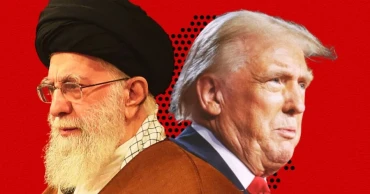
Tensions surge as Trump hints at regime change in Iran
Tensions in the Middle East have intensified after former US President Donald Trump suggested the possibility of a leadership change in Iran — just hours after his team had insisted that regime change was not the objective of recent American strikes.
The situation deteriorated further after Iran’s military vowed a “decisive response” to what Trump described as “monumental damage” inflicted on Iranian nuclear sites by US attacks.
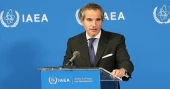
The International Atomic Energy Agency (IAEA), the UN’s nuclear watchdog, has since called for an immediate ceasefire to allow inspectors access to the affected areas.
In a sign of growing international concern, Iran’s Foreign Minister is currently in Moscow for high-level talks with Russian President Vladimir Putin, discussing what both sides termed “common challenges and threats.”
Iran vows retaliation over US strikes; Trump hints at regime change
Meanwhile, the UK’s Foreign Secretary has joined other Western leaders in urging Tehran to exercise restraint and avoid further escalation.
Despite diplomatic calls for calm, hostilities have continued. Israel launched what it described as “one of the most intense attacks” on Iranian military infrastructure overnight, followed by a fresh “series of strikes” directed towards Tehran earlier this morning.
Adding to the geopolitical strain, the United States has called on China to use its influence to persuade Iran not to shut down the Strait of Hormuz — a vital maritime corridor through which a significant portion of the world’s oil supply passes.
Trump says Iran 'must now make peace' after US strikes nuclear sites
With the situation deteriorating rapidly, global powers are scrambling to prevent a wider regional conflict, even as the rhetoric and military actions on all sides continue to escalate.
#With inputs from BBC
1 year ago
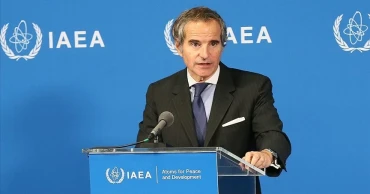
IAEA chief warns of nuclear fallout from Israeli attacks on Iran
The head of the United Nations nuclear watchdog has issued a grave warning over the potential consequences of Israeli attacks on Iranian nuclear facilities, citing the risk of nuclear contamination and long-term damage to global non-proliferation efforts.
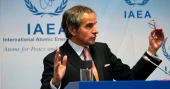
Speaking at an emergency meeting of the UN Security Council in New York, International Atomic Energy Agency (IAEA) Director General Rafael Grossi said the recent attacks have caused a "sharp degradation" in nuclear safety and security in Iran.
While no radiological release has yet affected the public, Grossi warned that the risk remains dangerously high.
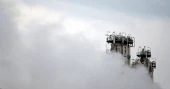
In particular, he raised concerns about the Israeli strike on the Natanz nuclear site. Although radiation levels outside the facility remain within normal limits, there is confirmed radiological and chemical contamination inside.
Life gradually returning to normal in Tehran despite tensions
“The radiation, primarily consisting of alpha particles, poses a significant danger if inhaled or ingested,” said Grossi. “This risk can be effectively managed with appropriate protective measures, such as respiratory protection. However, the main concern inside the facility is chemical toxicity.”
At the Esfahan nuclear site, where four buildings were damaged in the 13 June attack, there was no increase in off-site radiation, but similar concerns over chemical contamination persist. The IAEA reported no known damage at the Fordow enrichment facility, Iran’s main site for uranium enrichment to 60 per cent.
Grossi issued a particularly strong warning about the Bushehr Nuclear Power Plant, which remains operational and contains thousands of kilograms of nuclear material. “In case of an attack on the Bushehr Nuclear Power Plant, a direct hit could result in a very high release of radioactivity to the environment,” he cautioned.
He explained that even a strike that disables the plant’s two external power lines could lead to a meltdown of the reactor’s core, potentially requiring mass evacuations, sheltering measures, the distribution of stable iodine, and extensive food restrictions across areas spanning hundreds of kilometres.
The IAEA chief also raised alarm over the potential consequences of any attack on the Tehran Nuclear Research Reactor, saying it could have “severe consequences, potentially for large areas of the city and its inhabitants.”
“Armed attacks on nuclear facilities should never take place,” Grossi said, calling for restraint and a return to diplomacy. “Military escalation threatens lives and delays indispensable work toward a diplomatic solution for the long-term assurance that Iran does not acquire a nuclear weapon.”
He reiterated that a diplomatic resolution remains possible. “Elements for an agreement have been discussed,” Grossi noted.
“The IAEA can guarantee, through a watertight inspections system, that nuclear weapons will not be developed in Iran. This can form the basis of a durable agreement that brings peace and avoids a nuclear crisis in the Middle East,” Grossi said.
Israel claims killing of Quds Palestinian Corps commander in Qom strike
Grossi warned that failure to reach a political solution could have far-reaching consequences, including a protracted conflict and an erosion of the global nuclear non-proliferation regime. “The alternative,” he said, “is a looming threat of nuclear proliferation that would not only emanate from the Middle East but could unravel the Non-Proliferation Treaty itself.”
# With inputs from agencies
1 year ago
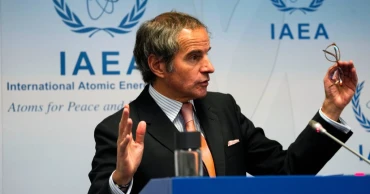
Iran FM reaffirms cooperation after IAEA warns on uranium stockpile
The Iranian foreign minister spoke by phone with the director of the UN’s nuclear watchdog agency early Sunday morning after a report from the agency said Iran is further increasing its stockpile of uranium enriched to near weapons-grade levels.
Writing on Telegram, Abbas Araghchi said he stressed Iran’s “continuous cooperation” in his conversation with Rafael Mariano Grossi, the head of the Vienna-based International Atomic Energy Agency.
The IAEA did not immediately return a request for comment about the phone call, reports AP.
The confidential IAEA report raised a stern warning, saying that Iran is now “the only non-nuclear-weapon state to produce such material” — something the agency said was of “serious concern.”
Araghchi emphasised to Grossi that all of Iran’s nuclear activities are within the framework of agreements and being monitored by the IAEA.
The IAEA said in a separate report that Iran’s cooperation with the agency has been “less than satisfactory” when it comes to uranium traces discovered by IAEA inspectors at several locations in Iran that Tehran has failed to declare as nuclear sites.
Araghchi also asked Grossi to ensure “that certain parties do not exploit the agency for political agendas against the Iranian people.” European nations could take further steps against Iran based on the comprehensive report, leading to a potential escalation in tensions between Iran and the West.
Iran vows to continue US nuclear talks despite trump threats
Iran's deputy foreign minister on Sunday published a detailed response, rejecting many of the report's findings. Kazem Gharibabadi noted that out of the IAEA's 682 inspections of 32 states, 493 were carried out in Iran alone.
“So long as a country’s nuclear activities are under the IAEA’s monitoring, there is no cause for concern,” he said. “The Islamic Republic of Iran is neither pursuing nuclear weapons nor does it possess any undeclared nuclear materials or activities.”
The IAEA report said that as of May 17, Iran has amassed 408.6 kilograms (900.8 pounds) of uranium enriched up to 60 per cent.
That’s an increase of almost 50 per cent since the IAEA’s last report in February. The 60 per cent enriched material is a short, technical step away from weapons-grade levels of 90 per cent.
1 year ago
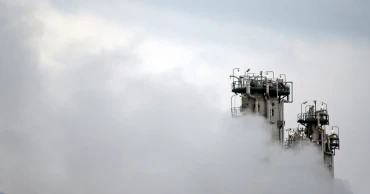
Iran speeds up near weapons-grade uranium production as US tensions rise: IAEA
Iran has accelerated its production of near weapons-grade uranium as tensions between Tehran and Washington rise after the election of US President Donald Trump, a report by the United Nations’ nuclear watchdog seen by The Associated Press on Wednesday showed.
The report by the Vienna-based International Atomic Energy Agency said that as of February 8, Iran has 274.8 kilograms (605.8 pounds) of uranium enriched up to 60 per cent. That’s an increase of 92.5 kilograms (203.9 pounds) since the IAEA’s last report in November.
That material is a short, technical step away from weapons-grade levels of 90 per cent.
A report in November 2024 put the stockpile at 182.3 kilograms (401.9 pounds). It had 164.7 kilograms (363.1 pounds) last August.
“The significantly increased production and accumulation of high enriched uranium by Iran, the only non-nuclear weapon State to produce such nuclear material, is of serious concern,” the confidential report stated.
US plans to cut Iran’s oil exports by over 90% in renewed pressure campaign
According to the IAEA, approximately 42 kilograms of 60 per cent enriched uranium is theoretically enough to produce one atomic bomb, if enriched further to 90 per cent.
The IAEA also estimated in its quarterly report that as of February 8, Iran’s overall stockpile of enriched uranium stands at 8,294.4 kilograms (18,286 pounds), which represents an increase of 1,690.0 kilograms (3725.8 pounds) since the last report in November.
Trump administration warns Tehran
The Trump administration said Iran must be prevented from acquiring nuclear weapons.
“President Trump has put the Iran Regime on notice by reimposing Maximum Pressure and is committed to ensuring the regime never gets a nuclear weapon. He has also made clear he is open to talks with Iran to come to an agreement that fully addresses the outstanding issues between our two countries," National Security Council spokesperson Brian Hughes said.
Trump’s first term in office was marked by a particularly troubled period in relations with Tehran. In 2018 he unilaterally withdrew the US from Iran’s nuclear deal with world powers, leading to sanctions hobbling the economy, and ordered the killing of the country's top general.
IAEA inspectors banned as Iran begins operating more centrifuges
Iran has maintained its nuclear program is for peaceful purposes only, but IAEA Director General Rafael Mariano Grossi has previously warned that Tehran has enough uranium enriched to near-weapons-grade levels to make “several” nuclear bombs if it chose to do so.
Iranian officials have increasingly suggested Tehran could pursue an atomic bomb. US intelligence agencies assess that Iran has yet to begin a weapons program, but has “undertaken activities that better position it to produce a nuclear device, if it chooses to do so.”
Iran loosens import restrictions on foreign cars and iPhones, trying to mask its economic woes
The IAEA already warned last December that Iran was poised to “quite dramatically” increase its stockpile of near weapons-grade uranium as it has started operating cascades of advanced centrifuges.
Wednesday’s report also said that Iran has also not reconsidered its September 2023 decision to ban some of the agency’s most experienced inspectors from monitoring its nuclear program.
“The Director General deeply regrets that Iran, despite having indicated a willingness to consider accepting the designation of four additional experienced Agency inspectors, did not accept their designations,” the report said.
1 year ago
.jpg)
FM, senior MoFA officials visit Rooppur Nuclear Power Plant
Foreign Minister Dr AK Abdul Momen along with senior officials of the ministry recently visited the Rooppur Nuclear Power Plant (RNPP) as part of its efforts to promote the peaceful use of nuclear technology across the world.
5 years ago

IAEA lauds Bangladesh’s sustained progress
International Atomic Energy Agency (IAEA) Director General Rafael Mariano Grossi has sought strong political support from Bangladesh in its endeavours to implement its mandates.
6 years ago
.jpg)
IAEA says to support Japan in Fukushima plant decommission
The head of the International Atomic Energy Agency (IAEA) on Tuesday said the agency will continue to support Japan in safely decommissioning the crippled Fukushima nuclear power plant.
6 years ago
Iran threatens to reconsider cooperation with IAEA
Iranian Parliament Speaker Ali Larijani warned on Sunday that Iran might reconsider its cooperation with the International Atomic Energy Agency (IAEA), Tasnim news agency reported.
6 years ago